Rajkumar Manickam, Sakthivel Murugesan, Senthilkumar Kottaisamy, Thangaraj Ramasundaram, Kannan Soundarapandian
Cancer Nanomedicine Laboratory, Department of Zoology, School of Life Sciences, Periyar University, Salem, 636 011, Tamil Nadu, India.
National Institute for Research in Tuberculosis/Indian Council for Medical Research, Ward No. 62, Government Rajaji Hospital Madurai, 625 001, Tamil Nadu, India.
Curr Res Pharmacol Drug Discov. 2022 Apr 17;3:100100. doi: 10.1016/j.crphar.2022.100100. eCollection 2022.
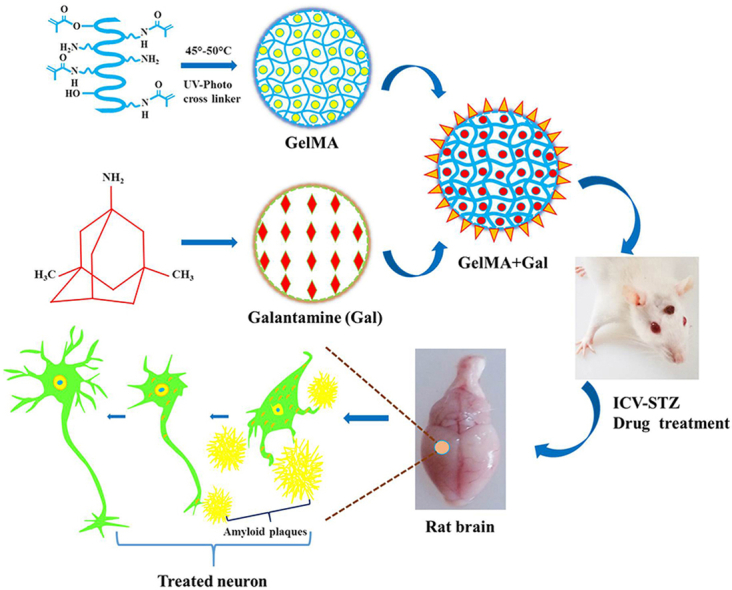
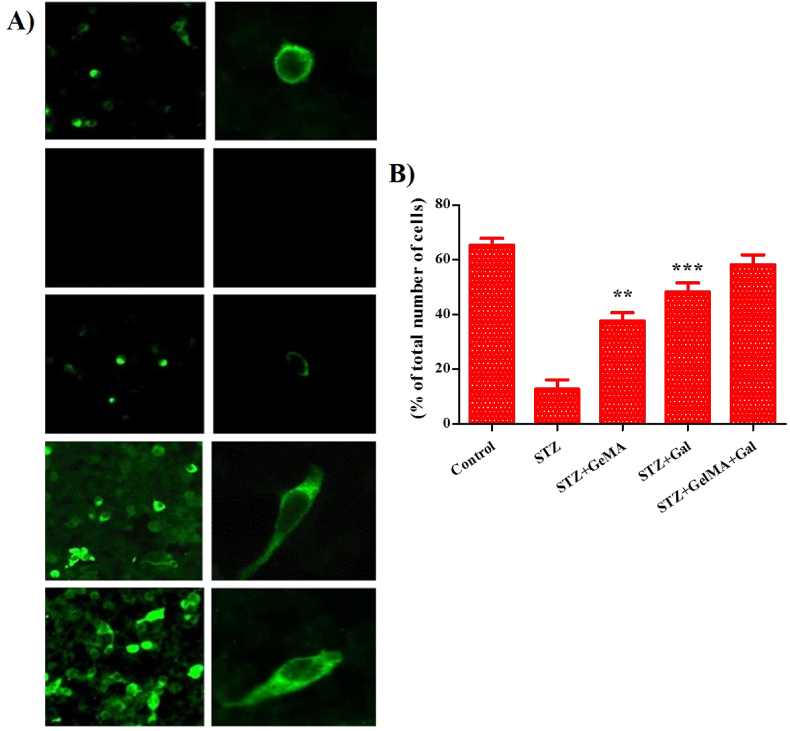
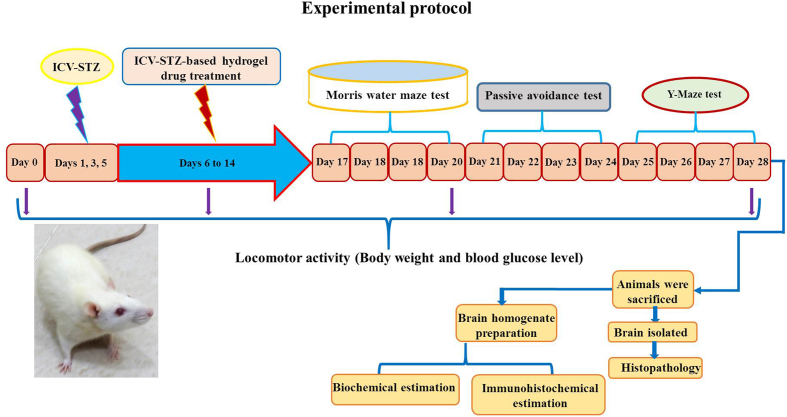
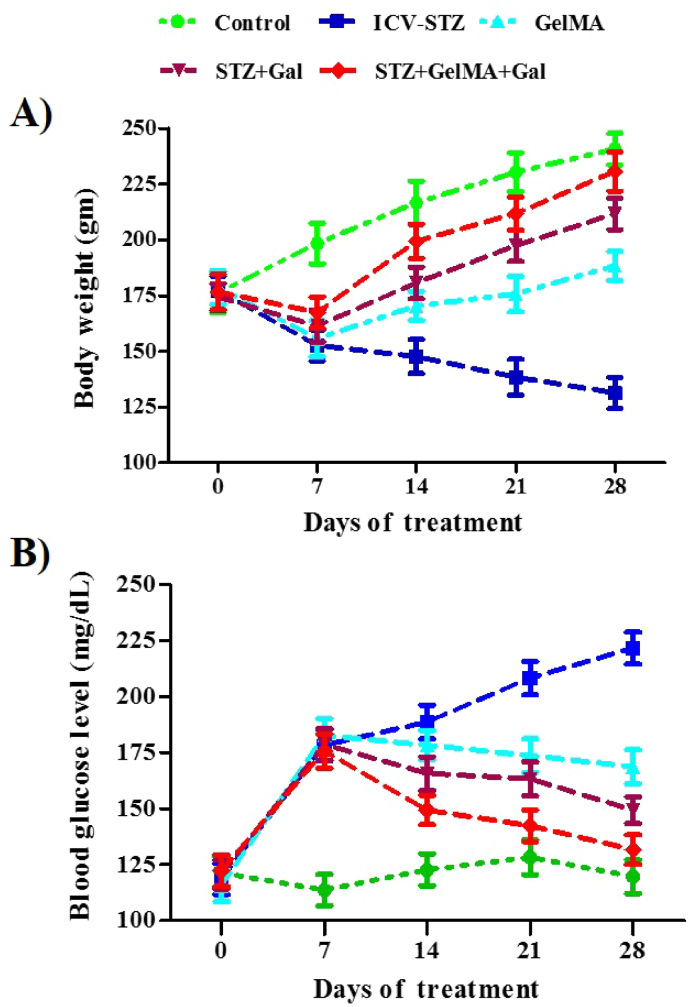
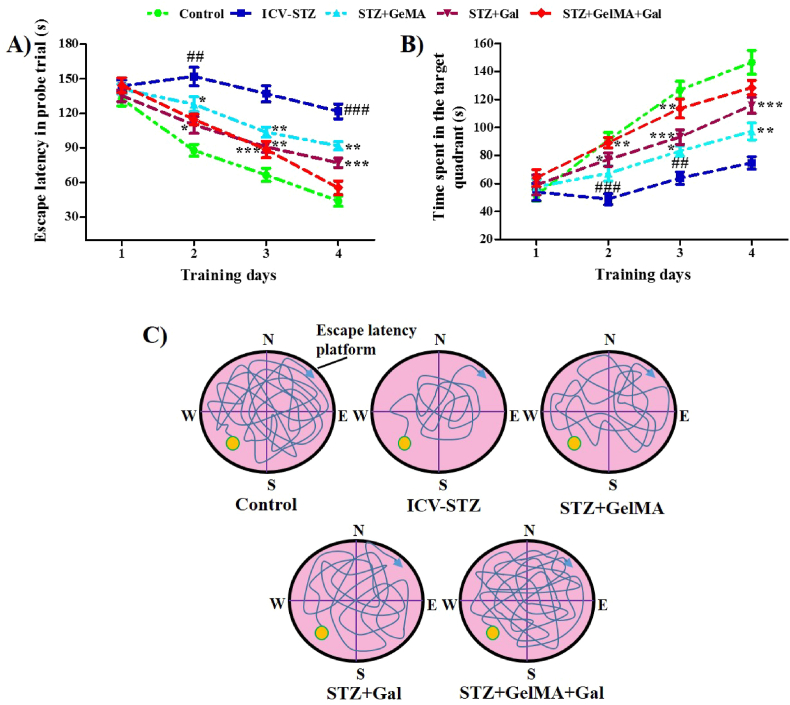
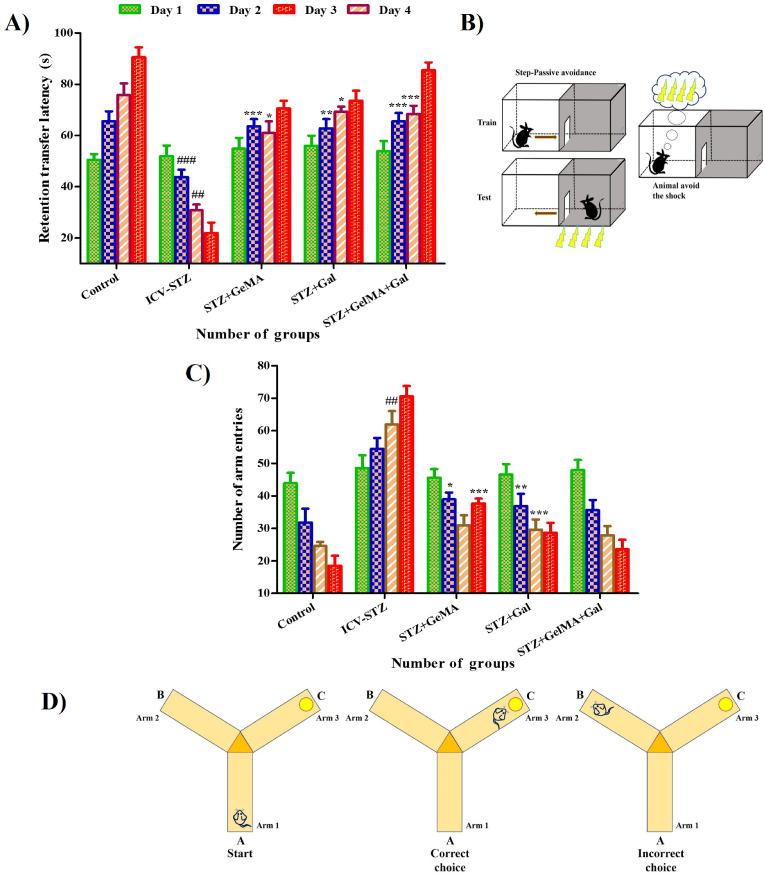
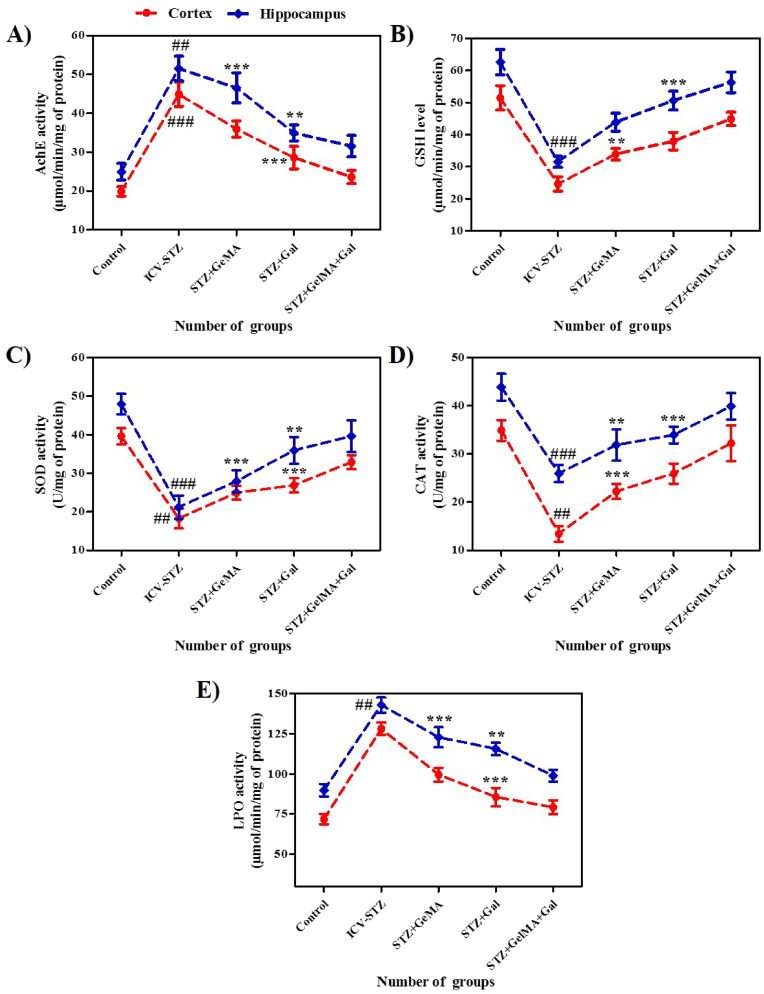
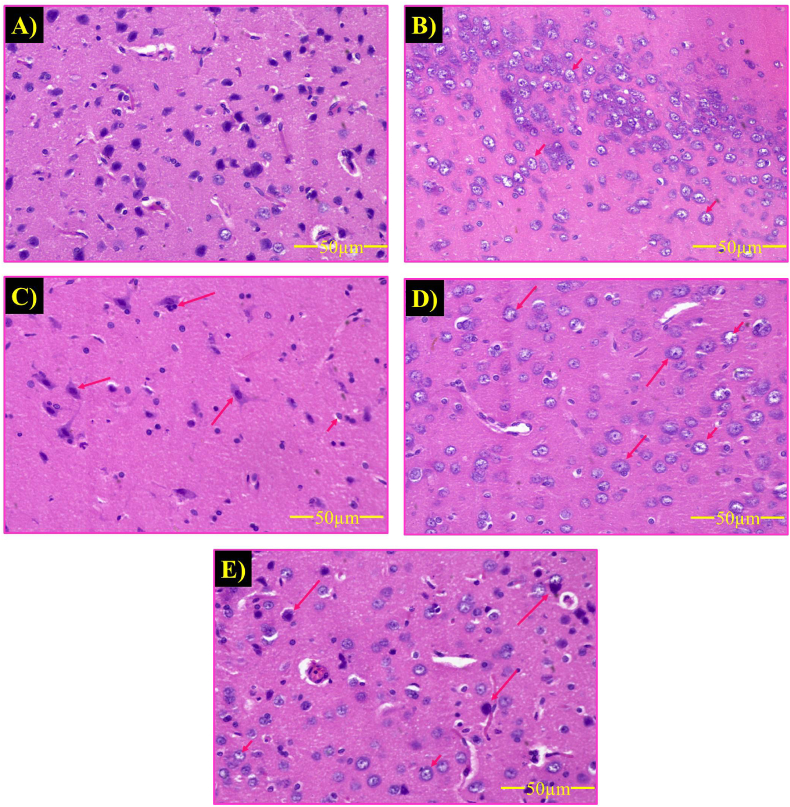
Amyloid-β (Aβ) plaque formation, neuronal cell death, and cognitive impairment are the unique symptoms of Alzheimer's disease (AD). No single step remedy is available to treat AD, so the present study aimed to improve the drugability and minimize the abnormal behavioral and biochemical activities in streptozotocin (STZ) induced AD experimental Wistar rats. In particular, we explored the utilization of methacrylated gelatin (GelMA), which is a biopolymeric hydrogel that mimics the natural tissue environment. The synthesized biopolymeric gel contained the drug galantamine (Gal). Investigations were conducted to evaluate the behavioral activities of STZ-induced AD experimental rats under STZ + GelMA + Gal treatment. The experimental groups comprised the control and STZ, STZ + GelMA, STZ + Gal, and STZ + GelMA + Gal (10 mg/kg) treated rats. Intracerebroventricular STZ ensures cognitive decline in terms of an increase in the escape latency period, with a decrease in the spontaneous alteration of behavioral activities. Our results indicated decrease Aβ aggregation in the hydrogel-based drug treatment group and significant decreases in the levels of acetylcholinesterase and lipid peroxidation ( < 0.001). In addition, the glutathione and superoxide dismutase activities appeared to be improved in the STZ + GelMA + Gal group compared with the other treatment groups. Furthermore, histopathological and immunohistochemical experiments showed that the GelMA + Gal treated AD rats exhibited significantly improved behavioral and biochemical activities compared with the STZ treated AD rats. Therefore, STZ + GelMA + Gal administration from the pre-plaque stage may have a potential clinical application in the prevention of AD. Thus, we conclude that hydrogel-based Gal drugs are efficient at decreasing Aβ aggregation and improving the neuroinflammatory process, antioxidant activity, and neuronal growth.
β淀粉样蛋白(Aβ)斑块形成、神经元细胞死亡和认知障碍是阿尔茨海默病(AD)的独特症状。目前尚无单一疗法可治疗AD,因此本研究旨在提高药物可及性,并将链脲佐菌素(STZ)诱导的AD实验性Wistar大鼠的异常行为和生化活动降至最低。特别是,我们探索了甲基丙烯酸化明胶(GelMA)的应用,它是一种模拟天然组织环境的生物聚合物水凝胶。合成的生物聚合物凝胶含有药物加兰他敏(Gal)。研究旨在评估STZ诱导的AD实验大鼠在STZ + GelMA + Gal治疗下的行为活动。实验组包括对照组以及接受STZ、STZ + GelMA、STZ + Gal和STZ + GelMA + Gal(10 mg/kg)治疗的大鼠。脑室内注射STZ会导致逃避潜伏期延长,行为活动的自发改变减少,从而导致认知能力下降。我们的结果表明,基于水凝胶的药物治疗组中Aβ聚集减少,乙酰胆碱酯酶水平和脂质过氧化显著降低(<0.001)。此外,与其他治疗组相比,STZ + GelMA + Gal组的谷胱甘肽和超氧化物歧化酶活性似乎有所提高。此外,组织病理学和免疫组织化学实验表明,与STZ治疗的AD大鼠相比,GelMA + Gal治疗的AD大鼠的行为和生化活动有显著改善。因此,在斑块形成前期给予STZ + GelMA + Gal可能在AD预防方面具有潜在的临床应用价值。因此,我们得出结论,基于水凝胶的Gal药物在减少Aβ聚集、改善神经炎症过程、抗氧化活性和神经元生长方面是有效的。