MTA-ELTE Comparative Ethology Research Group, Budapest, Hungary.
University of Veterinary Medicine, Budapest, Hungary.
Anim Cogn. 2022 Dec;25(6):1427-1442. doi: 10.1007/s10071-022-01624-6. Epub 2022 May 5.
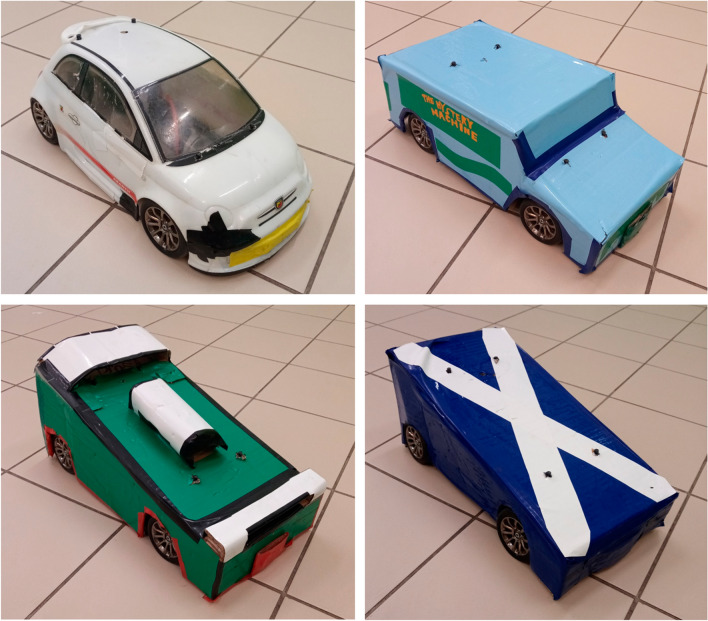
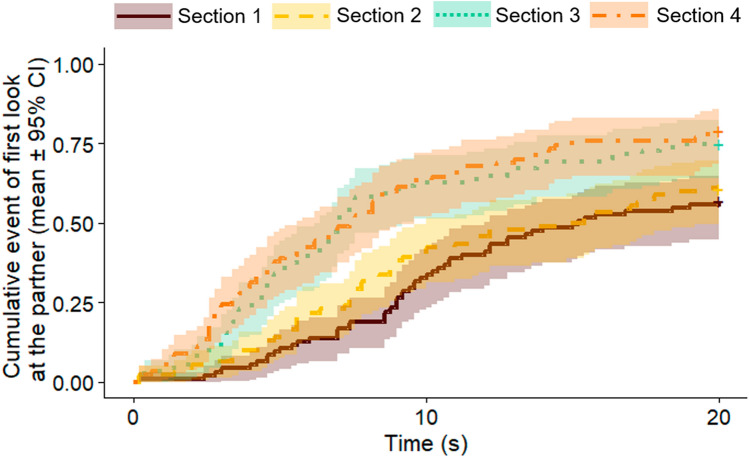
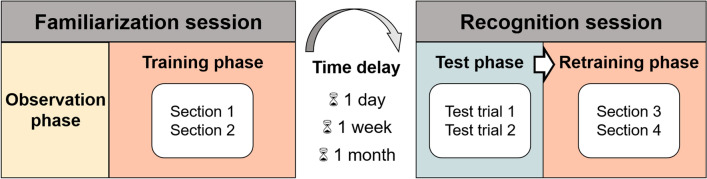
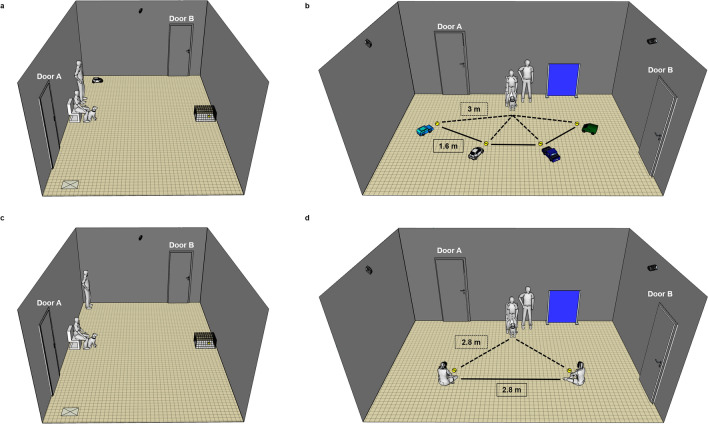
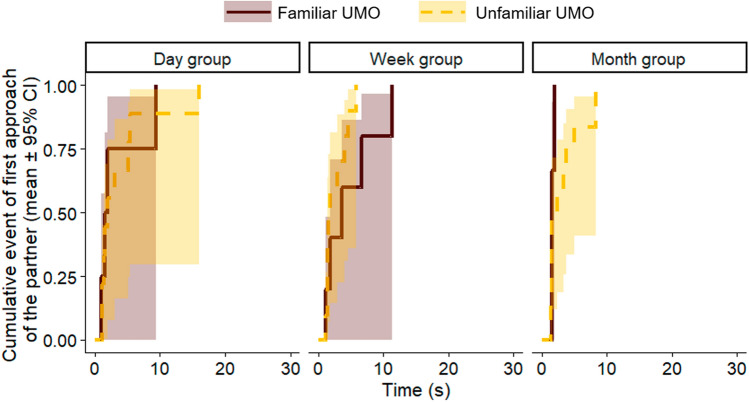
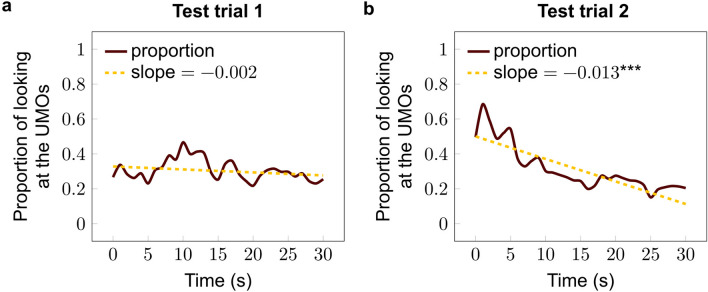
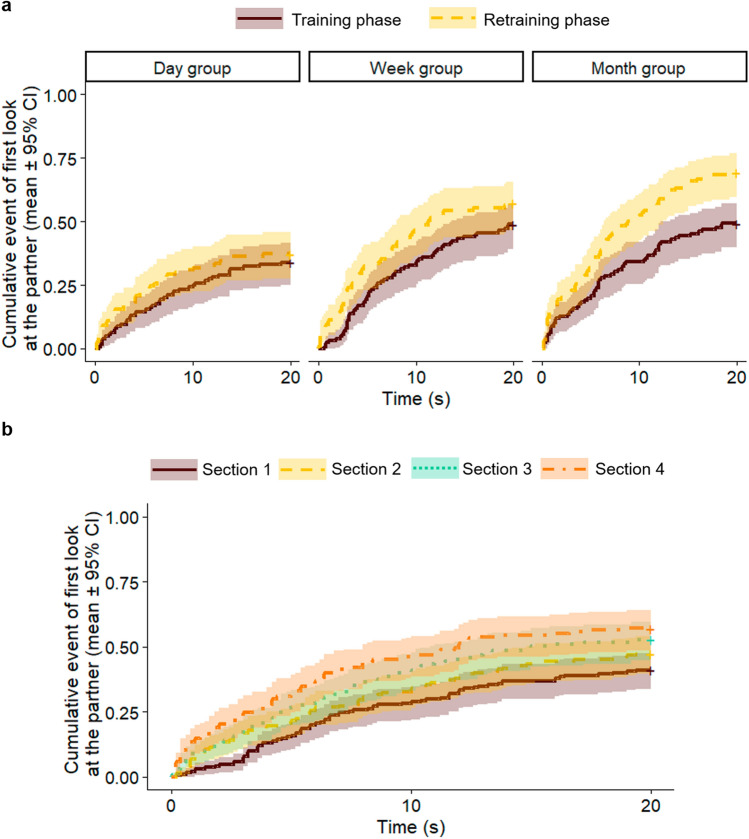
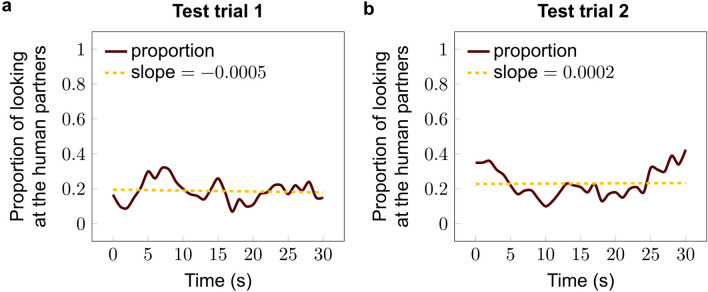
Investigation of individual recognition (IR) is difficult due to the lack of proper control of cues and previous experiences of subjects. Utilization of artificial agents (Unidentified Moving Objects: UMOs) may offer a better approach than using conspecifics or humans as partners. In Experiment 1, we investigated whether dogs are able to develop IR of UMOs (that is stable for at least 24 h) or that they only retain a more generalised memory about them. The UMO helped dogs to obtain an unreachable ball and played with them. One day, one week or one month later, we tested whether dogs display specific behaviour toward the familiar UMO over unfamiliar ones (four-way choice test). Dogs were also re-tested in the same helping context and playing interaction. Subjects did not approach the familiar UMO sooner than the others; however, they gazed at the familiar UMO earlier during re-testing of the problem solving task, irrespectively of the delay. In Experiment 2, we repeated the same procedure with human partners, applying a two-way choice test after a week delay, to study whether lack of IR was specific to the UMO. Dogs did not approach the familiar human sooner than the unfamiliar, but they gazed at the familiar partner earlier during re-testing. Thus, dogs do not seem to recognise an individual UMO or human after a short experience, but they remember the interaction with the novel partner in general, even after a long delay. We suggest that dogs need more experience with a specific social partner for the development of long-term memory.
个体识别(IR)的研究由于缺乏对线索和被试先前经验的适当控制而变得困难。使用人工智能(不明移动物体:UMO)可能比使用同物种或人类作为伙伴提供更好的方法。在实验 1 中,我们研究了狗是否能够对 UMO 发展出(至少 24 小时稳定的)IR,或者它们只是对它们保持更一般的记忆。UMO 帮助狗获得一个无法到达的球,并与它们一起玩耍。一天、一周或一个月后,我们测试狗是否会对熟悉的 UMO 表现出特定的行为,而不是对陌生的 UMO 表现出特定的行为(四向选择测试)。狗也在相同的帮助情境和游戏互动中重新进行了测试。与陌生的 UMO 相比,狗没有更早地接近熟悉的 UMO;然而,无论延迟多久,在重新测试解决问题的任务时,它们会更早地注视熟悉的 UMO。在实验 2 中,我们用人类伙伴重复了同样的程序,在一周的延迟后进行了双向选择测试,以研究缺乏 IR 是否是 UMO 特有的。狗不会比陌生的人更早地接近熟悉的人,但它们会在重新测试时更早地注视熟悉的伙伴。因此,狗在短暂的体验后似乎无法识别一个特定的 UMO 或人类,但它们会记住与新伙伴的互动,即使在很长时间的延迟后也是如此。我们认为,狗需要与特定的社交伙伴有更多的经验才能发展出长期记忆。