Zhou Rui, Wang Yansong, Liu Ziyu, Pang Yongqiang, Chen Jianxin, Kong Jie
MOE Key Lab of Materials Physics and Chemistry in Extraordinary Conditions, Shaanxi Key Lab of Macromolecular Science and Technology, School of Chemistry and Chemical Engineering, Northwestern Polytechnical University, Xi'an, 710072, People's Republic of China.
Key Laboratory of Optical System Advance Manufacturing Technology, Changchun Institute of Optics, Fine Mechanics and Physics, Chinese Academy of Sciences, Changchun, 130033, People's Republic of China.
Nanomicro Lett. 2022 May 5;14(1):122. doi: 10.1007/s40820-022-00865-x.
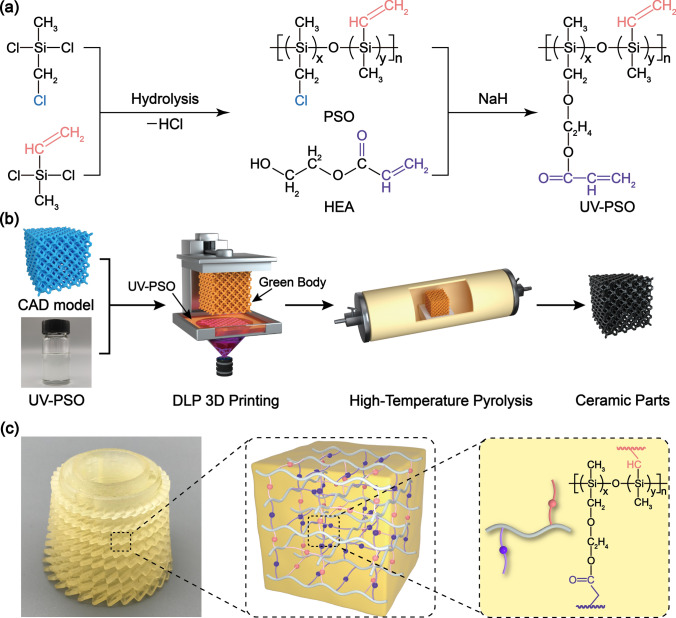
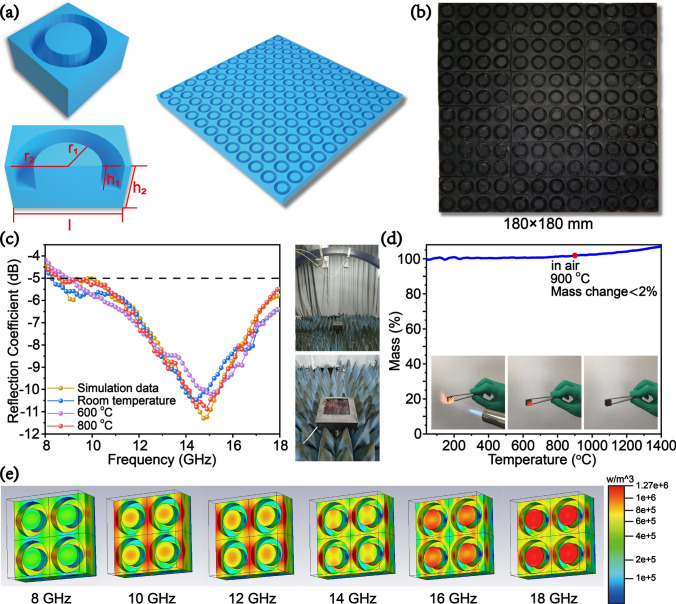
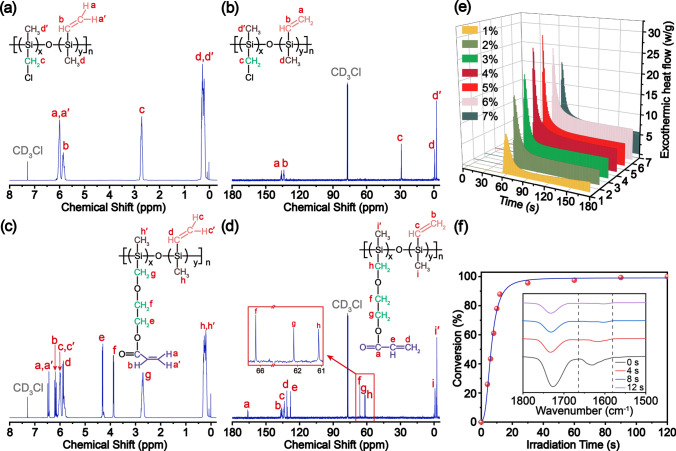
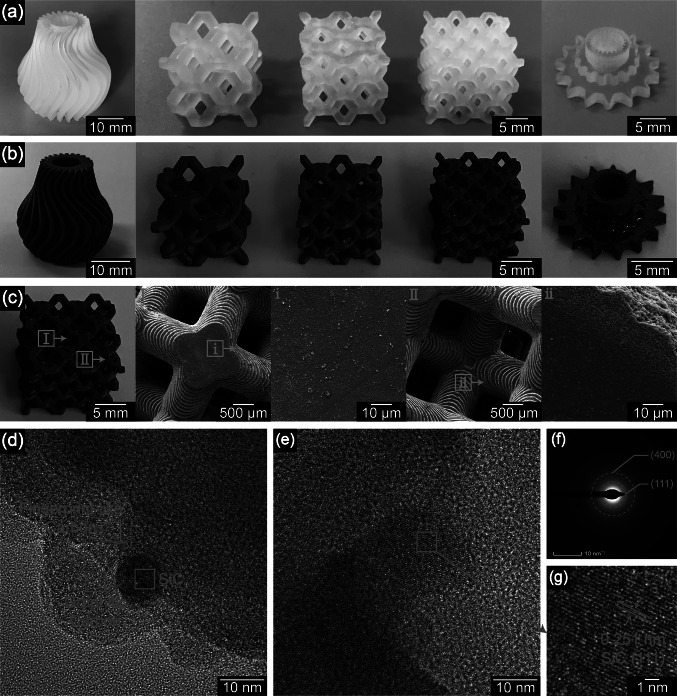
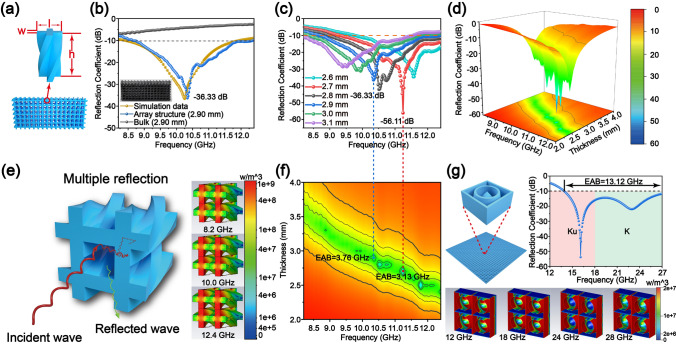
Combining 3D printing with precursor-derived ceramic for fabricating electromagnetic (EM) wave-absorbing metamaterials has attracted great attention. This study presents a novel ultraviolet-curable polysiloxane precursor for digital light processing (DLP) 3D printing to fabricate ceramic parts with complex geometry, no cracks and linear shrinkage. Guiding with the principles of impedance matching, attenuation, and effective-medium theory, we design a cross-helix-array metamaterial model based on the complex permittivity constant of precursor-derived ceramics. The corresponding ceramic metamaterials can be successfully prepared by DLP printing and subsequent pyrolysis process, achieving a low reflection coefficient and a wide effective absorption bandwidth in the X-band even under high temperature. This is a general method that can be extended to other bands, which can be realized by merely adjusting the unit structure of metamaterials. This strategy provides a novel and effective avenue to achieve "target-design-fabricating" ceramic metamaterials, and it exposes the downstream applications of highly efficient and broad EM wave-absorbing materials and structures with great potential applications.
将3D打印与先驱体衍生陶瓷相结合用于制造电磁(EM)波吸收超材料已引起了极大关注。本研究提出了一种用于数字光处理(DLP)3D打印的新型紫外光固化聚硅氧烷先驱体,以制造具有复杂几何形状、无裂纹且线性收缩的陶瓷部件。基于阻抗匹配、衰减和有效介质理论的原理,我们根据先驱体衍生陶瓷的复介电常数设计了一种交叉螺旋阵列超材料模型。通过DLP打印和后续热解工艺可以成功制备相应的陶瓷超材料,即使在高温下也能在X波段实现低反射系数和宽有效吸收带宽。这是一种通用方法,可扩展到其他频段,只需调整超材料的单元结构即可实现。该策略为实现“目标设计制造”陶瓷超材料提供了一条新颖有效的途径,并揭示了具有巨大潜在应用的高效宽频EM波吸收材料和结构的下游应用。