Department of Immunology and Infections, Biomedical Research Institute, Hasselt University, Hasselt, Belgium.
Peripheral Neuropathy Research Group, Department of Biomedical Sciences, Institute Born Bunge and University of Antwerp, Antwerp, Belgium.
Cell Commun Signal. 2022 May 5;20(1):58. doi: 10.1186/s12964-022-00863-x.
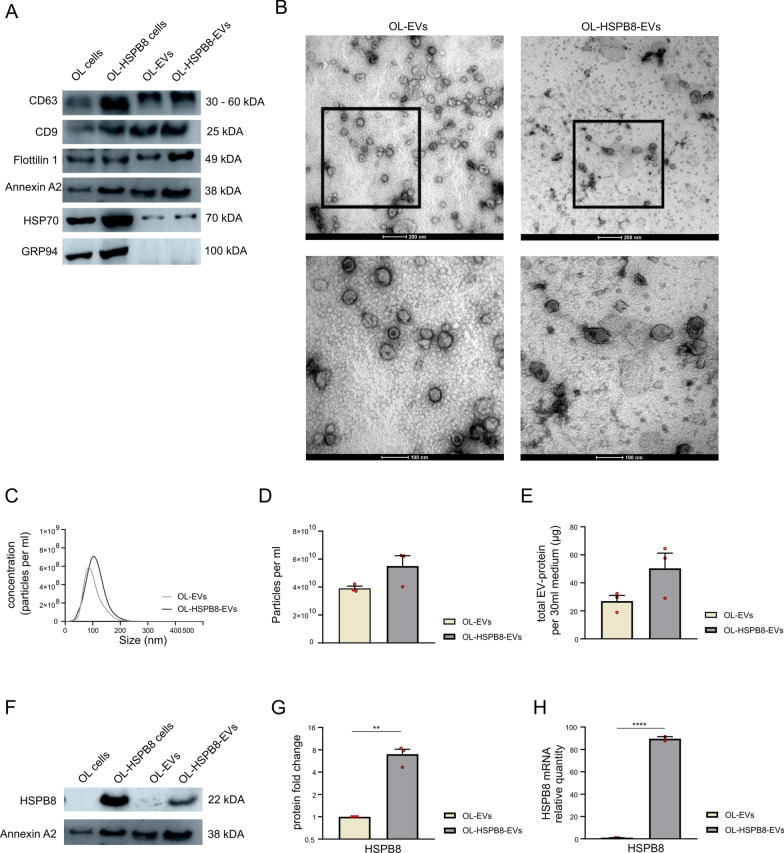
The contribution of native or modified oligodendroglia-derived extracellular vesicles (OL-EVs) in controlling chronic inflammation is poorly understood. In activated microglia, OL-EVs contribute to the removal of cytotoxic proteins following a proteotoxic stress. Intracellular small heat shock protein B8 (HSPB8) sustain this function by facilitating autophagy and protecting cells against oxidative stress mediated cell death. Therefore, secretion of HSPB8 in OL-EVs could be beneficial for neurons during chronic inflammation. However, how secreted HSPB8 contribute to cellular proteostasis remains to be elucidated.
We produced oligodendroglia-derived EVs, either native (OL-EVs) or HSPB8 modified (OL-HSPB8-EVs), to investigate their effects in controlling chronic inflammation and cellular homeostasis. We analyzed the impact of both EV subsets on either a resting or activated microglial cell line and on primary mixed neural cell culture cells. Cells were activated by stimulating with either tumor necrosis factor-alpha and interleukin 1-beta or with phorbol-12-myristate-13-acetate.
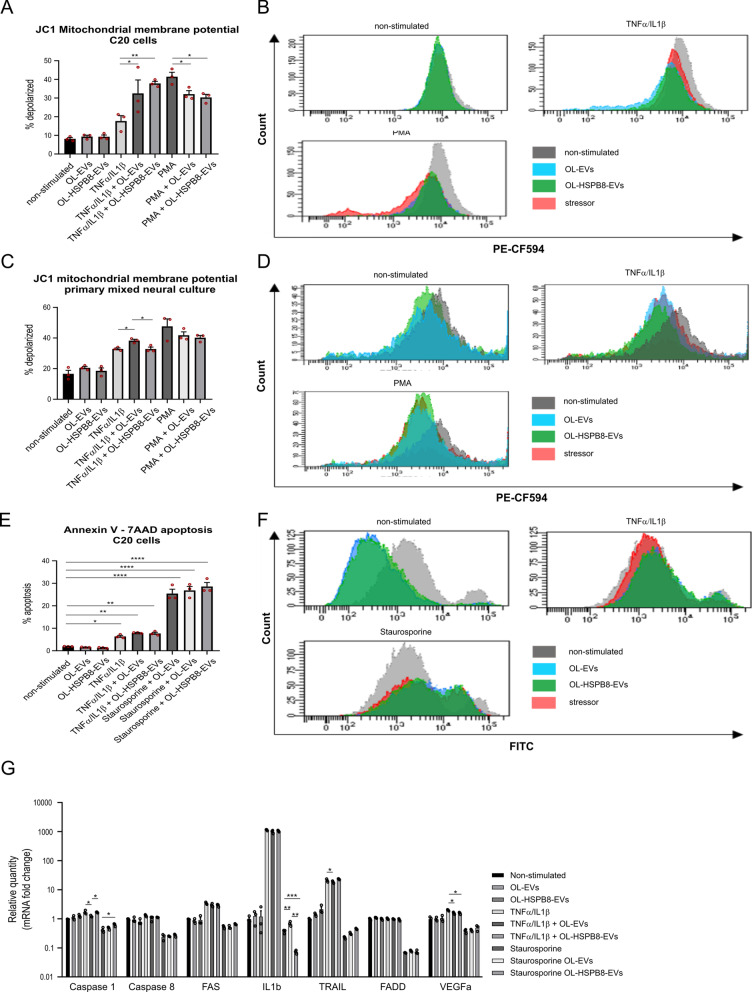
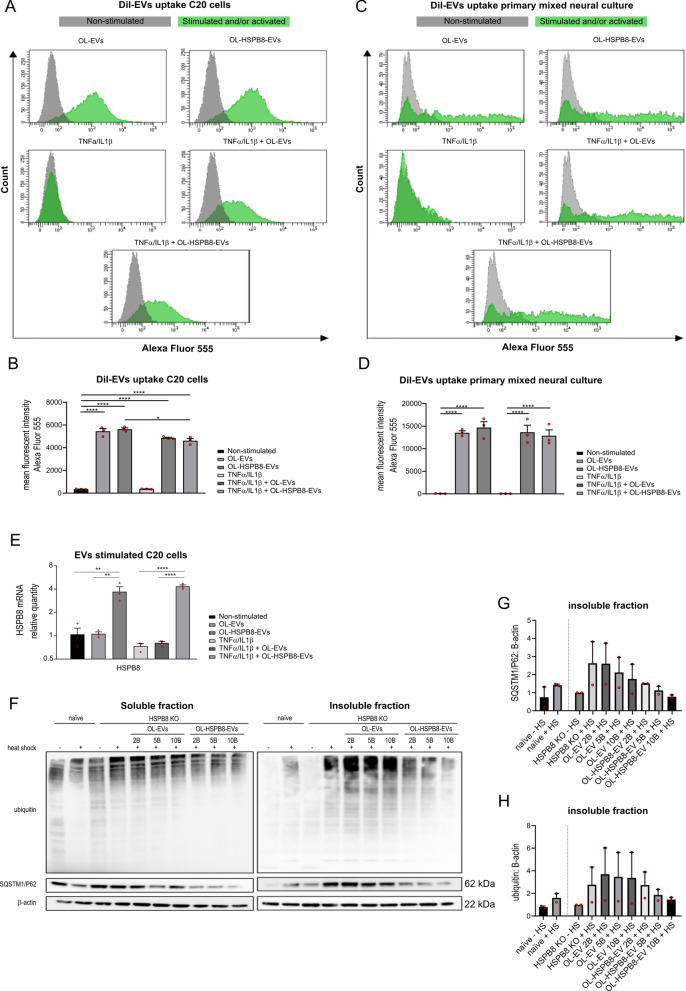
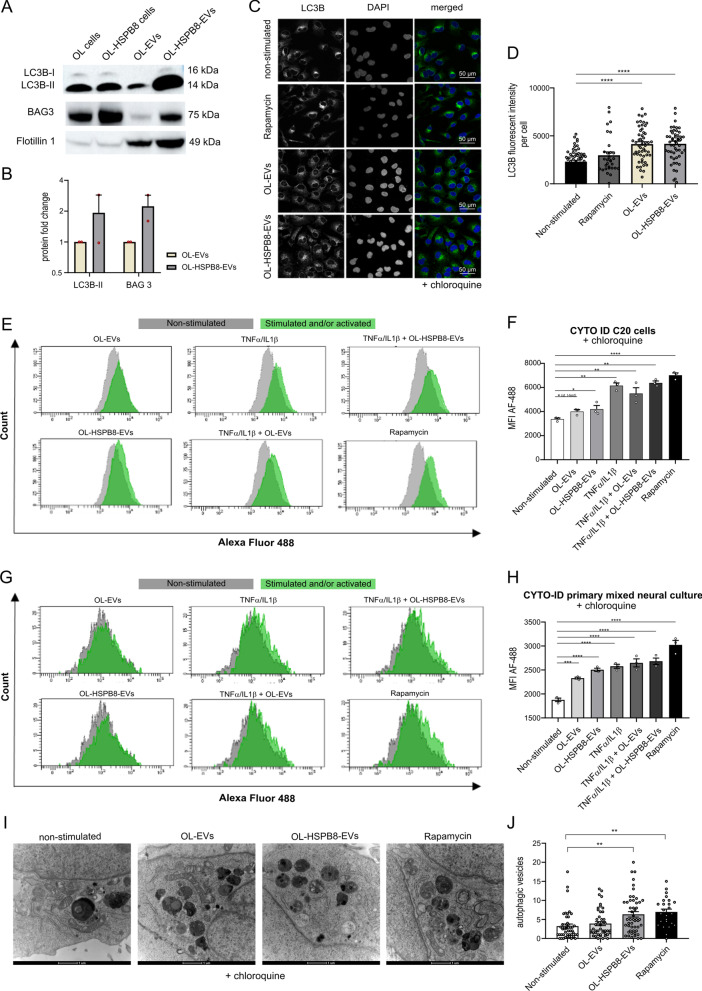
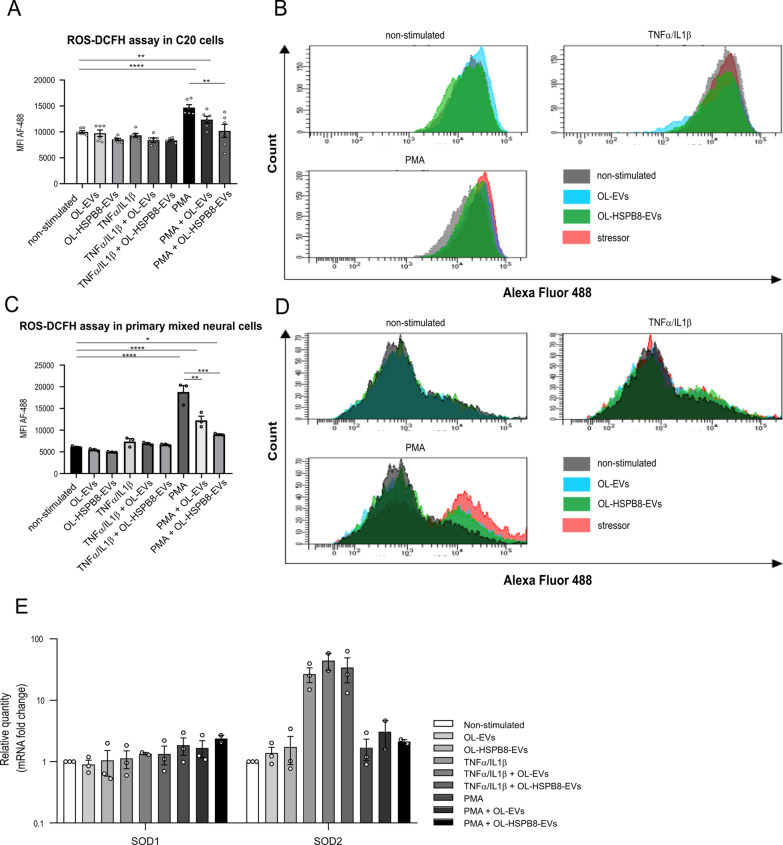
We show that OL-EVs and modified OL-HSPB8-EVs are internalized by C20 microglia and by primary mixed neural cells. The cellular uptake of OL-HSPB8-EVs increases the endogenous HSPB8 mRNA expression. Consistently, our results revealed that both EV subsets maintained cellular homeostasis during chronic inflammation with an increase in the formation of autophagic vesicles. Both EV subsets conveyed LC3B-II and BAG3 autophagy markers with an enhanced effect observed for OL-HSPB8-EVs. Moreover, stimulation with either native or modified OL-HSPB8-EVs showed a significant reduction in ubiquitinated protein, reactive oxygen species and mitochondrial depolarization, with OL-HSPB8-EVs exhibiting a more protective effect. Both EV subsets did not induce cell death in the C20 microglia cell line or the primary mixed neural cultures.
We demonstrate that the functions of oligodendroglia secreted EVs enriched with HSPB8 have a supportive role, comparable to the native OL-EVs. Further development of engineered oligodendroglia derived EVs could be a novel therapeutic strategy in countering chronic inflammation. Video Abstract.
少突胶质细胞来源的细胞外囊泡(OL-EVs)在控制慢性炎症中的作用尚不清楚。在激活的小胶质细胞中,OL-EVs 有助于在毒性蛋白应激后清除细胞毒性蛋白。细胞内小分子热休克蛋白 B8(HSPB8)通过促进自噬和保护细胞免受氧化应激介导的细胞死亡来维持这种功能。因此,OL-EVs 中 HSPB8 的分泌可能对慢性炎症期间的神经元有益。然而,分泌的 HSPB8 如何有助于细胞内蛋白质平衡仍有待阐明。
我们制备了少突胶质细胞来源的 EVs,包括天然 OL-EVs 和 HSPB8 修饰的 OL-HSPB8-EVs,以研究它们在控制慢性炎症和细胞内稳态方面的作用。我们分析了这两种 EV 亚群对静息或激活的小胶质细胞系以及原代混合神经细胞培养物的影响。细胞通过肿瘤坏死因子-α和白细胞介素 1-β或佛波醇 12-肉豆蔻酸 13-乙酸酯刺激激活。
我们表明,OL-EVs 和修饰的 OL-HSPB8-EVs 被 C20 小胶质细胞和原代混合神经细胞内化。OL-HSPB8-EVs 的细胞摄取增加了内源性 HSPB8mRNA 的表达。一致地,我们的结果表明,这两种 EV 亚群在慢性炎症期间维持细胞内稳态,自噬小泡形成增加。两种 EV 亚群均传递 LC3B-II 和 BAG3 自噬标记物,OL-HSPB8-EVs 的作用增强。此外,用天然或修饰的 OL-HSPB8-EVs 刺激显示出泛素化蛋白、活性氧和线粒体去极化的显著减少,而 OL-HSPB8-EVs 表现出更具保护作用。两种 EV 亚群在 C20 小胶质细胞系或原代混合神经培养物中均未诱导细胞死亡。
我们证明了富含 HSPB8 的少突胶质细胞分泌的 EVs 的功能具有支持作用,与天然 OL-EVs 相当。工程化的少突胶质细胞衍生 EVs 的进一步发展可能是对抗慢性炎症的一种新的治疗策略。