Alotaibi Nusaybah, Hammud Hassan H, Karnati Ranjith Kumar, Hussain Syed Ghazanfar, Mazher Javed, Prakasam Thirumurugan
Department of Chemistry, College of Science, King Faisal University Al-Ahsa 31982 Saudi Arabia
Department of Physics, College of Science, King Faisal University Al-Ahsa 31982 Saudi Arabia.
RSC Adv. 2020 May 6;10(30):17660-17672. doi: 10.1039/d0ra02752a. eCollection 2020 May 5.
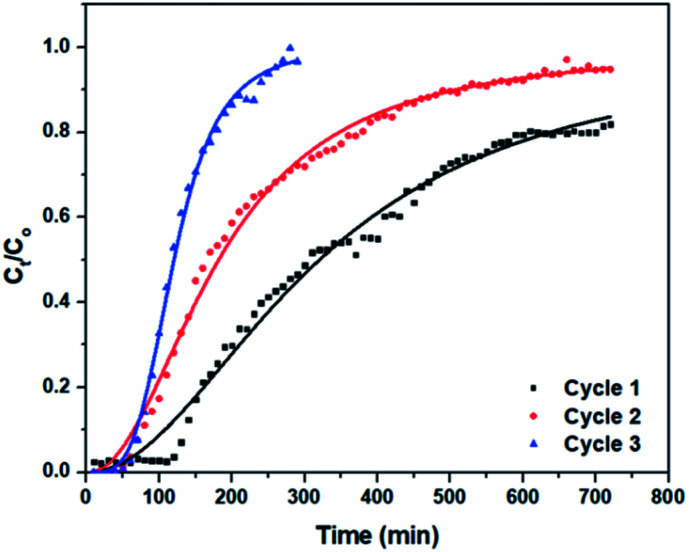
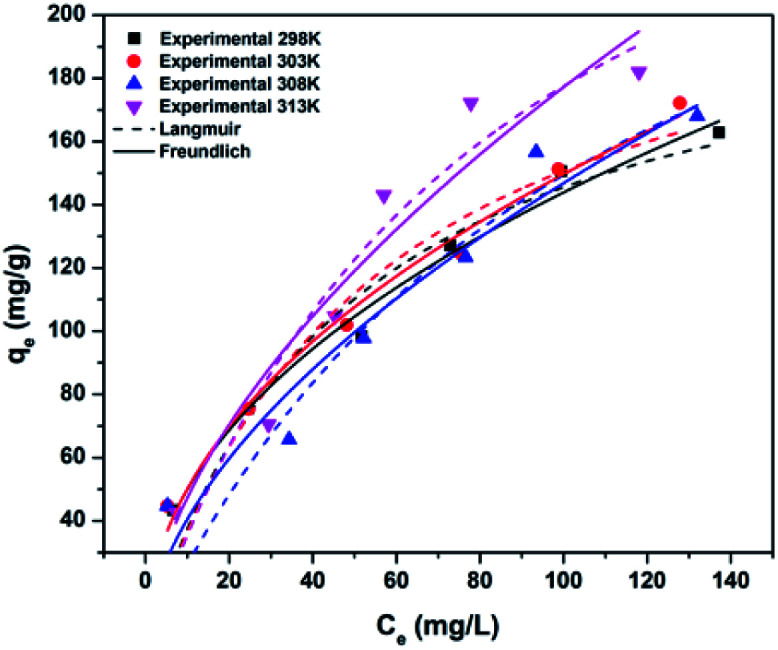
Recently, carbon nanostructures have attracted interest because of their unique properties and interesting applications. Here, CoC@SiO-850 (3) and CoC@SiO-600 (4) cobalt-carbon/silica nanocomposites were prepared by solid-state pyrolysis of anthracene with Co(tph)(2,2'-bipy)·4HO (1) complex in the presence of silica at 850 and 600 °C, respectively, where 2,2'-bipy is 2,2'-bipyridine and tph is the terephthalate dianion. Moreover, Co(μ-tph)(2,2'-bipy) (2) was isolated and its X-ray structure indicated that cobalt(ii) has a distorted trigonal prismatic coordination geometry. 2 is a metal-organic framework consisting of one-dimensional zigzag chains within a porous grid network. 3 and 4 consist of cobalt(0)/cobalt oxide nanoparticles with a graphitic shell and carbon nanotubes embedded in the silica matrix. They were characterized by scanning electron microscopy (SEM), transmission electron microscopy (TEM), powder X-ray diffraction (XRD), Brunauer-Emmett-Teller (BET), Raman spectroscopy, and X-ray photoelectron spectroscopy (XPS). XPS revealed that the nanocomposites are functionalized with oxygen-containing groups, such as carboxylic acid groups. In addition, the presence of metallic cobalt nanoparticles embedded in graphitized carbon was verified by XRD and TEM. The efficiency of 3 for adsorption of crystal violet (CV) dye was investigated by batch and column experiments. At 25 °C, the Langmuir adsorption capacity of 3 for CV was 214.2 mg g and the fixed-bed column capacity was 36.3 mg g. The adsorption data were well fitted by the Freundlich isotherm and pseudo-second-order kinetic model. The adsorption process was spontaneous and endothermic.
近年来,碳纳米结构因其独特的性质和有趣的应用而备受关注。在此,通过蒽与Co(tph)(2,2'-联吡啶)·4H₂O (1) 配合物在二氧化硅存在下分别于850和600 °C进行固态热解,制备了CoC@SiO-850 (3) 和CoC@SiO-600 (4) 钴-碳/二氧化硅纳米复合材料,其中2,2'-联吡啶为2,2'-联吡啶,tph为对苯二甲酸二价阴离子。此外,分离得到了Co(μ-tph)(2,2'-联吡啶) (2),其X射线结构表明钴(II) 具有扭曲的三角棱柱配位几何结构。2是一种金属有机框架,由多孔网格网络内的一维锯齿链组成。3和4由具有石墨壳的钴(0)/氧化钴纳米颗粒和嵌入二氧化硅基质中的碳纳米管组成。通过扫描电子显微镜 (SEM)、透射电子显微镜 (TEM)、粉末X射线衍射 (XRD)、布鲁诺尔-埃米特-泰勒 (BET)、拉曼光谱和X射线光电子能谱 (XPS) 对它们进行了表征。XPS显示纳米复合材料被含氧基团官能化,如羧酸基团。此外,通过XRD和TEM验证了嵌入石墨化碳中的金属钴纳米颗粒的存在。通过分批和柱实验研究了3对结晶紫 (CV) 染料的吸附效率。在25 °C下,3对CV的朗缪尔吸附容量为214.2 mg/g,固定床柱容量为36.3 mg/g。吸附数据与弗伦德利希等温线和伪二级动力学模型拟合良好。吸附过程是自发的且吸热的。