Huang Bo, Jiang Jie, Kang Mutian, Liu Pingwei, Sun Hailong, Li Bo-Geng, Wang Wen-Jun
State Key Lab of Chemical Engineering, College of Chemical and Biological Engineering, Zhejiang University 38 Zheda Road Hangzhou 310027 China
Institute of Zhejiang University - Quzhou 78 Jiuhua Boulevard North Quzhou China 324000.
RSC Adv. 2019 Apr 23;9(22):12370-12383. doi: 10.1039/c9ra02716e. eCollection 2019 Apr 17.
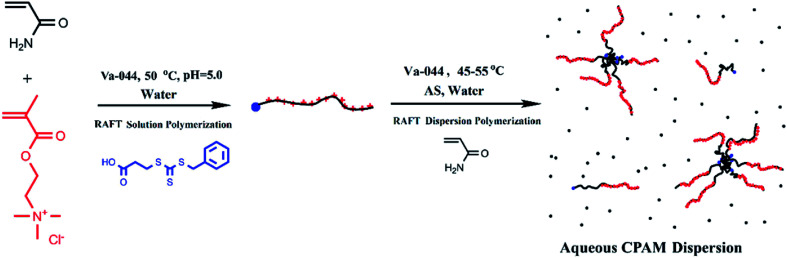
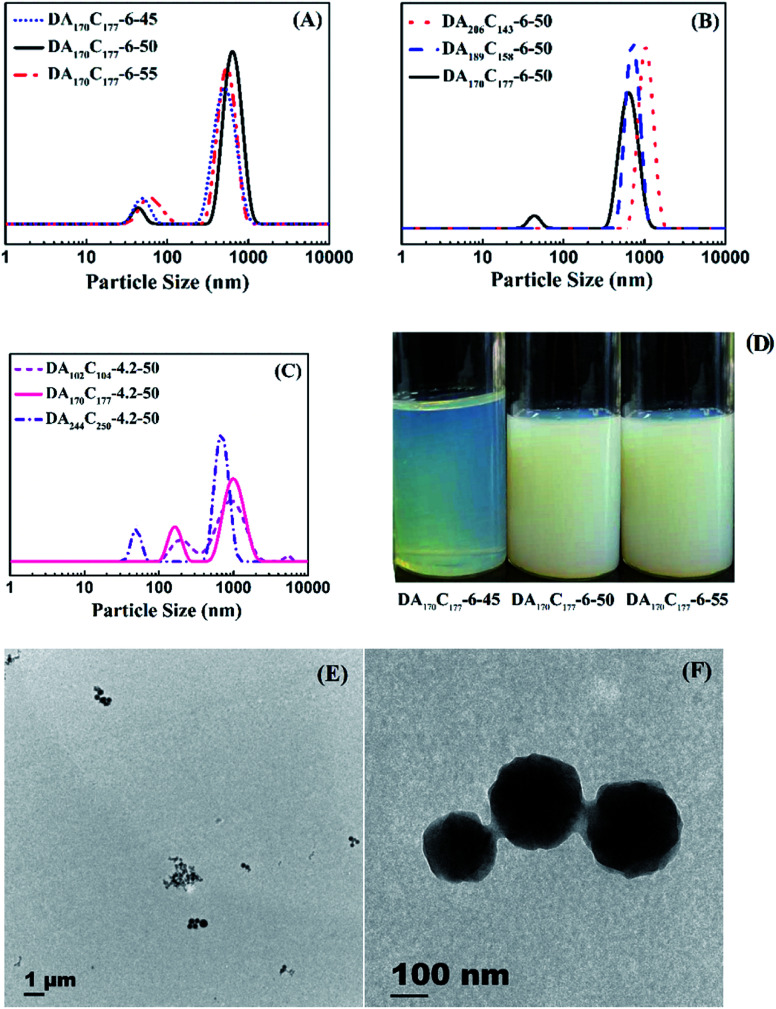
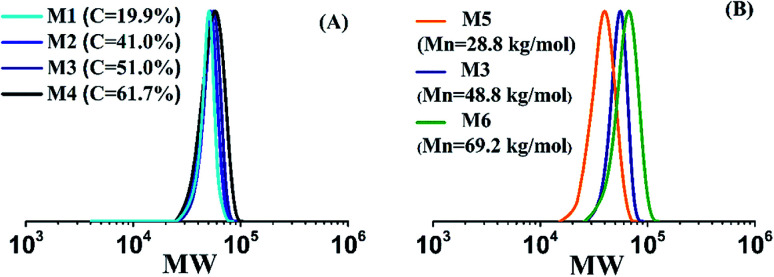
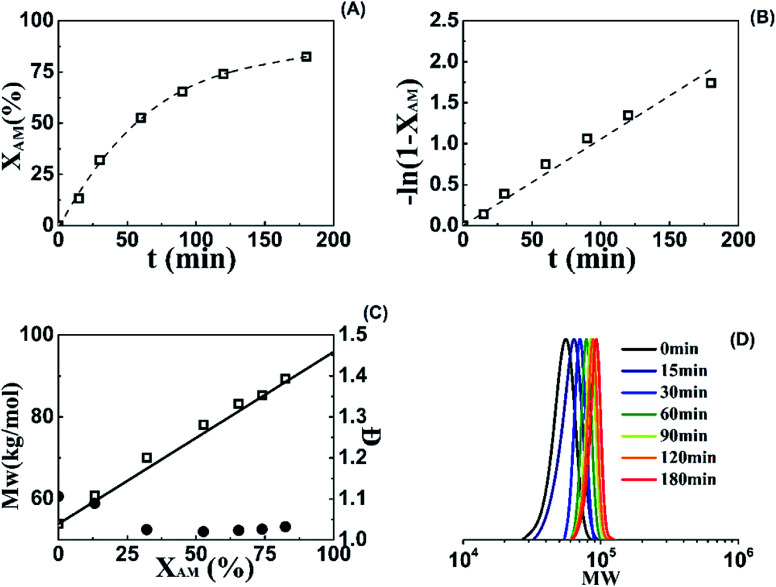
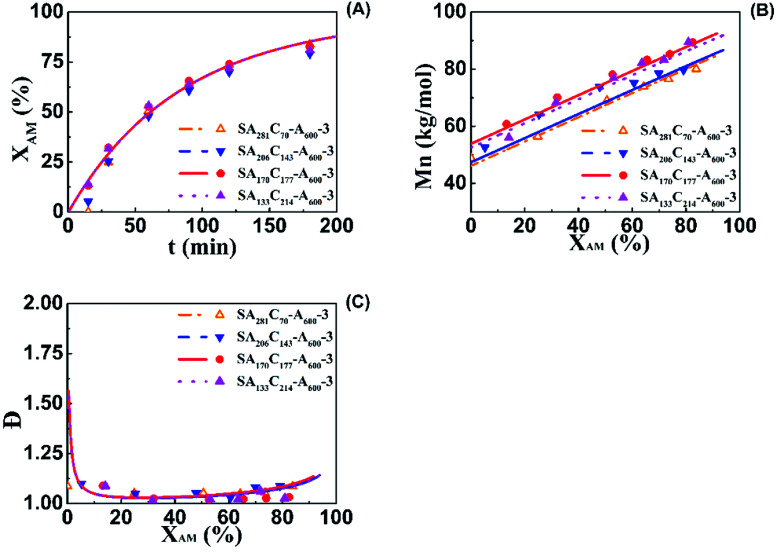
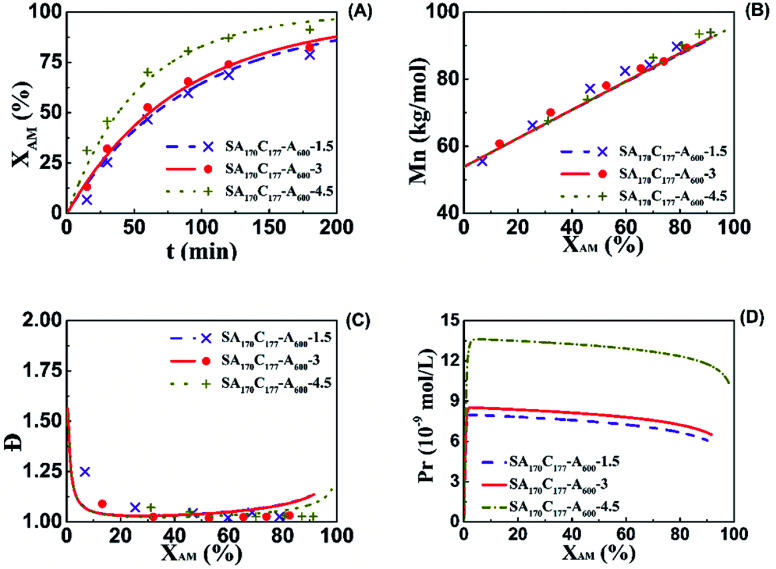
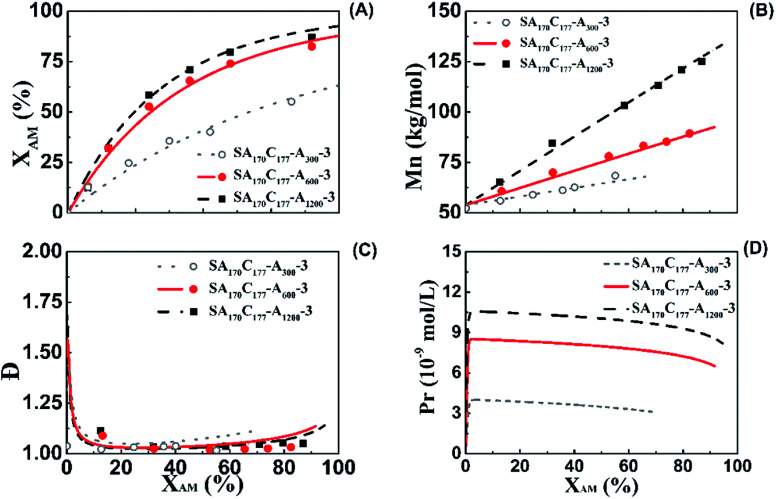
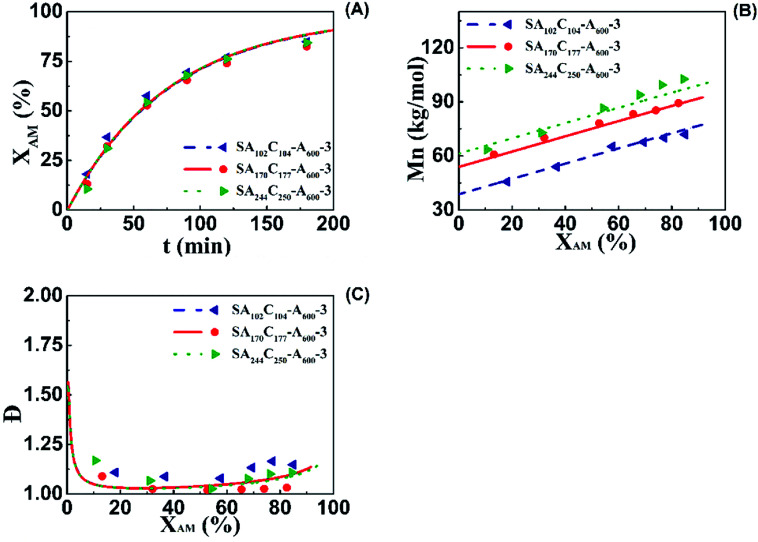
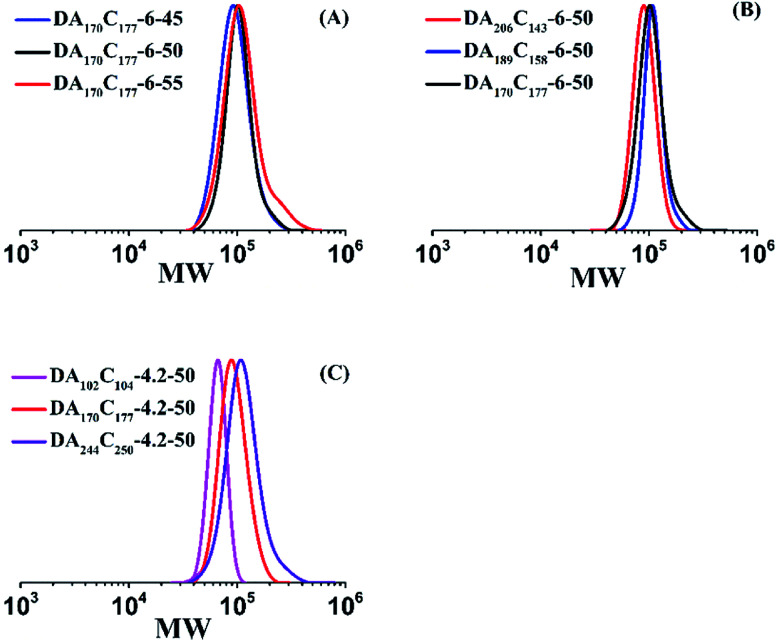
Synthesis of cationic polyacrylamides (CPAMs) by introducing cationic polymer precursors followed by chain extension of acrylamide (AM) homopolymer blocks RAFT polymerization is a promising approach for engineering high-performance CPAMs. However, the aqueous solution polymerization of AM usually leads to high viscosity, thus limiting the solid content in the polymerization system. Herein a novel approach is introduced that uses a random copolymer of AM and methacryloxyethyltrimethyl ammonium chloride (DMC) as a macro RAFT chain transfer agent (mCTA) and stabilizer for aqueous RAFT dispersion polymerization of AM. The AM/DMC random copolymers synthesized by RAFT solution polymerization, having narrow dispersities ( ) at different molecular weights and cationic degrees ( ), could serve as the mCTA, which was confirmed by mCTA chain extension in aqueous solution polymerization of AM under different , solid contents, AM addition contents, extended PAM block lengths, and mCTA chain lengths. The block CPAMs had a value of less than 1.2. A model was developed using the method of moments with consideration of the diffusion control effect, for further understanding the chain extension kinetics. Predicted polymerization kinetics provided an accurate fit of the experimental data. The AM/DMC random copolymers were further used for aqueous RAFT dispersion polymerization of AM under different polymerization temperatures, , and mCTA chain lengths. The resulting products had a milky appearance, and the block copolymers had of less than 1.3. Higher and longer chain lengths on mCTAs were beneficial for stabilizing the polymerization systems and produced smaller particle sizes and less particle aggregation. The products remained stable at room temperature storage for more than a month. The results indicate that aqueous RAFT dispersion polymerization using random copolymers of AM and DMC at moderate cationic degrees as a stabilizer and mCTA is a suitable approach for synthesizing CPAM block precursors at an elevated solid content.
通过引入阳离子聚合物前体,然后对丙烯酰胺(AM)均聚物嵌段进行链增长来合成阳离子聚丙烯酰胺(CPAM),可逆加成-断裂链转移(RAFT)聚合是制备高性能CPAM的一种很有前景的方法。然而,AM的水溶液聚合通常会导致高粘度,从而限制了聚合体系中的固体含量。本文介绍了一种新方法,该方法使用AM与甲基丙烯酰氧乙基三甲基氯化铵(DMC)的无规共聚物作为大分子RAFT链转移剂(mCTA)和稳定剂,用于AM的水相RAFT分散聚合。通过RAFT溶液聚合合成的AM/DMC无规共聚物,在不同分子量和阳离子度下具有较窄的分散度(),可用作mCTA,这在不同的、固体含量、AM添加量、扩展的PAM嵌段长度和mCTA链长条件下,通过AM水溶液聚合中的mCTA链增长得到了证实。嵌段CPAM的分散度值小于1.2。考虑扩散控制效应,采用矩量法建立了一个模型,以进一步理解链增长动力学。预测的聚合动力学与实验数据精确拟合。AM/DMC无规共聚物还被用于在不同聚合温度、和mCTA链长条件下进行AM的水相RAFT分散聚合。所得产物呈乳状外观,嵌段共聚物的分散度小于1.3。mCTA上较高的阳离子度和较长的链长有利于稳定聚合体系,产生较小的粒径和较少的颗粒聚集。产物在室温下储存一个多月仍保持稳定。结果表明,以中等阳离子度的AM和DMC无规共聚物作为稳定剂和mCTA进行水相RAFT分散聚合,是一种在较高固体含量下合成CPAM嵌段前体的合适方法。