Su Tian, Wang Zhen, Zhang Zhengyi, Hou Zhanwu, Han Xiao, Yang Fei, Liu Huadong
Center for Mitochondrial Biology and Medicine, The Key Laboratory of Biomedical Information Engineering of Ministry of Education, School of Life Science and Technology, Xi'an Jiaotong University, Xi'an, Shaanxi, China.
Food Nutr Res. 2022 Apr 21;66. doi: 10.29219/fnr.v66.8224. eCollection 2022.
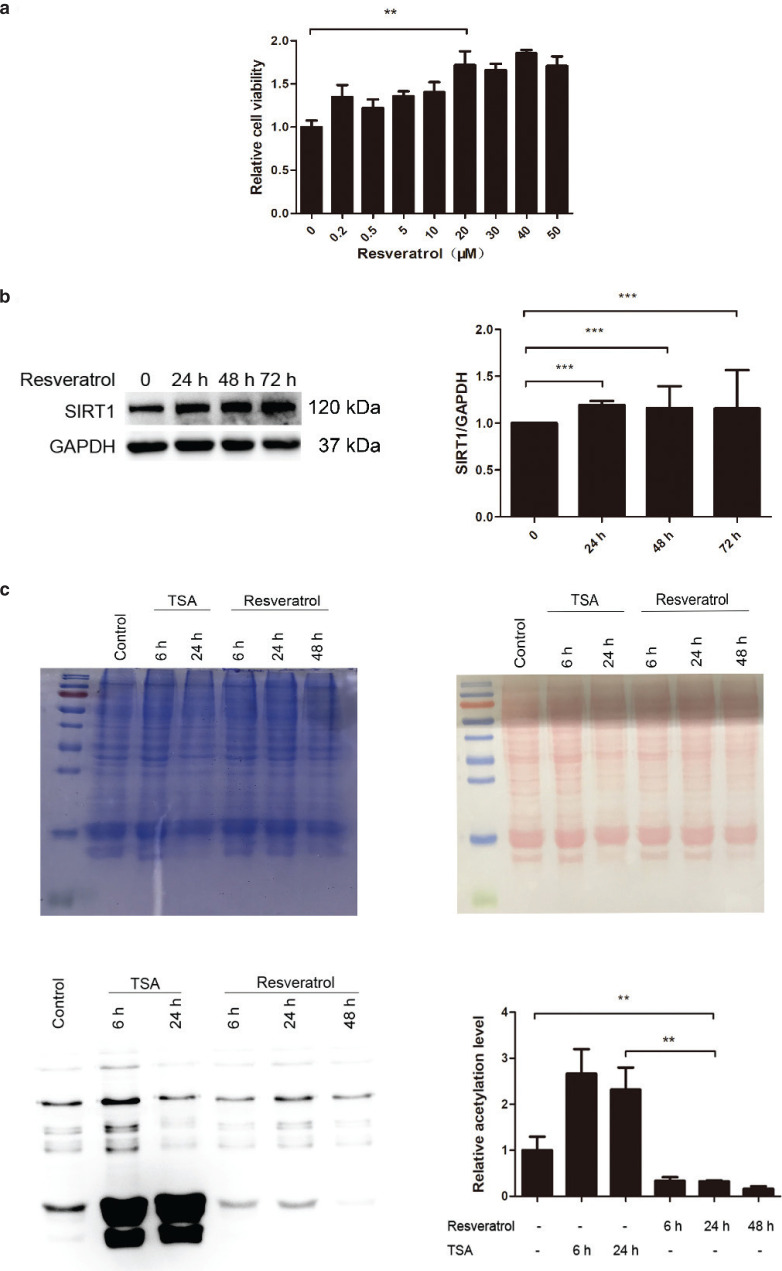
Resveratrol, a well-known natural compound and nutrient, activates the deacetylation ability of SIRT1, demonstrating p53-dependent apoptosis functions in many diseases. However, the nascent proteomic fluctuation caused by resveratrol is still unclear.
In this study, we investigated the effect of resveratrol on the nascent proteome and transcriptome initiated by SIRT1 activation, and we explored the mechanism of resveratrol in HEK 293T cells.
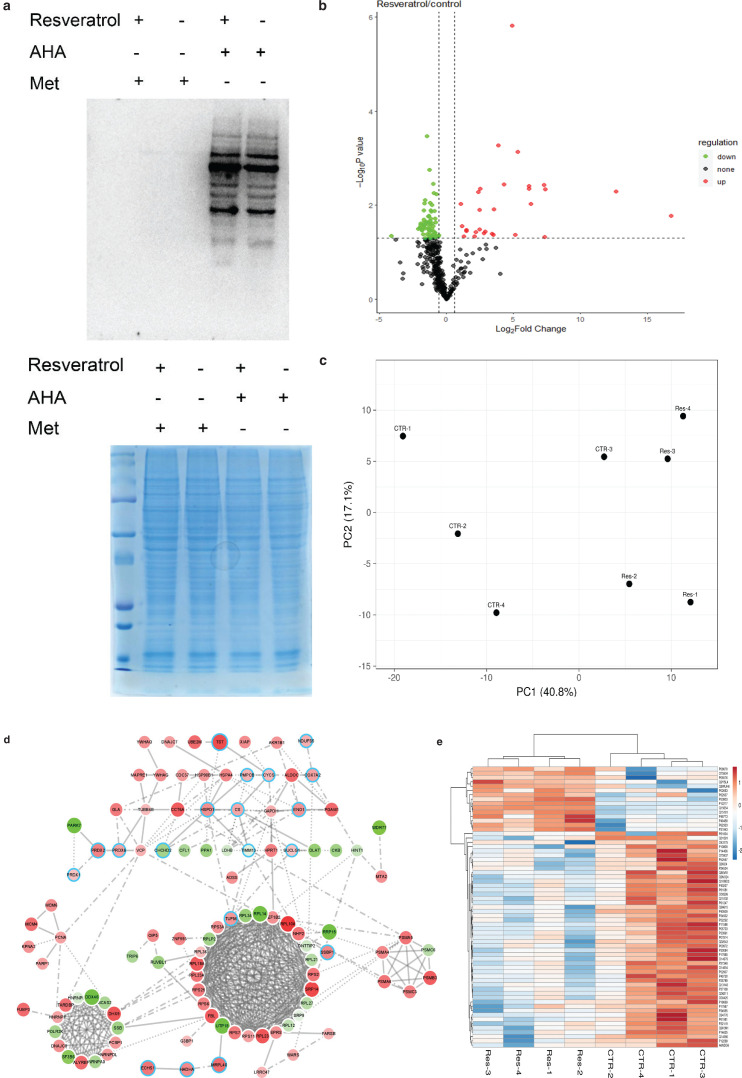
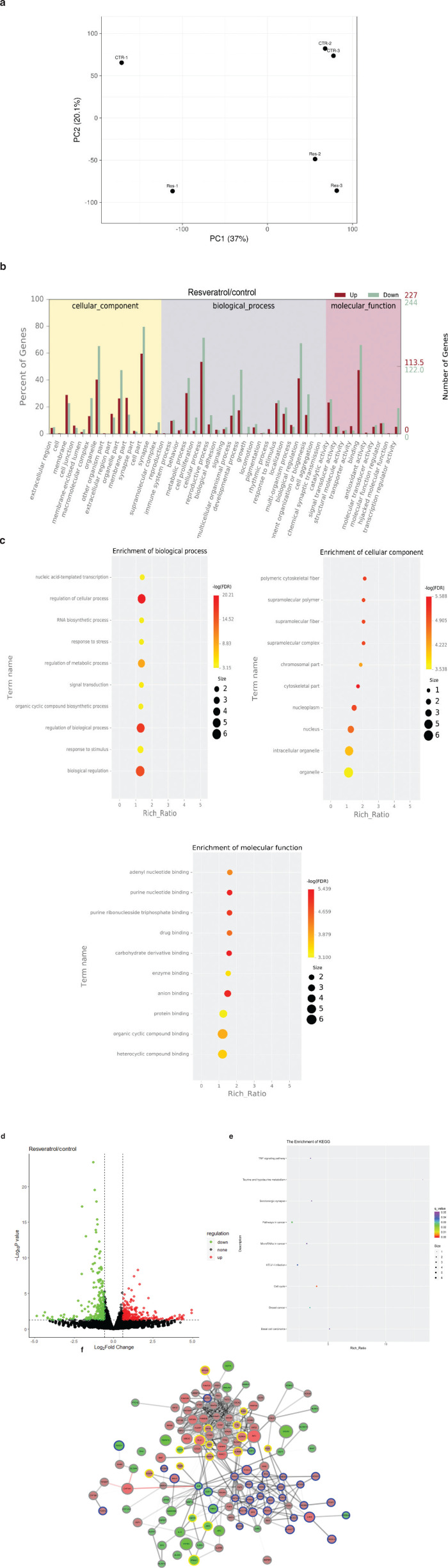
Bioorthogonal noncanonical amino acid tagging (BONCAT) is a method used to metabolically label nascent proteins. In this strategy, L-azidohomoalanine (AHA) was used to replace methionine (Met) under different conditions. Taking advantage of the click reaction between AHA and terminal alkyne- and disulfide-functionalized agarose resin (TAD resin), we were able to efficiently separate stimulation responsive proteins from the pre-existing proteome. Resveratrol responsive proteins were identified by Liquid Chromatograph-Mass Spectrometer/Mass Spectrometer (LC-MS/MS). Furthermore, changes in mRNA levels were analyzed by transcriptome sequencing.
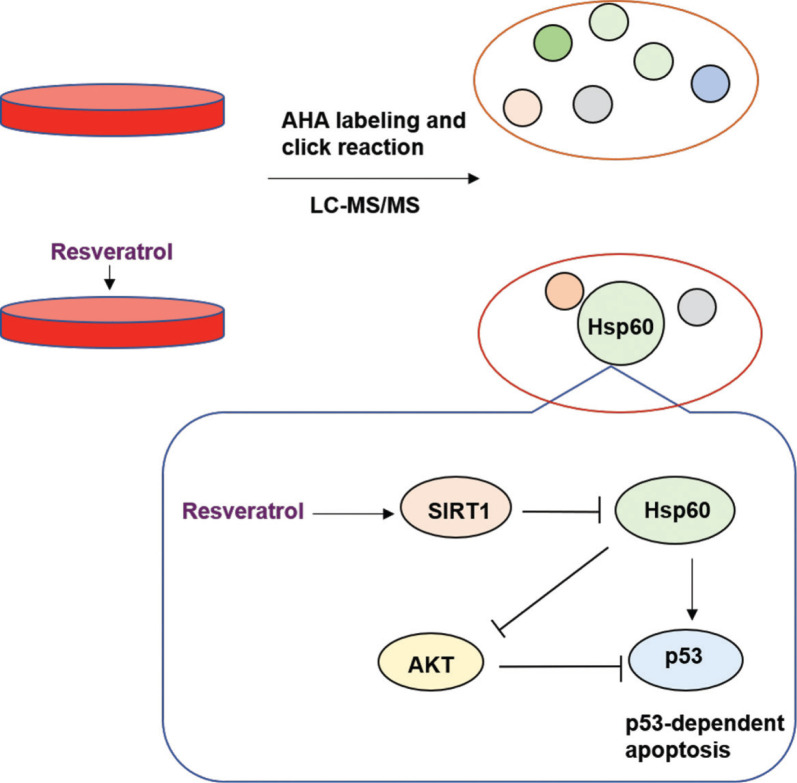
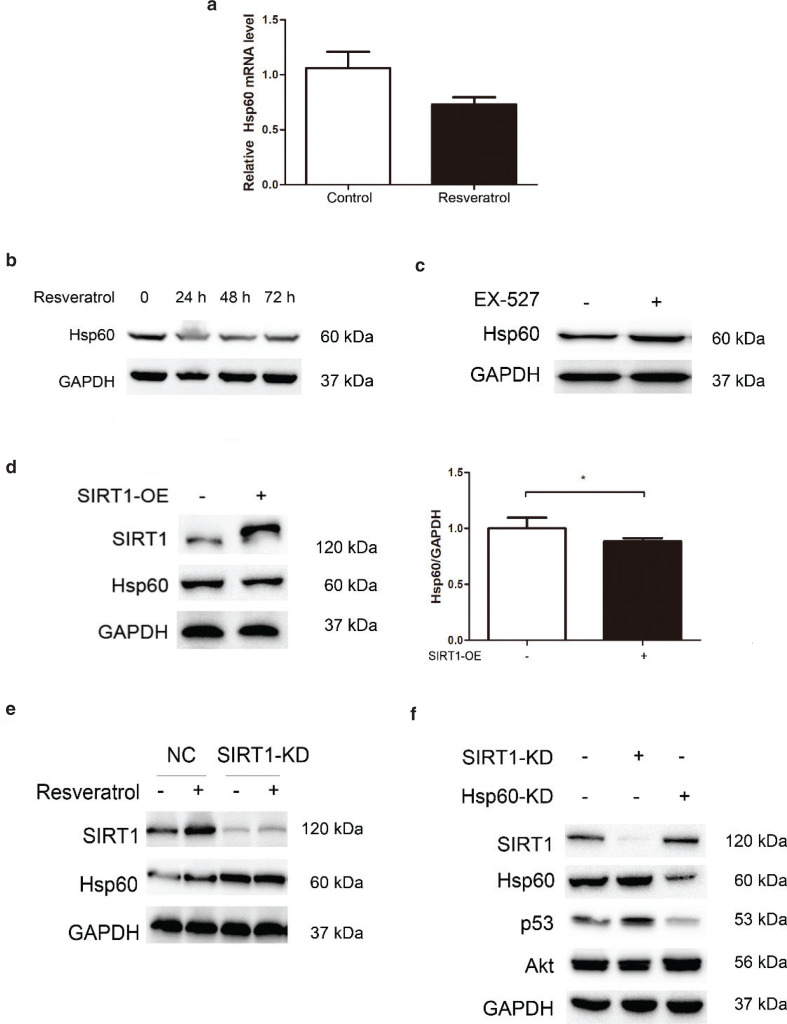
Integrational analysis revealed a resveratrol response in HEK 293T cells and showed that Hsp60 was downregulated at both the nascent protein and mRNA levels. Knockdown of SIRT1 and Hsp60 provides evidence that resveratrol downregulated Hsp60 through SIRT1 and that Hsp60 decreased p53 through the Akt pathway.
This study revealed dynamic changes in the nascent proteome and transcriptome in response to resveratrol in HEK 293T cells and demonstrated that resveratrol downregulates Hsp60 by activating SIRT1, which may be a possible mechanism by which resveratrol prevents p53-dependent apoptosis by regulating Hsp60.
白藜芦醇是一种著名的天然化合物和营养素,可激活SIRT1的去乙酰化能力,在许多疾病中表现出p53依赖性凋亡功能。然而,白藜芦醇引起的新生蛋白质组波动仍不清楚。
在本研究中,我们研究了白藜芦醇对由SIRT1激活引发的新生蛋白质组和转录组的影响,并探讨了白藜芦醇在人胚肾293T细胞中的作用机制。
生物正交非天然氨基酸标记(BONCAT)是一种用于代谢标记新生蛋白质的方法。在该策略中,L-叠氮高丙氨酸(AHA)在不同条件下用于替代甲硫氨酸(Met)。利用AHA与末端炔烃和二硫键功能化琼脂糖树脂(TAD树脂)之间的点击反应,我们能够从预先存在的蛋白质组中有效分离出刺激反应性蛋白质。通过液相色谱-质谱仪/质谱仪(LC-MS/MS)鉴定白藜芦醇反应性蛋白质。此外,通过转录组测序分析mRNA水平的变化。
整合分析揭示了人胚肾293T细胞中的白藜芦醇反应,并表明热休克蛋白60(Hsp60)在新生蛋白质和mRNA水平均下调。敲低SIRT1和Hsp60提供了证据,表明白藜芦醇通过SIRT1下调Hsp60,并且Hsp60通过Akt途径降低p53。
本研究揭示了人胚肾293T细胞中新生蛋白质组和转录组对白藜芦醇的动态变化,并表明白藜芦醇通过激活SIRT1下调Hsp60,这可能是白藜芦醇通过调节Hsp60预防p53依赖性凋亡的一种可能机制。