Zhen Zili, Shen Zhemin, Sun Peilong
Department of General Surgery, Jinshan Hospital, Fudan University, Shanghai, China.
Department of Surgery, Shanghai Medical College, Fudan University, Shanghai, China.
Front Genet. 2022 Apr 19;13:853648. doi: 10.3389/fgene.2022.853648. eCollection 2022.
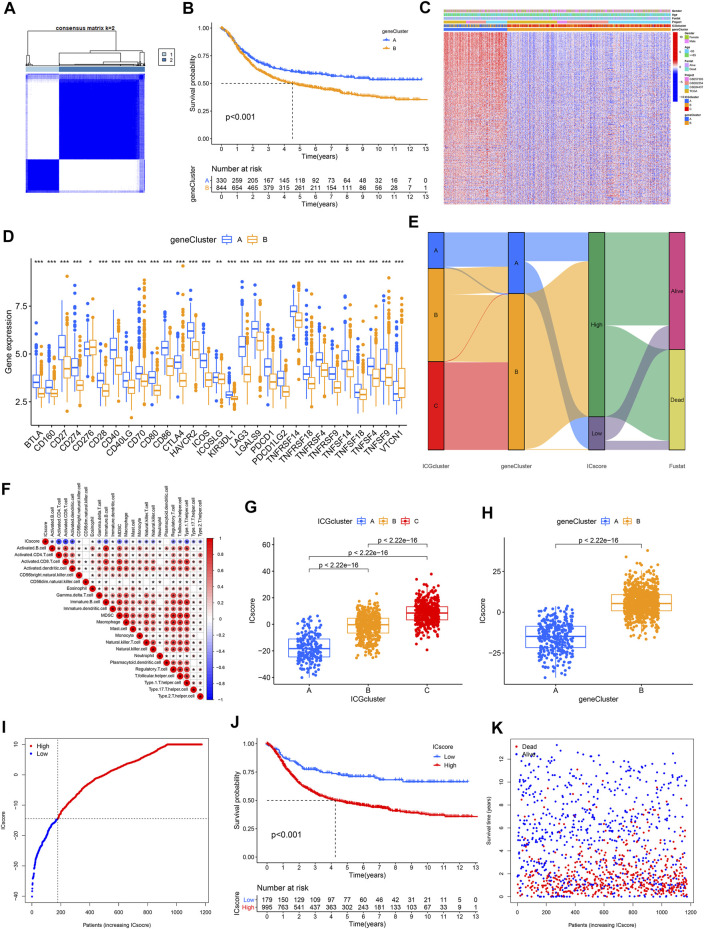
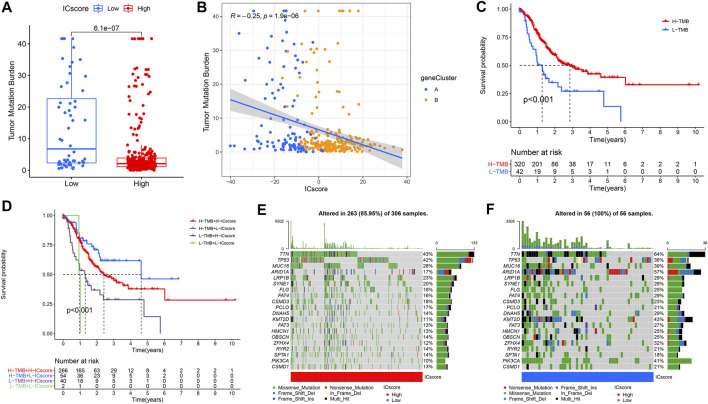
Many studies suggest that immune checkpoint molecules play a vital role in tumor progression and immune responses. However, the impact of the comprehensive regulation pattern of immune checkpoint molecules on immune responses, tumor microenvironment (TME) formation, and patient prognosis is poorly understood. In this study, we evaluated immune checkpoint regulation patterns in 1,174 gastric cancer (GC) samples based on 31 immune checkpoint genes (ICGs). Three distinct immune checkpoint regulation patterns with significant prognostic differences were ultimately identified. Moreover, GC patients were divided into two subgroups according to immune checkpoint score (ICscore). Patients with lower ICscore were characterized by a favorable prognosis and enhanced immune infiltration as well as an increased tumor mutation burden, non-recurrence, and microsatellite instability-high. Collectively, this study indicated that immune checkpoint regulation patterns were essential to forming the diversity of TME and a better understanding of that will contribute to assessing the characteristics of TME in GC, which intends to improve the development of immunotherapy.
许多研究表明,免疫检查点分子在肿瘤进展和免疫反应中起着至关重要的作用。然而,免疫检查点分子的综合调控模式对免疫反应、肿瘤微环境(TME)形成和患者预后的影响尚不清楚。在本研究中,我们基于31个免疫检查点基因(ICGs)评估了1174例胃癌(GC)样本中的免疫检查点调控模式。最终确定了三种具有显著预后差异的不同免疫检查点调控模式。此外,根据免疫检查点评分(ICscore)将GC患者分为两个亚组。ICscore较低的患者预后良好,免疫浸润增强,肿瘤突变负担增加,无复发,微卫星不稳定性高。总的来说,本研究表明免疫检查点调控模式对于形成TME的多样性至关重要,更好地理解这一点将有助于评估GC中TME的特征,从而推动免疫治疗的发展。