Zhang Qian, Li Quanan, Chen Xiaoya
School of Materials Science and Engineering, Henan University of Science and Technology Luoyang 471023 China
Provincial and Ministerial Co-Construction of Collaborative Innovation Center for Non-Ferrous Metal New Materials and Advanced Processing Technology Luoyang 471023 China.
RSC Adv. 2020 Dec 8;10(71):43371-43382. doi: 10.1039/d0ra08933h. eCollection 2020 Nov 27.
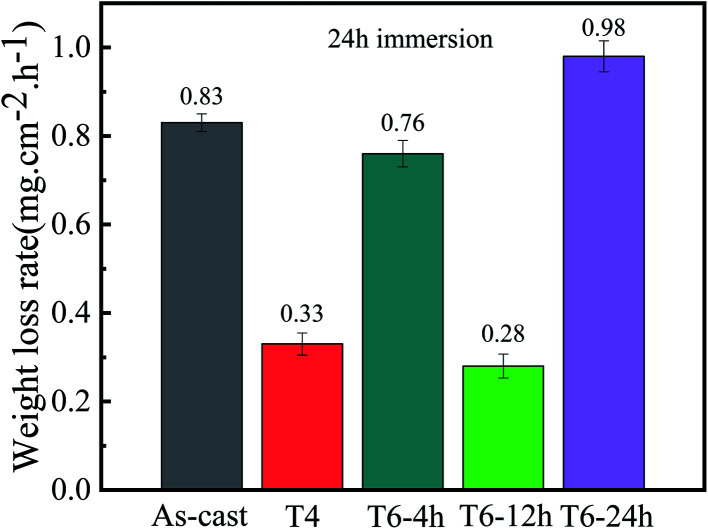
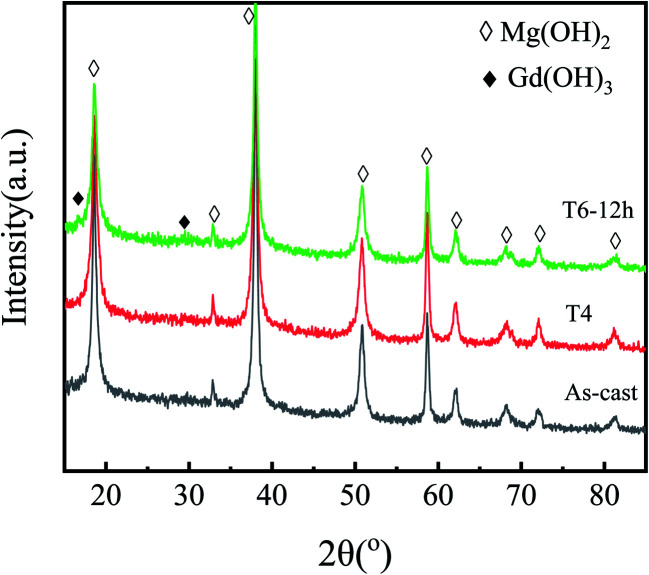
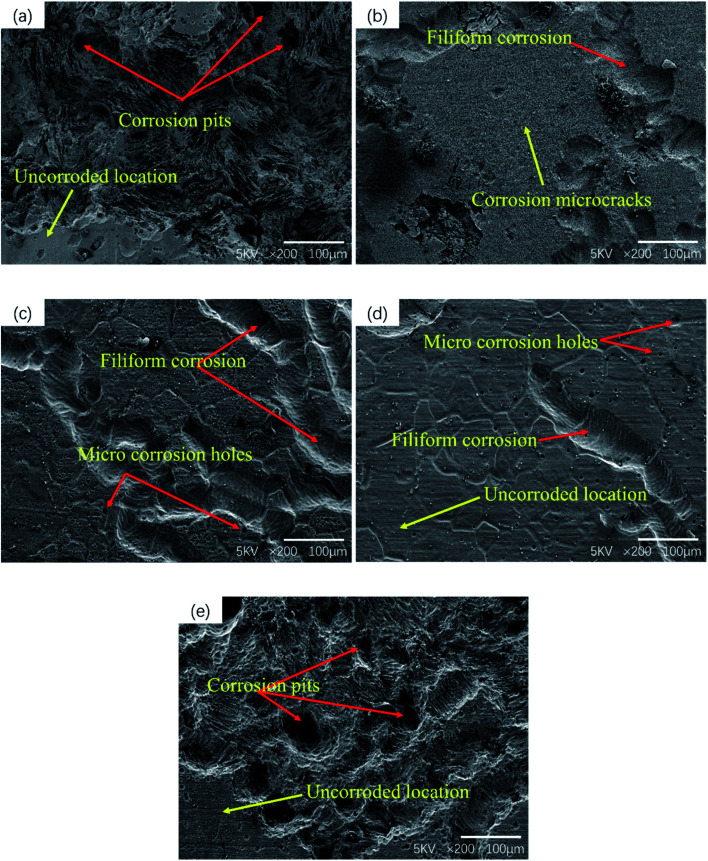
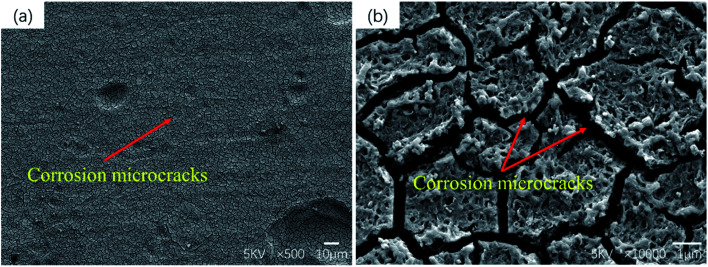
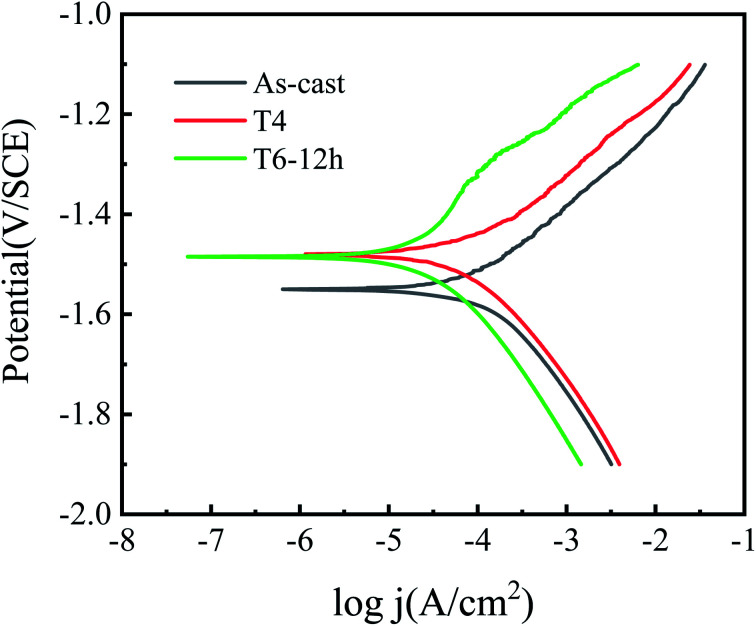
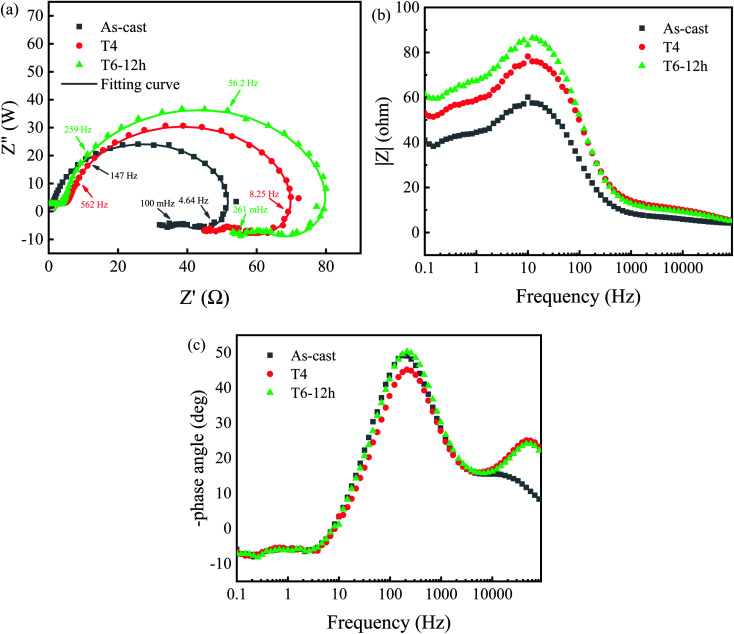
The effects of different heat treatment processes on the microstructure and corrosion behavior of Mg-5Gd-3Y-0.5Zr (GW53K) magnesium alloy were studied by means of microanalysis, weight loss test and electrochemical test. The results show that appropriate heat treatment can improve the corrosion resistance of the alloy. Among the tested alloys, the T6-12 h alloy has the best corrosion resistance, which is mainly attributed to the morphology and distribution of the Mg-RE phase. The corrosion rate of the T4 alloy is similar to that of the T6-12 h alloy. The corrosion resistance of the T4 alloy may be reduced under long-term corrosion due to the existence of surface corrosion microcracks.
通过微观分析、失重试验和电化学试验,研究了不同热处理工艺对Mg-5Gd-3Y-0.5Zr(GW53K)镁合金微观结构和腐蚀行为的影响。结果表明,适当的热处理可以提高合金的耐腐蚀性。在所测试的合金中,T6-12小时合金具有最佳的耐腐蚀性,这主要归因于Mg-RE相的形态和分布。T4合金的腐蚀速率与T6-12小时合金相似。由于表面腐蚀微裂纹的存在,T4合金在长期腐蚀下的耐腐蚀性可能会降低。