Kholil Md Ibrahim, Hossen Bhuiyan Md Tofajjol
Department of Physics, Pabna University of Science and Technology Pabna-6600 Bangladesh
RSC Adv. 2020 Dec 9;10(71):43660-43669. doi: 10.1039/d0ra09270c. eCollection 2020 Nov 27.
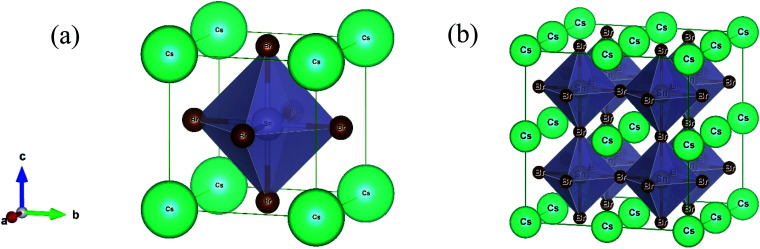
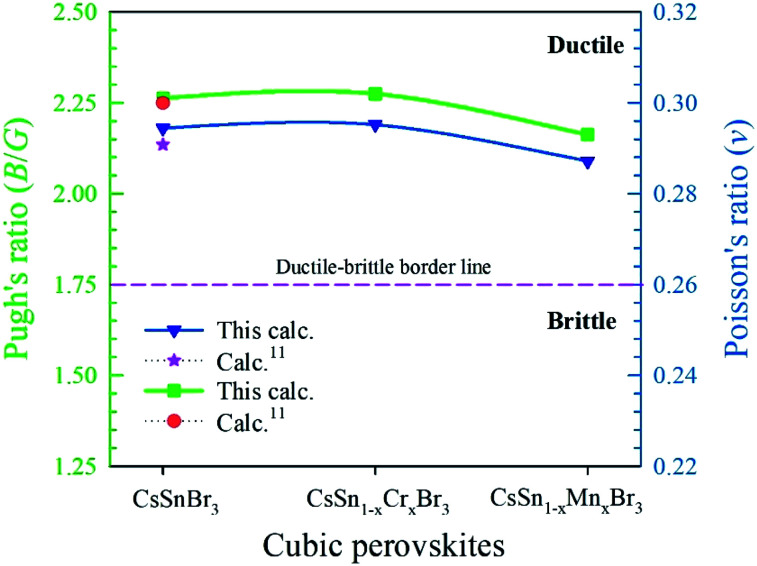
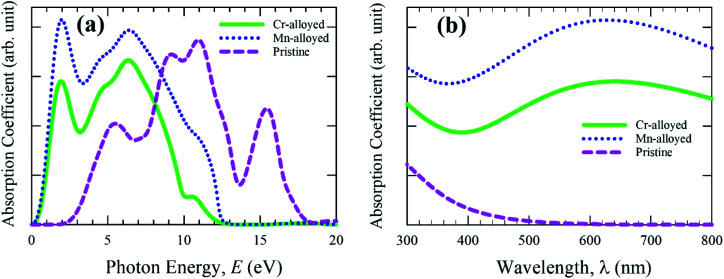
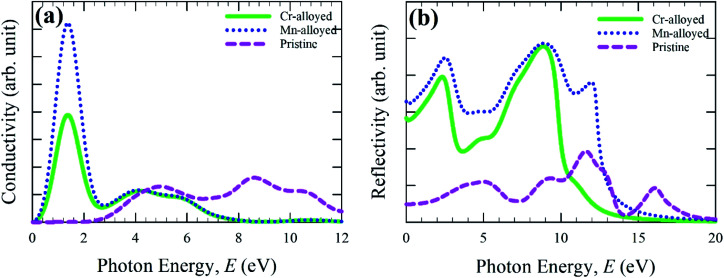
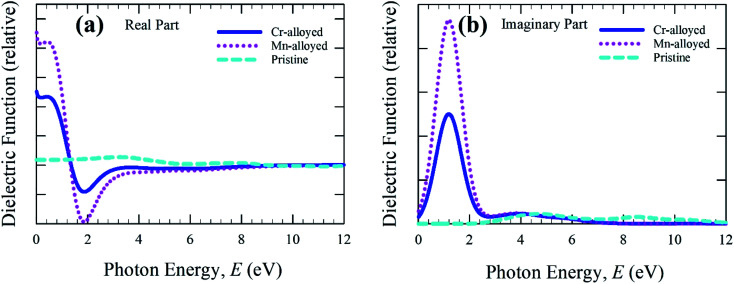
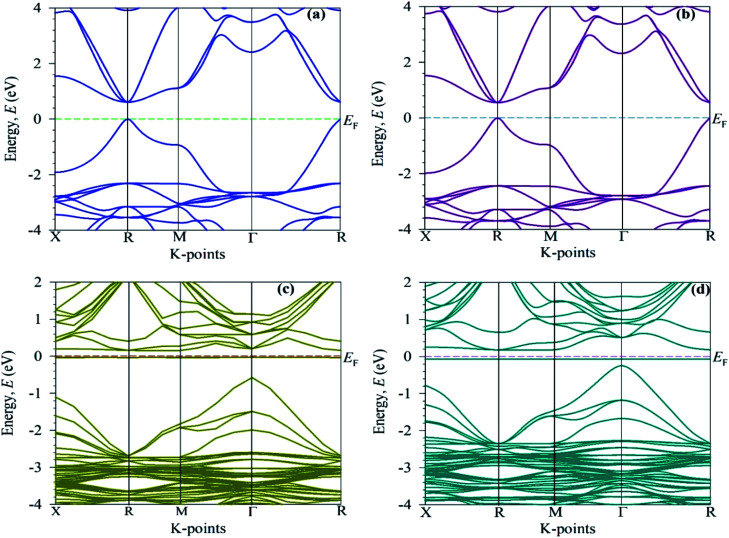
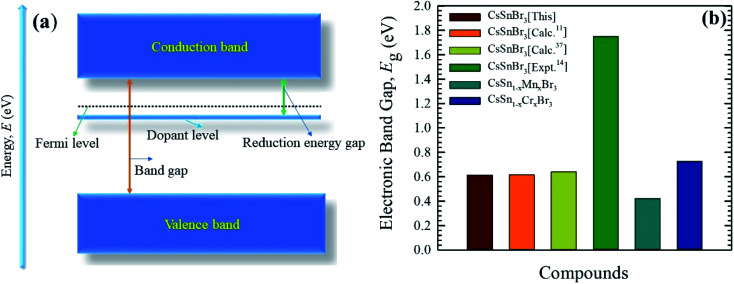
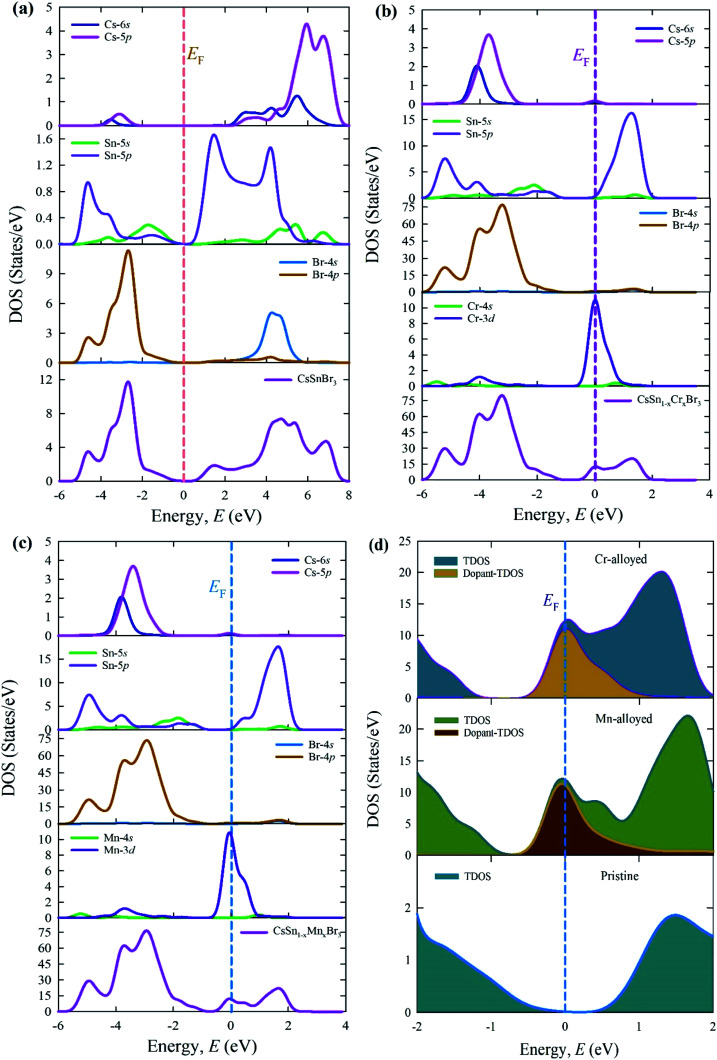
Nowadays, lead-free metal halide perovskite materials have become more popular in the field of commercialization owing to their potential use in solar cells and for other optoelectronic applications. In this study, we used density functional theory to determine the different optoelectronic properties, such as structural, optical, electronic, and elastic properties, of pure CsSnBr and metal (Cr/Mn) alloyed CsSnBr. The present study suggests high absorption with a narrow band gap, a high dielectric effect, high conductivity, and reasonable reflectivity in the visible region under metal alloying. The calculated absorption coefficients indicate that the absorption edge mainly shifted (red-shift) towards the lower energy region in the event of alloying, and a clear peak was observed in the visible region. The creation of an intermediate state (dopant level) in the band structure of the alloying samples allows excited photoelectrons to transfer from the valence band to the conduction band. The alloying materials exhibit a highly ductile nature and are mechanically stable as pristine samples. The alloying effects seen in the present investigation suggest that Mn-alloyed CsSnBr is remarkable, showing appropriate characteristics for use in solar cell devices and for other optoelectronic applications in comparison with other lead-free (toxin-free) perovskite materials.
如今,无铅金属卤化物钙钛矿材料因其在太阳能电池及其他光电子应用中的潜在用途,在商业化领域变得愈发流行。在本研究中,我们使用密度泛函理论来确定纯CsSnBr以及金属(Cr/Mn)合金化的CsSnBr的不同光电子性质,如结构、光学、电子和弹性性质。本研究表明,金属合金化后,在可见光区域具有高吸收、窄带隙、高介电效应、高电导率和合理的反射率。计算得到的吸收系数表明,合金化时吸收边主要向低能区移动(红移),且在可见光区域观察到一个明显的峰值。合金化样品能带结构中中间态(掺杂能级)的产生使得激发的光电子能够从价带转移到导带。合金化材料表现出高度的延展性,并且与原始样品一样机械稳定。本研究中观察到的合金化效应表明,与其他无铅(无毒)钙钛矿材料相比,Mn合金化的CsSnBr表现出色,具有适用于太阳能电池器件及其他光电子应用的特性。