Song Hyon-Min, Zink Jeffrey I
Department of Chemistry, Dong-A University Busan 604-714 South Korea
Department of Chemistry and Biochemistry, University of California Los Angeles California 90095-1569 USA.
RSC Adv. 2019 Feb 5;9(8):4380-4389. doi: 10.1039/c8ra10517k. eCollection 2019 Jan 30.
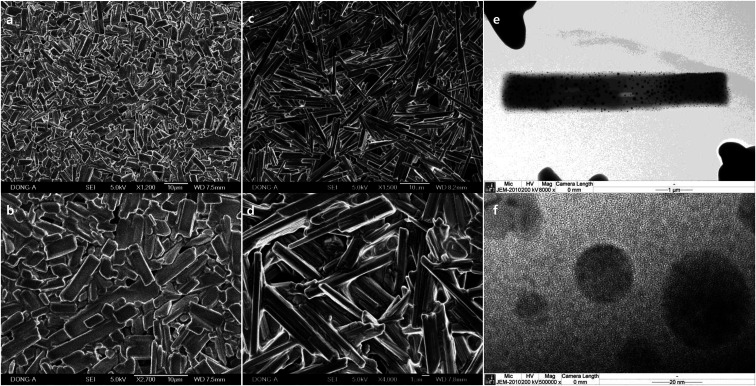
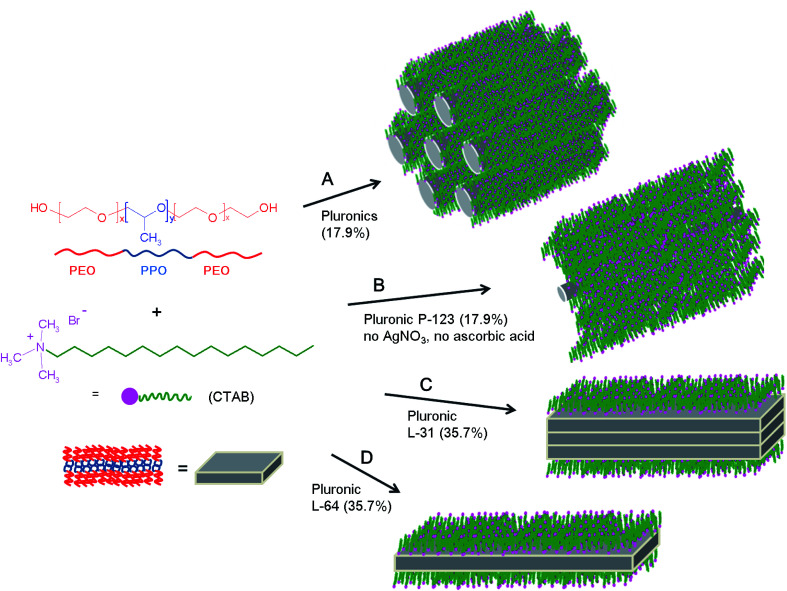
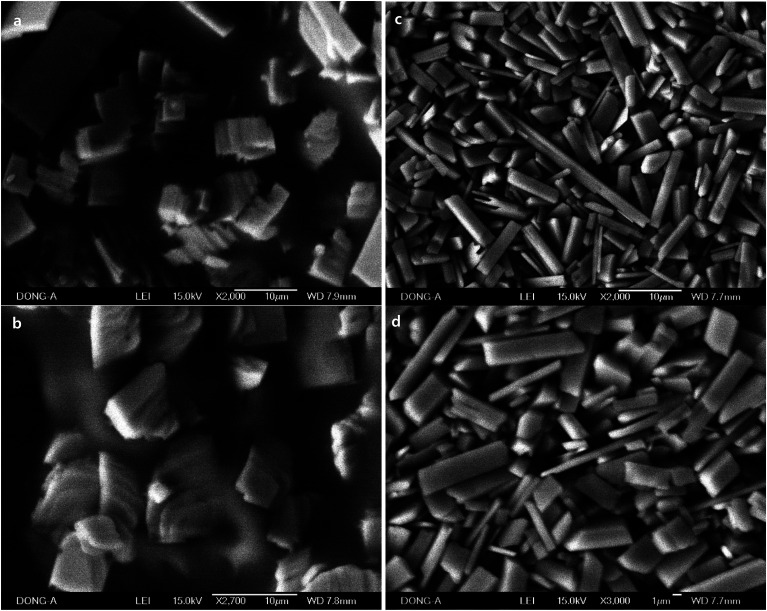
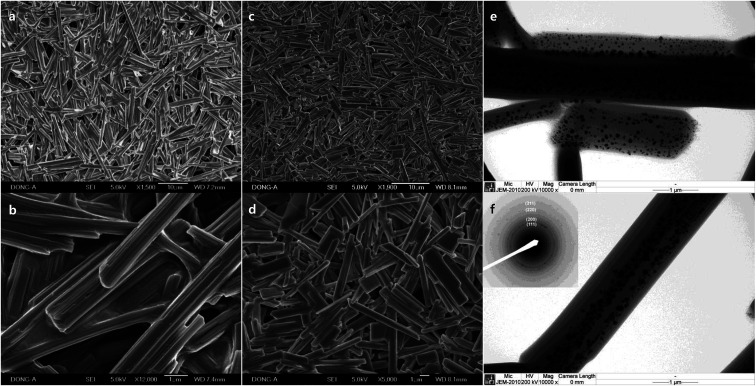
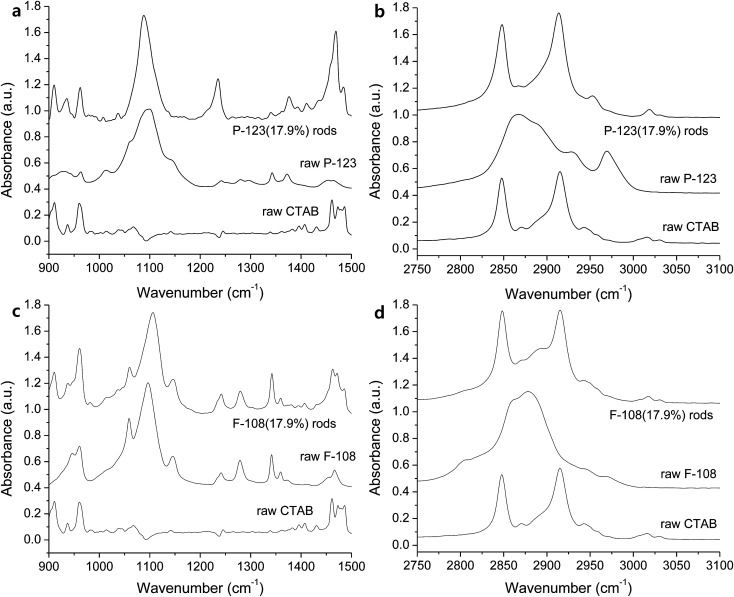
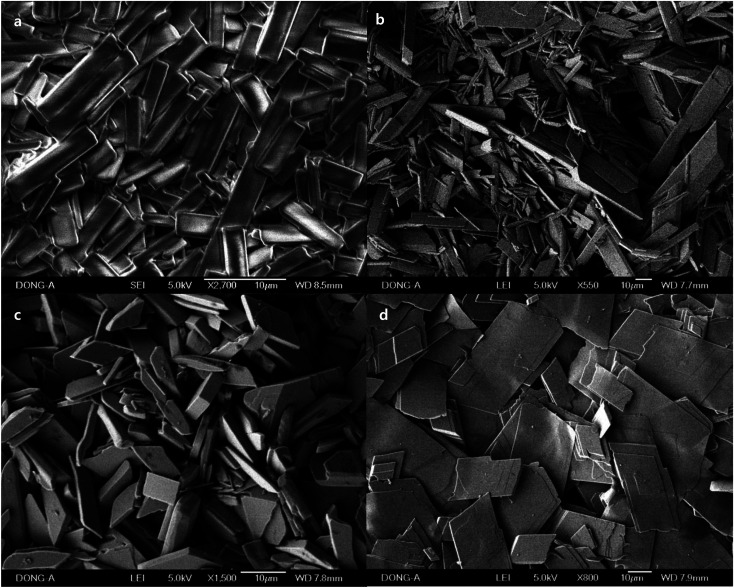
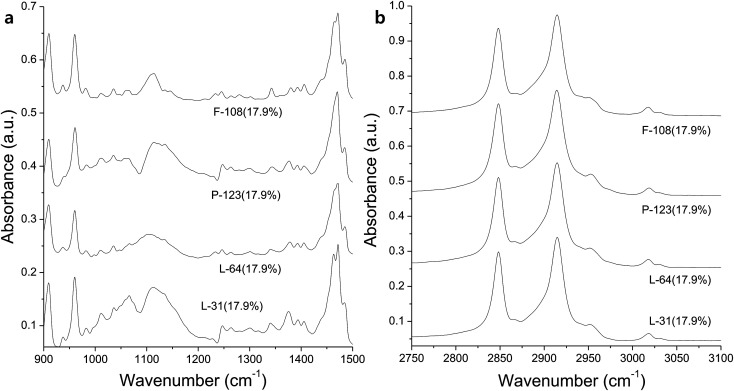
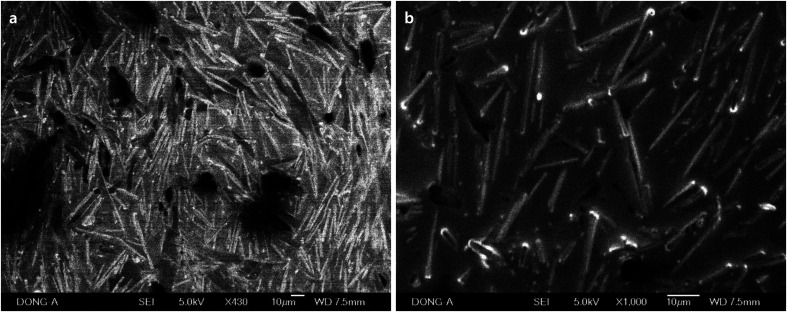
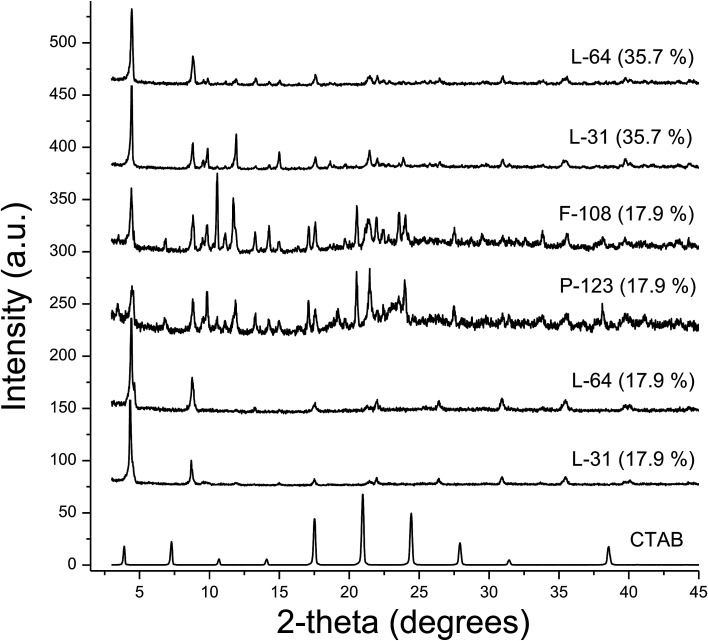
One-dimensional (1D) metallogels are commonly observed in metal-coordinated complexes, but there are not many examples of soft crystalline solids which are generated by the self-assembly of metal-polymer complexation in a non-gel state. In a continued effort to obtain 1D materials by utilizing the tendency of Pluronic triblock copolymers to be micellized anisotropically at an elevated temperature, we investigate Ag(i)-mediated self-assembly of the surfactant mixture of Pluronic copolymers and cetyltrimethylammonium bromide (CTAB). At sufficiently high temperature, Pluronic copolymers are known to organize into many crystalline mesophases, such as body-centered-cubic, hexagonal, and lamellar phases. Four Pluronics of L-31, L-64, P-123, and F-108 were studied, and at the concentration of 17.9%, macroscale 1D rods with the aspect ratios ranging from 3.07 to 12.8 are obtained. At the concentration of 35.7%, anisotropic two dimensional (2D) planar plates are observed. These planar structures were believed to be generated from 2D lamellar mesophases, which is consistent with the general phase diagram of Pluronic copolymers that shows lamellar phase with the highest concentration. In the absence of ascorbic acid, rods and plates of larger size are produced. Rather than as a reductant, ascorbic acid is thought to play the roles of an agent to increase the hydrophilicity, and as a mediator to determine the dimension of rods and plates by hindering the long range self-assembly of alkyl chains. Dehydration by the addition of AgNO, and the increase of hydrophobicity enable self-assembly of alkyl groups of CTAB and Pluronics and promote the formation of crystalline soft solids.
一维(1D)金属凝胶常见于金属配位络合物中,但通过金属 - 聚合物络合在非凝胶状态下自组装生成的软结晶固体实例并不多。为了利用普朗尼克三嵌段共聚物在高温下倾向于各向异性胶束化的特性来获得一维材料,我们研究了银(I)介导的普朗尼克共聚物与十六烷基三甲基溴化铵(CTAB)表面活性剂混合物的自组装。在足够高的温度下,已知普朗尼克共聚物会组织成许多结晶中间相,如体心立方相、六方相和层状相。研究了L - 31、L - 64、P - 123和F - 108四种普朗尼克共聚物,在浓度为17.9%时,获得了长径比范围为3.07至12.8的宏观一维棒状物。在浓度为35.7%时,观察到各向异性的二维平面板。这些平面结构被认为是由二维层状中间相产生的,这与普朗尼克共聚物的一般相图一致,该相图显示层状相具有最高浓度。在没有抗坏血酸的情况下,会产生尺寸更大的棒状物和板状物。抗坏血酸并非作为还原剂,而是被认为起到增加亲水性的作用,以及作为一种介质,通过阻碍烷基链的长程自组装来确定棒状物和板状物的尺寸。添加硝酸银导致脱水以及疏水性增加,使得CTAB和普朗尼克共聚物的烷基能够自组装,并促进结晶软固体的形成。