Department of Applied Science and Technology, Politecnico di Torino, 10029 Torino, Italy.
Department of Surgical Science, Università degli Studi di Torino, 10029 Torino, Italy.
Int J Mol Sci. 2021 Feb 9;22(4):1718. doi: 10.3390/ijms22041718.
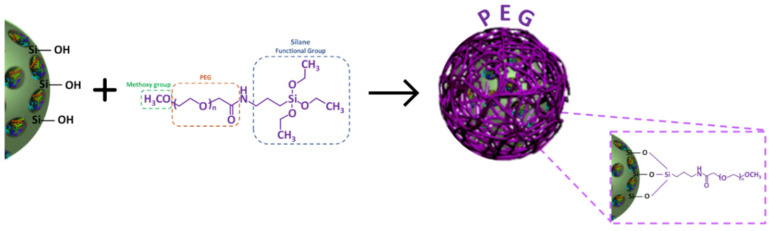
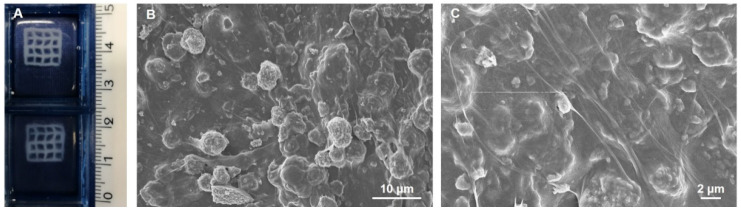
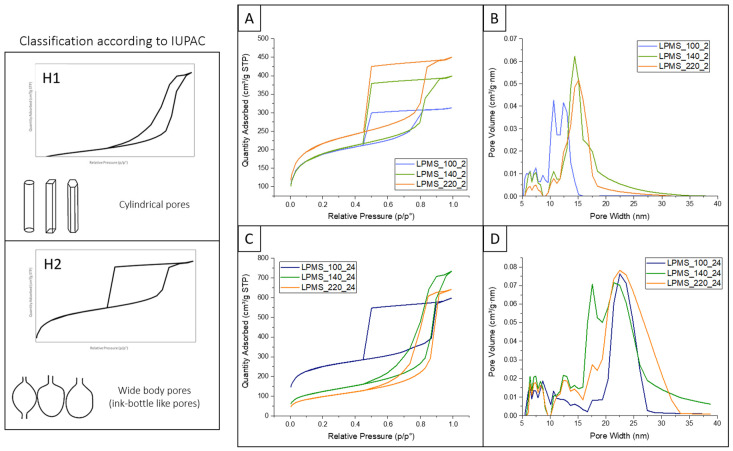
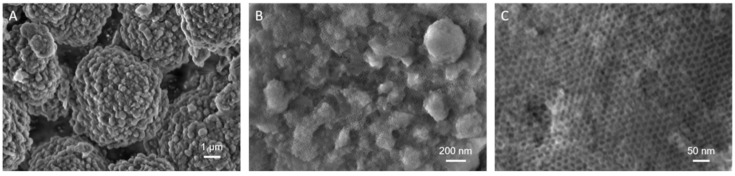
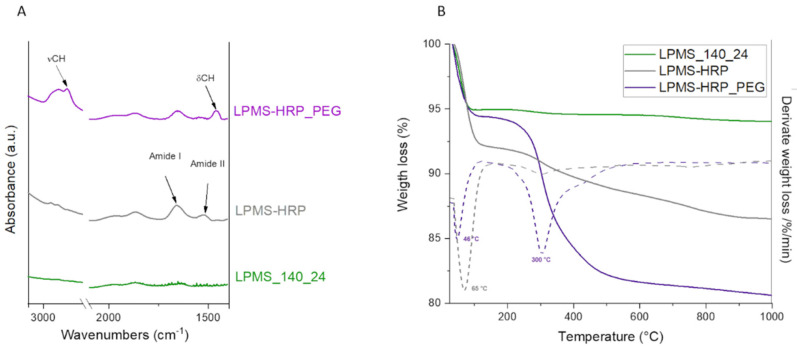
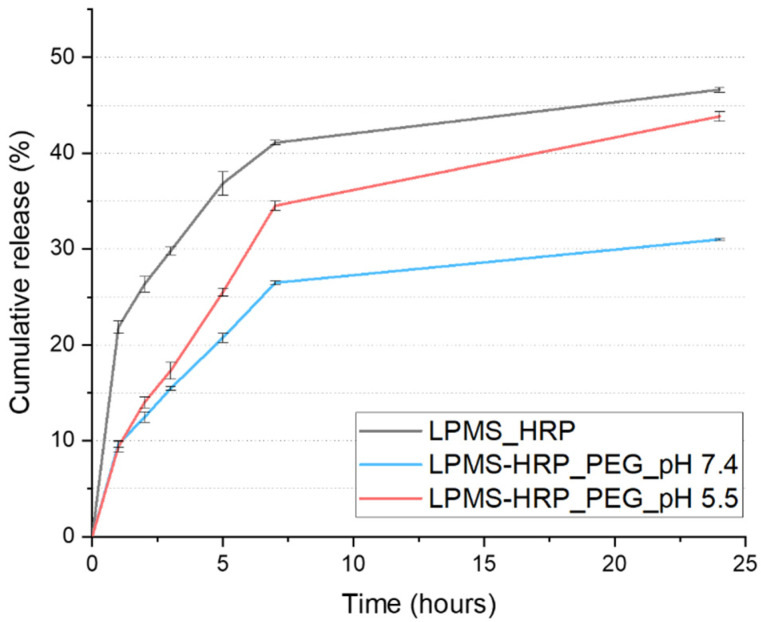
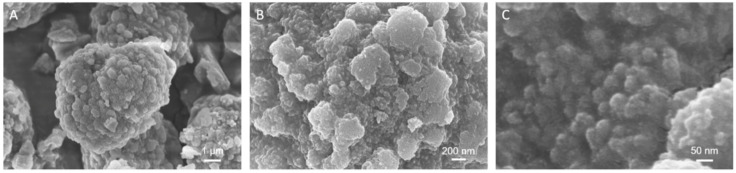
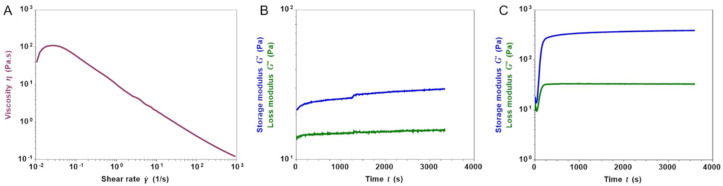
Silica-based mesoporous systems have gained great interest in drug delivery applications due to their excellent biocompatibility and high loading capability. However, these materials face challenges in terms of pore-size limitations since they are characterized by nanopores ranging between 6-8 nm and thus unsuitable to host large molecular weight molecules such as proteins, enzymes and growth factors (GFs). In this work, for an application in the field of bone regeneration, large-pore mesoporous silicas (LPMSs) were developed to vehicle large biomolecules and release them under a pH stimulus. Considering bone remodeling, the proposed pH-triggered mechanism aims to mimic the release of GFs encased in the bone matrix due to bone resorption by osteoclasts (OCs) and the associated pH drop. To this aim, LPMSs were prepared by using 1,3,5-trimethyl benzene (TMB) as a swelling agent and the synthesis solution was hydrothermally treated and the influence of different process temperatures and durations on the resulting mesostructure was investigated. The synthesized particles exhibited a cage-like mesoporous structure with accessible pores of diameter up to 23 nm. LPMSs produced at 140 °C for 24 h showed the best compromise in terms of specific surface area, pores size and shape and hence, were selected for further experiments. Horseradish peroxidase (HRP) was used as model protein to evaluate the ability of the LPMSs to adsorb and release large biomolecules. After HRP-loading, LPMSs were coated with a pH-responsive polymer, poly(ethylene glycol) (PEG), allowing the release of the incorporated biomolecules in response to a pH decrease, in an attempt to mimic GFs release in bone under the acidic pH generated by the resorption activity of OCs. The reported results proved that PEG-coated carriers released HRP more quickly in an acidic environment, due to the protonation of PEG at low pH that catalyzes polymer hydrolysis reaction. Our findings indicate that LPMSs could be used as carriers to deliver large biomolecules and prove the effectiveness of PEG as pH-responsive coating. Finally, as proof of concept, a collagen-based suspension was obtained by incorporating PEG-coated LPMS carriers into a type I collagen matrix with the aim of designing a hybrid formulation for 3D-printing of bone scaffolds.
基于硅的中孔系统由于其出色的生物相容性和高负载能力,在药物输送应用中引起了极大的兴趣。然而,这些材料在孔径限制方面面临挑战,因为它们的特征是纳米孔的直径在 6-8nm 之间,因此不适合容纳大分子重量的分子,如蛋白质、酶和生长因子(GFs)。在这项工作中,针对骨再生领域的应用,开发了大孔介孔硅(LPMSs)来输送大生物分子,并在 pH 刺激下释放它们。考虑到骨重塑,所提出的 pH 触发机制旨在模拟由于破骨细胞(OCs)的骨吸收和相关的 pH 下降而包裹在骨基质中的 GFs 的释放。为此,使用 1,3,5-三甲基苯(TMB)作为溶胀剂制备 LPMSs,并对合成溶液进行水热处理,并研究了不同的工艺温度和时间对所得介孔结构的影响。合成的颗粒具有笼状介孔结构,孔径可达 23nm。在 140°C 下反应 24 小时制得的 LPMSs 在比表面积、孔径和形状方面表现出最佳的折衷,因此被选为进一步实验。辣根过氧化物酶(HRP)被用作模型蛋白,以评估 LPMSs 吸附和释放大生物分子的能力。负载 HRP 后,LPMSs 用 pH 响应性聚合物聚乙二醇(PEG)包被,允许所包含的生物分子在 pH 降低时释放,试图模拟骨中 GFs 在由 OCs 吸收活性产生的酸性 pH 下的释放。报告的结果证明,PEG 包被的载体在酸性环境中能更快地释放 HRP,这是由于在低 pH 下 PEG 的质子化催化了聚合物的水解反应。我们的研究结果表明,LPMSs 可用作载体来输送大生物分子,并证明 PEG 作为 pH 响应性涂层的有效性。最后,作为概念验证,通过将 PEG 包被的 LPMS 载体掺入 I 型胶原基质中,获得了基于胶原的悬浮液,旨在设计用于 3D 打印骨支架的混合配方。