Tian Xu, Xin Binjie, Lu Zan, Gao Weihong, Zhang Fuli
School of Fashion Engineering, Shanghai University of Engineering Science Shanghai 201620 China
The Naval Medical I Research Institute Shanghai 200433 China.
RSC Adv. 2019 Apr 10;9(20):11220-11229. doi: 10.1039/c8ra10229e. eCollection 2019 Apr 9.
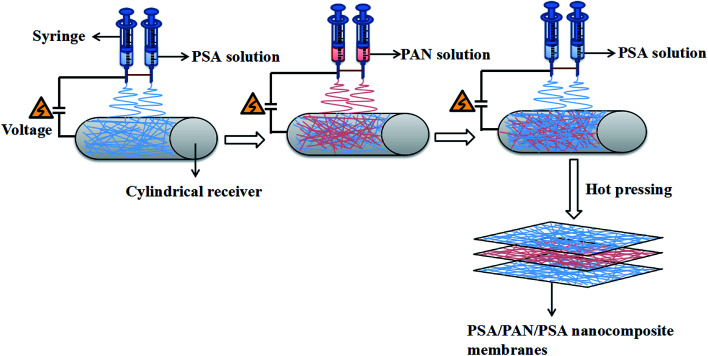
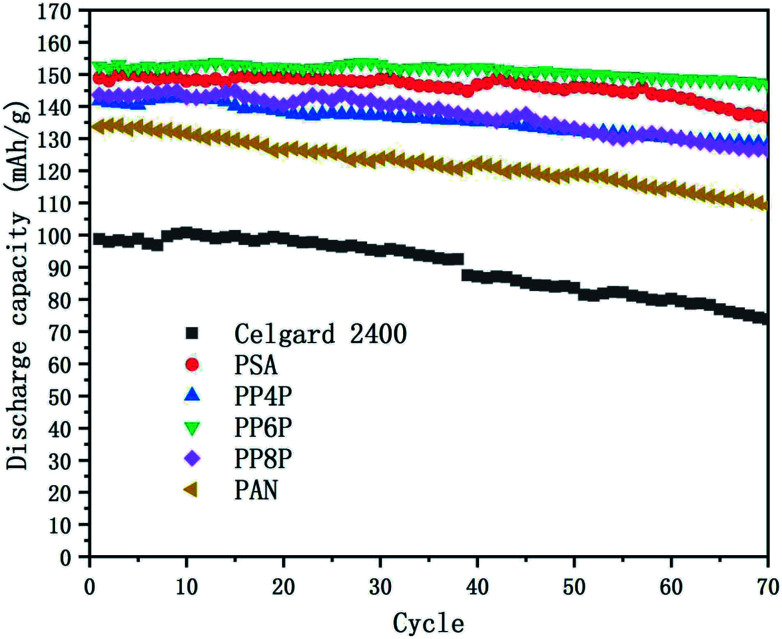
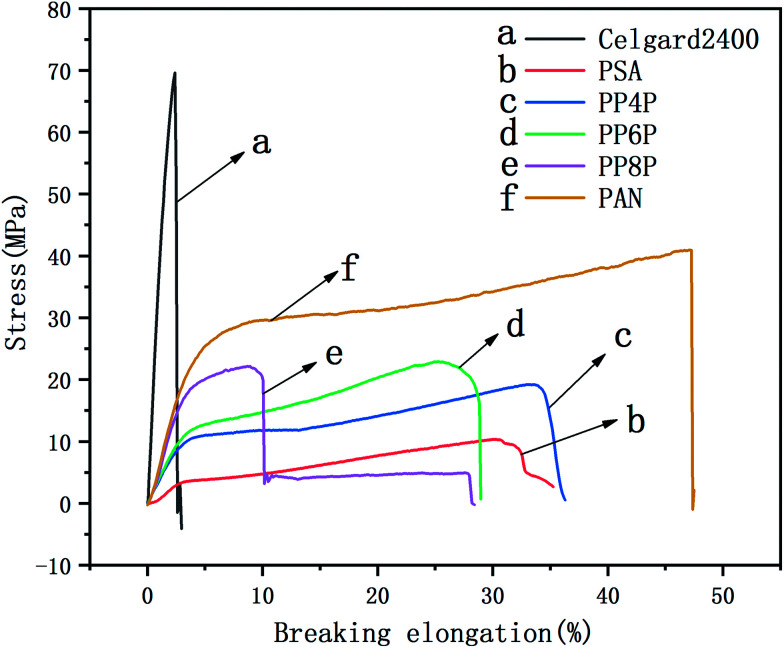
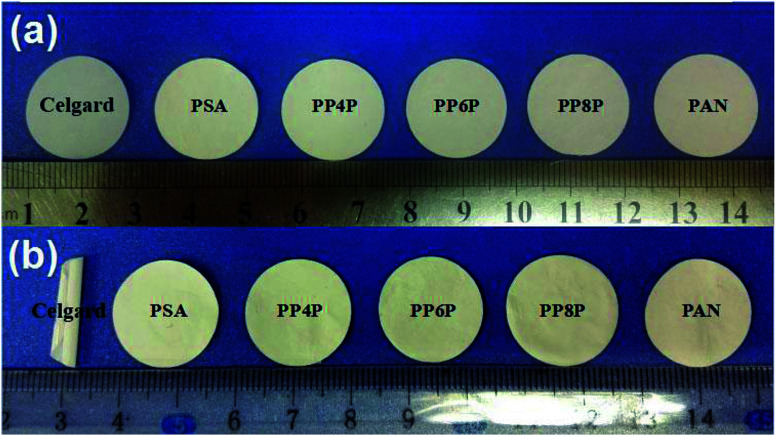
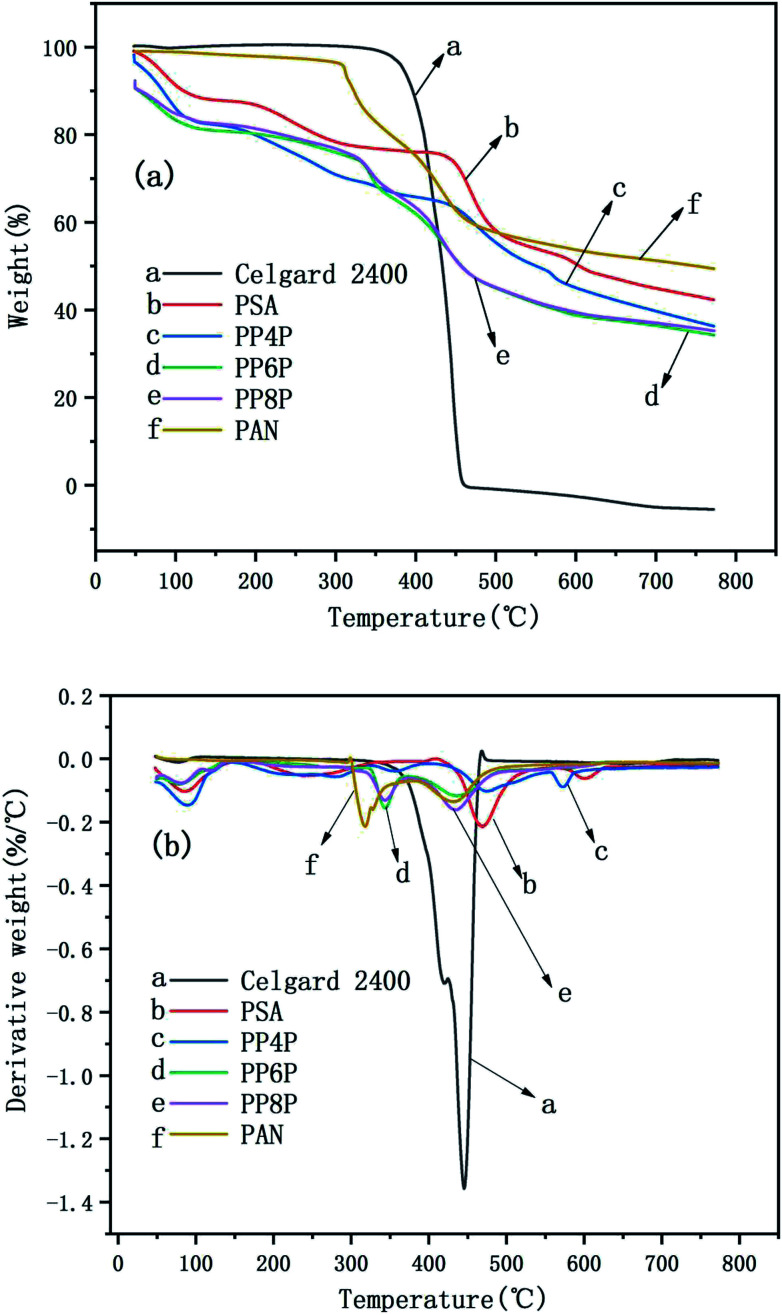
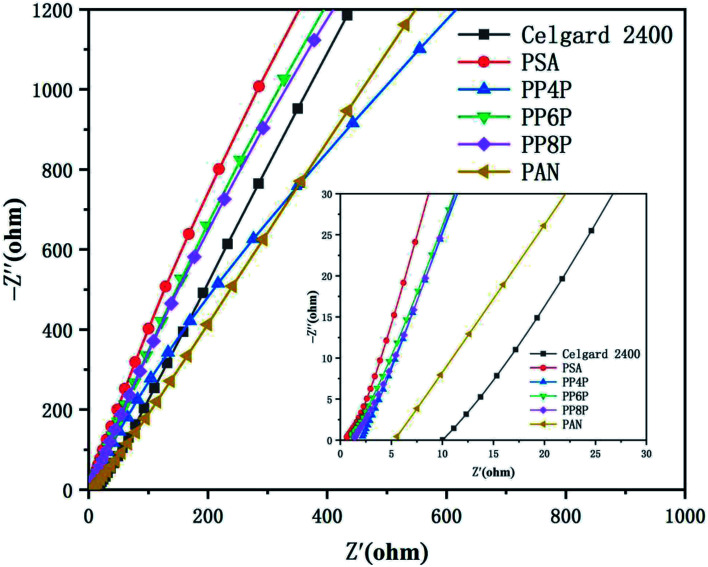
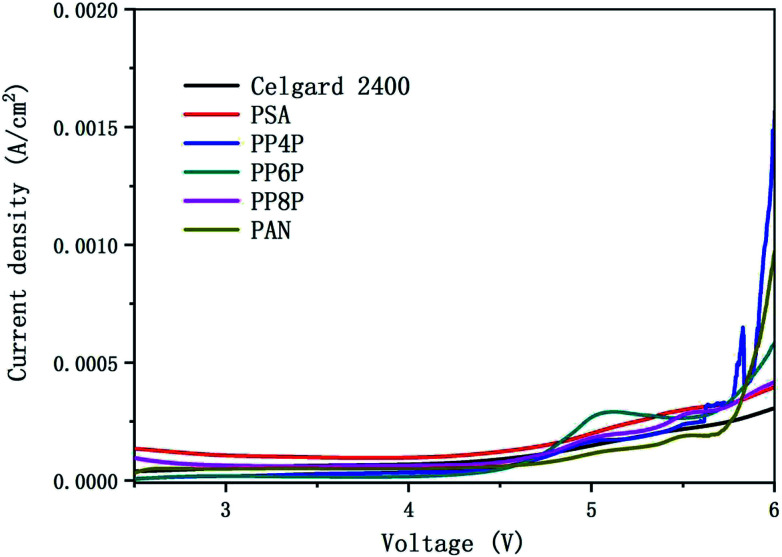
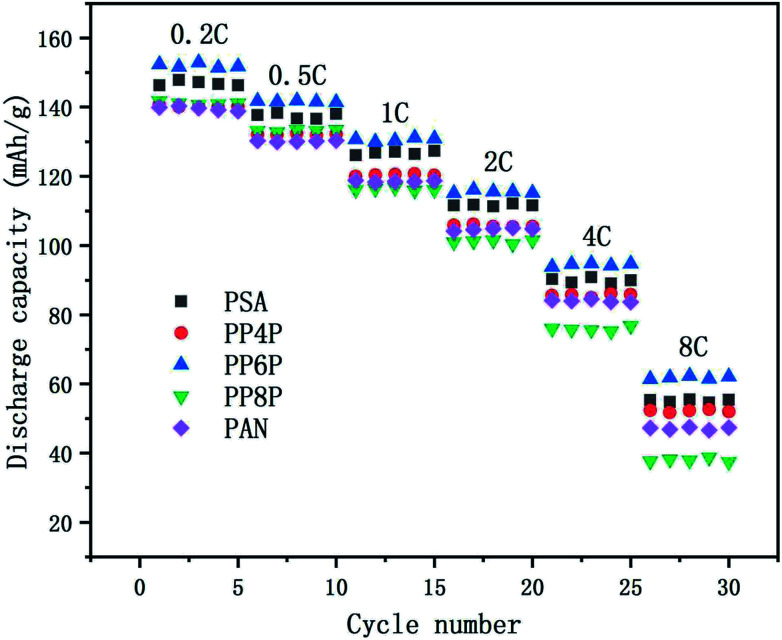
The demands for novel approaches that ensure stability in lithium-ion batteries are increasing and have led to the development of new materials and fabrication strategies. In this study, sandwich structure-like polysulfonamide (PSA)/polyacrylonitrile (PAN)/polysulfonamide (PSA) composite nanofibrous membranes were prepared an electrospinning method and used as a separator in lithium-ion batteries. The spinning time of each polymer nanofiber layer of the composite membranes was respectively and precisely controlled to maximize the merits of each component. It was found that the PSA/PAN/PSA composite nanofibrous membranes exhibited superior thermal stability and excellent porosity, liquid electrolyte uptake and ionic conductivity, showing obvious enhancement as compared to those of the commercial microporous polyolefin separator (Celgard 2400), pure PSA and pure PAN membranes. In addition, they were evaluated in the assembled Li/LiFePO cells with an electrolyte solution, and good cycling performance and C-rate capacity were obtained; especially for the case of the PP6P membrane, the first discharge capacity of the battery reached 152 mA h g, and the discharge capacity retention ratio was 85.94% from 0.2C to 2C; moreover, the battery displayed highest capacity retention ratio after 70 cycles, which was found to be 96.2% of its initial discharge capacity. Therefore, the PSA/PAN/PSA composite nanofibrous membranes can be regarded as a promising candidate for application in lithium-ion batteries.
对确保锂离子电池稳定性的新方法的需求不断增加,这推动了新材料和制造策略的发展。在本研究中,采用静电纺丝法制备了三明治结构状的聚磺酰胺(PSA)/聚丙烯腈(PAN)/聚磺酰胺(PSA)复合纳米纤维膜,并将其用作锂离子电池的隔膜。复合膜各聚合物纳米纤维层的纺丝时间分别且精确地控制,以最大限度发挥各组分的优点。结果发现,PSA/PAN/PSA复合纳米纤维膜表现出优异的热稳定性、良好的孔隙率、液体电解质吸收率和离子电导率,与商用微孔聚烯烃隔膜(Celgard 2400)、纯PSA和纯PAN膜相比有明显增强。此外,在配备电解质溶液的组装Li/LiFePO电池中对它们进行了评估,并获得了良好的循环性能和C倍率容量;特别是对于PP6P膜的情况,电池的首次放电容量达到152 mA h g,从0.2C到2C的放电容量保持率为85.94%;而且,电池在70次循环后显示出最高的容量保持率,为其初始放电容量的96.2%。因此,PSA/PAN/PSA复合纳米纤维膜可被视为锂离子电池应用中有前景的候选材料。