Ma Fei, Ding Shaolan, Ren Huijun, Liu Yanhua
College of Bioresources Chemical and Materials Engineering, Shaanxi University of Science & Technology Xi'an 710021 China
School of Arts and Sciences of Shaanxi University of Science & Technology Xi'an 710021 China.
RSC Adv. 2019 Jan 18;9(5):2474-2483. doi: 10.1039/c8ra09685f.
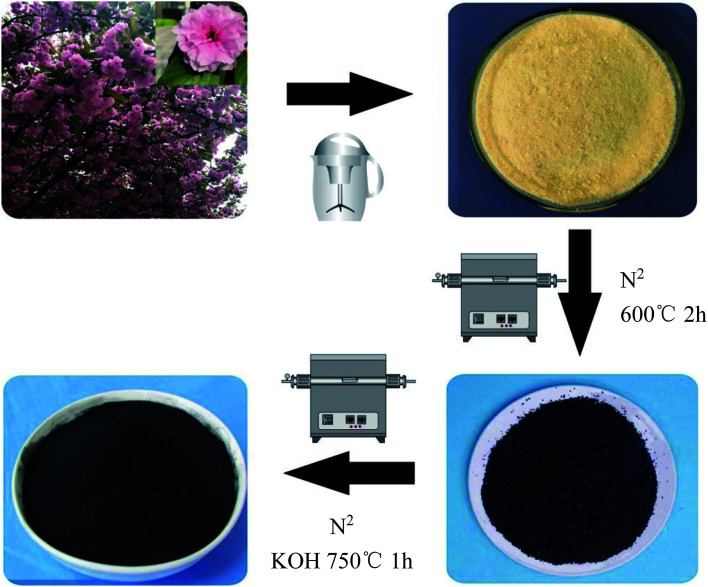
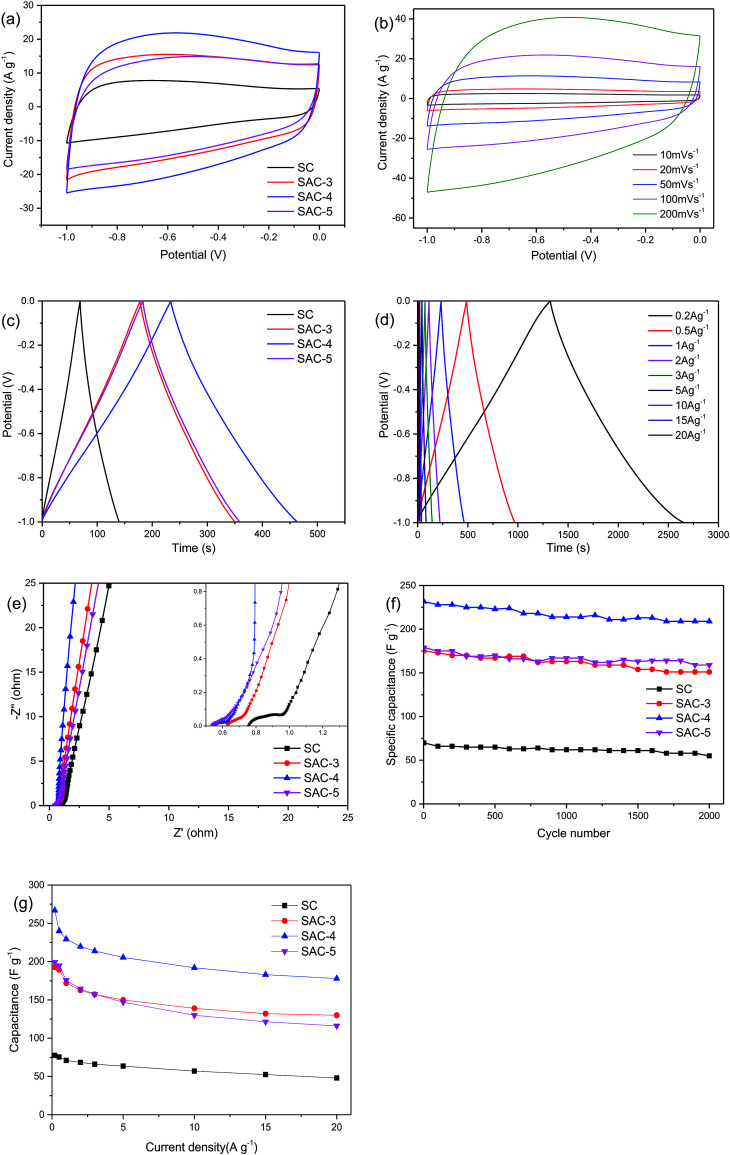
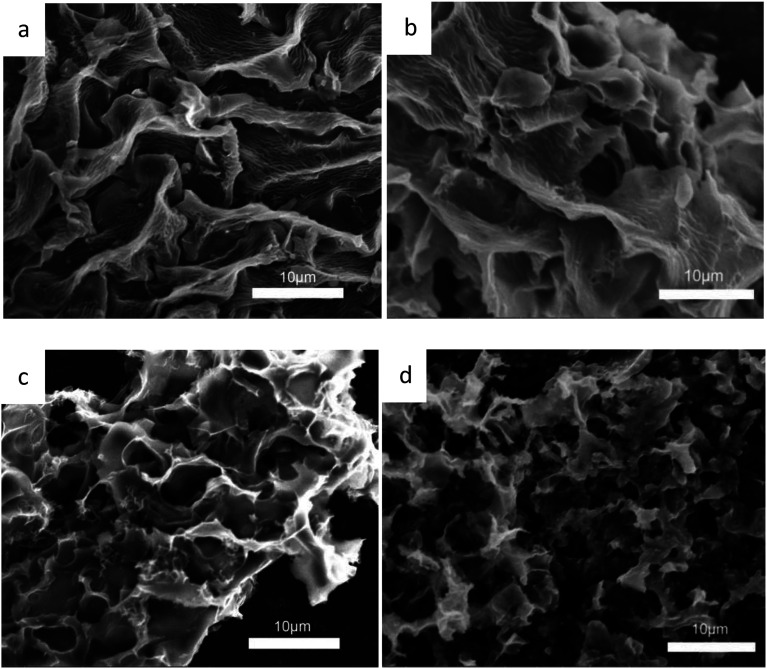
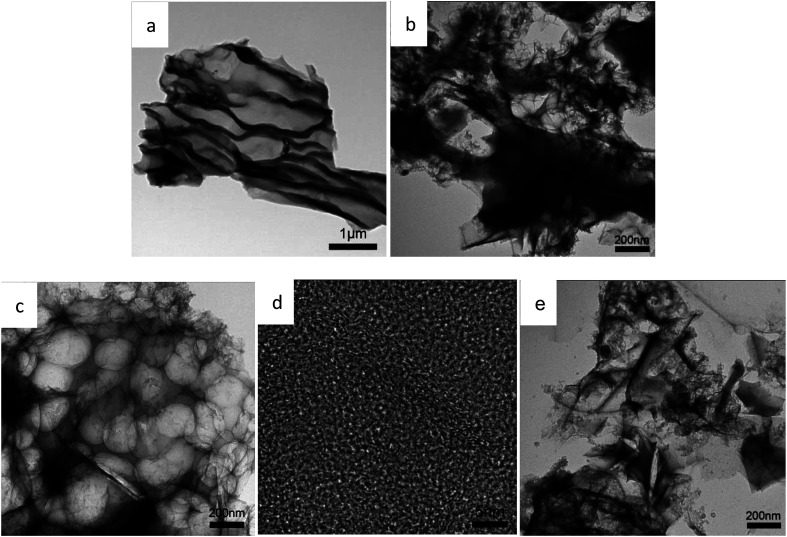
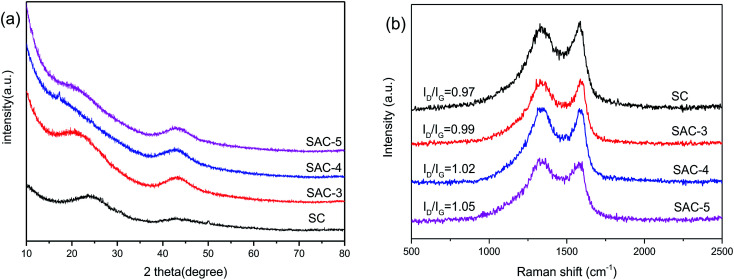
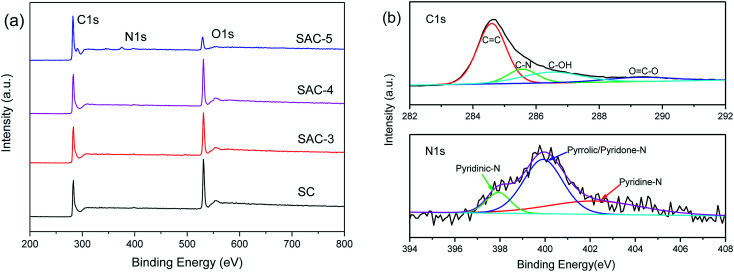
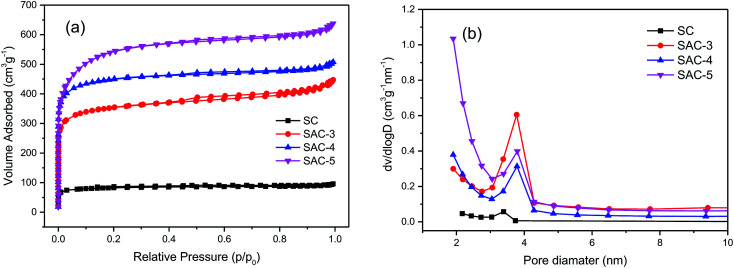
3D porous carbonaceous materials were prepared by combining pre-carbonization and KOH activation with sakura petals as raw materials. The prepared porous sakura carbon (SAC-4) exhibits a high specific surface area, a suitable pore size distribution, a low proportion of oxygen-rich groups and N functional groups, and a partially graphitized phase, which are very beneficial for the electrochemical performance of the material as a supercapacitor electrode. In the activation step, when the mass ratio of KOH to sakura carbon (SC) is 4, a supercapacitor is prepared. A maximal specific capacitance of 265.8 F g is obtained when the current density is 0.2 A g. When the current density is 1 A g, after 2000 cycles in succession, the capacitance retention rate is excellent and the cycling stability can reach as high as 90.2%. The obtained results indicate that porous carbon prepared with sakura blossom as the raw material is an effective and environmentally friendly electrode material for energy storage.
以樱花花瓣为原料,通过预碳化和KOH活化相结合的方法制备了3D多孔碳质材料。制备的多孔樱花碳(SAC-4)具有高比表面积、合适的孔径分布、低比例的富氧基团和N官能团以及部分石墨化相,这些对于该材料作为超级电容器电极的电化学性能非常有利。在活化步骤中,当KOH与樱花碳(SC)的质量比为4时,制备了一种超级电容器。当电流密度为0.2 A g时,获得的最大比电容为265.8 F g 。当电流密度为1 A g时,连续循环2000次后,电容保持率优异,循环稳定性高达90.2%。所得结果表明,以樱花为原料制备的多孔碳是一种有效且环保的储能电极材料。