Kurečič Manja, Mohan Tamilselvan, Virant Natalija, Maver Uroš, Stergar Janja, Gradišnik Lidija, Kleinschek Karin Stana, Hribernik Silvo
Laboratory for Characterization and Processing of Polymers, Faculty of Mechanical Engineering, University of Maribor Smetanova 17 2000 Maribor Slovenia
Faculty of Electrical Engineering and Computer Science, University of Maribor Koroška Cesta 46 SI-2000 Maribor Slovenia.
RSC Adv. 2019 Jul 9;9(37):21288-21301. doi: 10.1039/c9ra03399h. eCollection 2019 Jul 5.
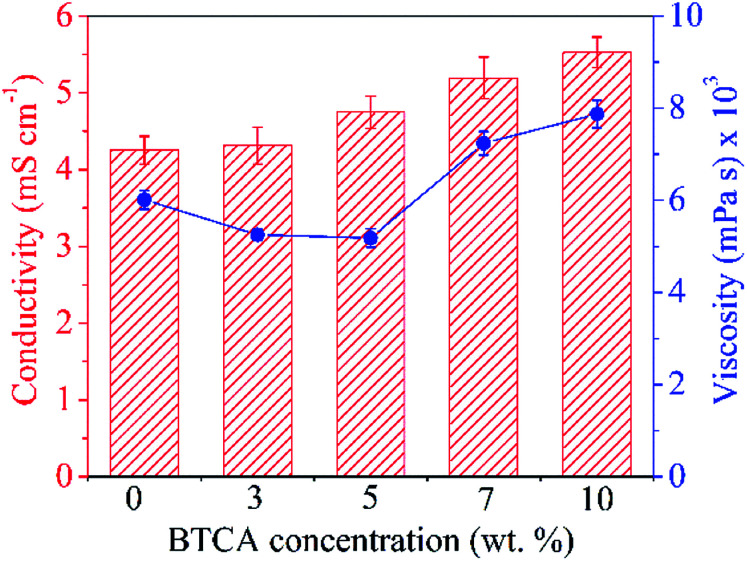
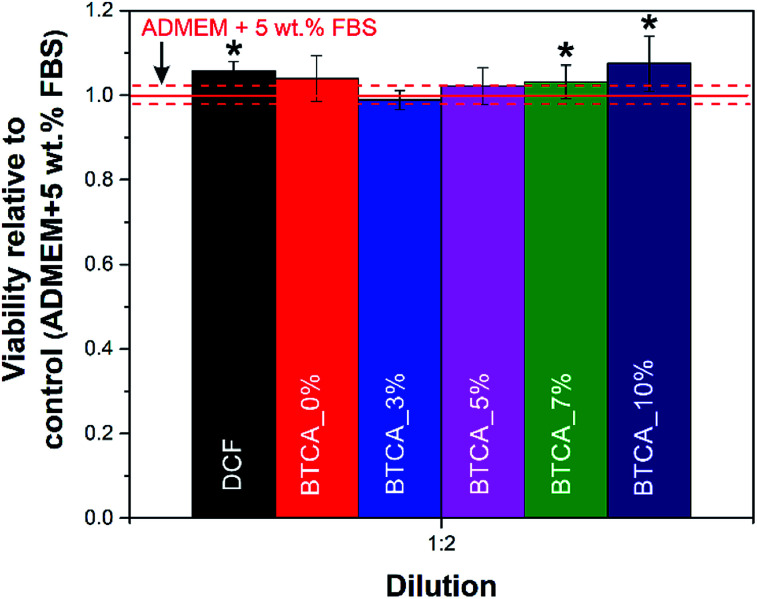
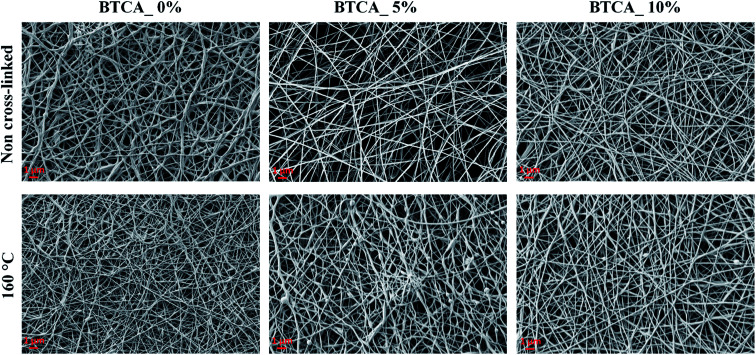
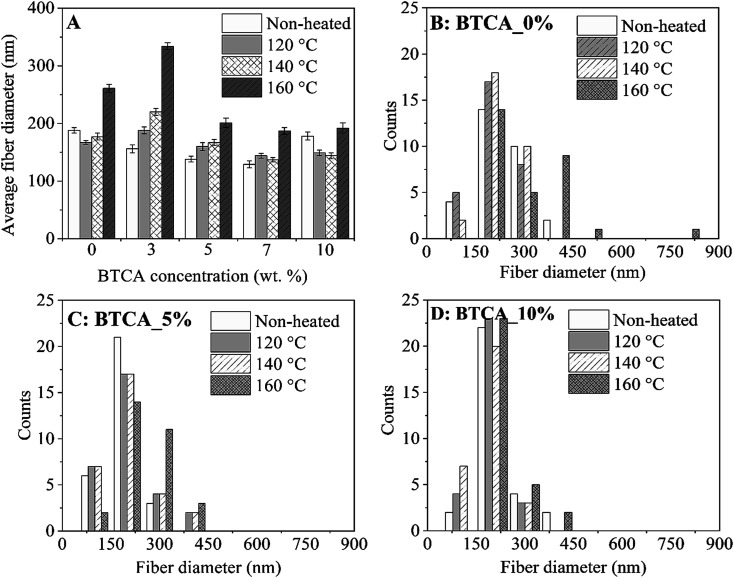
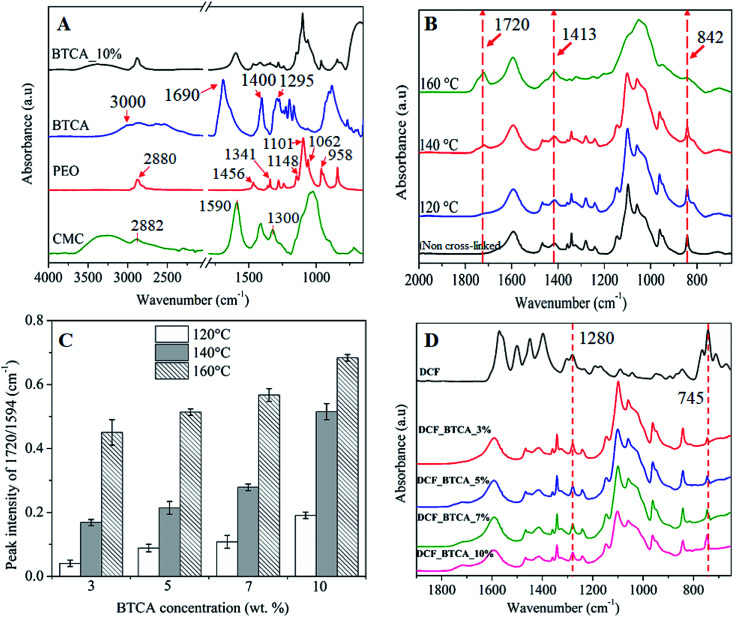
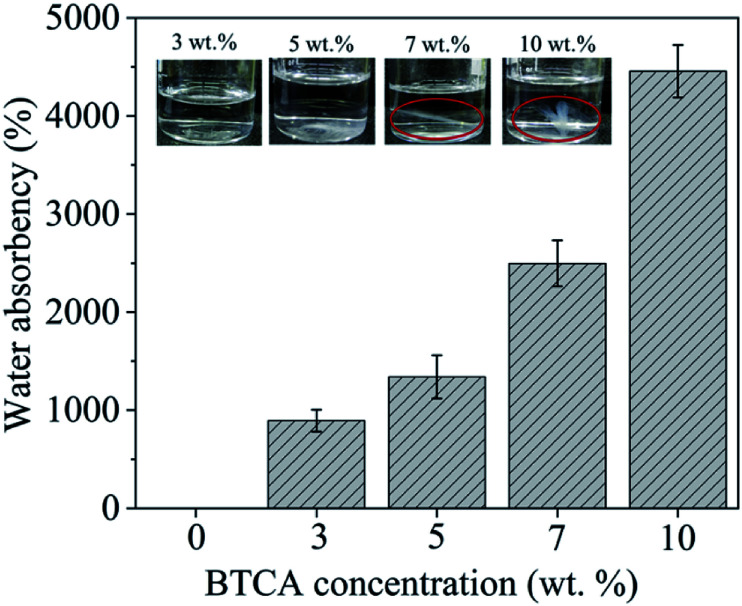
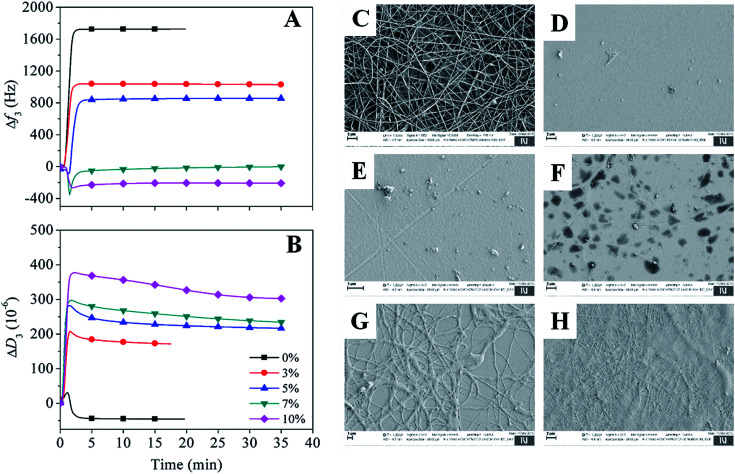
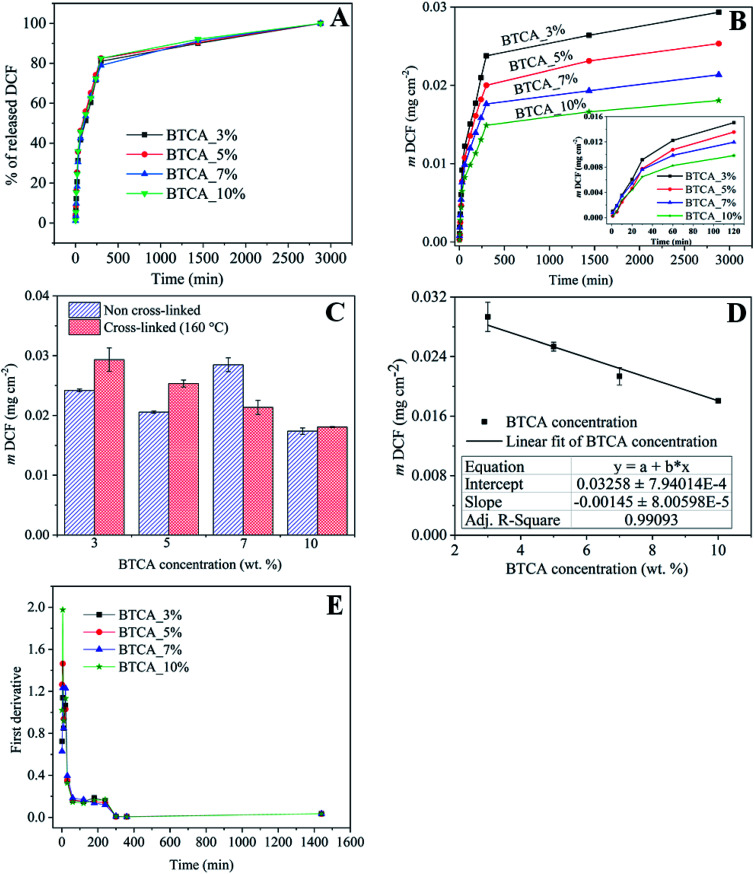
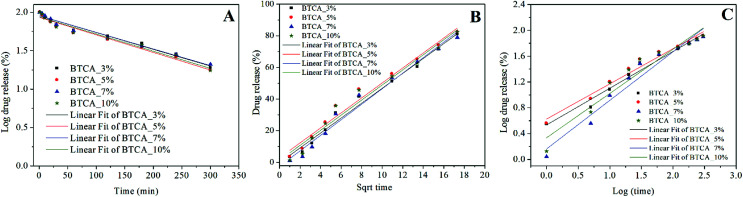
Stable and (bio)-compatible nanofibrous matrices showing effective incorporation and release of nonsteroidal anti-inflammatory drugs (NSAIDs) hold a huge potential in tissue regeneration and wound healing. Herein, a two-step, water-based and needleless electrospinning method is used to fabricate thermally cross-linked multifunctional nanofibrous substrates from a hydrophilic cellulose derivative, carboxymethyl cellulose (CMC), and polyethylene glycol (PEG) with an incorporated NSAID, diclofenac (DCF). Electrospun bi-component blend nanofibers, strongly linked together by ester bonds, with different degrees of cross-linking density are achieved by varying the concentrations of butanetetracarboxylic acid (BTCA, a green polycarboxylic cross-linker) and the sodium hypophosphite (SHP) catalyst, and the temperature. The results demonstrated that not only the dimensional stability and swelling properties could be better controlled but also the morphology, fiber diameter, surface area, pore volume, pore size, and functionality of the cross-linked nanofibers. Release kinetics of DCF from the nanofibrous substrates are controlled and prolonged up to 48 h, and the overall released mass of DCF decreased linearly with increasing cross-linking degree of BTCA and SHP. Fitting of release data using various kinetic models revealed that the release of DCF follows a non-Fickian (diffusion and erosion controlled) to Fickian mechanism (only diffusion-controlled process). Cell viability testing based on crystal violet dyeing showed that the DCF-incorporating nanofibers have excellent biocompatibility and no toxic effect on human skin fibroblast cells. Overall, the reported DCF-incorporating nanofibrous substrate demonstrates high potential to be used as a smart drug delivery system in wound healing, especially due to its noninvasive characteristics.
稳定且具有(生物)相容性的纳米纤维基质,能够有效包载和释放非甾体抗炎药(NSAIDs),在组织再生和伤口愈合方面具有巨大潜力。在此,采用两步法、水基无针静电纺丝方法,以亲水性纤维素衍生物羧甲基纤维素(CMC)和聚乙二醇(PEG)为原料,并掺入NSAID双氯芬酸(DCF),制备热交联多功能纳米纤维基质。通过改变丁烷四羧酸(BTCA,一种绿色多元羧酸交联剂)和次磷酸钠(SHP)催化剂的浓度以及温度,可实现由酯键紧密连接在一起、具有不同交联密度的静电纺双组分共混纳米纤维。结果表明,不仅可以更好地控制尺寸稳定性和溶胀性能,还能调控交联纳米纤维的形态、纤维直径、表面积、孔体积、孔径和功能。DCF从纳米纤维基质中的释放动力学得到控制,并延长至48小时,且DCF的总释放量随BTCA和SHP交联度的增加呈线性下降。使用各种动力学模型对释放数据进行拟合表明,DCF的释放遵循从非菲克(扩散和侵蚀控制)到菲克机制(仅扩散控制过程)。基于结晶紫染色的细胞活力测试表明,掺入DCF的纳米纤维具有优异的生物相容性,对人皮肤成纤维细胞无毒性作用。总体而言,所报道的掺入DCF的纳米纤维基质具有作为伤口愈合中智能药物递送系统的巨大潜力,特别是因其具有非侵入性特征。