Radiation Biology Branch, Center for Cancer Research, National Cancer Institute, NIH, Bethesda, Maryland, United States; Josai University, Faculty of Pharmaceutical Sciences, Sakado, Japan.
Radiation Biology Branch, Center for Cancer Research, National Cancer Institute, NIH, Bethesda, Maryland, United States; Department of Respiratory Medicine and Infectious Diseases, Niigata University Medical and Dental Hospital, Niigata, Japan.
Neoplasia. 2022 Aug;30:100793. doi: 10.1016/j.neo.2022.100793. Epub 2022 May 3.
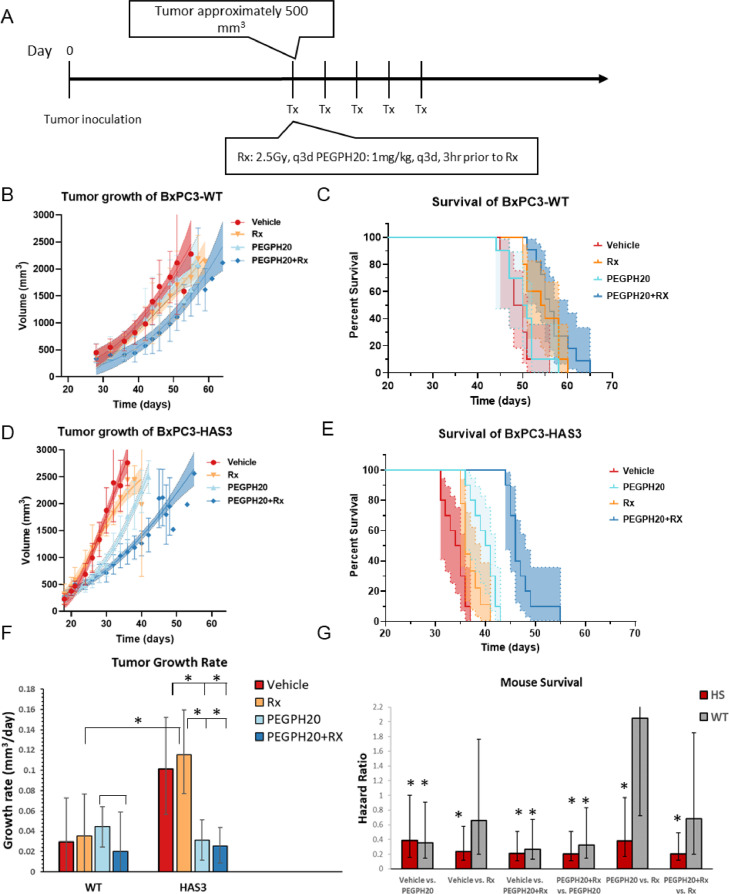
PEGylated human hyaluronidase (PEGPH20) enzymatically depletes hyaluronan, an important component of the extracellular matrix, increasing the delivery of therapeutic molecules. Combinations of chemotherapy and PEGPH20, however, have been unsuccessful in Phase III clinical trials. We hypothesize that by increasing tumor oxygenation by improving vascular patency and perfusion, PEGPH20 will also act as a radiosensitization agent.
The effect of PEGPH20 on radiation treatment was analyzed with respect to tumor growth, survival time, p0, local blood volume, and the perfusion/permeability of blood vessels in a human pancreatic adenocarcinoma BxPC3 mouse model overexpressing hyaluronan synthase 3 (HAS3).
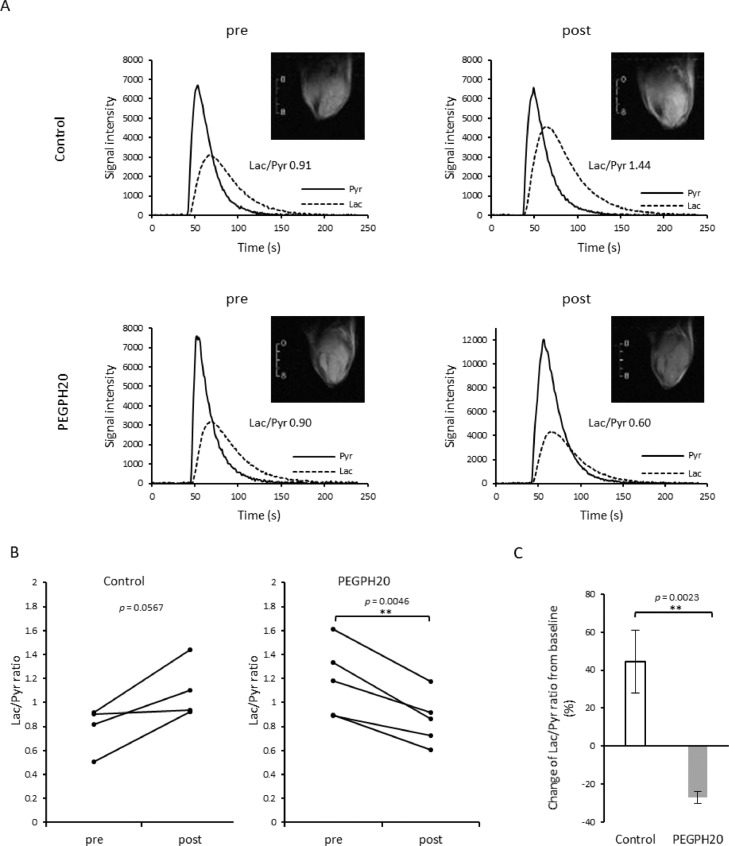
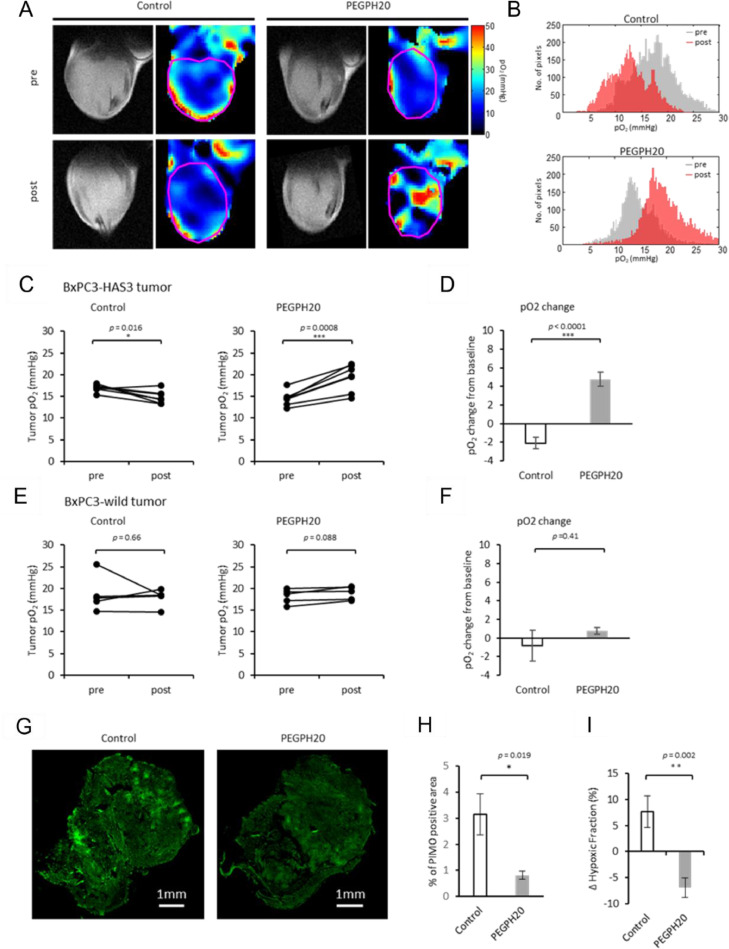
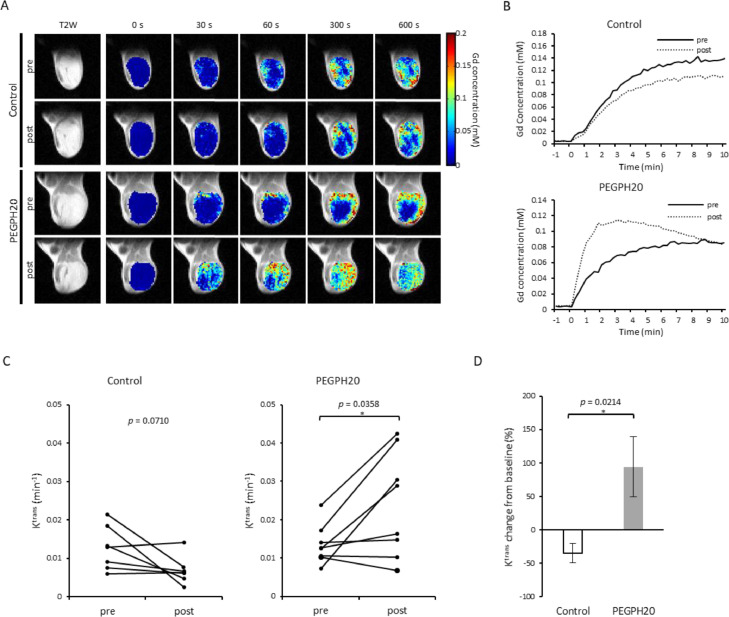
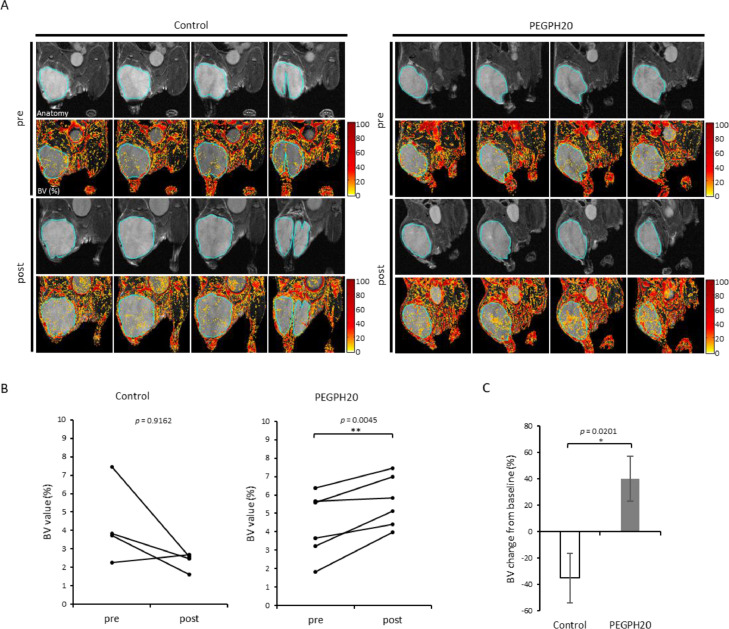
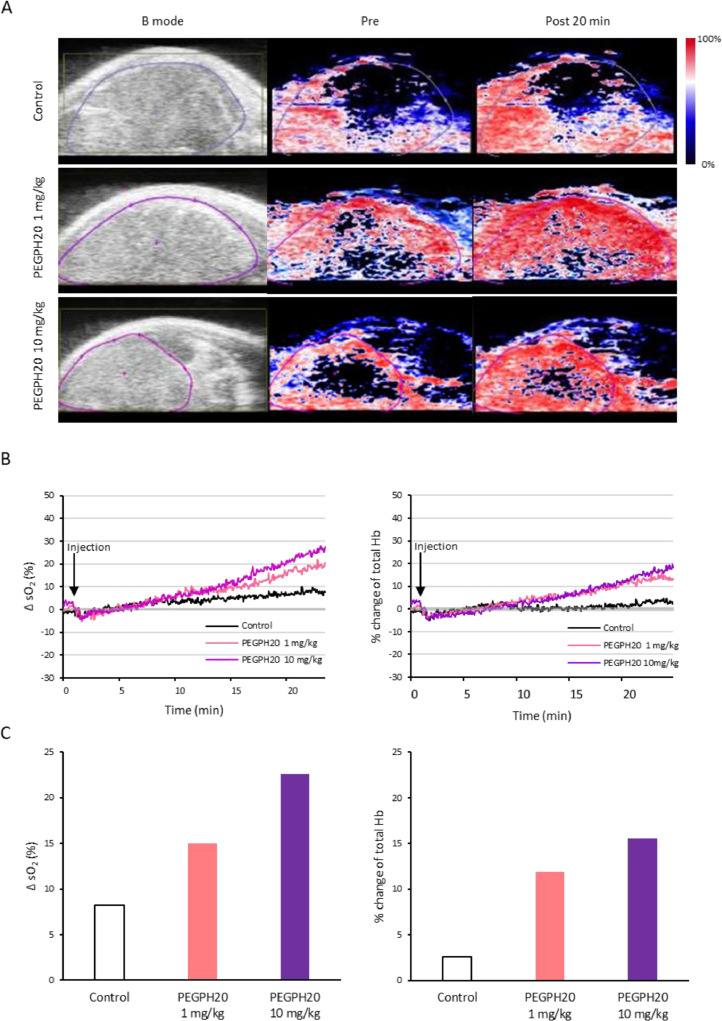
Mice overexpressing HAS3 developed fast growing, radiation resistant tumors that became rapidly more hypoxic as time progressed. Treatment with PEGPH20 increased survival times when used in combination with radiation therapy, significantly more than either radiation therapy or PEGPH20 alone. In mice that overexpressed HAS3, EPR imaging showed an increase in local pO that could be linked to increases in perfusion/permeability and local blood volume immediately after PEGPH20 treatment. Hyperpolarized [1-C] pyruvate suggested PEGPH20 caused a metabolic shift towards decreased glycolytic flux. These effects were confined to the mice overexpressing HAS3 - no effect of PEGPH20 on survival, radiation treatment, or pO was seen in wild type BxPC3 tumors.
PEGPH20 may be useful for radiosensitization of pancreatic cancer but only in the subset of tumors with substantial hyaluronan accumulation. The response of the treatment may potentially be monitored by non-invasive imaging of the hemodynamic and metabolic changes in the tumor microenvironment.
聚乙二醇化人透明质酸酶(PEGPH20)通过酶促作用使透明质酸(细胞外基质的重要组成部分)耗竭,增加治疗分子的递送。然而,化疗联合 PEGPH20 组合在 III 期临床试验中并未取得成功。我们假设通过改善血管通畅性和灌注来增加肿瘤氧合,PEGPH20 也将作为放射增敏剂。
在过表达透明质酸合酶 3(HAS3)的人胰腺腺癌 BxPC3 小鼠模型中,分析 PEGPH20 对放射治疗的影响,包括肿瘤生长、生存时间、p0、局部血容量以及血管的灌注/通透性。
过表达 HAS3 的小鼠形成了快速生长、对辐射有抗性的肿瘤,随着时间的推移,肿瘤变得更加缺氧。PEGPH20 与放射治疗联合使用可显著提高小鼠的生存时间,明显优于单独使用放射治疗或 PEGPH20。在过表达 HAS3 的小鼠中,EPR 成像显示局部 pO 增加,这可能与 PEGPH20 治疗后即刻灌注/通透性和局部血容量增加有关。极化 [1-C] 丙酮酸表明 PEGPH20 导致代谢向降低糖酵解通量的方向转变。这些作用仅限于过表达 HAS3 的小鼠 - 在野生型 BxPC3 肿瘤中未观察到 PEGPH20 对生存、放射治疗或 pO 的影响。
PEGPH20 可能对胰腺癌细胞的放射增敏有用,但仅在具有大量透明质酸积累的肿瘤亚组中有效。该治疗的反应可能可以通过肿瘤微环境中血流动力学和代谢变化的无创成像来监测。