Cardiology and Syncope Unit, Department of Translational Medical Sciences, University of Campania "Luigi Vanvitelli"-Monaldi Hospital, Naples, Italy.
Department of History and Philosophy, Roosevelt University, Chicago, USA.
Clin Auton Res. 2022 Jun;32(3):167-173. doi: 10.1007/s10286-022-00864-3. Epub 2022 May 6.
The aim of our study was to evaluate the prevalence and clinical predictors of cardioinhibitory (CI) responses with asystole at the nitroglycerin (NTG)-potentiated head-up tilt test (HUTT) in patients with a history of syncope admitted to a tertiary referral syncope unit.
We retrospectively evaluated all consecutive patients who underwent NTG-potentiated HUTT for suspected reflex syncope at our institution from March 1 2017 to May 1 2020. The prevalence of HUTT-induced CI syncope was assessed. Univariate and multivariate analyses were performed to test the association of asystolic response to HUTT with a set of clinical covariates.
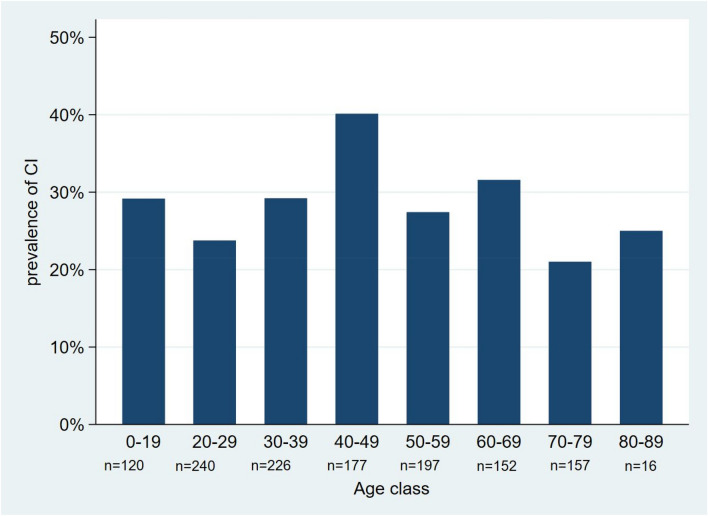
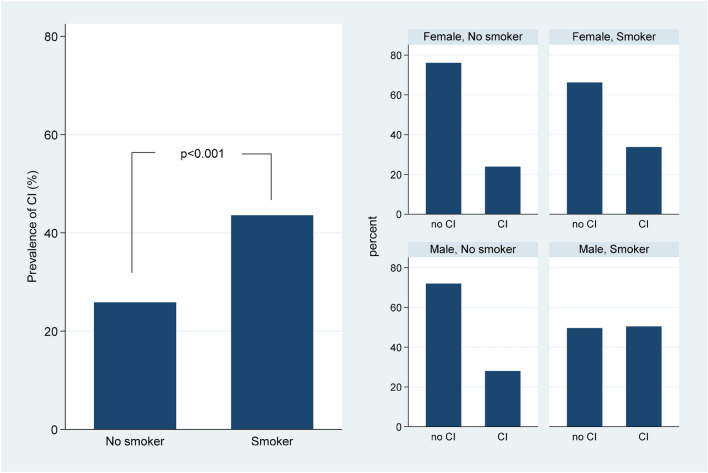
We enrolled 1285 patients (45 ± 19.1 years; 49.6% male); 368 (28.6%) showed HUTT-induced CI response with asystole. A multivariate analysis revealed that the following factors were independently associated with HUTT-induced CI syncope: male sex (OR 1.48; ConInt 1.14-1.92; P = 0.003), smoking (OR 2.22; ConInt 1.56-3.115; P < 0.001), traumatic syncope (OR: 2.81; ConInt 1.79-4.42; P < 0.001), situational syncope (OR 0.45; ConInt 0.27-0.73; P = 0.002), and the use of diuretics (OR 9.94; ConInt 3.83-25.76; P < 0.001).
The cardioinhibitory syncope with asystole induced by NTG-potentiated HUTT is more frequent than previously reported. The male gender, smoking habit, history of traumatic syncope, and use of diuretics were independent predictors of HUTT-induced CI responses. Conversely, the history of situational syncope seems to reduce this probability.
本研究旨在评估既往晕厥病史患者行硝酸甘油(NTG)增强直立倾斜试验(HUTT)时出现心脏抑制(CI)伴停搏的发生率和临床预测因素。
我们回顾性评估了 2017 年 3 月 1 日至 2020 年 5 月 1 日期间因疑似反射性晕厥在我院行 NTG 增强 HUTT 的所有连续患者。评估 HUTT 诱导的 CI 晕厥的发生率。进行单变量和多变量分析,以检验 HUTT 诱导的 CI 反应与一系列临床协变量的关联。
共纳入 1285 例患者(45±19.1 岁;49.6%为男性);368 例(28.6%)出现 HUTT 诱导的 CI 伴停搏反应。多变量分析显示,以下因素与 HUTT 诱导的 CI 晕厥独立相关:男性(OR 1.48;95%CI 1.14-1.92;P=0.003)、吸烟(OR 2.22;95%CI 1.56-3.115;P<0.001)、创伤性晕厥(OR:2.81;95%CI 1.79-4.42;P<0.001)、情境性晕厥(OR 0.45;95%CI 0.27-0.73;P=0.002)和利尿剂的使用(OR 9.94;95%CI 3.83-25.76;P<0.001)。
NTG 增强 HUTT 诱导的 CI 伴停搏性晕厥比以往报道的更为常见。男性、吸烟习惯、创伤性晕厥史和利尿剂的使用是 HUTT 诱导 CI 反应的独立预测因素。相反,情境性晕厥史似乎降低了这种可能性。