Luo Ting, Yang Sai, Chen Yan, Liu Shulei, Yang Liming, Hu Nanfei, Ma Ye, Qiu Jun, Wang Kewei, Li Liping, Tan Lihong
Pediatrics Research Institute of Hunan Province, Hunan Children's Hospital, Changsha, China.
Department of Neurology, Hunan Children's Hospital, Changsha, China.
Proteome Sci. 2022 May 6;20(1):8. doi: 10.1186/s12953-022-00191-5.
Bacterial meningitis (BM) is a life-threatening infectious disease of the central nervous system in infants and children. To date, no diagnostic methods for the early and precise diagnosis of paediatric BM have been developed.
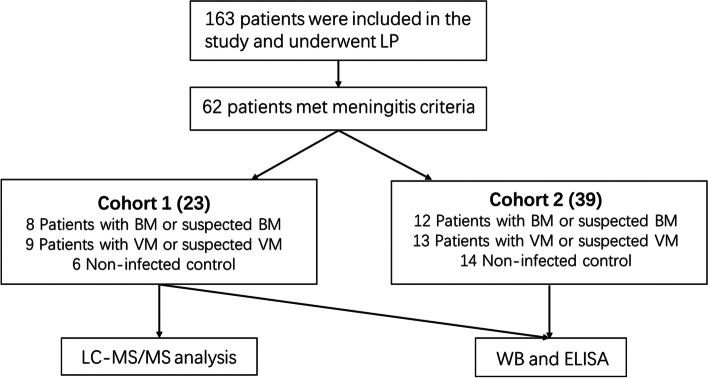
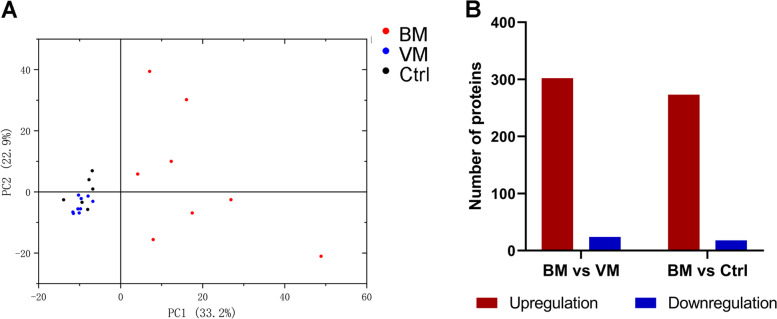
A label-free cerebrospinal fluid (CSF) quantitative proteomic analysis of 8 patients with confirmed or suspected BM, 9 patients with confirmed or suspected viral meningitis (VM) and 6 non-CNS-infected hospital patients was performed via high-resolution LC-MS/MS.
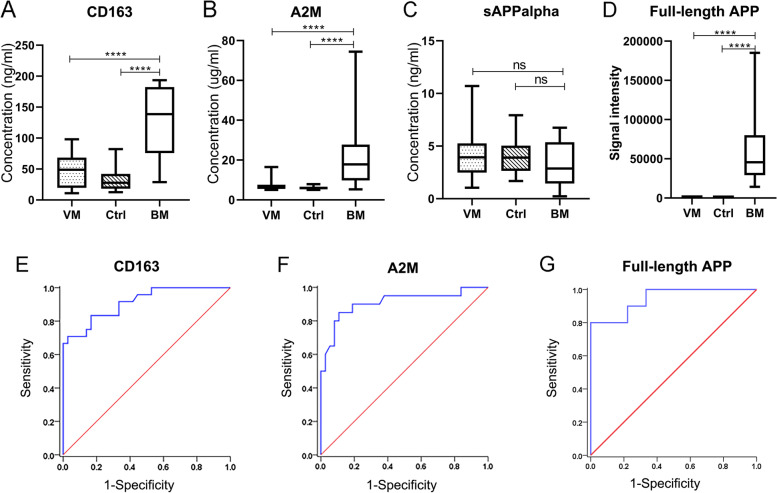
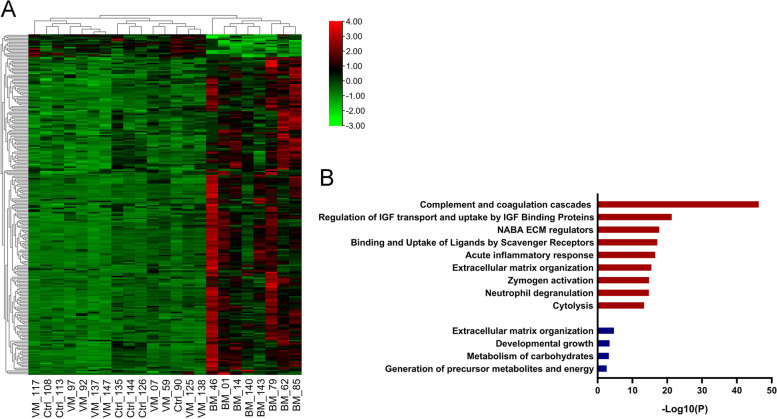
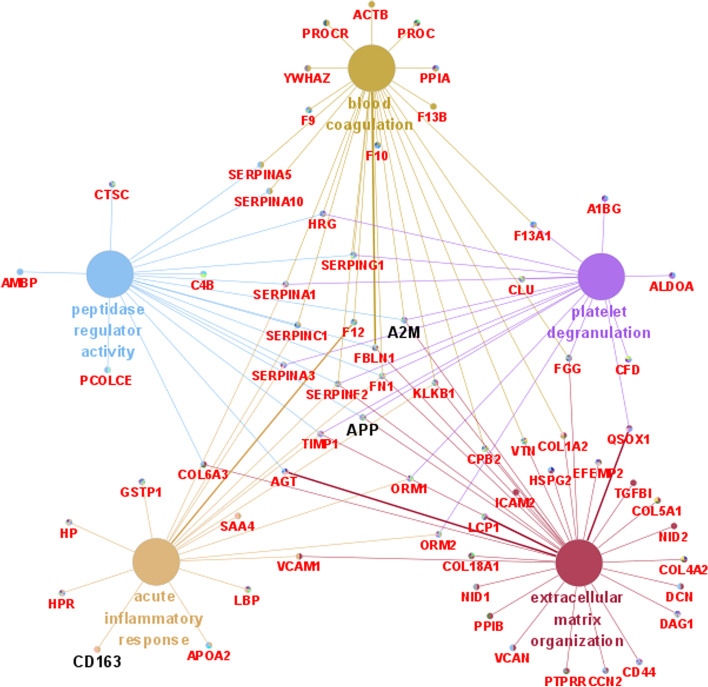
Our CSF proteomic analysis allowed the identification of critical differences between the BM and non-BM groups. Compared to the proteomes of the non-BM groups, the proteome of the paediatric BM group was characterized by upregulation of complement and coagulation cascades, regulation of IGF transport, uptake by IGF-binding proteins and acute inflammatory response, downregulation of developmental growth, and metabolism of carbohydrates. Moreover, the levels of CD163, A2M and full-length APP in CSF showed excellent diagnostic performance for paediatric BM, with AUC values of 0.911 (95% CI: 0.839-0.984), 0.908 (95% CI: 0.816-1.000) and 0.944 (95% CI: 0.86, 1.000), respectively. Among them, A2M and full-length APP are reported here for the first time as potential diagnostic biomarkers of BM. The findings imply that peptidase regulator activity plays an important role in BM and provide potential novel targets for precision medicine in paediatric BM.
CD163, A2M and full-length APP are validated as potential diagnostic biomarkers of paediatric BM.
细菌性脑膜炎(BM)是婴幼儿中枢神经系统的一种危及生命的传染病。迄今为止,尚未开发出用于早期精确诊断小儿BM的诊断方法。
通过高分辨率液相色谱-串联质谱法对8例确诊或疑似BM的患者、9例确诊或疑似病毒性脑膜炎(VM)的患者和6例非中枢神经系统感染的住院患者进行了无标记脑脊液(CSF)定量蛋白质组分析。
我们的脑脊液蛋白质组分析能够识别BM组和非BM组之间的关键差异。与非BM组的蛋白质组相比,小儿BM组的蛋白质组特征为补体和凝血级联反应上调、IGF转运调节、IGF结合蛋白摄取以及急性炎症反应,发育生长下调和碳水化合物代谢。此外,脑脊液中CD163、A2M和全长APP的水平对小儿BM具有出色的诊断性能,AUC值分别为0.911(95%CI:0.839-0.984)、0.908(95%CI:0.816-1.000)和0.944(95%CI:0.86,1.000)。其中,A2M和全长APP首次作为BM的潜在诊断生物标志物报道。这些发现表明肽酶调节活性在BM中起重要作用,并为小儿BM的精准医学提供了潜在的新靶点。
CD163、A2M和全长APP被验证为小儿BM的潜在诊断生物标志物。