Prevention and Infection Control Unit, Department of Medicine, Lausanne University Hospital (CHUV) and University of Lausanne, Chemin de Mont-Paisible 18, 1011, Lausanne, Switzerland.
Service of Infectious Diseases, Lausanne University Hospital and University of Lausanne, Lausanne, Switzerland.
Antimicrob Resist Infect Control. 2022 May 7;11(1):66. doi: 10.1186/s13756-022-01104-z.
The growing threat of multidrug resistant organisms have led to increasingly promote prudent and rational use of antimicrobials as well as early hospital discharge plan. Antibiotic stewardship programs (ASP) have been developed as multifaceted approaches to improve use of current antibiotics and are now widely applied through different strategies. Proactive interventions are still limited in Switzerland and data on antimicrobial appropriateness and early discharge strategies are lacking. We aimed to describe the opportunities of antibiotics prescriptions optimization at Lausanne University Hospital, Switzerland and evaluate the suitability for early discharge among patients receiving antibiotics. The need for outpatient medical structures was also assessed.
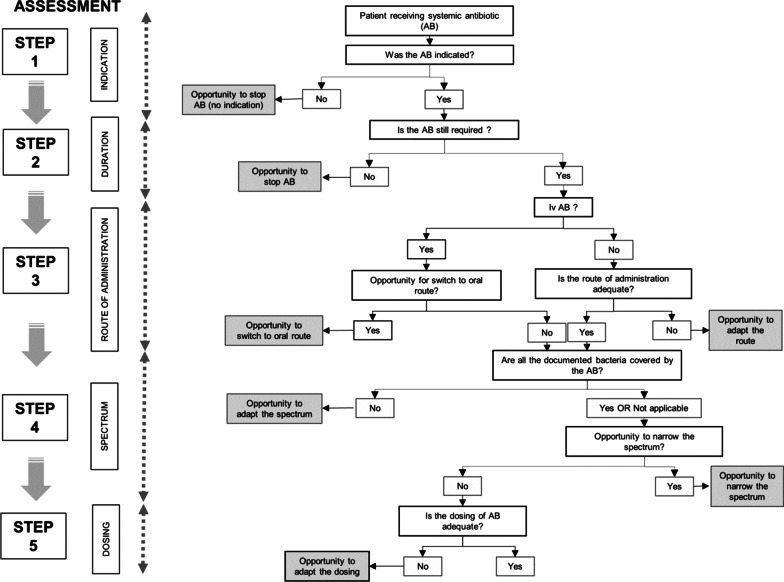
We conducted a point prevalence survey of antibiotic prescriptions in adult medical and surgical units with exclusion of intermediate and intensive care units. All hospitalized patients receiving a systemic antibiotic on the day of evaluation were included. An infectious diseases specialist evaluated antimicrobial appropriateness and assessed suitability for discharge according to medical and nursing observations. The need of flexible additional outpatient facility for a close medical follow-up was evaluated concomitantly.
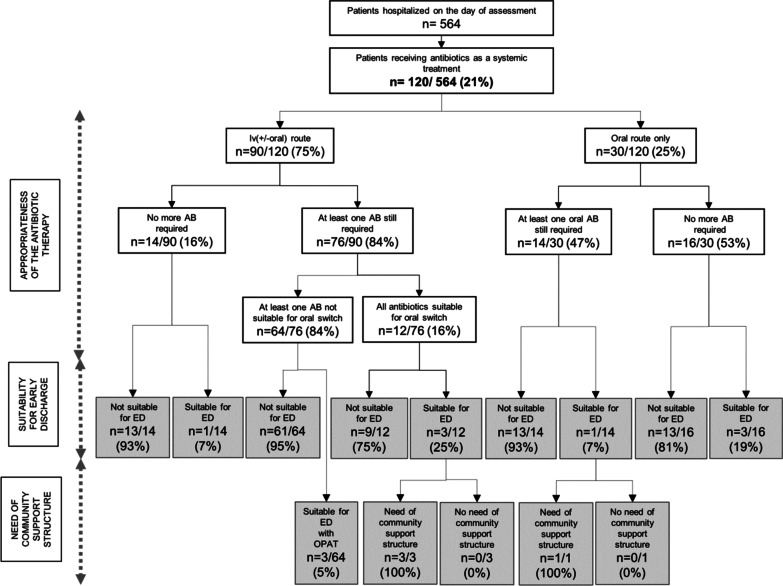
A total of 564 patients' files were reviewed. 182 (32%) patients received one or more systemic antibiotic: 62 (34%) as a prophylaxis and 120 (66%) as a treatment with or without concomitant prophylaxis. 37/62 (60%) patients receiving prophylaxis had no indication to continue the antibacterial. Regarding the patients treated with antibiotics, 69/120 (58%) presented at least one opportunity for treatment optimization, mainly interruption of treatment. A previous ID consultation was recorded for 55/120 (46%) patients, of whom 21 (38%) could have benefited from antimicrobial therapy optimization on the day of the point assessment. 9.2% patients were eligible for discharge of whom 64% could leave the hospital with a close outpatient follow-up for infectious issues.
This point prevalence study offers precious indicators for tailoring future antibiotic stewardship interventions that can be combined with early discharge. Any centre considering implementing ASP should conduct this type of analysis with a pragmatic approach to gain insight into local practices and needed resources.
多药耐药菌的威胁日益增加,这促使人们越来越提倡谨慎和合理使用抗菌药物,并尽早制定出院计划。抗生素管理计划(ASP)作为改善当前抗生素使用的多方面方法已经得到发展,并且现在通过不同的策略得到了广泛的应用。在瑞士,主动干预措施仍然有限,并且缺乏关于抗菌药物适当性和早期出院策略的数据。我们旨在描述洛桑大学医院优化抗生素处方的机会,并评估接受抗生素治疗的患者提前出院的适宜性。同时还评估了对门诊医疗结构的需求。
我们对成人内科和外科病房(不包括中级和重症监护病房)进行了抗生素处方的现况调查。评估日接受全身抗生素治疗的所有住院患者均被纳入研究。一名传染病专家根据医学和护理观察评估了抗菌药物的适当性,并评估了出院的适宜性。同时还评估了是否需要灵活的额外门诊设施进行密切的医疗随访。
共审查了 564 名患者的病历。182 名(32%)患者接受了一种或多种全身抗生素治疗:62 名(34%)为预防用药,120 名(66%)为治疗用药,其中有或没有同时预防用药。62 名接受预防用药的患者中有 37 名(60%)没有继续使用抗菌药物的指征。对于接受抗生素治疗的患者,120 名中有 69 名(58%)至少有一次治疗优化的机会,主要是中断治疗。120 名患者中有 55 名(46%)之前曾接受过 ID 咨询,其中 21 名(38%)在现况评估日可能受益于抗菌药物治疗优化。9.2%的患者符合出院标准,其中 64%的患者在感染问题方面可以通过密切的门诊随访出院。
这项现况研究为制定未来的抗生素管理干预措施提供了宝贵的指标,这些措施可以与提前出院相结合。任何考虑实施 ASP 的中心都应该以务实的方式进行这种类型的分析,以了解当地的实践和所需的资源。