Department of International Health, Johns Hopkins Bloomberg School of Public Health, Baltimore, MD, United States; Department of Family Medicine and Community Health, University of Hawaii, John A. Burns School of Medicine, Aiea, HI, United States.
Department of International Health, Johns Hopkins Bloomberg School of Public Health, Baltimore, MD, United States.
Contraception. 2022 Jul;111:61-70. doi: 10.1016/j.contraception.2022.04.012. Epub 2022 May 5.
We sought to systematically review the literature on health workers' values and preferences related to contraceptive methods.
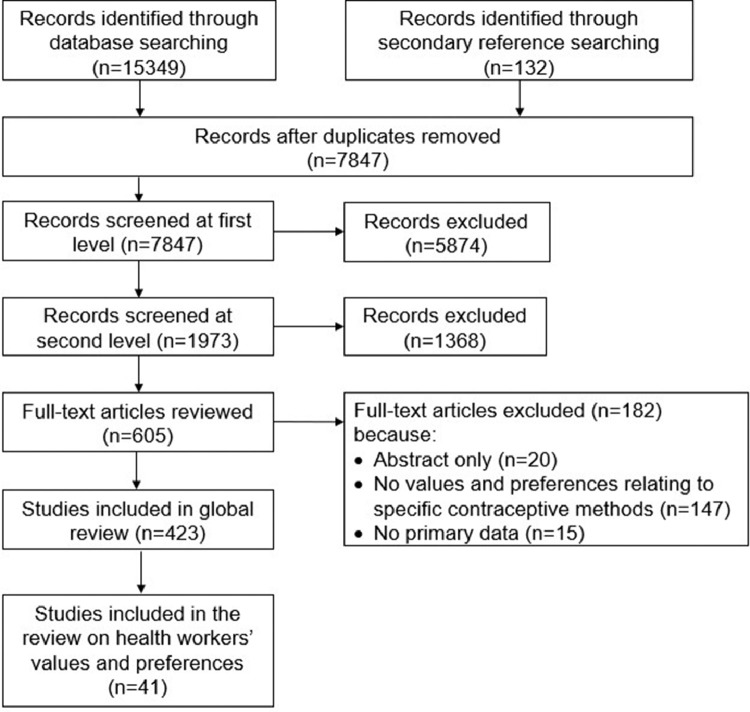
As part of a larger review, we searched ten electronic databases for published articles from January 1, 2005 through July 27, 2020. We included studies that reported qualitative or quantitative data from the perspective of health workers providing family planning services globally.
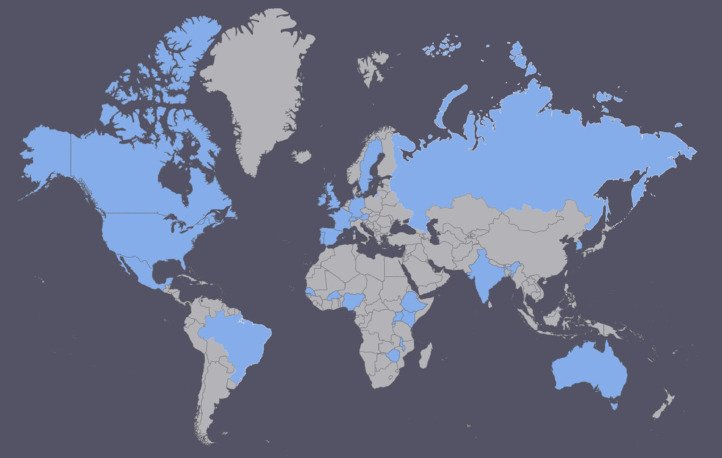
Forty-one studies met our inclusion criteria. These studies included 12,643 health workers and were conducted in 27 countries. Health worker values and preferences for contraceptive methods were affected by factors related to contraceptive method characteristics (e.g., bleeding pattern and convenience), the contraceptive user (e.g., medical history, parity), and the health worker themselves (e.g., training, environment). Differences were also noted between various professions/specialties (e.g., comfort level with contraceptive methods, depth of experience). While contraceptive counseling and provision were influenced by health worker values and preferences, they were also affected by health worker misconceptions and biases.
Health worker values and preferences for contraception are affected by the client's history, medical eligibility, and the health worker context. Provision of contraception that is affected by harmful bias towards certain populations or about certain methods can negatively affect patient-centered care. Future work should address knowledge gaps and health worker biases by improving and standardizing education and training globally, to ensure high-quality, rights-based, and patient-centered contraceptive services.
我们旨在系统地回顾有关卫生工作者对避孕方法的价值观和偏好的文献。
作为一项更大综述的一部分,我们检索了十个电子数据库,以查找 2005 年 1 月 1 日至 2020 年 7 月 27 日期间发表的文章。我们纳入了从提供计划生育服务的卫生工作者角度报告定性或定量数据的研究。
有 41 项研究符合纳入标准。这些研究包括 12643 名卫生工作者,在 27 个国家进行。卫生工作者对避孕方法的价值观和偏好受到与避孕方法特征相关的因素的影响(例如,出血模式和便利性)、避孕使用者(例如,病史、生育史)和卫生工作者自身(例如,培训、环境)。不同职业/专业(例如,对避孕方法的舒适度、经验深度)之间也存在差异。虽然避孕咨询和提供受到卫生工作者价值观和偏好的影响,但也受到卫生工作者误解和偏见的影响。
卫生工作者对避孕的价值观和偏好受客户的病史、医学资格和卫生工作者背景的影响。受到对某些人群或某些方法的有害偏见影响的避孕提供可能会对以患者为中心的护理产生负面影响。未来的工作应通过在全球范围内改善和规范教育和培训来解决知识差距和卫生工作者偏见,以确保高质量、基于权利和以患者为中心的避孕服务。