Department of Pediatrics, Stem Cell Transplantation Program and Laboratory for Pediatric Immunology, Willem-Alexander Children's Hospital, Leiden University Medical Center, Albinusdreef 2, 2333ZA, Leiden, The Netherlands.
Department of Biomedical Data Sciences, Leiden University Medical Center, Leiden, The Netherlands.
J Clin Immunol. 2022 Aug;42(6):1205-1222. doi: 10.1007/s10875-022-01279-5. Epub 2022 May 9.
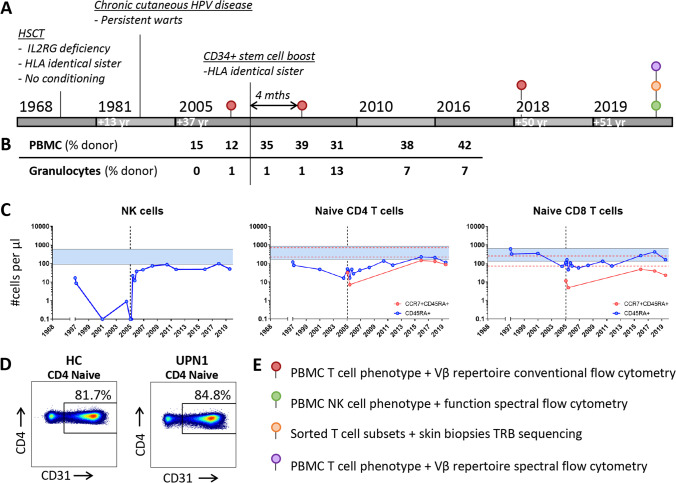
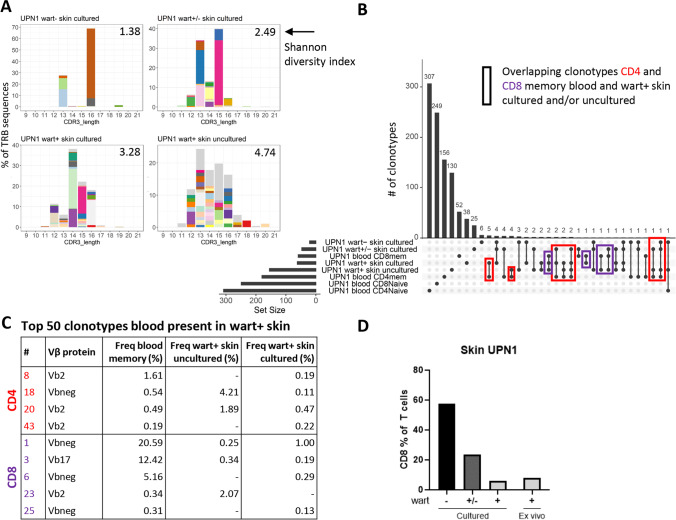
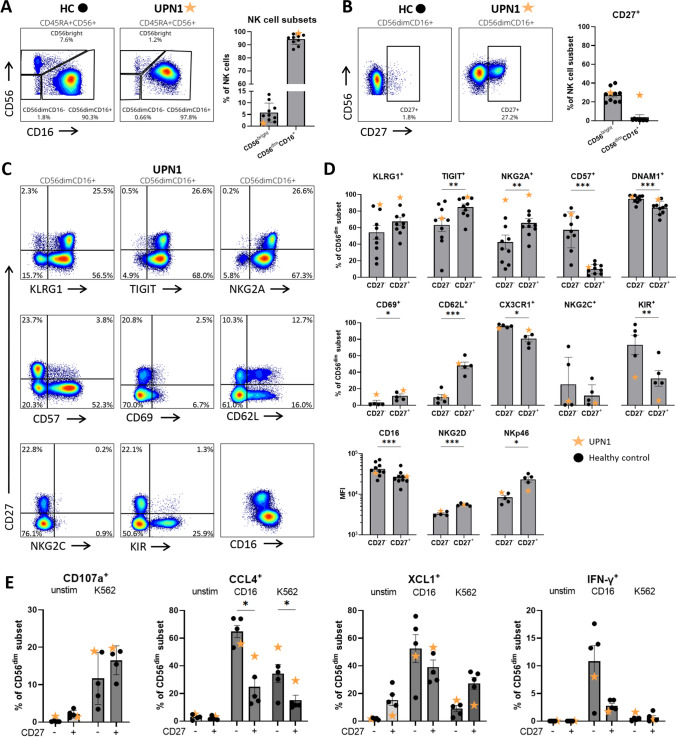
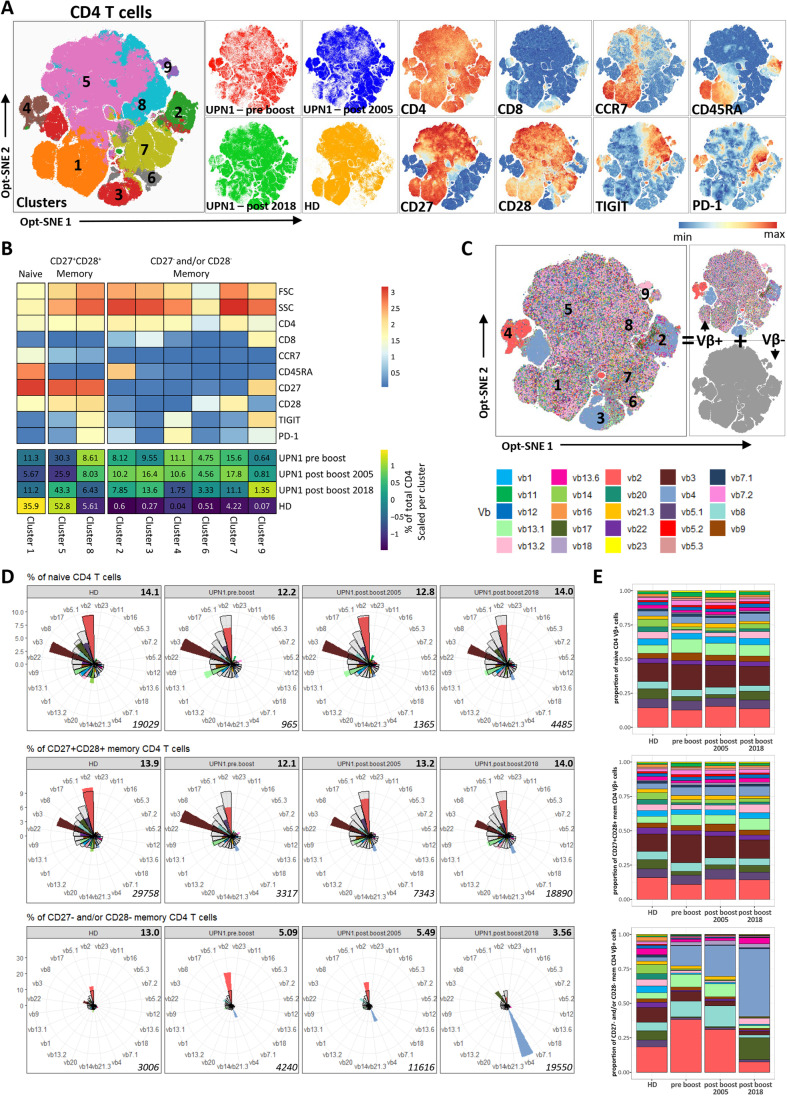
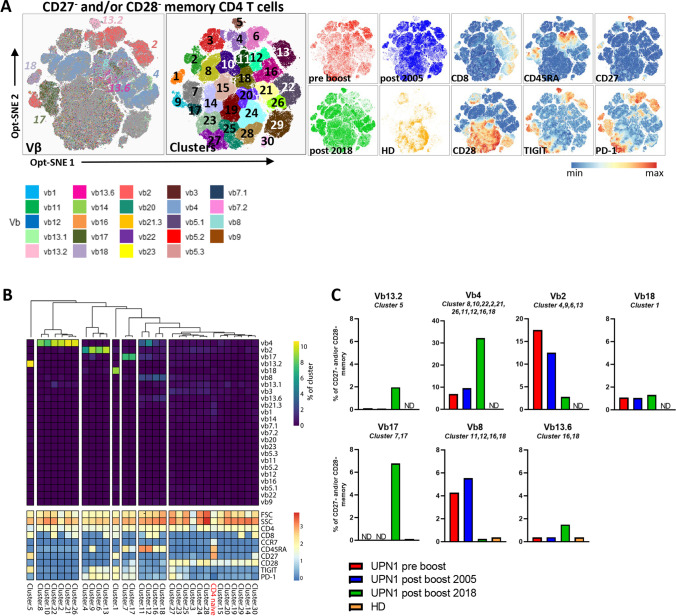
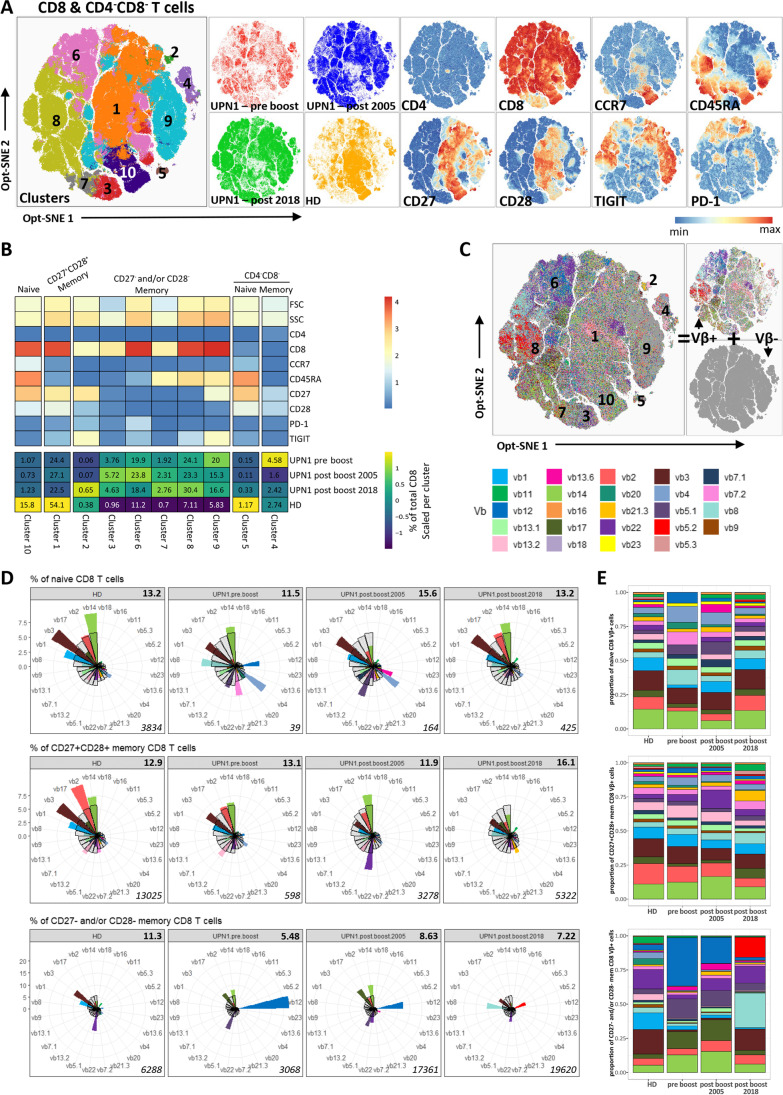
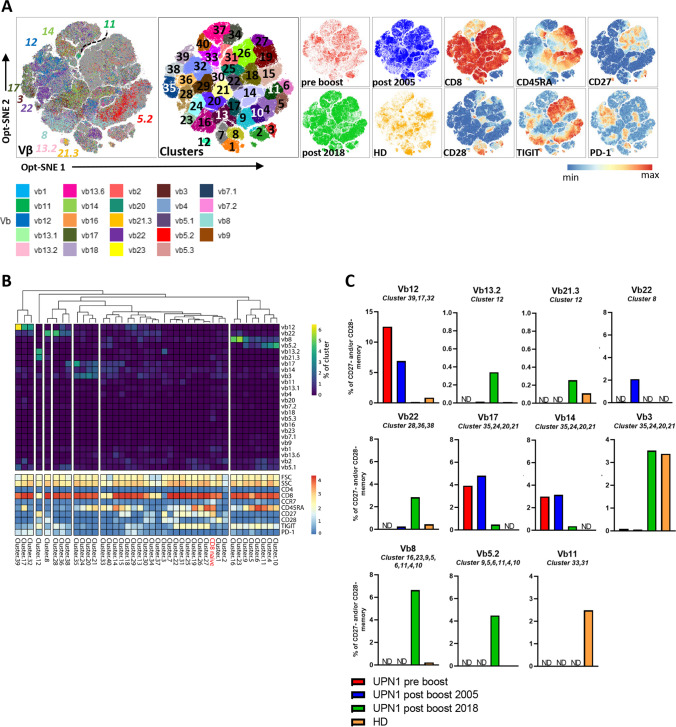
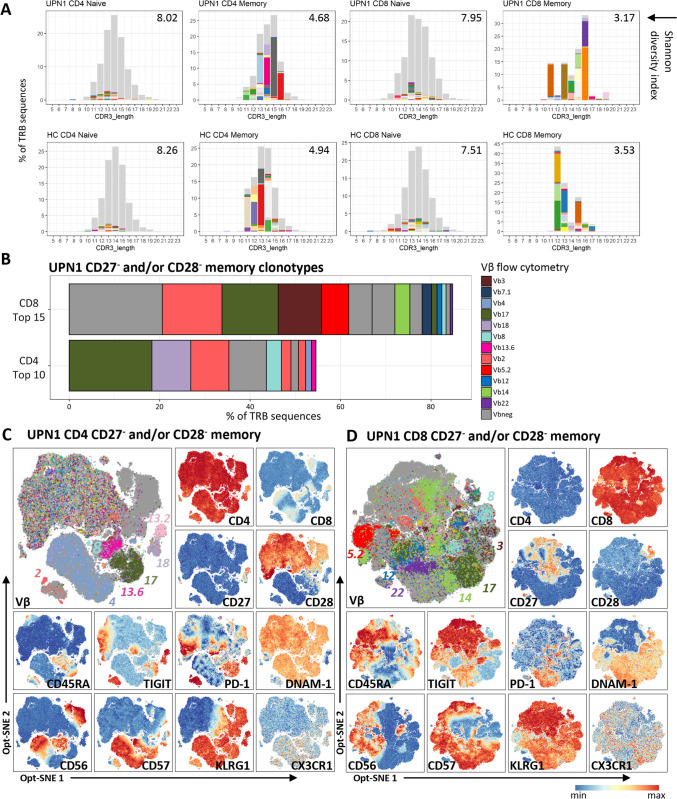
The first successful European hematopoietic stem cell transplantation (HSCT) was performed in 1968 as treatment in a newborn with IL2RG deficiency using an HLA-identical sibling donor. Because of declining naive T and natural killer (NK) cells, and persistent human papilloma virus (HPV)-induced warts, the patient received a peripheral stem cell boost at the age of 37 years. NK and T cells were assessed before and up to 14 years after the boost by flow cytometry. The boost induced renewed reconstitution of functional NK cells that were 14 years later enriched for CD56CD27 NK cells. T-cell phenotype and T-cell receptor (TCR) repertoire were simultaneously analyzed by including TCR Vβ antibodies in the cytometry panel. Naive T-cell numbers with a diverse TCR Vβ repertoire were increased by the boost. Before and after the boost, clonal expansions with a homogeneous TIGIT and PD-1 phenotype were identified in the CD27 and/or CD28 memory population in the patient, but not in the donor. TRB sequencing was applied on sorted T-cell subsets from blood and on T cells from skin biopsies. Abundant circulating CD8 memory clonotypes with a chronic virus-associated CD57KLRG1CX3CR1 phenotype were also present in warts, but not in healthy skin of the patient, suggesting a link with HPV. In conclusion, we demonstrate in this IL2RG-deficient patient functional NK cells, a diverse and lasting naive T-cell compartment, supported by a stem cell boost, and an oligoclonal memory compartment half a century after HSCT.
首例成功的欧洲造血干细胞移植(HSCT)于 1968 年进行,用于治疗一名患有 IL2RG 缺陷的新生儿,使用 HLA 相同的同胞供体。由于幼稚 T 细胞和自然杀伤(NK)细胞减少,以及持续的人乳头瘤病毒(HPV)引起的疣,该患者在 37 岁时接受了外周干细胞增强治疗。通过流式细胞术评估增强治疗前和增强治疗后长达 14 年的 NK 和 T 细胞。增强治疗诱导了功能性 NK 细胞的重新重建,这些细胞在 14 年后富含 CD56CD27 NK 细胞。通过在细胞术面板中包括 TCR Vβ 抗体,同时分析 T 细胞表型和 T 细胞受体(TCR)库。增强治疗增加了具有多样化 TCR Vβ 库的幼稚 T 细胞数量。在增强治疗前后,在患者的 CD27 和/或 CD28 记忆群体中,均发现了具有同质 TIGIT 和 PD-1 表型的克隆性扩张,但在供体中未发现。对来自血液的分选 T 细胞亚群和来自皮肤活检的 T 细胞进行了 TRB 测序。在患者的疣中还存在大量循环 CD8 记忆克隆型,具有慢性病毒相关的 CD57KLRG1CX3CR1 表型,但在患者的健康皮肤中不存在,提示与 HPV 有关。总之,我们在这名 IL2RG 缺陷患者中证明了功能性 NK 细胞、多样化且持久的幼稚 T 细胞区室、由干细胞增强治疗支持的区室,以及半个世纪后 HSCT 后的寡克隆记忆区室。