Fitouchi Simon, Di Marco Paola, Motreff Pascal, Lhoest Nicolas
Division of Cardiovascular Medicine, Cardiovascular Institute, Strasbourg, France.
Division of Cardiovascular Medicine, University Hospital of Strasbourg, Strasbourg, France.
Eur Heart J Case Rep. 2022 Apr 26;6(5):ytac172. doi: 10.1093/ehjcr/ytac172. eCollection 2022 May.
Spontaneous coronary artery dissection (SCAD) is still an underdiagnosed condition that requires a detailed assessment of angiographic signs. It also shares similar clinical presentations with Takotsubo syndrome (TTS). The concomitant presentation of SCAD with TTS is a possible occurrence, making it difficult for clinicians to treat and manage.
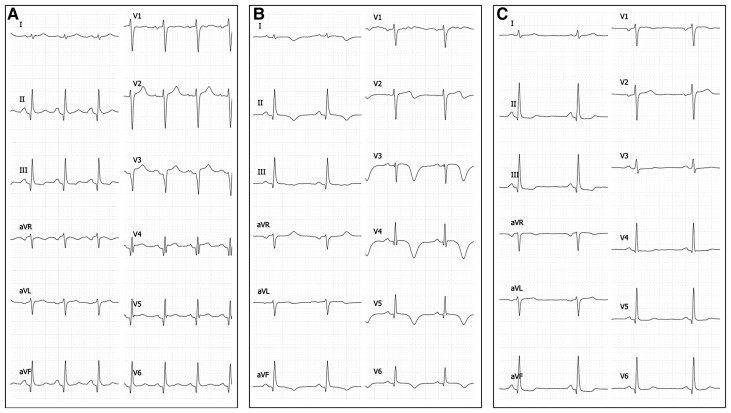
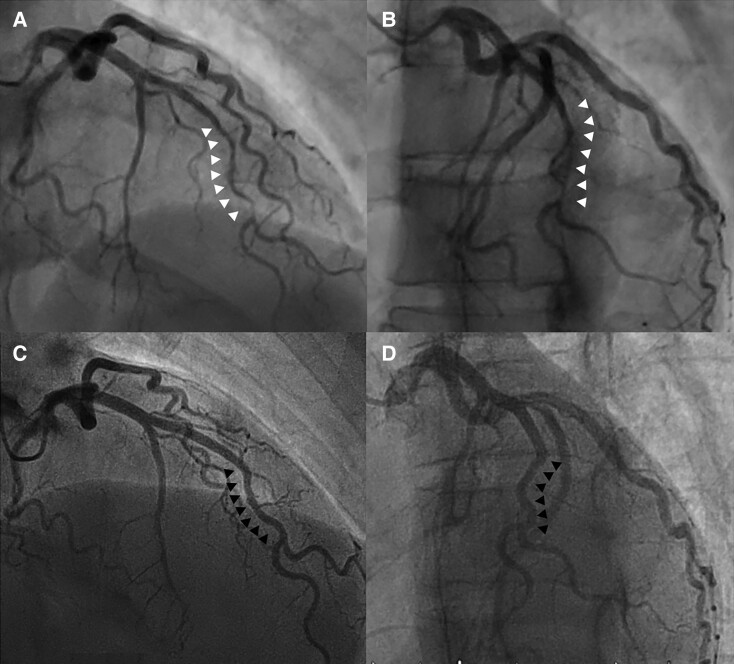
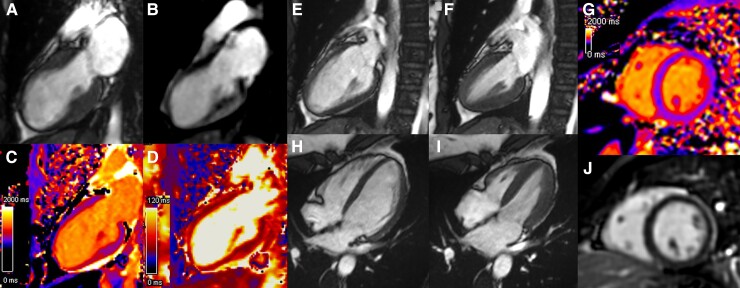
This study included a 49-year-old woman with retrosternal chest pain who was admitted to the emergency department. Coronary angiography indicated Type 2A SCAD involving the middle part of the left anterior descending artery, while the left ventriculography indicated a typical left ventricular apical ballooning compatible with TTS. A conservative approach to the management of SCAD was observed. After a 3-month follow-up, the control coronary angiography showed a complete angiographic resolution. The results of the transthoracic echocardiogram (TTE) and cardiac magnetic resonance revealed a complete normalization of the pathological features. The patient remained asymptomatic and showed no recurrence of chest pain.
Although TTS and SCAD are commonly observed in patients who share certain characteristics (women, without atheromatous terrain, stress-related factors), it is difficult to establish a pathophysiological link between them. This observation confirms the non-random association of two rare entities of myocardial infarction with no obstructive coronary arteries. Although TTS can be easily diagnosed via non-invasive imaging, the diagnosis of SCAD is more difficult. The findings of this study suggest a concomitant presentation between SCAD and TTS. Although the treatment approach to SCAD is usually conservative, severe forms of this disease require early diagnosis and appropriate treatment.
自发性冠状动脉夹层(SCAD)仍是一种诊断不足的疾病,需要对血管造影征象进行详细评估。它与Takotsubo综合征(TTS)也有相似的临床表现。SCAD与TTS的并存是可能发生的,这给临床医生的治疗和管理带来困难。
本研究纳入一名因胸骨后胸痛入住急诊科的49岁女性。冠状动脉造影显示2A型SCAD累及左前降支中部,而左心室造影显示典型的左心室心尖气球样变,符合TTS。对SCAD采取了保守治疗方法。经过3个月的随访,对照冠状动脉造影显示血管造影完全恢复正常。经胸超声心动图(TTE)和心脏磁共振成像结果显示病理特征完全恢复正常。患者仍无症状,未出现胸痛复发。
虽然TTS和SCAD在具有某些共同特征(女性、无动脉粥样硬化病变、与应激相关因素)的患者中较为常见,但很难在它们之间建立病理生理联系。这一观察结果证实了两种罕见的非阻塞性冠状动脉心肌梗死实体之间的非随机关联。虽然TTS可通过无创成像轻松诊断,但SCAD的诊断更为困难。本研究结果提示SCAD与TTS并存。虽然SCAD的治疗方法通常是保守的,但这种疾病的严重形式需要早期诊断和适当治疗。