Karmakar Shilpita, Ramirez Oscar, Paul Kiran V, Gupta Abhishek K, Kumari Vandana, Botti Valentina, de Los Mozos Igor Ruiz, Neuenkirchen Nils, Ross Robert J, Karanicolas John, Neugebauer Karla M, Pillai Manoj M
Section of Hematology, Yale Cancer Center, New Haven, CT 06511, USA.
Department of Molecular Biophysics and Biochemistry, Yale University School of Medicine, New Haven, CT 06510, USA.
NAR Cancer. 2022 May 2;4(2):zcac015. doi: 10.1093/narcan/zcac015. eCollection 2022 Jun.
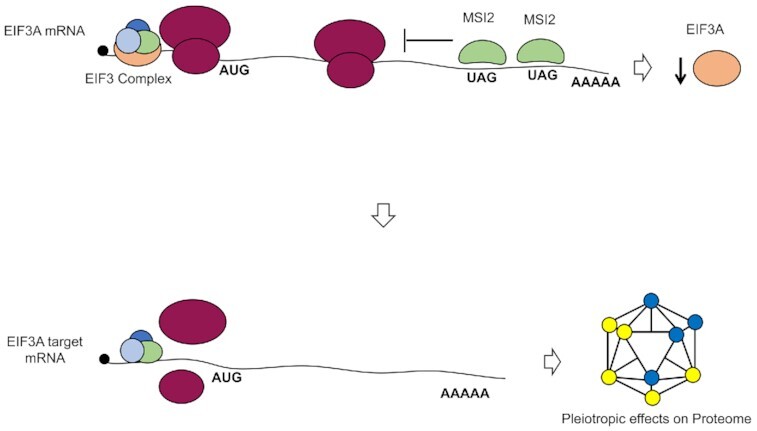
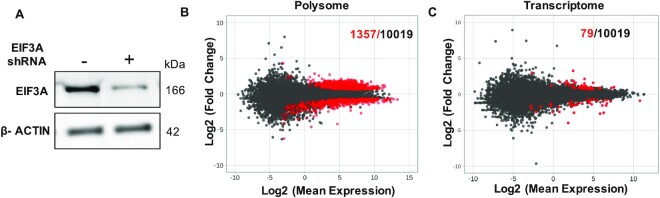
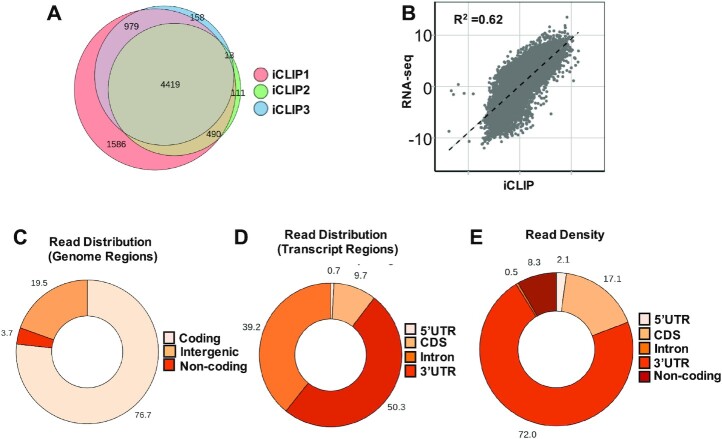
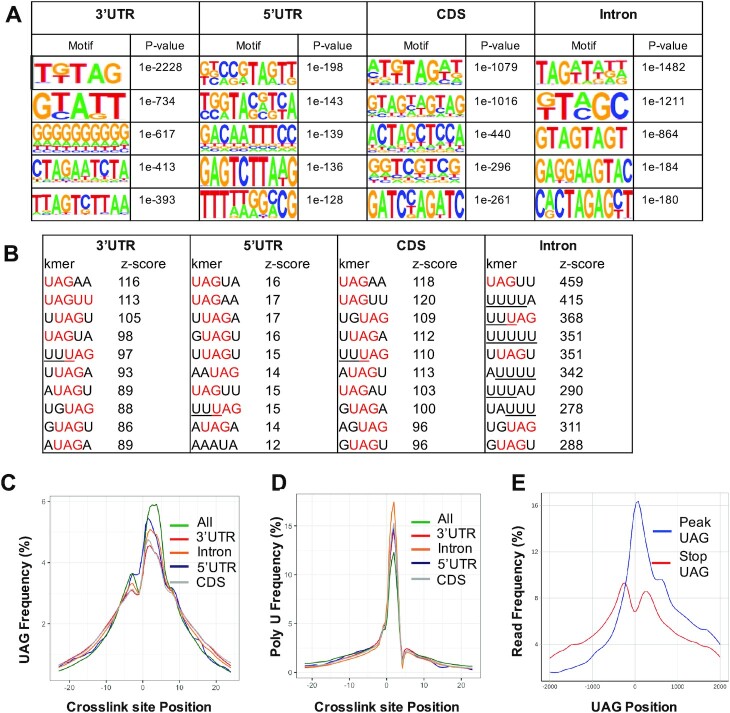
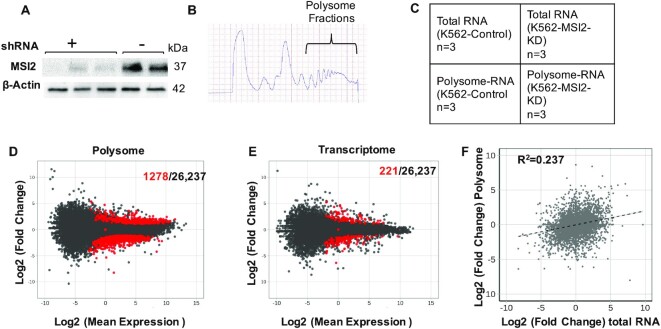
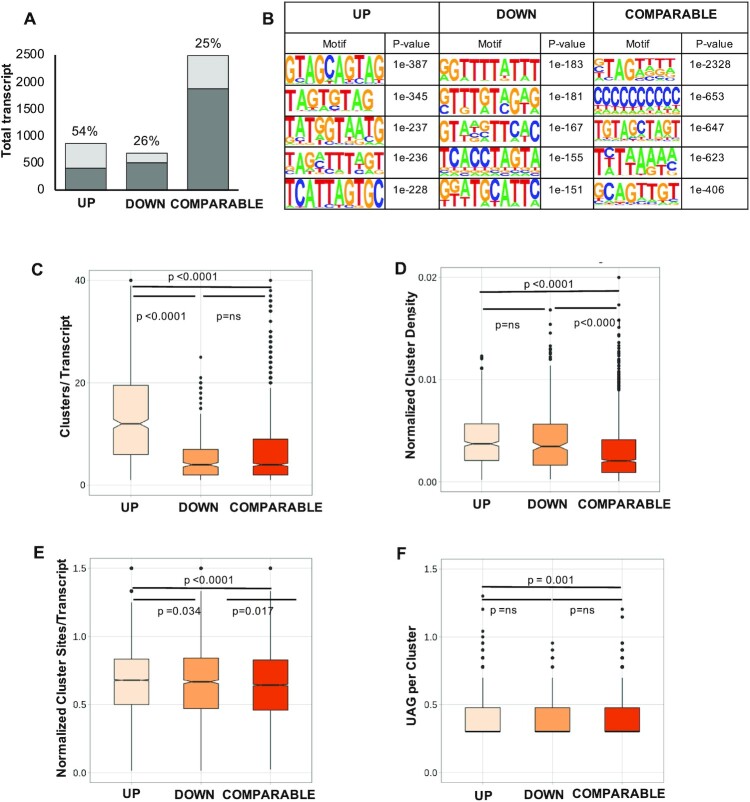
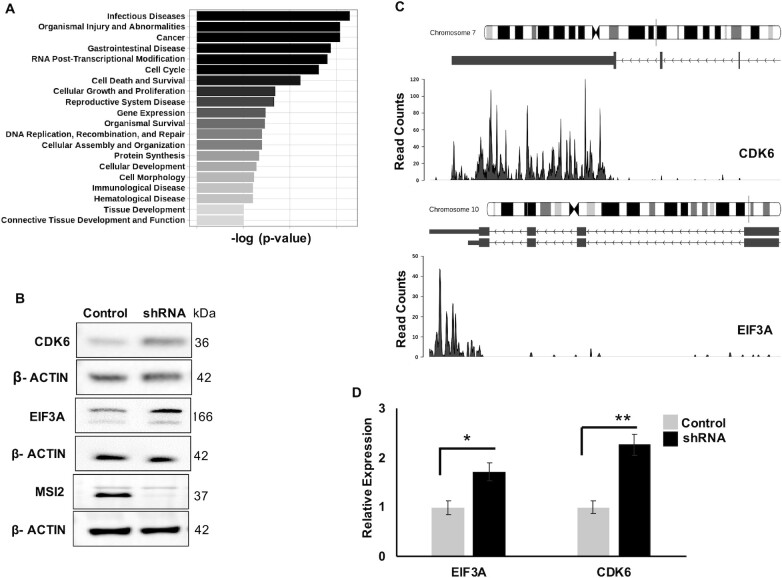
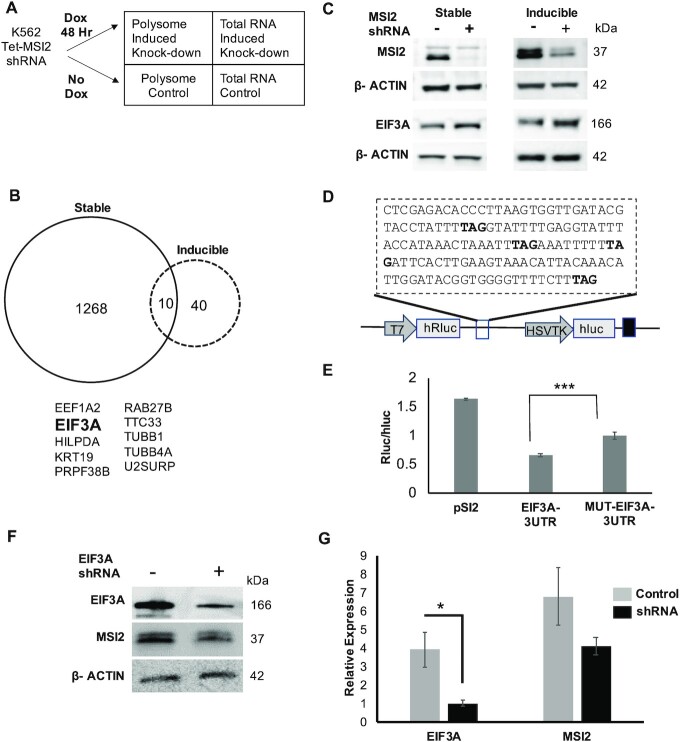
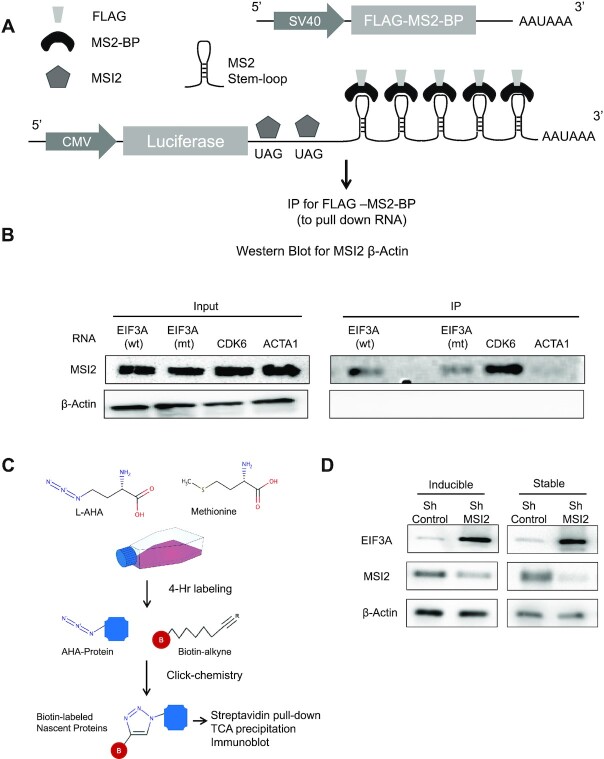
Musashi 2 (MSI2) is an RNA binding protein (RBP) that regulates asymmetric cell division and cell fate decisions in normal and cancer stem cells. MSI2 appears to repress translation by binding to 3' untranslated regions (3'UTRs) of mRNA, but the identity of functional targets remains unknown. Here, we used individual nucleotide resolution cross-linking and immunoprecipitation (iCLIP) to identify direct RNA binding partners of MSI2 and integrated these data with polysome profiling to obtain insights into MSI2 function. iCLIP revealed specific MSI2 binding to thousands of mRNAs largely in 3'UTRs, but translational differences were restricted to a small fraction of these transcripts, indicating that MSI2 regulation is not triggered by simple binding. Instead, the functional targets identified here were bound at higher density and contain more 'UAG' motifs compared to targets bound nonproductively. To further distinguish direct and indirect targets, MSI2 was acutely depleted. Surprisingly, only 50 transcripts were found to undergo translational induction on acute loss. Using complementary approaches, we determined eukaryotic translation initiation factor 3A (EIF3A) to be an immediate, direct target. We propose that MSI2 downregulation of EIF3A amplifies these effects on translation. Our results also underscore the challenges in defining functional targets of RBPs since mere binding does not imply a discernible functional interaction.
Musashi 2(MSI2)是一种RNA结合蛋白(RBP),可调节正常和癌症干细胞中的不对称细胞分裂及细胞命运决定。MSI2似乎通过与mRNA的3'非翻译区(3'UTR)结合来抑制翻译,但功能靶点的具体情况仍不清楚。在此,我们使用单核苷酸分辨率交联和免疫沉淀(iCLIP)来鉴定MSI2的直接RNA结合伙伴,并将这些数据与多核糖体谱分析相结合,以深入了解MSI2的功能。iCLIP显示MSI2特异性结合数千种主要位于3'UTR的mRNA,但翻译差异仅限于这些转录本中的一小部分,这表明MSI2的调控并非由简单结合触发。相反,与非有效结合的靶点相比,此处鉴定出的功能靶点结合密度更高,且含有更多“UAG”基序。为了进一步区分直接和间接靶点,我们对MSI2进行了快速敲低。令人惊讶的是,仅发现50种转录本在快速缺失时会发生翻译诱导。通过互补方法,我们确定真核翻译起始因子3A(EIF3A)是一个直接的直接靶点。我们提出MSI2对EIF3A的下调会放大这些对翻译的影响。我们的结果还强调了定义RBP功能靶点的挑战,因为单纯的结合并不意味着存在可识别的功能相互作用。