Banik Jewel, Moreira Ana Rita Silva, Lim Juchan, Tomlinson Sophia, Hardy Linda L, Lagasse Alex, Haney Anessa, Crimmins Meghan R, Boehm Ulrich, Odle Angela K, MacNicol Melanie C, Childs Gwen V, MacNicol Angus M
Department of Neurobiology and Developmental Sciences, University of Arkansas for Medical Sciences, 4301 W Markham, Slot 814, Little Rock, AR, 72205, USA.
Arkansas Children's Nutrition Center, Arkansas Children's Hospital, Little Rock, AR, USA.
Sci Rep. 2024 Mar 11;14(1):5918. doi: 10.1038/s41598-024-56002-8.
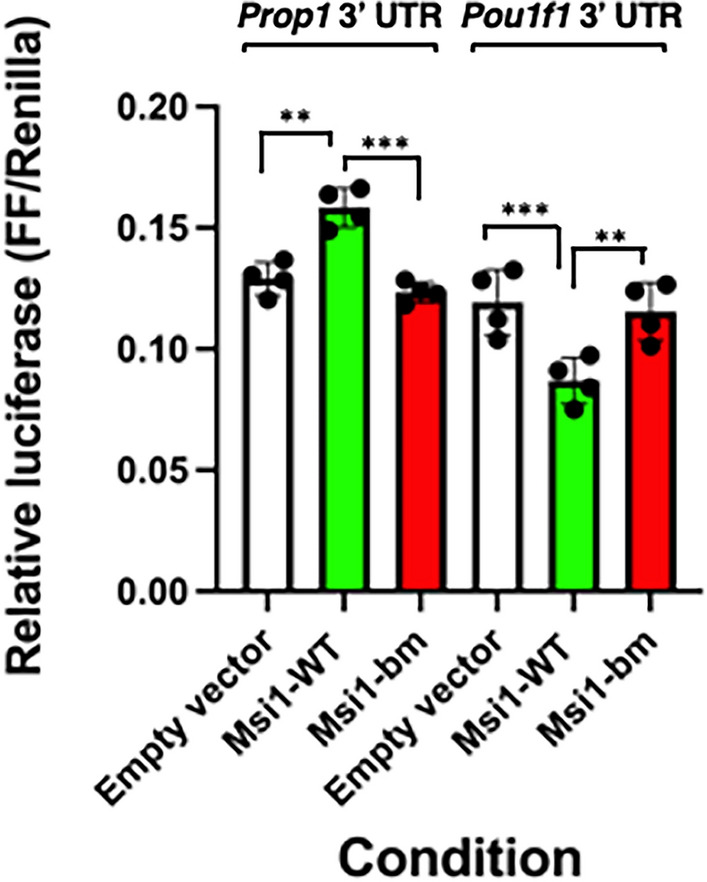
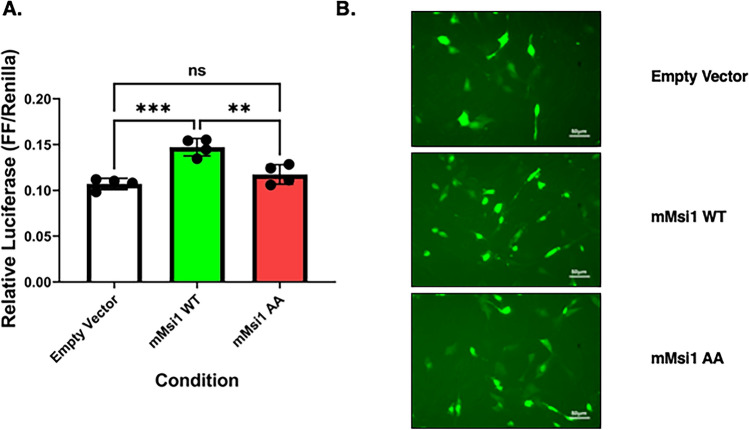
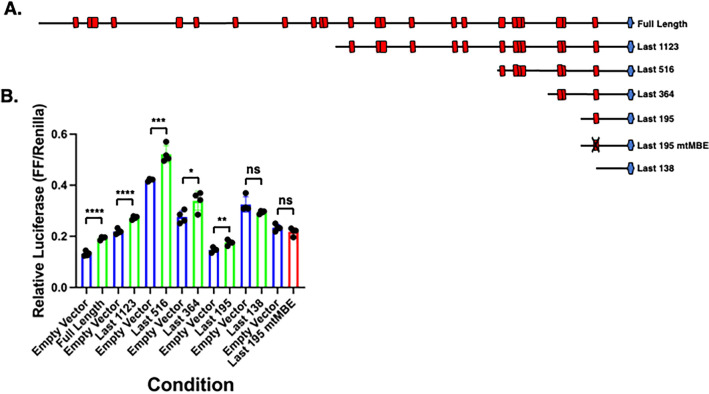
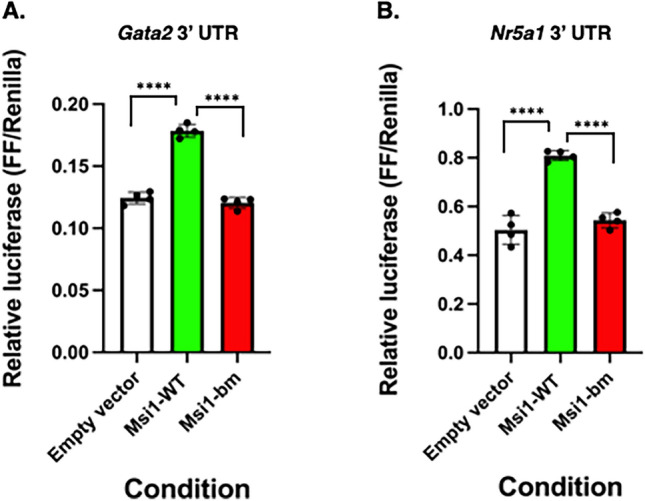
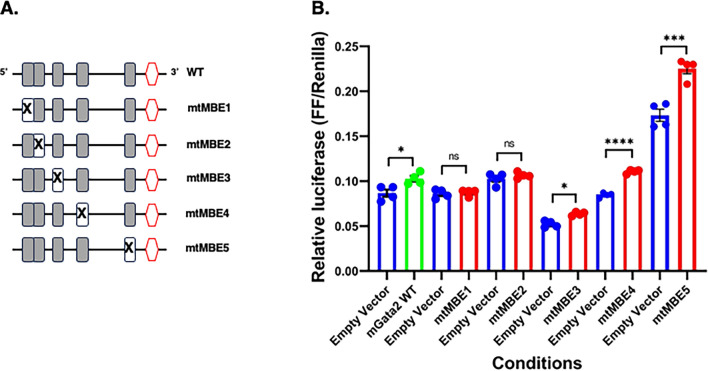
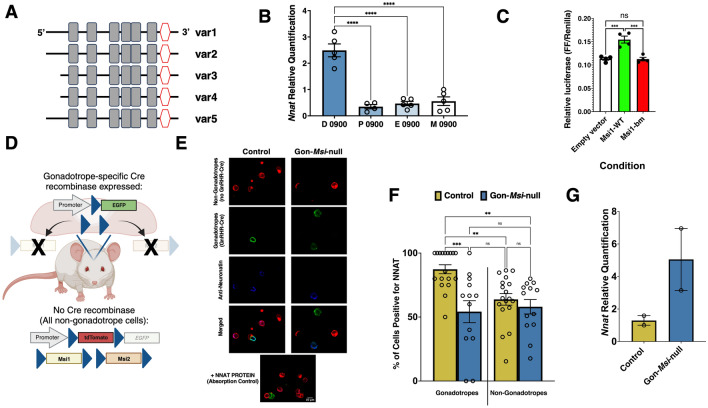
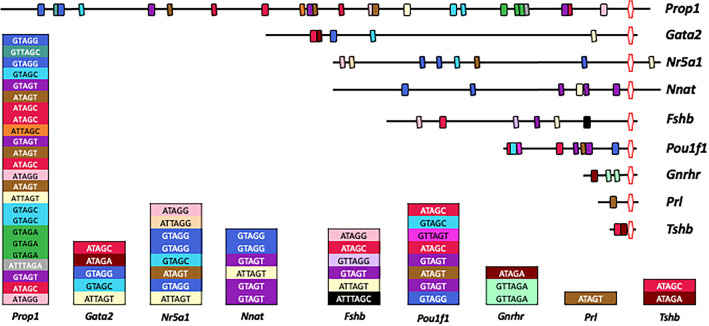
The pituitary functions as a master endocrine gland that secretes hormones critical for regulation of a wide variety of physiological processes including reproduction, growth, metabolism and stress responses. The distinct hormone-producing cell lineages within the pituitary display remarkable levels of cell plasticity that allow remodeling of the relative proportions of each hormone-producing cell population to meet organismal demands. The molecular mechanisms governing pituitary cell plasticity have not been fully elucidated. Our recent studies have implicated a role for the Musashi family of sequence-specific mRNA binding proteins in the control of pituitary hormone production, pituitary responses to hypothalamic stimulation and modulation of pituitary transcription factor expression in response to leptin signaling. To date, these actions of Musashi in the pituitary appear to be mediated through translational repression of the target mRNAs. Here, we report Musashi1 directs the translational activation, rather than repression, of the Prop1, Gata2 and Nr5a1 mRNAs which encode key pituitary lineage specification factors. We observe that Musashi1 further directs the translational activation of the mRNA encoding the glycolipid Neuronatin (Nnat) as determined both in mRNA reporter assays as well as in vivo. Our findings suggest a complex bifunctional role for Musashi1 in the control of pituitary cell function.
垂体作为主要的内分泌腺,分泌对多种生理过程(包括生殖、生长、代谢和应激反应)调节至关重要的激素。垂体内不同的激素产生细胞谱系表现出显著的细胞可塑性水平,这使得每个激素产生细胞群体的相对比例能够重塑,以满足机体需求。控制垂体细胞可塑性的分子机制尚未完全阐明。我们最近的研究表明,序列特异性mRNA结合蛋白的Musashi家族在垂体激素产生的控制、垂体对下丘脑刺激的反应以及响应瘦素信号调节垂体转录因子表达方面发挥作用。迄今为止,Musashi在垂体中的这些作用似乎是通过对靶mRNA的翻译抑制来介导的。在这里,我们报告Musashi1指导编码关键垂体谱系特异性因子的Prop1、Gata2和Nr5a1 mRNA的翻译激活,而不是抑制。我们观察到,无论是在mRNA报告基因分析还是在体内实验中,Musashi1都进一步指导编码糖脂神经节蛋白(Nnat)的mRNA的翻译激活。我们的研究结果表明,Musashi1在垂体细胞功能控制中具有复杂的双功能作用。