Corbett Stephen, Cho Jin-Gun, Ulbricht Evan, Sintchenko Vitali
Centre for Population Health, Western Sydney Local Health District, Sydney, New South Wales 2151, Australia.
Faculty of Medicine and Health, Westmead Clinical School, The University of Sydney, Sydney, New South Wales 2006, Australia.
Evol Med Public Health. 2022 Mar 8;10(1):189-201. doi: 10.1093/emph/eoac008. eCollection 2022.
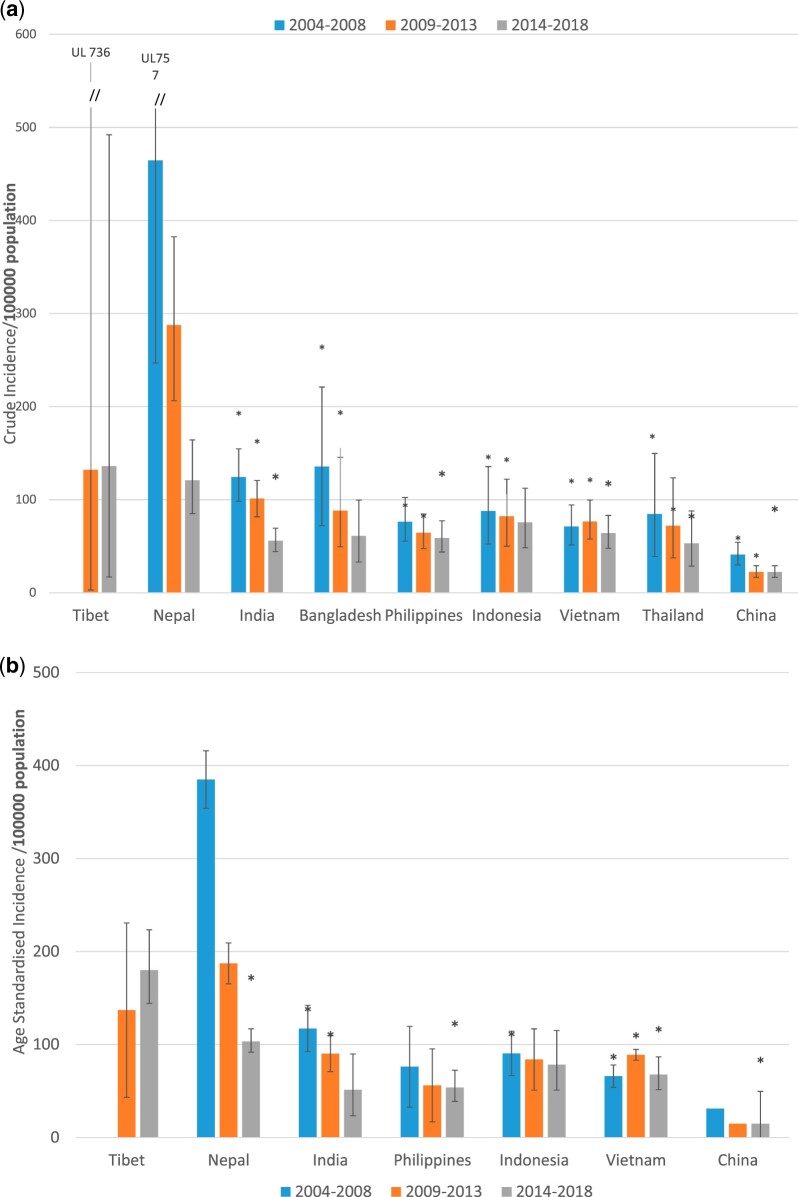
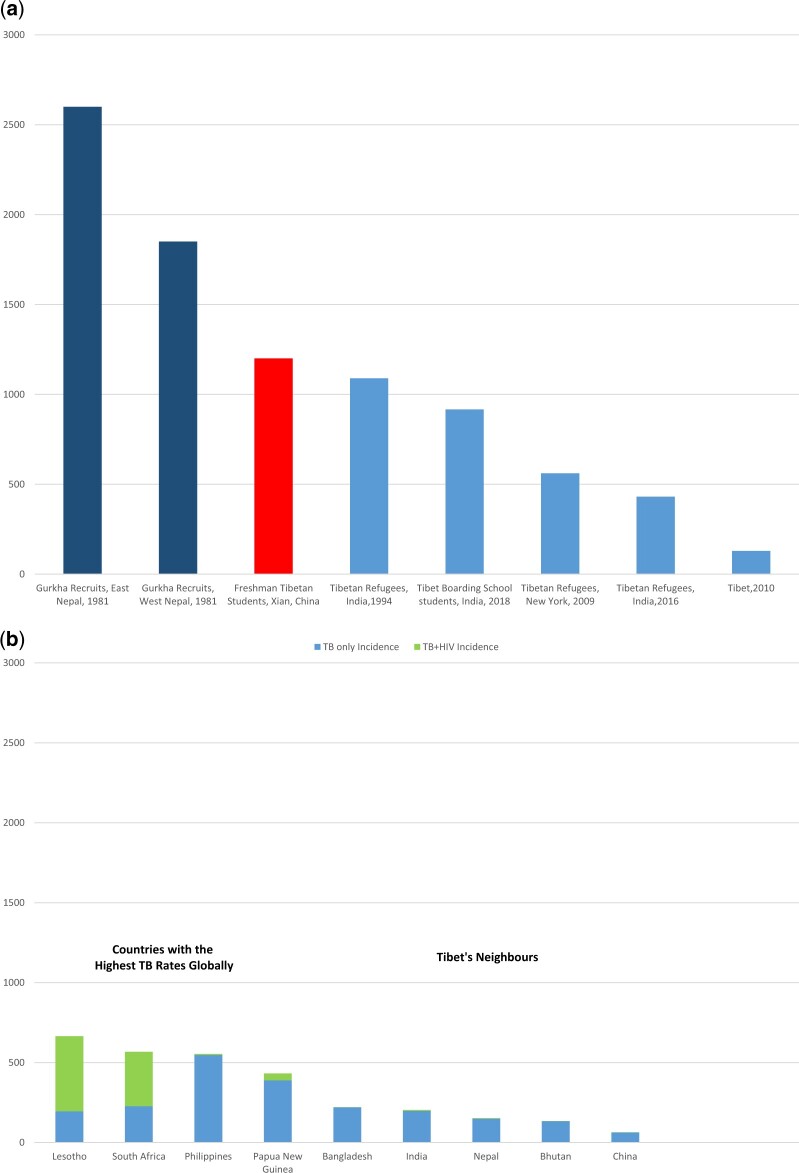
High rates of tuberculosis (TB) in migrants from Tibet and Nepal have been documented for over 120 years and were previously ascribed to poor living conditions in the places of settlement. Adaptations to altitude involving genes in the Hypoxia-Inducible Factor pathway are present in 90-95% of Tibetans and in Nepalis these allele frequencies increase by 17% with each 1000 m increase in altitude.
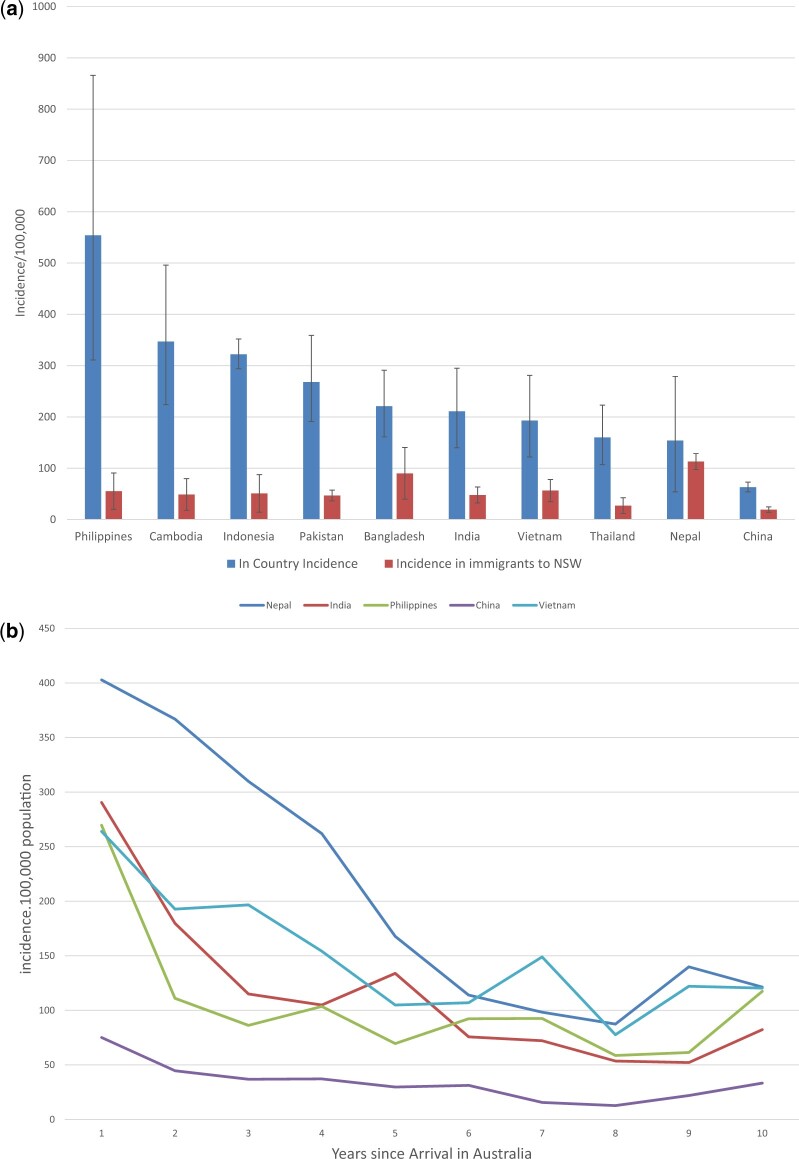
We calculated the incidence of TB by country of origin in immigrants from South and East Asia in New South Wales (NSW), Australia between 2004 and 2018, and compared disease severity, site of infection, evidence of local transmission and prevalence of latent TB, among these groups.
The incidence of active TB was consistently higher among 30 000 Nepalese and 1000 Tibetans than among all other immigrants to NSW. Nepal was the only country of origin where TB incidence in immigrants was not significantly lower than the reported TB incidence in the country of origin.
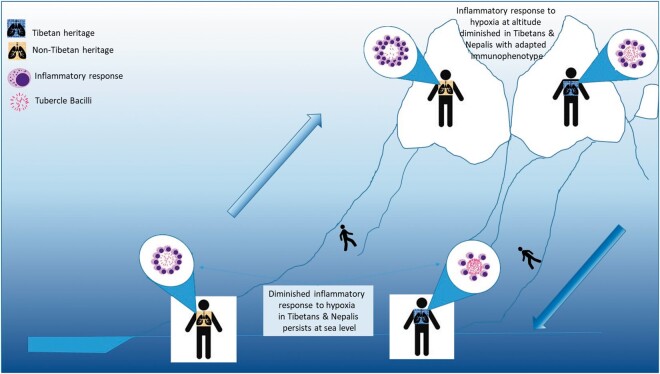
High rates of TB among Nepalese and Tibetan immigrants in Australia are unlikely to be attributable to pre-existing disease or local acquisition. Phenotypic effects of high-altitude adaptations may include a dampening of inflammatory responses to hypoxia, an effect unmasked by descent to a normoxic environment. A corollary of these findings may be that hypoxia-induced inflammation limits TB progression, reconfirming previous explanations for the apparent efficacy of high-altitude sanatoria. If vindicated by subsequent research, these provisional findings could open new avenues into preventive and host-directed interventions for tuberculosis.
The incidence of tuberculosis among Nepalese immigrants to Australia and other people of Tibetan heritage who migrate to lower altitudes is very high. In these screened populations, pre-existing active TB or locally acquired infection are unlikely explanations. We suggest that adaptations to altitude combined with descent to higher oxygen levels in air at sea level may be contributing factors.
在过去120多年里,来自西藏和尼泊尔的移民中结核病(TB)发病率一直很高,以前认为这是由于定居地生活条件差所致。90%至95%的藏族人具有涉及缺氧诱导因子途径基因的高原适应性,而在尼泊尔人中,随着海拔每升高1000米,这些等位基因频率增加17%。
我们计算了2004年至2018年期间澳大利亚新南威尔士州(NSW)来自南亚和东亚移民按原籍国划分的结核病发病率,并比较了这些群体之间的疾病严重程度、感染部位、局部传播证据以及潜伏性结核病患病率。
在30000名尼泊尔人和1000名藏族人中,活动性结核病的发病率一直高于新南威尔士州的所有其他移民。尼泊尔是唯一一个移民中结核病发病率不显著低于原籍国报告的结核病发病率的原籍国。
澳大利亚尼泊尔和藏族移民中结核病的高发病率不太可能归因于既往疾病或当地感染。高原适应性的表型效应可能包括对缺氧炎症反应的减弱,这种效应在降至常氧环境时会显现出来。这些发现的一个推论可能是缺氧诱导的炎症限制了结核病的进展,再次证实了以前对高原疗养院明显疗效的解释。如果后续研究证实这些初步发现,可能会为结核病的预防和宿主导向干预开辟新途径。
移民到澳大利亚的尼泊尔人和其他有藏族血统且迁移到较低海拔地区的人群中结核病发病率非常高。在这些经过筛查的人群中,既往活动性结核病或当地获得性感染不太可能是原因。我们认为高原适应性加上降至海平面较高氧气水平的空气环境可能是促成因素。