Jia Jie, Tang Jing
Department of Orthopedics, Union Hospital, Tongji Medical College, Huazhong University of Science and Technology, Wuhan, Hubei, China.
Cancer Center, Union Hospital, Tongji Medical College, Huazhong University of Science and Technology, Wuhan, Hubei, China.
J Clin Transl Hepatol. 2022 Apr 28;10(2):273-283. doi: 10.14218/JCTH.2021.00010. Epub 2021 Aug 20.
With high rates of recurrence post-treatment, hepatocellular carcinoma (HCC) is one of the most common types of cancer worldwide and the major cause of cancer death. To improve the overall survival of HCC patients, identification of a reliable biomarker and precise early diagnosis of HCC remain major unsolved problems.
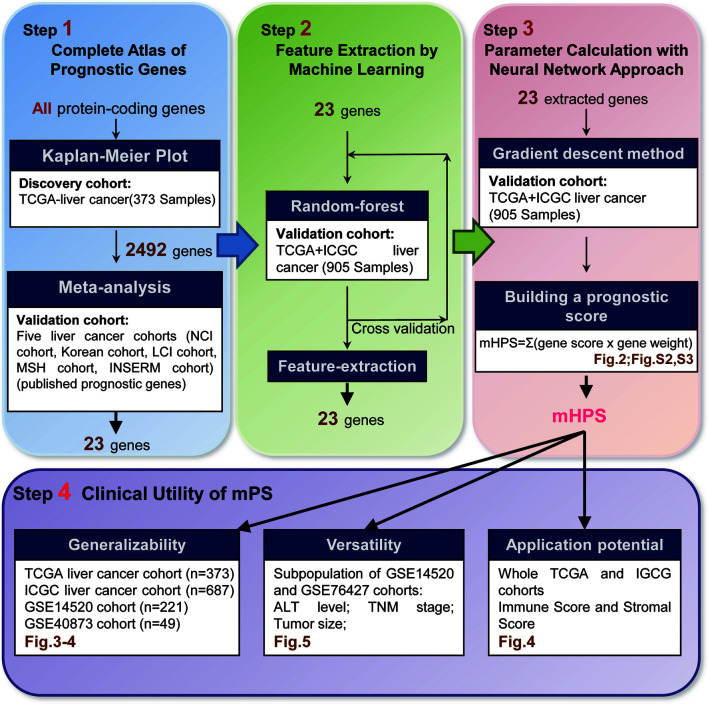
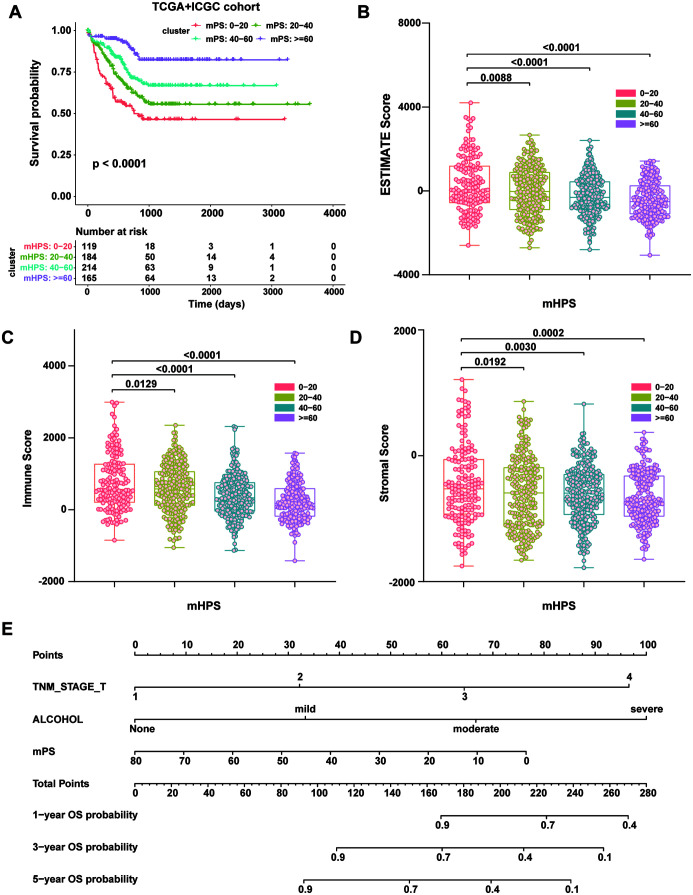
We initially screened data from the Cancer Genome Atlas liver cancer cohort to identify potential prognosis-related genes. Then, a meta-analysis of five international HCC cohorts was implemented to validate such genes. Subsequently, artificial intelligence models (random forest and neural network) were trained to predict prognosis accurately, and a log-rank test was performed for validation. Finally, the correlation between the molecular hepatocellular carcinoma prognostic score (mHPS) and the stromal and immune scoring in HCC were explored.
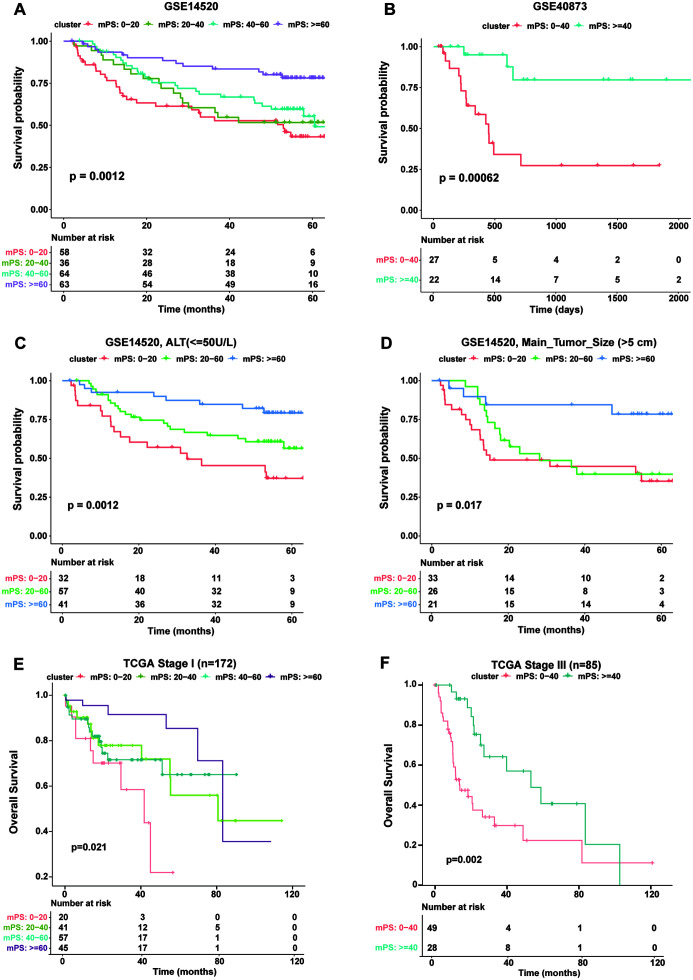
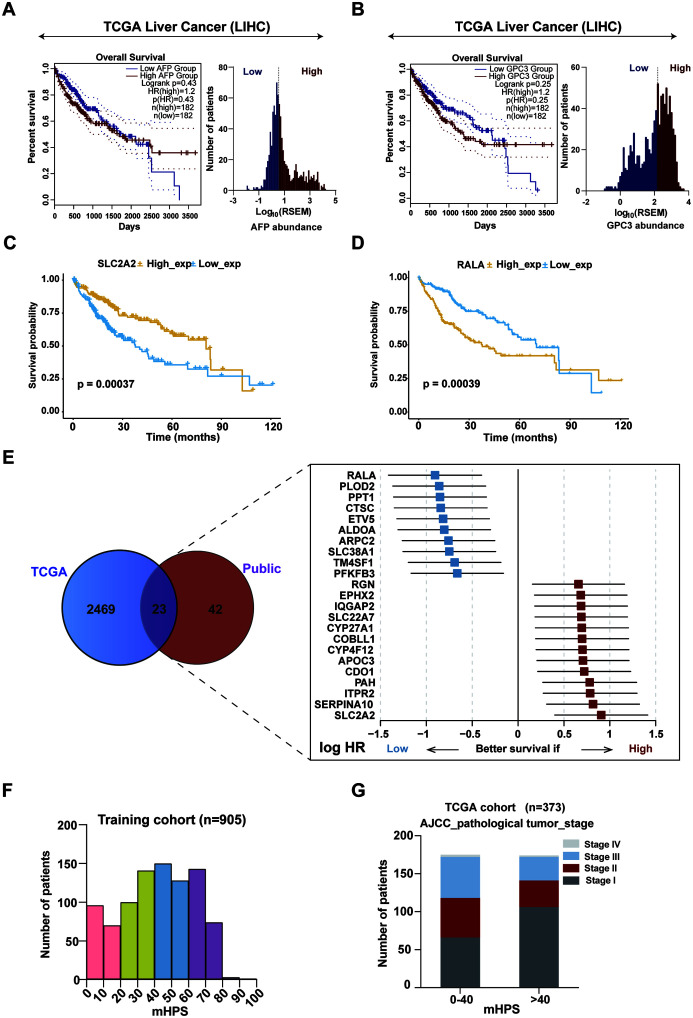
A comprehensive list of 65 prognosis-related genes was obtained, most of which have been not extensively studied thus far. A universal HCC mHPS system depending on the expression pattern of only 23 genes was established. The mHPS system had general applicability to HCC patients (log-rank <0.05) in a platform-independent manner (RNA sequencing or microarray). The mHPS was also correlated with the stromal and immune scoring in HCC, reflecting the status of the tumor immune microenvironment.
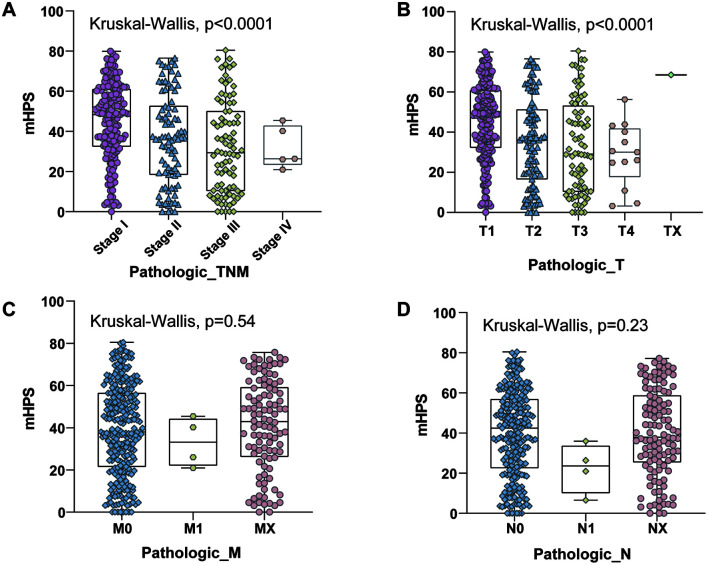
Overall, the mHPS is an easy and cost-effective prognosis predicting system, which can disclose previously uncovered heterogeneity among patient subpopulations. The mHPS system can further stratify patients who are at the same clinical stage and should be valuable for precise treatment. Moreover, the prognosis-related genes recognized in this study have potential in targeted and immune therapy.
肝细胞癌(HCC)治疗后复发率高,是全球最常见的癌症类型之一,也是癌症死亡的主要原因。为提高HCC患者的总生存率,识别可靠的生物标志物以及对HCC进行精确的早期诊断仍是尚未解决的主要问题。
我们首先筛选了癌症基因组图谱肝癌队列的数据,以识别潜在的预后相关基因。然后,对五个国际HCC队列进行荟萃分析以验证这些基因。随后,训练人工智能模型(随机森林和神经网络)以准确预测预后,并进行对数秩检验以进行验证。最后,探讨了分子肝细胞癌预后评分(mHPS)与HCC中基质和免疫评分之间的相关性。
获得了一份包含65个预后相关基因的综合列表,其中大多数基因迄今为止尚未得到广泛研究。建立了一个仅依赖23个基因表达模式的通用HCC mHPS系统。mHPS系统以平台独立的方式(RNA测序或微阵列)对HCC患者具有普遍适用性(对数秩<0.05)。mHPS还与HCC中的基质和免疫评分相关,反映了肿瘤免疫微环境的状态。
总体而言,mHPS是一种简单且经济高效的预后预测系统,它可以揭示患者亚群之间先前未发现的异质性。mHPS系统可以进一步对处于相同临床阶段的患者进行分层,对精确治疗具有重要价值。此外,本研究中识别出的预后相关基因在靶向治疗和免疫治疗方面具有潜力。