Department of Molecular and Cellular Biology, Medical Institute of Bioregulation, Kyushu University, 3-1-1 Maidashi, Higashi-ku, Fukuoka, Japan.
Department of Molecular and Cellular Biology, Medical Institute of Bioregulation, Kyushu University, 3-1-1 Maidashi, Higashi-ku, Fukuoka, Japan.
EBioMedicine. 2019 Aug;46:150-159. doi: 10.1016/j.ebiom.2019.07.046. Epub 2019 Jul 26.
Although many prognosis-predicting molecular scores for breast cancer have been developed, they are applicable to only limited disease subtypes. We aimed to develop a novel prognostic score that is applicable to a wider range of breast cancer patients.
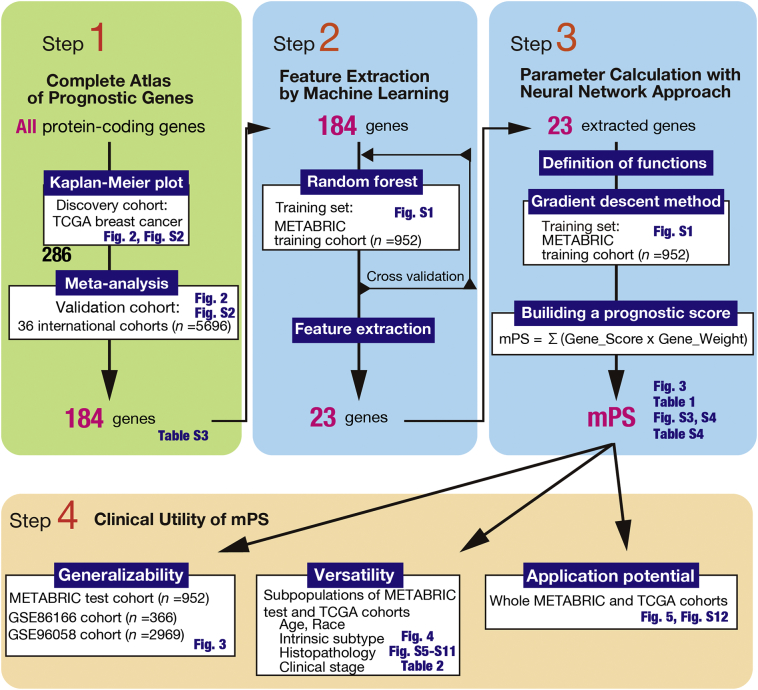
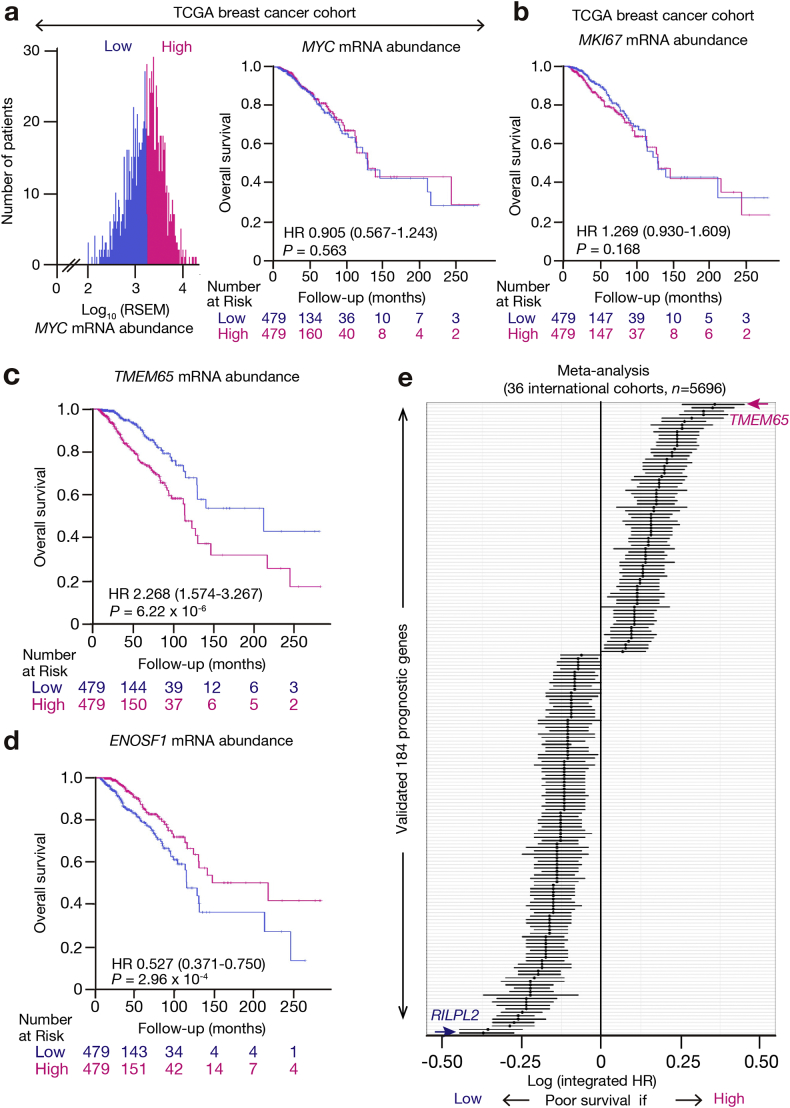
We initially examined The Cancer Genome Atlas breast cancer cohort to identify potential prognosis-related genes. We then performed a meta-analysis of 36 international breast cancer cohorts to validate such genes. We trained artificial intelligence models (random forest and neural network) to predict prognosis precisely, and we finally validated our prediction with the log-rank test.
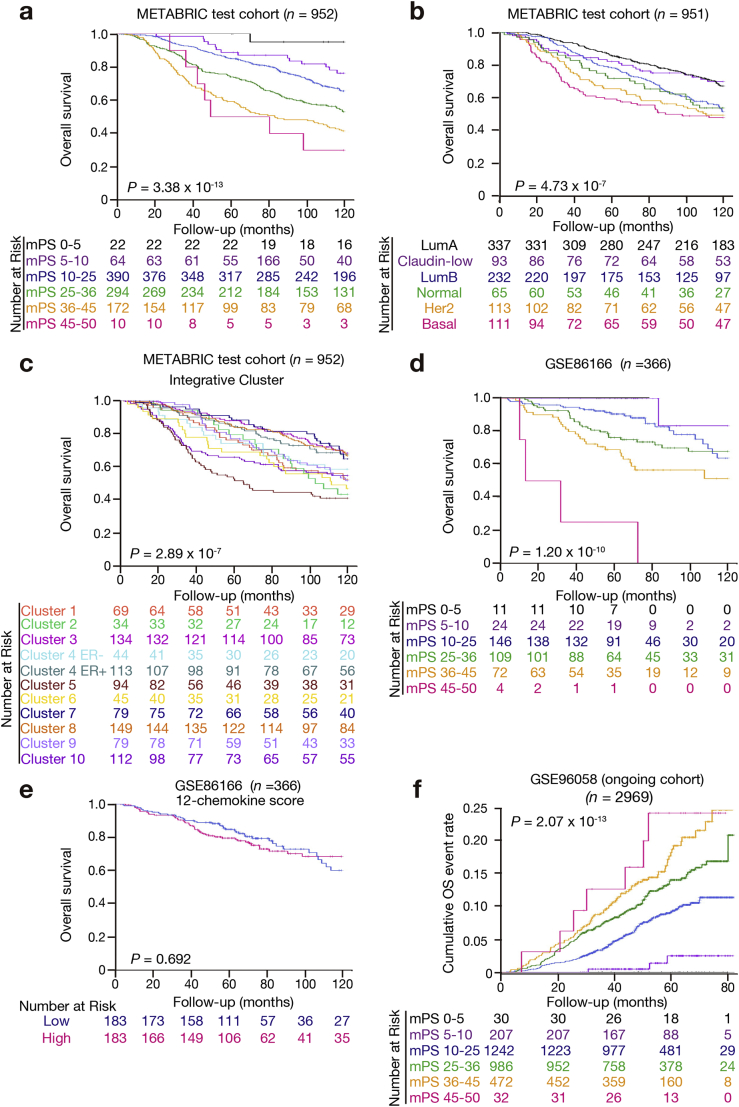
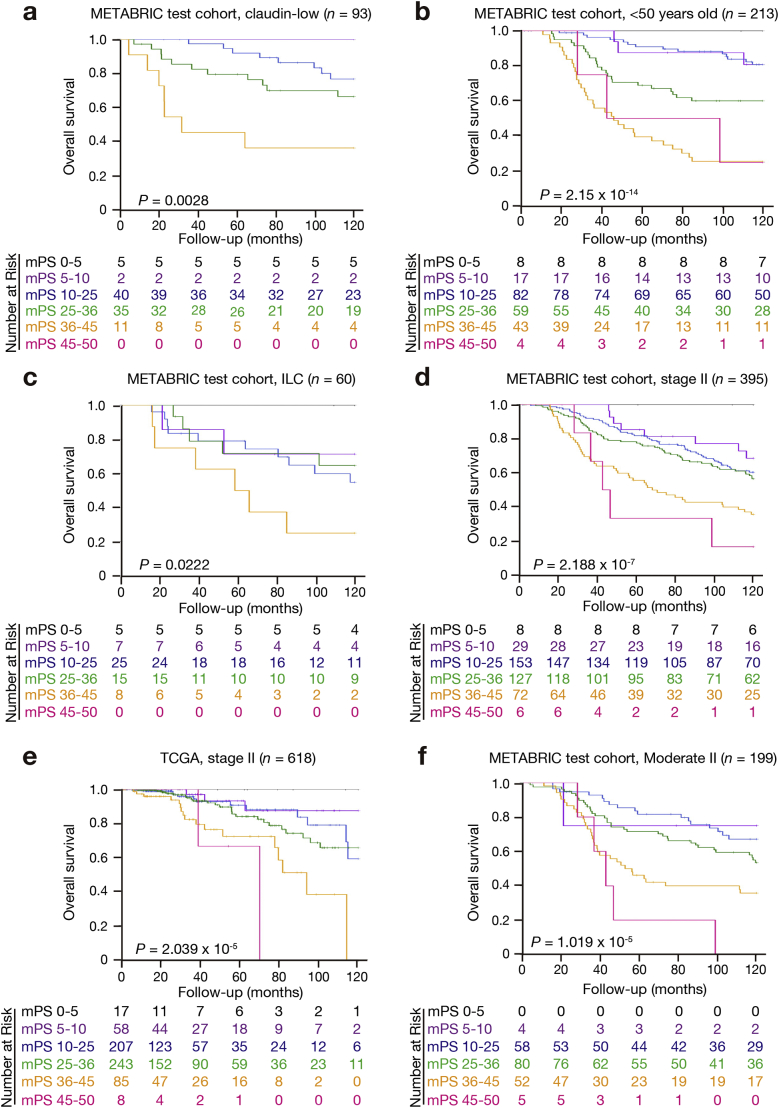
We identified a comprehensive list of 184 prognosis-related genes, most of which have been not extensively studied to date. We then established a universal molecular prognostic score (mPS) that relies on the expression status of only 23 of these genes. The mPS system is almost universally applicable to breast cancer patients (log-rank P < 0.05) in a manner independent of platform (microarray or RNA sequencing).
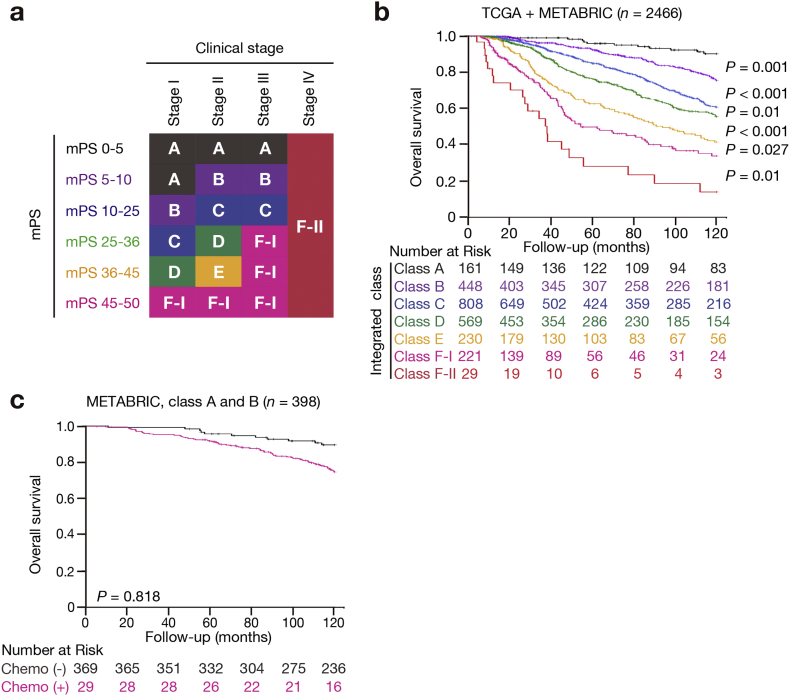
The mPS system is simple and cost-effective to apply and yet is able to reveal previously unrecognized heterogeneity among patient subpopulations in a platform-independent manner. The combination of mPS and clinical stage stratifies prognosis even more precisely and should prove of value for avoidance of overtreatment. In addition, the prognosis-related genes uncovered in this study are potential drug targets. FUND: This work was supported by KAKENHI grants from the Ministry of Education, Culture, Sports, Science, and Technology of Japan to H.S. (19K20403) and to K.I·N (18H05215).
尽管已经开发出许多用于预测乳腺癌预后的分子评分,但它们仅适用于有限的疾病亚型。我们旨在开发一种新的预后评分,适用于更广泛的乳腺癌患者。
我们首先检查了癌症基因组图谱乳腺癌队列,以确定潜在的预后相关基因。然后,我们对 36 个国际乳腺癌队列进行了荟萃分析,以验证这些基因。我们使用人工智能模型(随机森林和神经网络)来精确预测预后,并最终使用对数秩检验进行验证。
我们确定了一份全面的 184 个与预后相关的基因列表,其中大多数迄今尚未得到广泛研究。然后,我们建立了一个通用的分子预后评分(mPS),该评分仅依赖于其中 23 个基因的表达状态。mPS 系统几乎可以普遍适用于乳腺癌患者(对数秩 P<0.05),而与平台(微阵列或 RNA 测序)无关。
mPS 系统简单且具有成本效益,并且能够以独立于平台的方式揭示患者亚群中以前未被认识到的异质性。mPS 与临床分期的结合甚至可以更精确地分层预后,并且应该有助于避免过度治疗。此外,本研究中发现的与预后相关的基因是潜在的药物靶点。
这项工作得到了日本文部科学省的 KAKENHI 资助,分别授予 H.S.(19K20403)和 K.I·N(18H05215)。