Li Xiaojing, Liu Yihua, Wang Na, Liu Yuyu, Wang Shuai, Wang Hongmin, Li Aihua, Ren Shaoda
Laboratory of Drug Discovery and Design, School of Pharmacy, Liaocheng University Liaocheng 252000 China
Department of Medicinal Chemistry, Key Laboratory of Chemical Biology (Ministry of Education), School of Pharmacy, Shandong University Jinan 250012 China.
RSC Adv. 2019 Aug 30;9(47):27294-27304. doi: 10.1039/c9ra04961d. eCollection 2019 Aug 29.
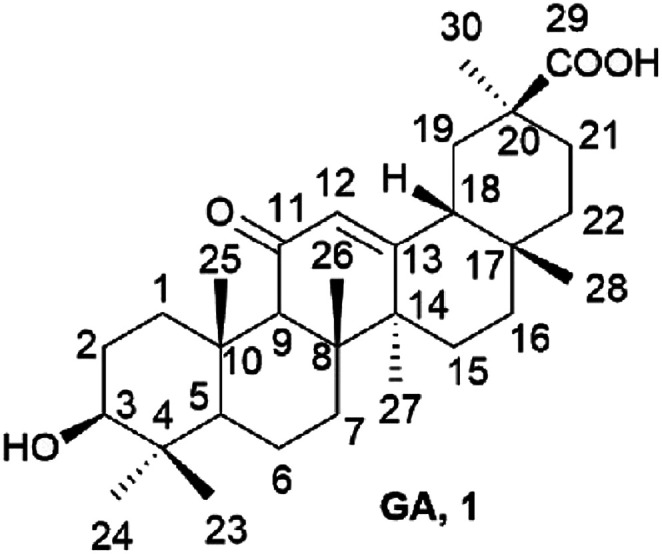
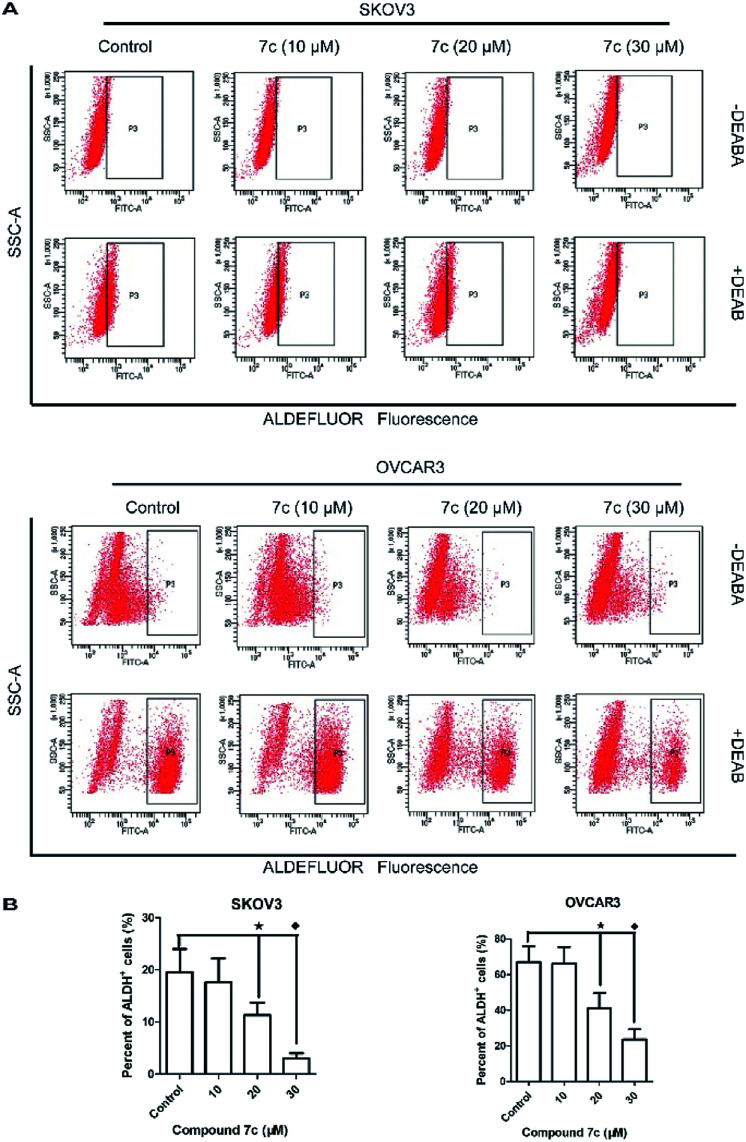
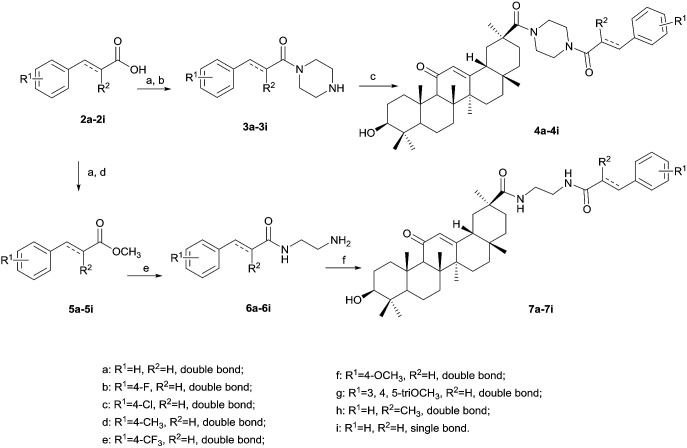
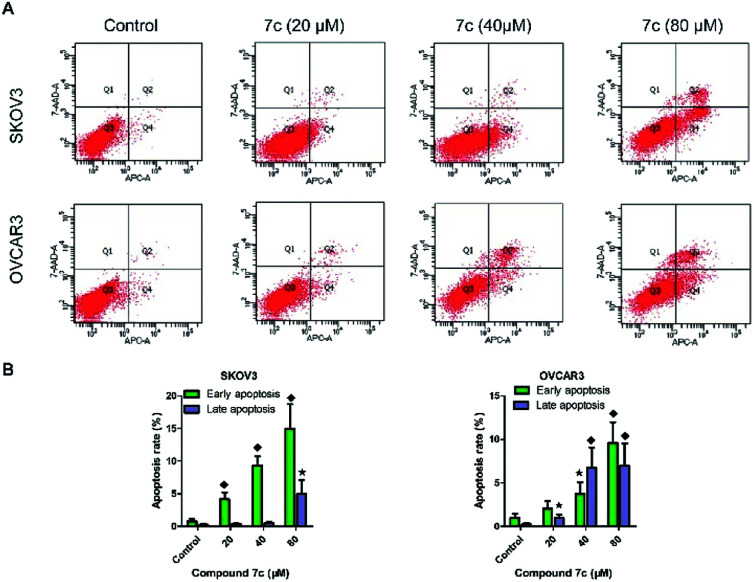
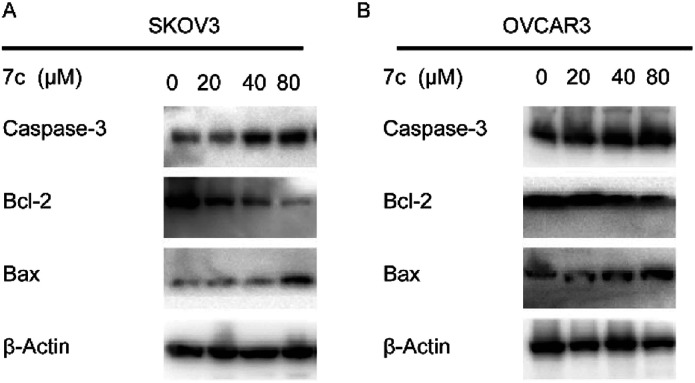
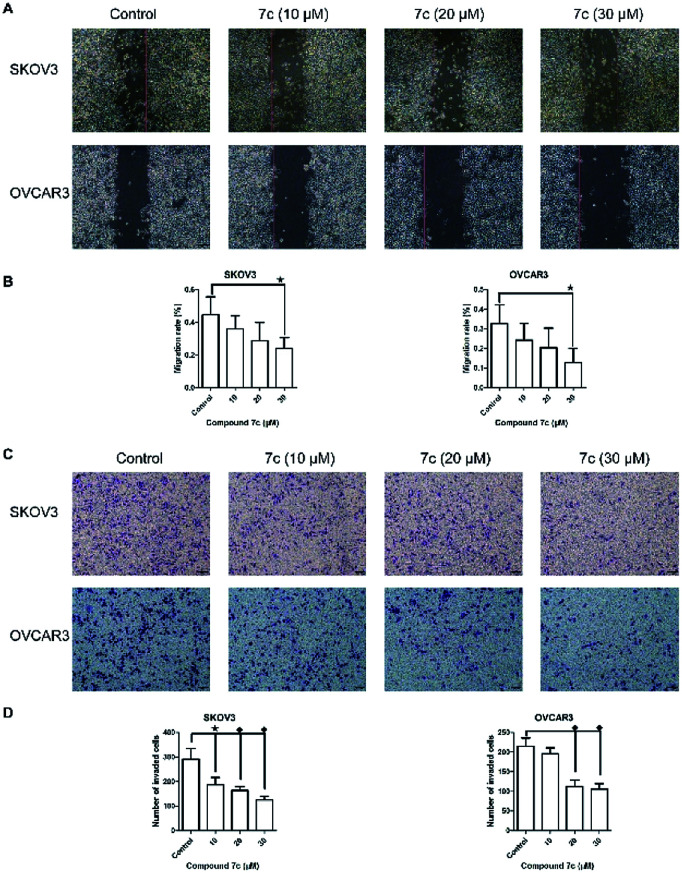
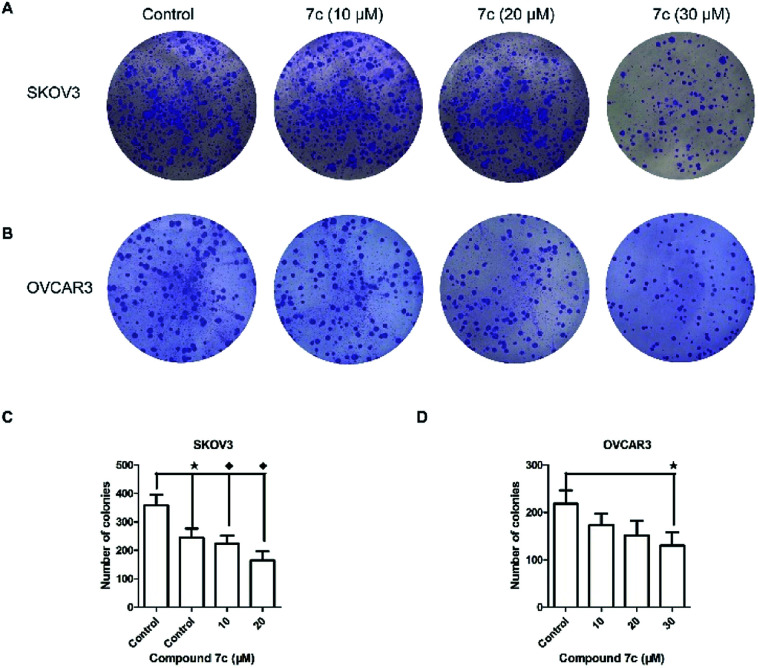
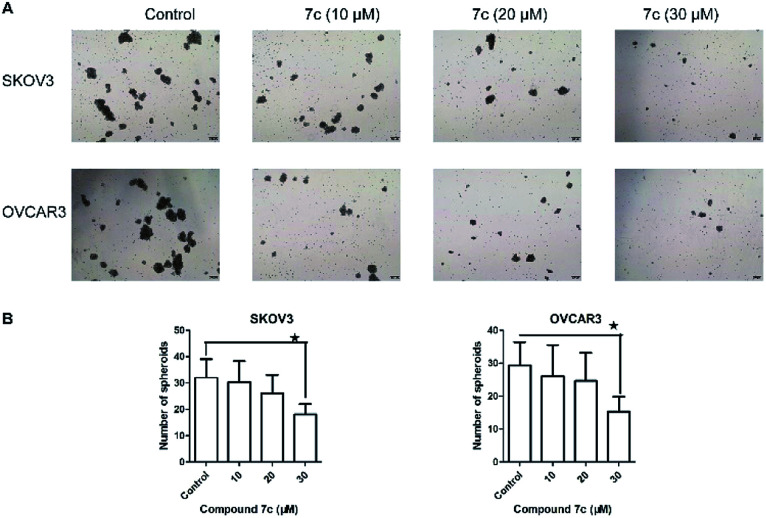
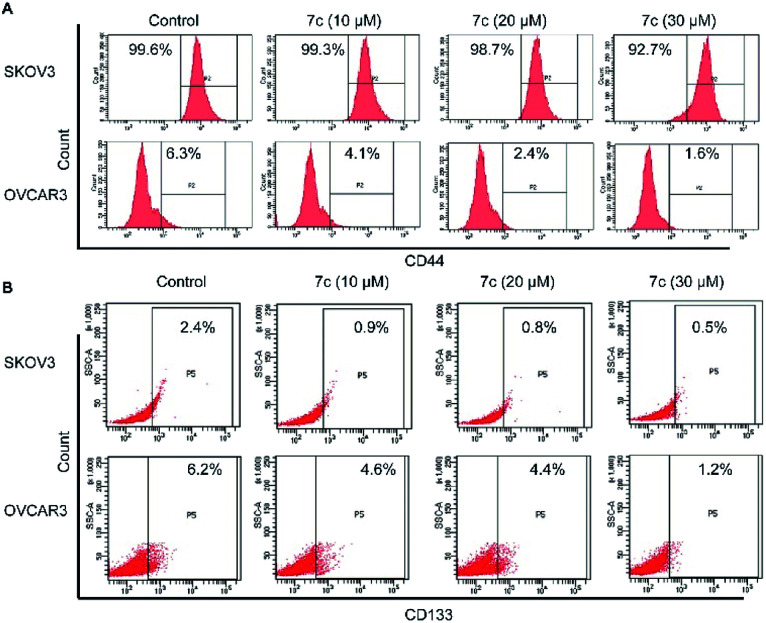
Despite advances in ovarian cancer treatment, the five-year overall survival rate is less than 30% with the presence of cancer stem cells (CSCs). To develop CSC-targeting therapy, a series of 18β-glycyrrhetinic acid (GA) derivatives containing cinnamamide moiety have been designed, synthesized, and screened for their antiproliferative activity in SKOV3 and OVCAR3 cells. Most of the compounds exhibited stronger antiproliferative activity than GA, and compound 7c was the most active one. Further biological studies showed that compound 7c could induce apoptosis and suppress migration. In addition, compound 7c could not only observably decrease the colony formation and sphere formation ability, but also significantly reduce the CD44, CD133, and ALDH subpopulation in SKOV3 and OVCAR3 cells. In conclusion, these results indicate that compound 7c is a promising anti-CSC agent for further anti-ovarian cancer studies.
尽管卵巢癌治疗取得了进展,但在存在癌症干细胞(CSCs)的情况下,五年总生存率仍低于30%。为了开发针对CSC的疗法,设计、合成了一系列含有肉桂酰胺部分的18β-甘草次酸(GA)衍生物,并在SKOV3和OVCAR3细胞中筛选了它们的抗增殖活性。大多数化合物表现出比GA更强的抗增殖活性,化合物7c是活性最强的一种。进一步的生物学研究表明,化合物7c可诱导细胞凋亡并抑制迁移。此外,化合物7c不仅能显著降低SKOV3和OVCAR3细胞的集落形成和球形成能力,还能显著减少CD44、CD133和ALDH亚群。总之,这些结果表明化合物7c是一种有前途的抗CSC药物,可用于进一步的抗卵巢癌研究。