Toledo-Guzmán Mariel E, Bigoni-Ordóñez Gabriele D, Ibáñez Hernández Miguel, Ortiz-Sánchez Elizabeth
Subdirección de Investigación Básica, Instituto Nacional de Cancerología, Mexico City 14080, Mexico.
Departamento de Bioquímica, Laboratorio de Terapia Génica, Escuela Nacional de Ciencias Biológicas, Posgrado de Biomedicina y Biotecnología Molecular, Instituto Politécnico Nacional, Mexico City 11340, Mexico.
World J Stem Cells. 2018 Dec 26;10(12):183-195. doi: 10.4252/wjsc.v10.i12.183.
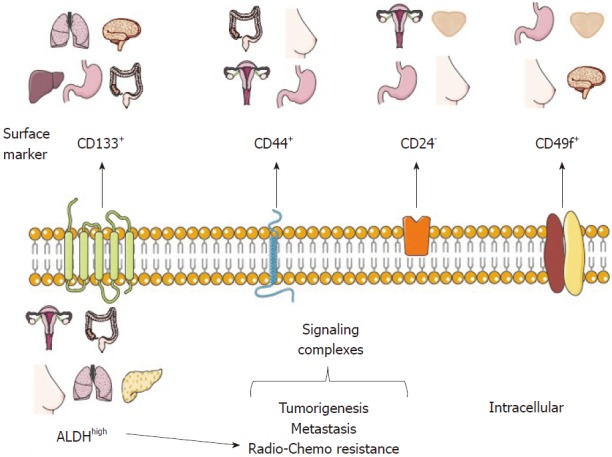
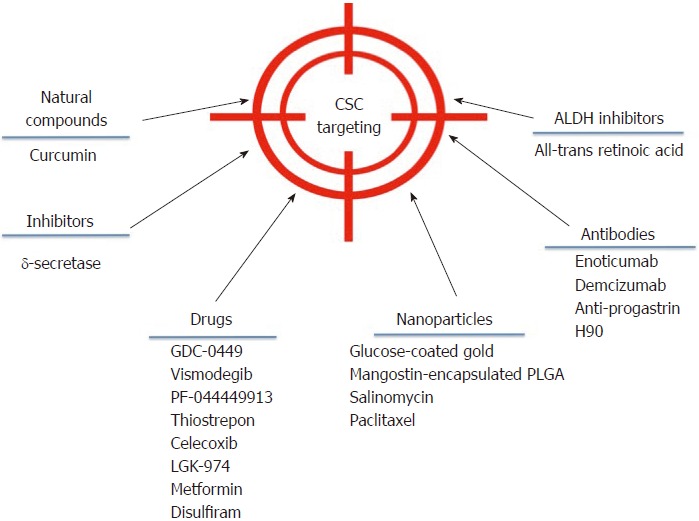
Cancer is a widespread worldwide chronic disease. In most cases, the high mortality rate from cancer correlates with a lack of clear symptoms, which results in late diagnosis for patients, and consequently, advanced tumor disease with poor probabilities for cure, since many patients will show chemo- and radio-resistance. Several mechanisms have been studied to explain chemo- and radio-resistance to anti-tumor therapies, including cell signaling pathways, anti-apoptotic mechanisms, stemness, metabolism, and cellular phenotypes. Interestingly, the presence of cancer stem cells (CSCs), which are a subset of cells within the tumors, has been related to therapy resistance. In this review, we focus on evaluating the presence of CSCs in different tumors such as breast cancer, gastric cancer, lung cancer, and hematological neoplasias, highlighting studies where CSCs were identified in patient samples. It is evident that there has been a great drive to identify the cell surface phenotypes of CSCs so that they can be used as a tool for anti-tumor therapy treatment design. We also review the potential effect of nanoparticles, drugs, natural compounds, aldehyde dehydrogenase inhibitors, cell signaling inhibitors, and antibodies to treat CSCs from specific tumors. Taken together, we present an overview of the role of CSCs in tumorigenesis and how research is advancing to target these highly tumorigenic cells to improve oncology patient outcomes.
癌症是一种在全球范围内广泛存在的慢性疾病。在大多数情况下,癌症的高死亡率与缺乏明显症状相关,这导致患者诊断延迟,进而出现晚期肿瘤疾病,治愈概率低,因为许多患者会表现出化疗和放疗抗性。人们已经研究了几种机制来解释对抗肿瘤治疗的化疗和放疗抗性,包括细胞信号通路、抗凋亡机制、干性、代谢和细胞表型。有趣的是,肿瘤干细胞(CSCs)作为肿瘤内细胞的一个亚群,其存在与治疗抗性有关。在这篇综述中,我们专注于评估CSCs在不同肿瘤中的存在情况,如乳腺癌、胃癌、肺癌和血液系统肿瘤,并着重介绍在患者样本中鉴定出CSCs的研究。显然,人们一直在大力推动鉴定CSCs的细胞表面表型,以便将其用作抗肿瘤治疗设计的工具。我们还综述了纳米颗粒、药物、天然化合物、醛脱氢酶抑制剂、细胞信号抑制剂和抗体对治疗特定肿瘤中的CSCs的潜在作用。综上所述,我们概述了CSCs在肿瘤发生中的作用,以及针对这些高致瘤性细胞的研究进展,以改善肿瘤患者的治疗效果。