El-Eskandarany M Sherif, Banyan Mohammad, Al-Ajmi Fahad
Nanotechnology and Advanced Materials Program, Energy and Building Research Center, Kuwait Institute for Scientific Research Safat 13109 Kuwait
RSC Adv. 2019 Sep 6;9(48):27987-27995. doi: 10.1039/c9ra05121j. eCollection 2019 Sep 3.
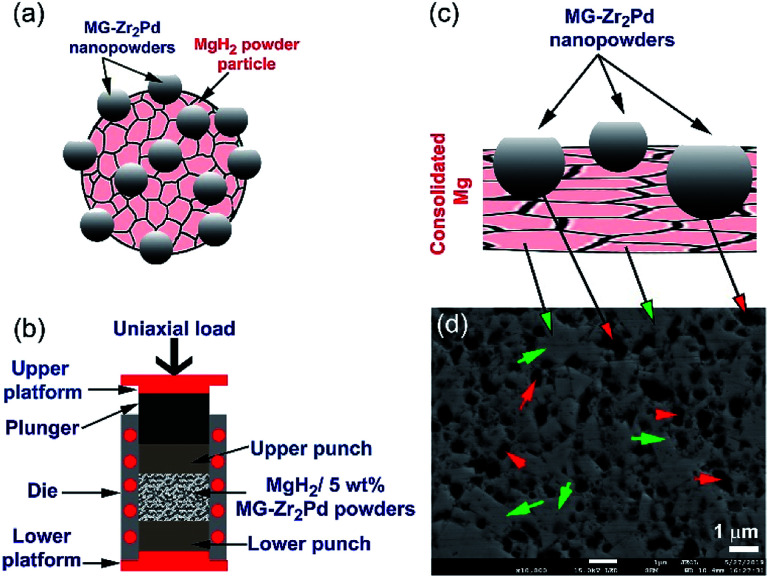
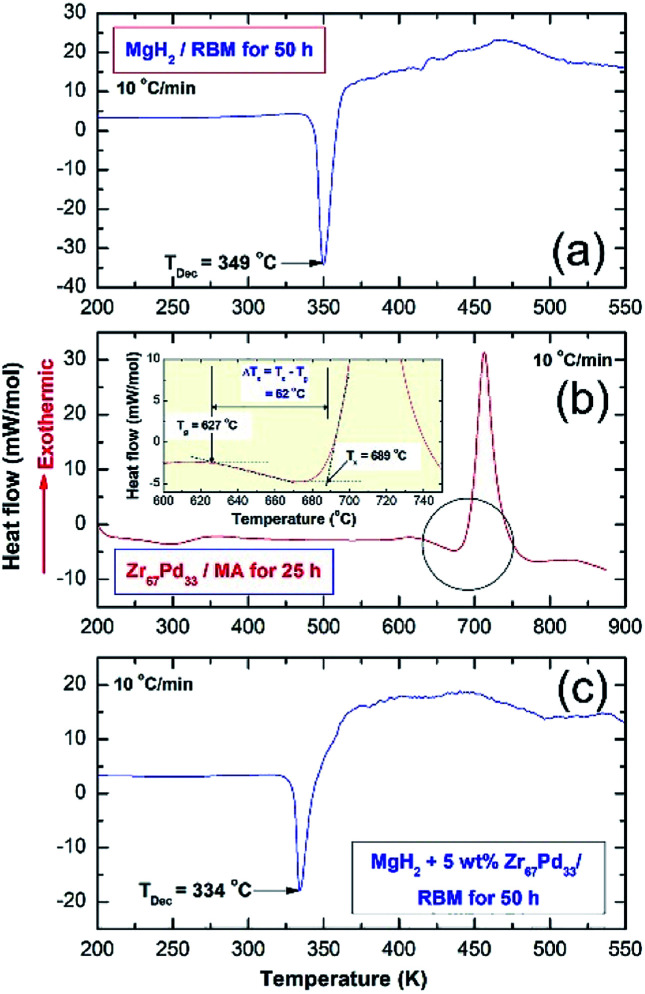
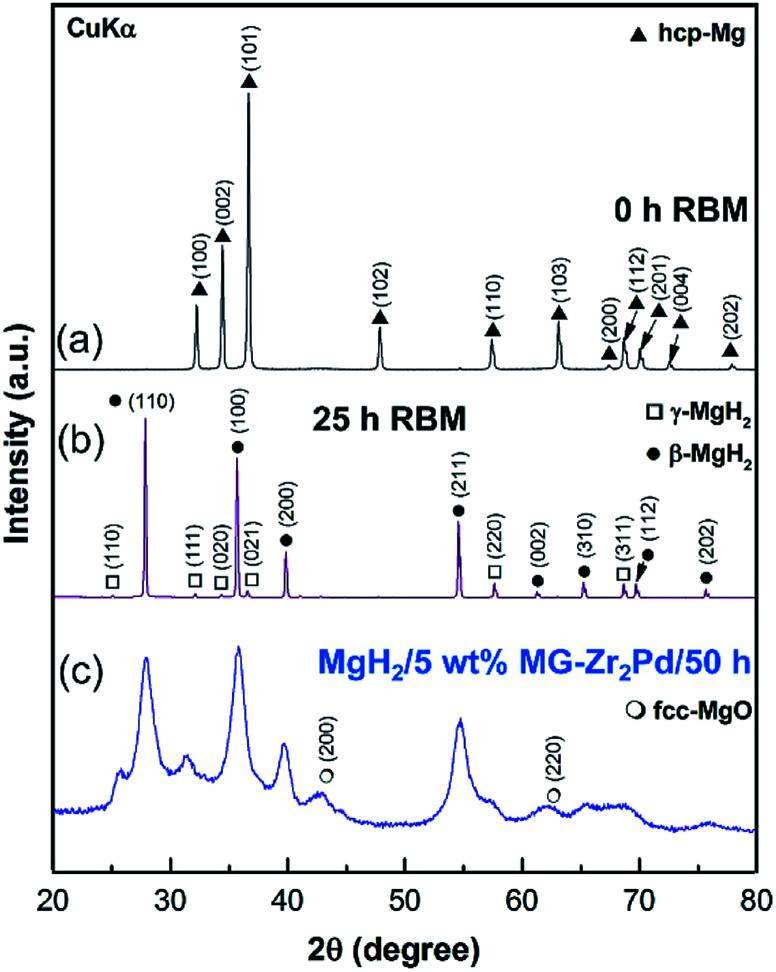
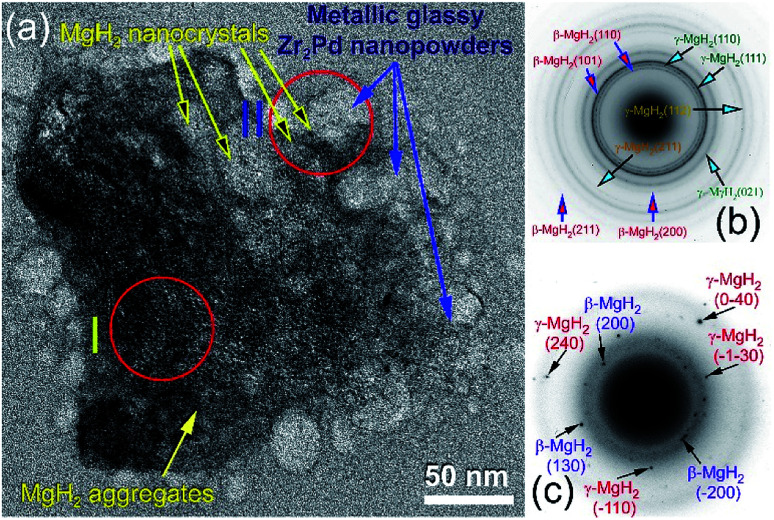
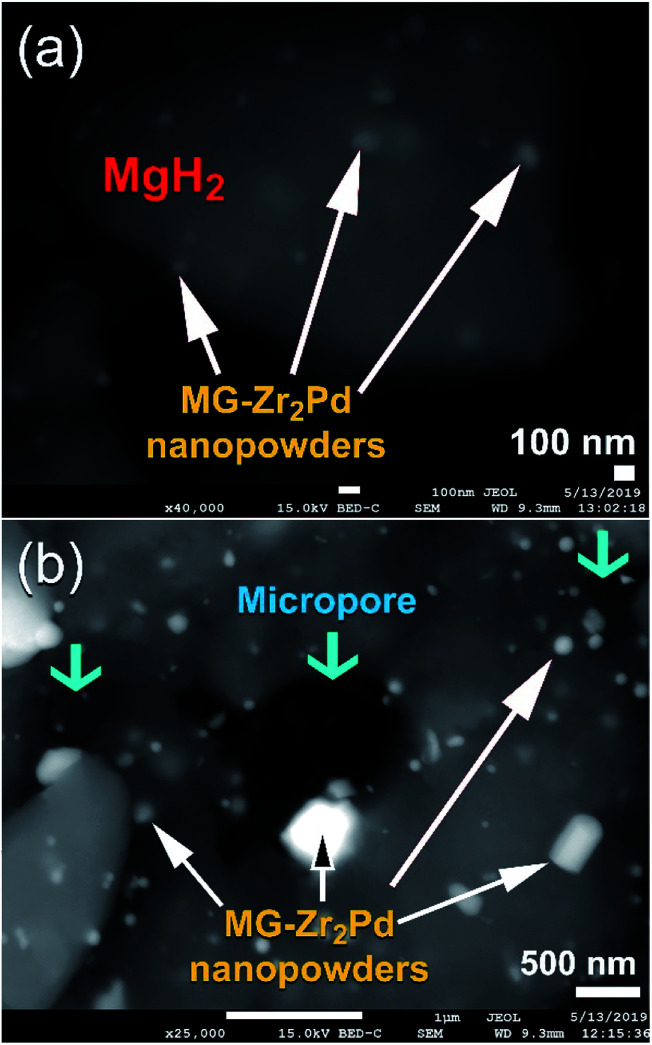
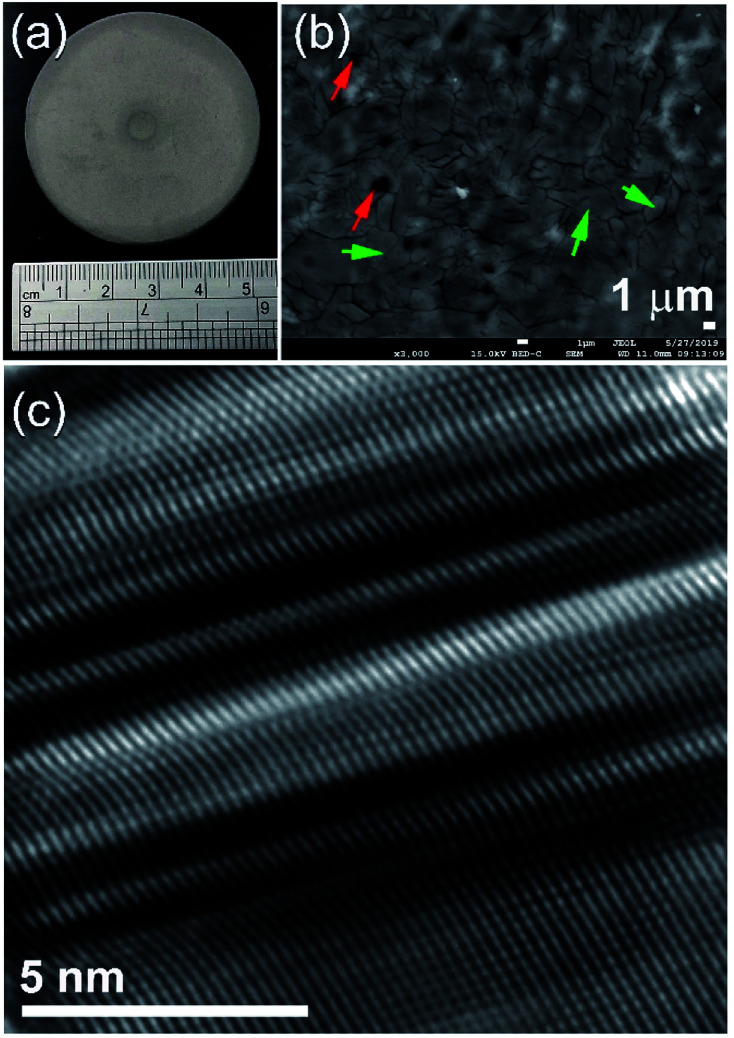
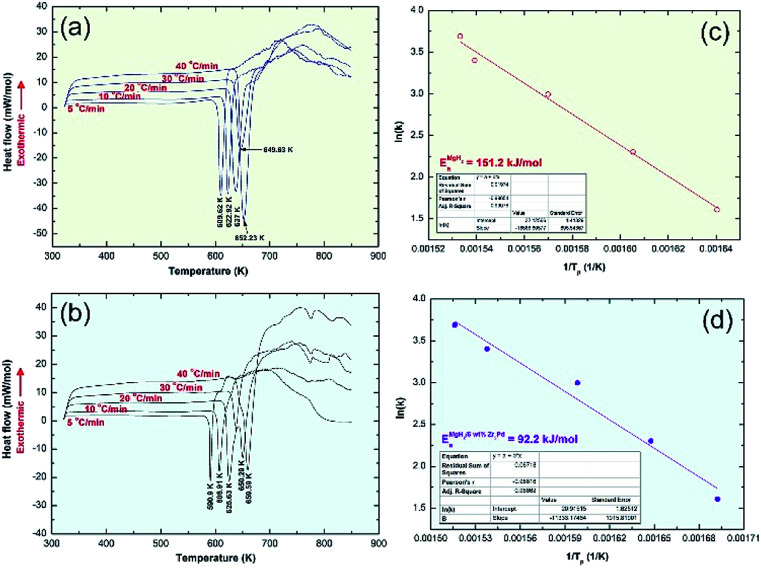
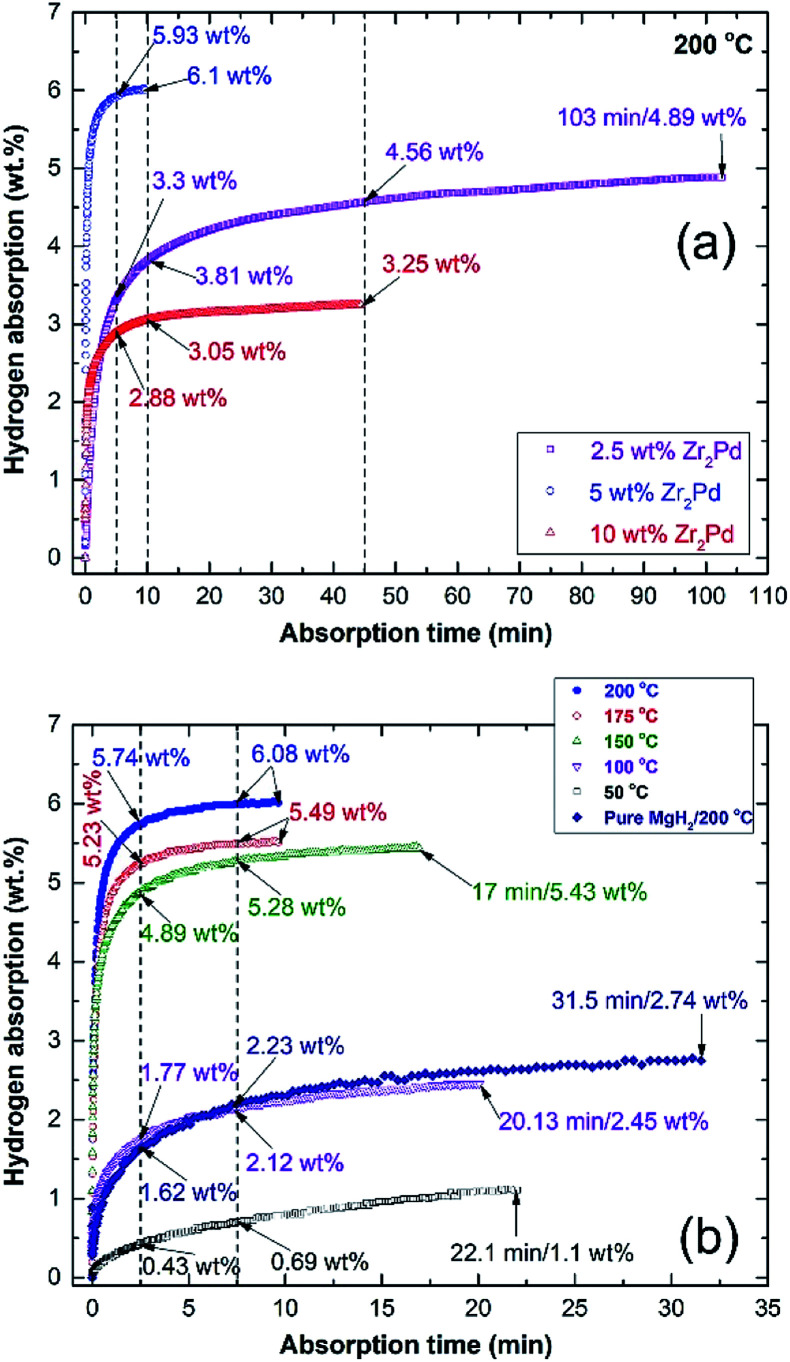
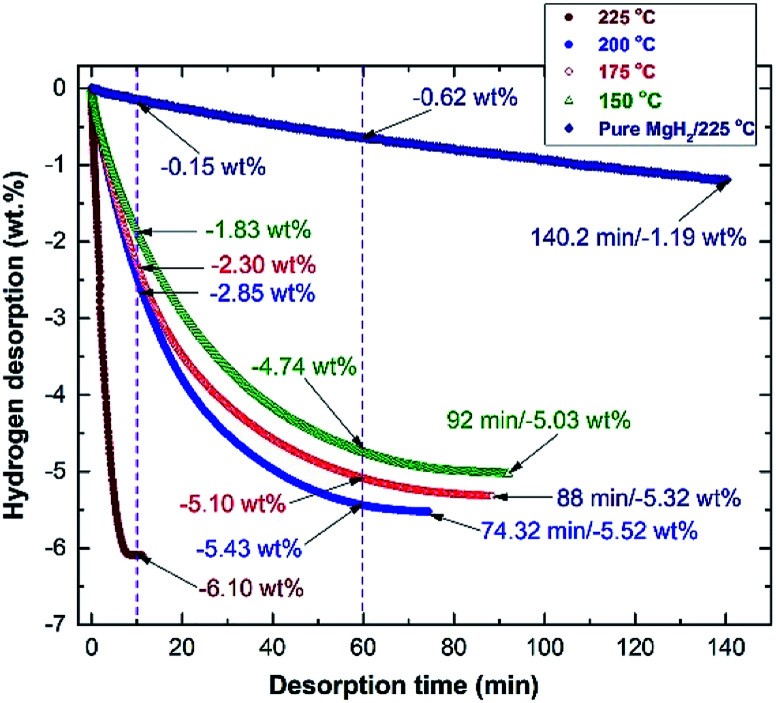
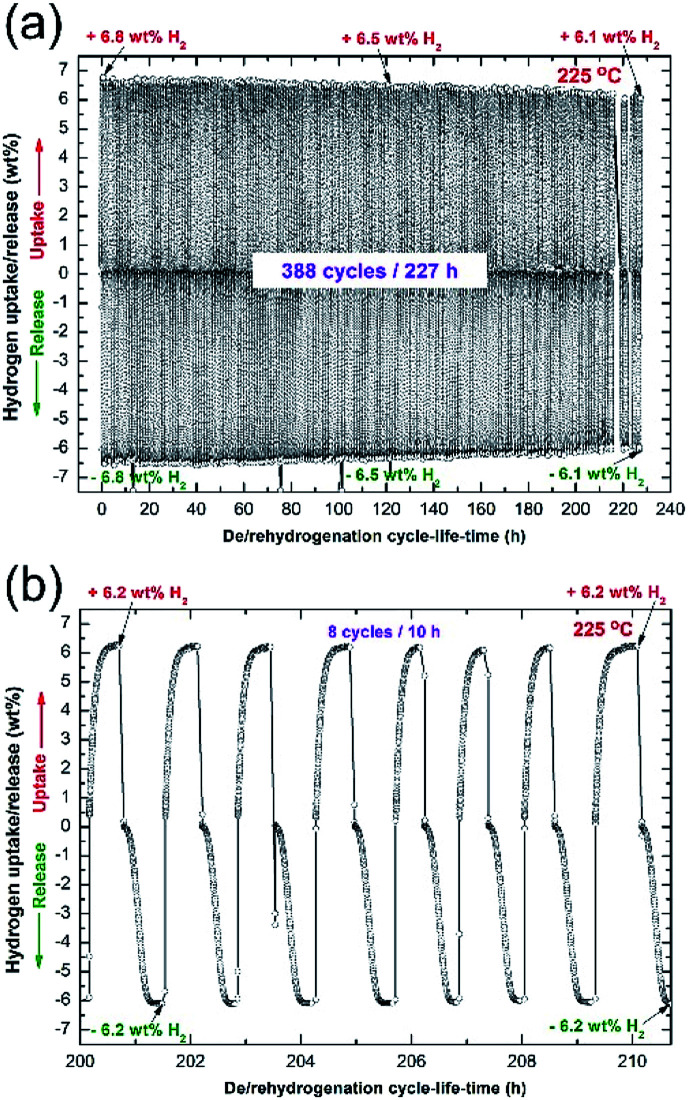
A new solid-state hydrogen storage system of magnesium hydride (MgH) doped with 5 wt% of metallic glassy (MG) zirconium palladium (ZrPd) nanopowder was fabricated using a high-energy ball milling technique. The end-product obtained after 50 h of milling was consolidated into bulk buttons, using a hot-pressing technique at 350 °C. The results have shown that this consolidation step, followed by the repetitive pressing at ambient temperature did not affect the nanocrystalline characteristics of pressed powders. Recycling pressing demonstrated beneficial effects of plastic deformation and lattice imperfections on Mg, leading to its enhanced hydrogenation/dehydrogenation kinetics and cycle-life-time performance compared with untreated samples. The results elucidated that spherical, hard, nanopowder of MG-ZrPd were forced to penetrate the Mg/MgH matrix to create micro/nanopore structures upon pressing for 50 cycles. These ultrafine spherical metallic glassy particles (∼400 nm in diameter) acted as a micro-milling media for reducing the particle size of MgH powders into submicron particles. In addition, they played a vital role as grain growth inhibitors to prevent the undesired growth of Mg grains upon the application of a moderate temperature in the range of 50 °C to 350 °C. The apparent activation energy for the decomposition of this new consolidated nanocomposite material was measured to be 92.2 kJ mol, which is far below than the measured value of pure nanocrystalline MgH powders (151.2 kJ mol) prepared in the present study. This new binary system possessed superior hydrogenation kinetics, indicated by the rather low temperature (200 °C) required to uptake 6.08 wt% H within 7.5 min. More importantly, the system revealed excellent dehydrogenation kinetics at 225 °C as implied by the limited time needed to release 6.1 wt% H in 10 min. The MgH/5 wt% MG-ZrPd system showed a high performance for cyclability, implied by the achievement of continuous cycles (338 cycles) at 225 °C without degradation over 227 h.
采用高能球磨技术制备了一种新型固态储氢系统,该系统是由掺杂了5 wt%金属玻璃态(MG)锆钯(ZrPd)纳米粉末的氢化镁(MgH)组成。球磨50小时后得到的最终产物,通过在350℃下的热压技术固结为块状纽扣。结果表明,这一固结步骤以及随后在室温下的重复压制,并未影响压制粉末的纳米晶特性。循环压制显示出塑性变形和晶格缺陷对镁的有益影响,与未处理的样品相比,其氢化/脱氢动力学和循环寿命性能得到了增强。结果表明,在压制50个循环后,MG-ZrPd的球形、坚硬纳米粉末被迫穿透Mg/MgH基体,形成微/纳米孔结构。这些直径约为400 nm的超细球形金属玻璃颗粒,作为微研磨介质,将MgH粉末的粒径减小到亚微米颗粒。此外,在50℃至350℃的适中温度下,它们作为晶粒生长抑制剂,对防止Mg晶粒的不期望生长起到了至关重要的作用。测量得出这种新型固结纳米复合材料分解的表观活化能为92.2 kJ/mol,远低于本研究中制备的纯纳米晶MgH粉末的测量值(151.2 kJ/mol)。这种新型二元体系具有优异的氢化动力学,在7.5分钟内吸收6.08 wt%的氢所需的温度相当低(200℃)即可表明。更重要的是,该体系在225℃下显示出优异的脱氢动力学,10分钟内释放6.1 wt%的氢所需的时间有限即可暗示。MgH/5 wt% MG-ZrPd体系表现出了高性能的循环稳定性,在225℃下连续循环(338次循环)227小时无降解即可表明。