Centre for Developmental Neurobiology, Institute of Psychiatry, Psychology, and Neuroscience, King's College London, London SE1 1UL, United Kingdom.
Medical Research Council Centre for Neurodevelopmental Disorders, King's College London, London SE1 1UL, United Kingdom.
Proc Natl Acad Sci U S A. 2022 May 17;119(20):e2118430119. doi: 10.1073/pnas.2118430119. Epub 2022 May 9.
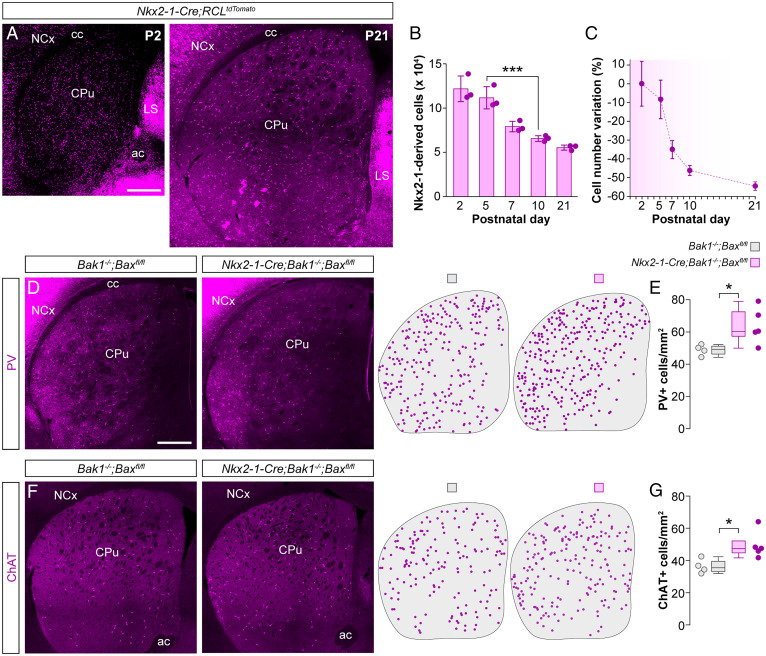
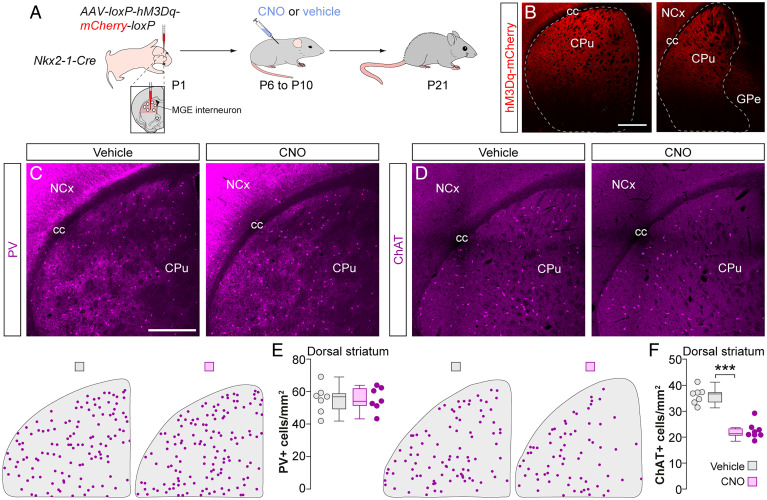
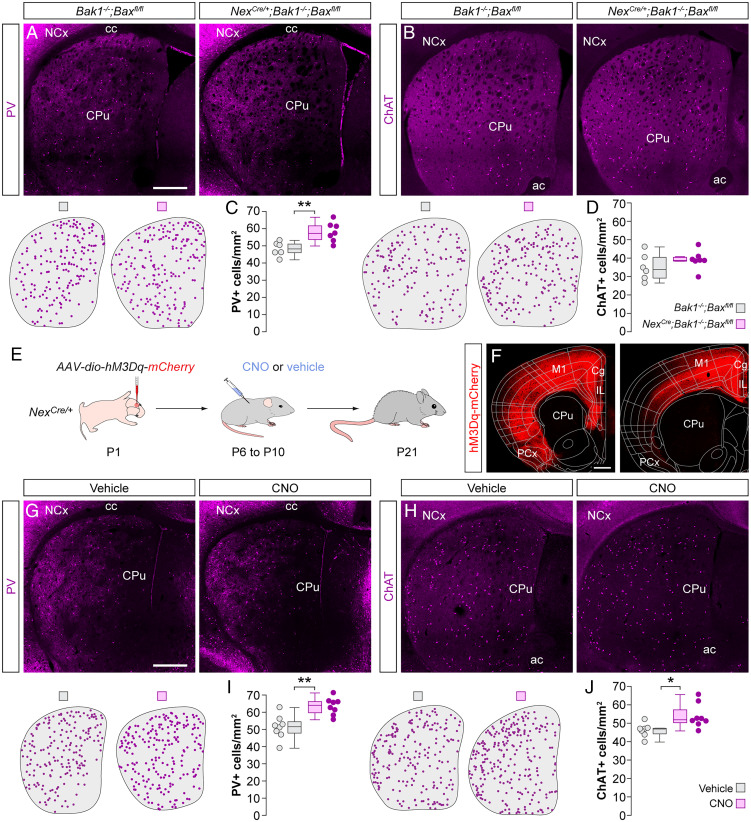
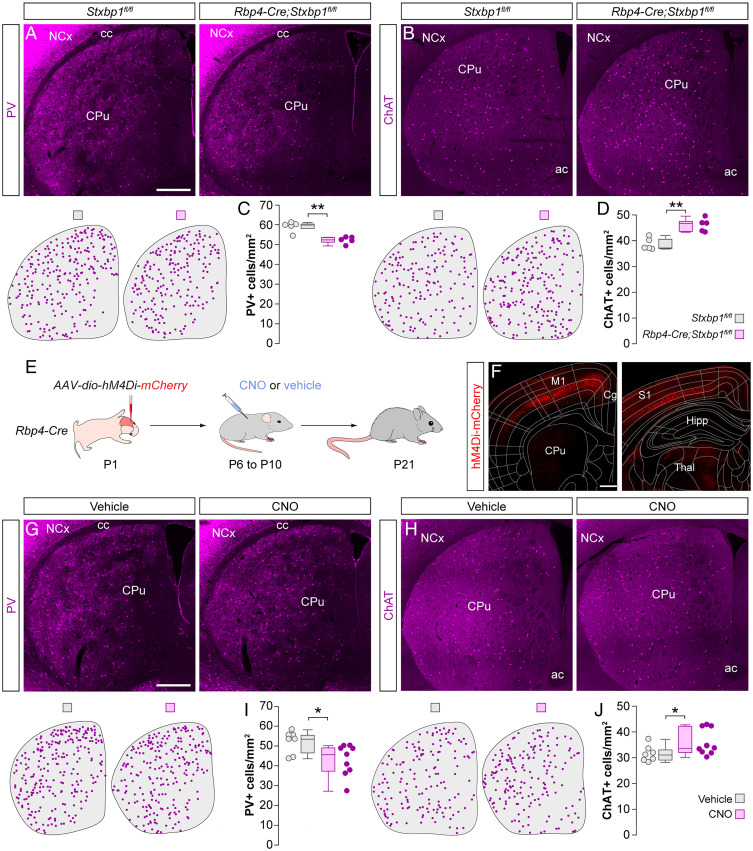
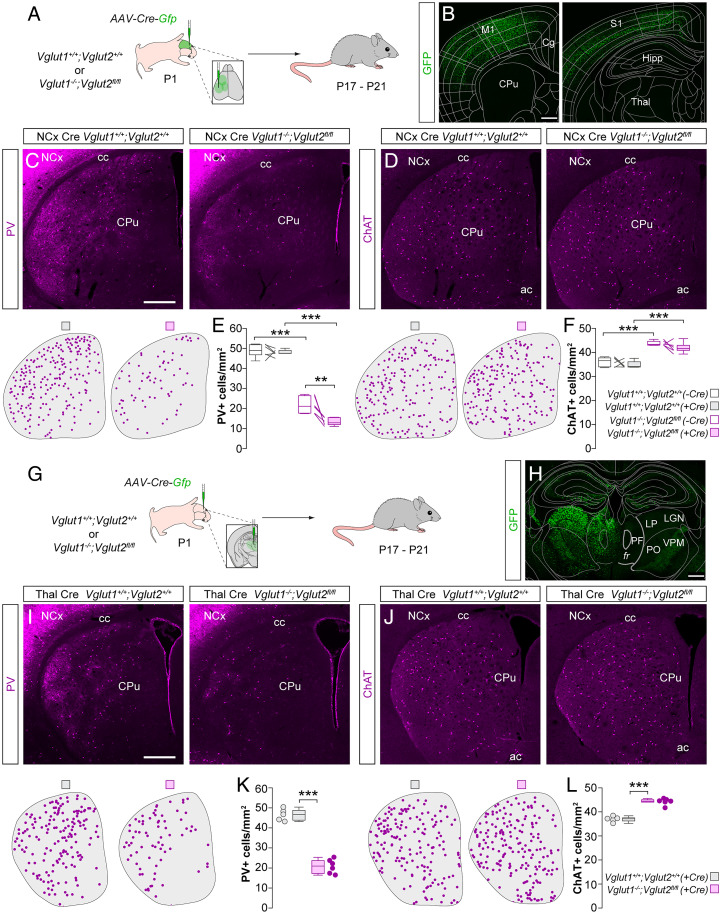
The assembly of functional neuronal circuits requires appropriate numbers of distinct classes of neurons, but the mechanisms through which their relative proportions are established remain poorly defined. Investigating the mouse striatum, we found that the two most prominent subtypes of striatal interneurons, parvalbumin-expressing (PV+) GABAergic and cholinergic (ChAT+) interneurons, undergo extensive programmed cell death between the first and second postnatal weeks. Remarkably, the survival of PV+ and ChAT+ interneurons is regulated by distinct mechanisms mediated by their specific afferent connectivity. While long-range cortical inputs control PV+ interneuron survival, ChAT+ interneuron survival is regulated by local input from the medium spiny neurons. Our results identify input-specific circuit mechanisms that operate during the period of programmed cell death to establish the final number of interneurons in nascent striatal networks.
功能性神经元回路的组装需要适当数量的不同类别的神经元,但它们的相对比例是如何建立的机制仍不清楚。在研究小鼠纹状体时,我们发现纹状体中间神经元中两个最突出的亚型,即表达 parvalbumin 的(PV+)GABA 能和胆碱能(ChAT+)中间神经元,在出生后的第一到第二周之间经历广泛的程序性细胞死亡。值得注意的是,PV+和 ChAT+中间神经元的存活受到其特定传入连接介导的不同机制的调节。虽然长程皮质输入控制 PV+中间神经元的存活,但 ChAT+中间神经元的存活受到来自中等棘突神经元的局部输入的调节。我们的研究结果确定了在程序性细胞死亡期间起作用的输入特异性回路机制,以建立新生纹状体网络中中间神经元的最终数量。