Department of Neurological Surgery, Lou and Jean Malnati Brain Tumor Institute, Robert H. Lurie Comprehensive Cancer Center, Feinberg School of Medicine, Northwestern University, Chicago, IL 60611, USA.
Department of Neurological Surgery, Lou and Jean Malnati Brain Tumor Institute, Robert H. Lurie Comprehensive Cancer Center, Feinberg School of Medicine, Northwestern University, Chicago, IL 60611, USA.
Trends Pharmacol Sci. 2022 Aug;43(8):686-700. doi: 10.1016/j.tips.2022.04.002. Epub 2022 May 7.
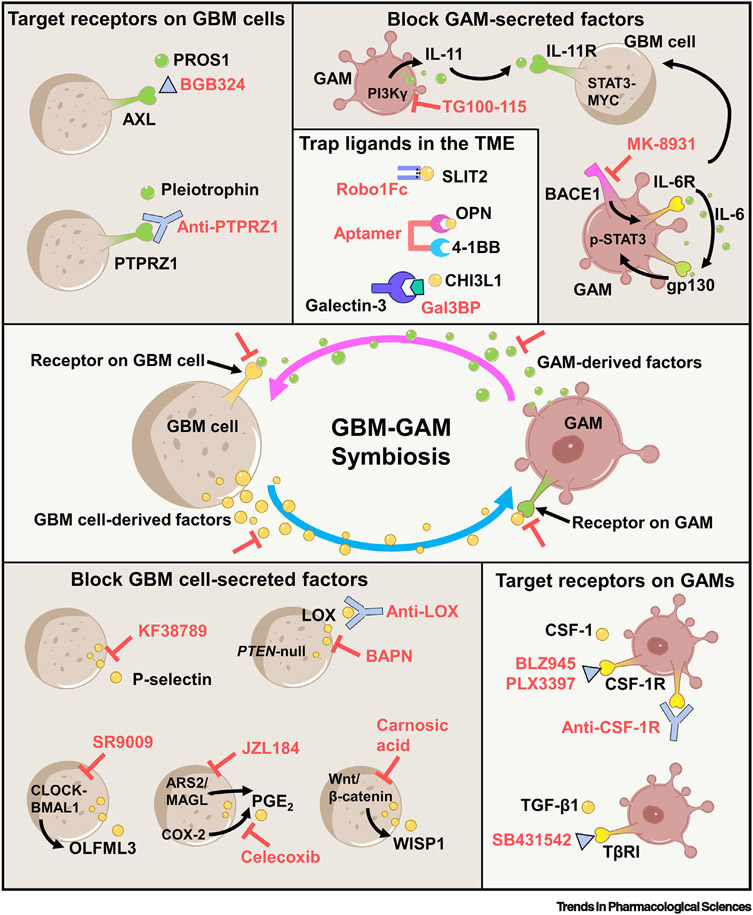
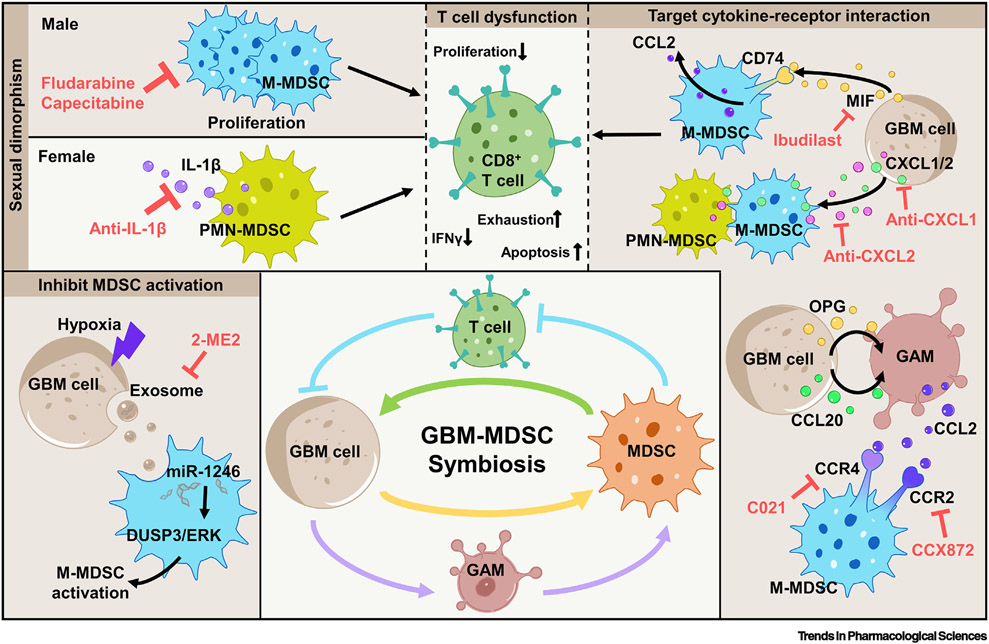
Glioblastoma (GBM) is the most common and highly lethal form of primary brain tumor in adults. The median survival of GBM patients is approximately 14-16 months despite multimodal therapies. Emerging evidence has substantiated the critical role of symbiotic interactions between GBM cells and noncancerous immune cells (e.g., myeloid cells and T cells) in regulating tumor progression and therapy resistance. Approaches to target the tumor-immune symbiosis have emerged as a promising therapeutic strategy for GBM. Here, we review the recent developments for pharmacological targeting of the GBM-immune symbiosis and highlight the role of such strategies to improve the effectiveness of immunotherapies in GBM.
胶质母细胞瘤(GBM)是成人中最常见且致命性最高的原发性脑肿瘤。尽管采用了多种治疗方法,GBM 患者的中位生存期仍约为 14-16 个月。新出现的证据证实了 GBM 细胞与非癌细胞免疫细胞(例如髓样细胞和 T 细胞)之间共生相互作用在调节肿瘤进展和治疗耐药性方面的关键作用。针对肿瘤免疫共生的方法已成为治疗 GBM 的一种有前途的治疗策略。在这里,我们综述了针对 GBM-免疫共生的药理学靶向治疗的最新进展,并强调了这些策略在提高 GBM 免疫治疗效果方面的作用。