Program in Chemical Biology, Harvard University, Cambridge, MA, 02138, USA.
Infectious Disease and Microbiome Program, Broad Institute of MIT and Harvard, Cambridge, MA, 02142, USA.
Nat Commun. 2022 May 9;13(1):2525. doi: 10.1038/s41467-022-30272-0.
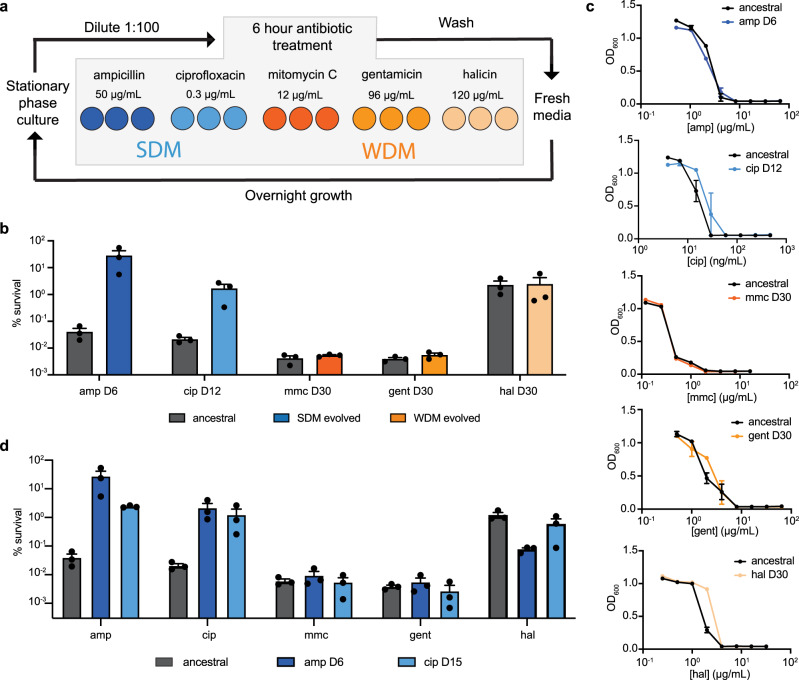
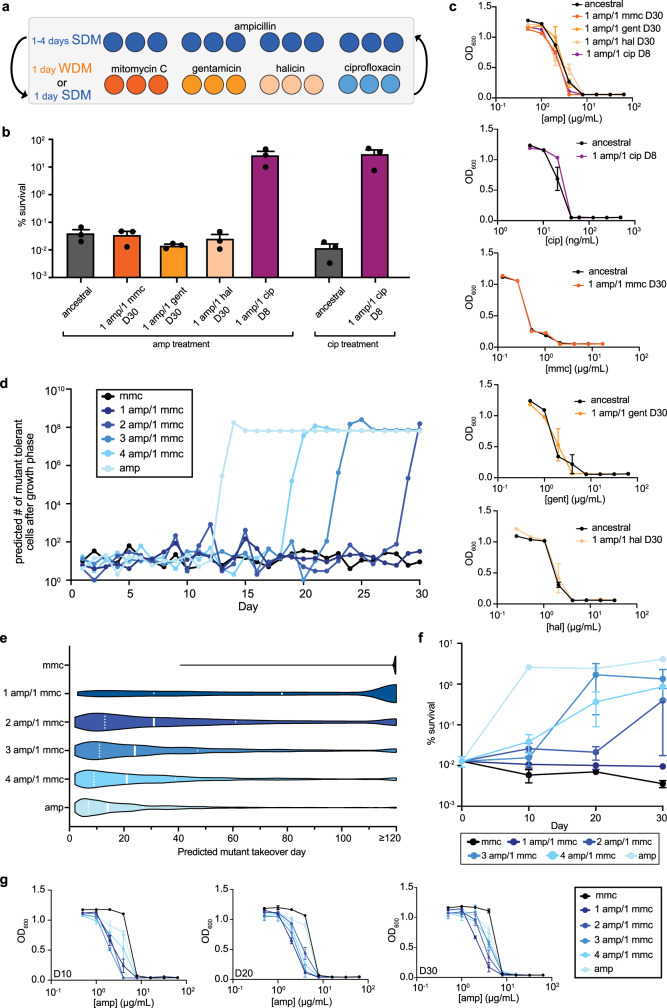
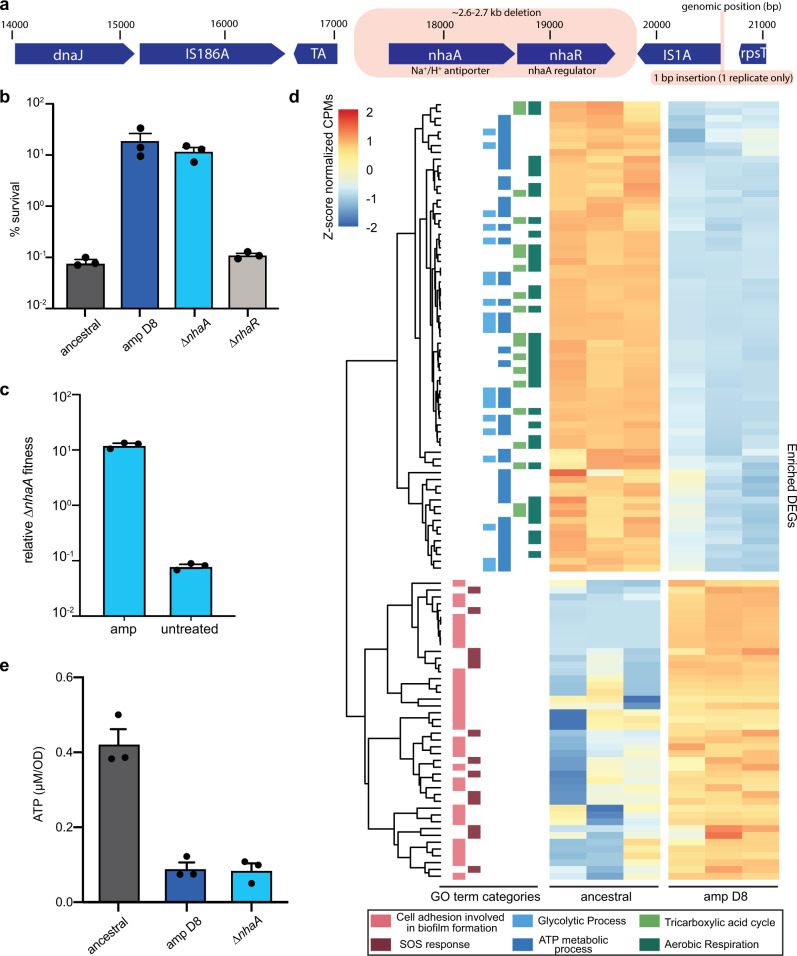
Antibiotic tolerance, or the ability of bacteria to survive antibiotic treatment in the absence of genetic resistance, has been linked to chronic and recurrent infections. Tolerant cells are often characterized by a low metabolic state, against which most clinically used antibiotics are ineffective. Here, we show that tolerance readily evolves against antibiotics that are strongly dependent on bacterial metabolism, but does not arise against antibiotics whose efficacy is only minimally affected by metabolic state. We identify a mechanism of tolerance evolution in E. coli involving deletion of the sodium-proton antiporter gene nhaA, which results in downregulated metabolism and upregulated stress responses. Additionally, we find that cycling of antibiotics with different metabolic dependencies interrupts evolution of tolerance in vitro, increasing the lifetime of treatment efficacy. Our work highlights the potential for limiting the occurrence and extent of tolerance by accounting for antibiotic dependencies on bacterial metabolism.
抗生素耐受,即细菌在没有遗传抗性的情况下对抗生素治疗存活的能力,与慢性和复发性感染有关。耐受细胞的特征通常是代谢状态较低,而大多数临床使用的抗生素对此无效。在这里,我们表明,对抗生素的耐受性很容易进化,这些抗生素强烈依赖于细菌的新陈代谢,但对抗生素的疗效不受代谢状态影响的抗生素则不会产生耐受性。我们确定了一种涉及删除钠离子-质子反向转运蛋白基因 nhaA 的大肠杆菌耐受进化机制,这导致代谢下调和应激反应上调。此外,我们发现,用不同代谢依赖性的抗生素循环可以中断体外的耐受进化,增加治疗效果的寿命。我们的工作强调了通过考虑抗生素对细菌代谢的依赖性来限制耐受发生和程度的潜力。