Asari Taka, Kikuchi Hidezumi, Kawaguchi Shogo, Sakuraba Hirotake, Yoshida Shukuko, Akemoto Yui, Maeda Takato, Shinji Ota, Murai Yasuhisa, Higuchi Naoki, Hoshi Kentaro, Fukutoku Yukari, Hiraga Hiroto, Sasaki Kenroh, Fukuda Shinsaku
Department of Gastroenterology and Hematology, Hirosaki University Graduate School of Medicine, 5-Zaifu-cho, Hirosaki, Aomori, 036-8562, Japan.
Department of Community Medicine, Hirosaki University Graduate School of Medicine, 5-Zaifu-cho, Hirosaki, Aomori, 036-8562, Japan.
Biochem Biophys Rep. 2022 May 2;30:101272. doi: 10.1016/j.bbrep.2022.101272. eCollection 2022 Jul.
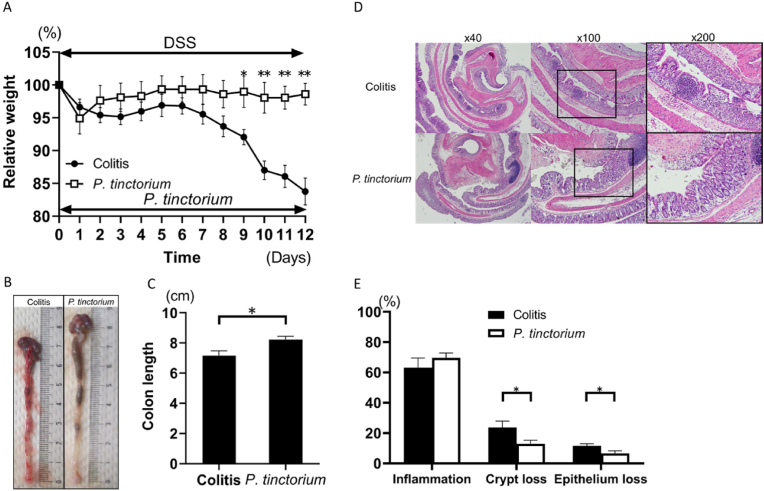
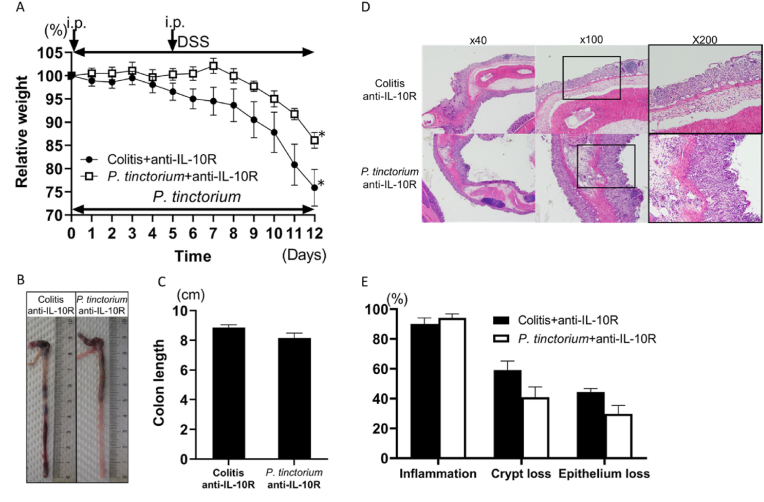
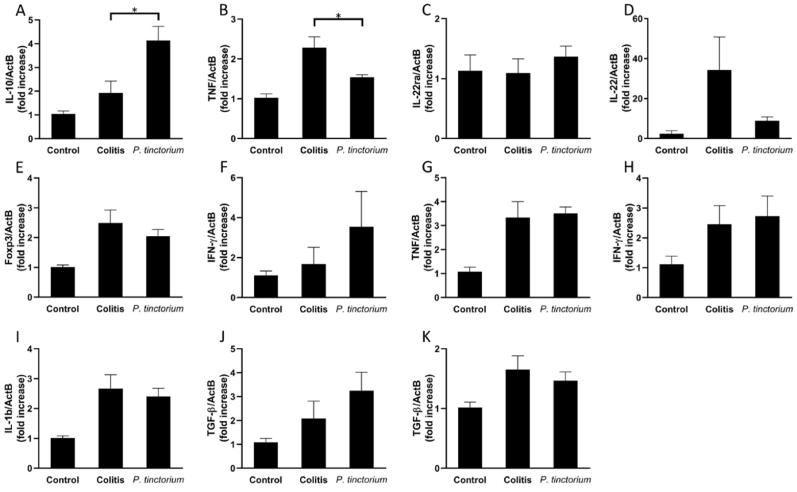
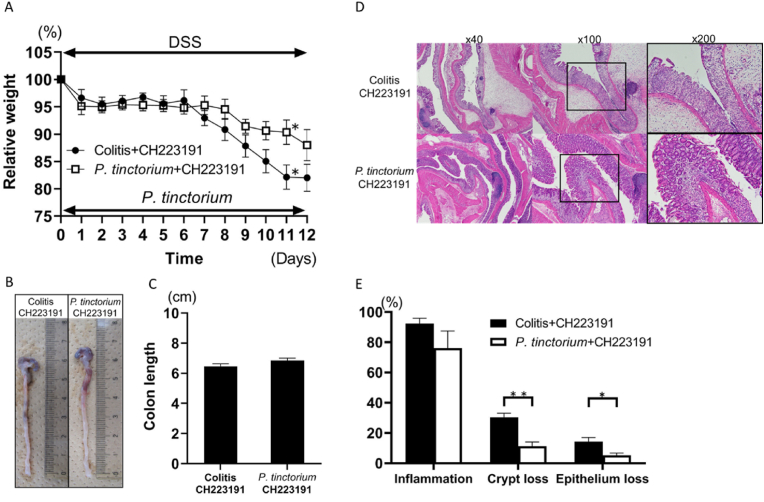
Indigo naturalis, a herbal medicine purified from indigo-containing plants, such as and , has been reported to be useful in the treatment of ulcerative colitis by activating the aryl hydrocarbon receptor. However, the aryl hydrocarbon receptor pathway causes crucial side effects, such as pulmonary arterial hypertension. Although is one of the plant derivatives of indigo naturalis, it is not identical to it To date, the pure leaves of have not been reported to ameliorate ulcerative colitis. Therefore, we investigated the effect of pure leaves, which are consumed in some regions, on experimental colitis induced in mice using sodium dextran sulfate. We found that leaves ameliorated weight loss (P < 0.01) and pathological inflammatory changes in the colon (P < 0.05), enhanced mRNA expression of interleukin-10 (P < 0.05), and decreased expression of tumor necrosis factor-in colonic tissues (P < 0.05), as determined using quantitative real-time reverse transcription polymerase chain reaction. The intraperitoneal administration of an aryl hydrocarbon receptor antagonist did not antagonize the inhibition of mucosal destruction, whereas an anti-interleukin-10 receptor antibody did. These results suggest that ameliorate sodium dextran sulfate-induced intestinal inflammation via interleukin-10-related pathway, independent of the aryl hydrocarbon receptor pathway. leaves have the potential to be a new, safe treatment for ulcerative colitis.
青黛是一种从含靛蓝的植物(如蓼蓝和菘蓝)中提纯的草药,据报道其可通过激活芳烃受体来治疗溃疡性结肠炎。然而,芳烃受体途径会引发诸如肺动脉高压等严重副作用。尽管马蓝是青黛的植物衍生物之一,但二者并不完全相同。迄今为止,尚未有关于马蓝纯叶可改善溃疡性结肠炎的报道。因此,我们研究了某些地区食用的马蓝纯叶对葡聚糖硫酸钠诱导的小鼠实验性结肠炎的影响。我们发现,马蓝叶可改善体重减轻(P < 0.01)以及结肠的病理性炎症变化(P < 0.05),通过定量实时逆转录聚合酶链反应测定,其可增强白细胞介素-10的mRNA表达(P < 0.05),并降低结肠组织中肿瘤坏死因子的表达(P < 0.05)。腹腔注射芳烃受体拮抗剂并不能拮抗对黏膜破坏的抑制作用,而抗白细胞介素-10受体抗体则可以。这些结果表明,马蓝叶通过白细胞介素-10相关途径改善葡聚糖硫酸钠诱导的肠道炎症,独立于芳烃受体途径。马蓝叶有可能成为一种治疗溃疡性结肠炎的新型安全药物。