Murdoch Children's Research Institute, Parkville, Australia.
Department of Paediatrics, University of Melbourne, Parkville, Australia.
Elife. 2022 May 10;11:e75170. doi: 10.7554/eLife.75170.
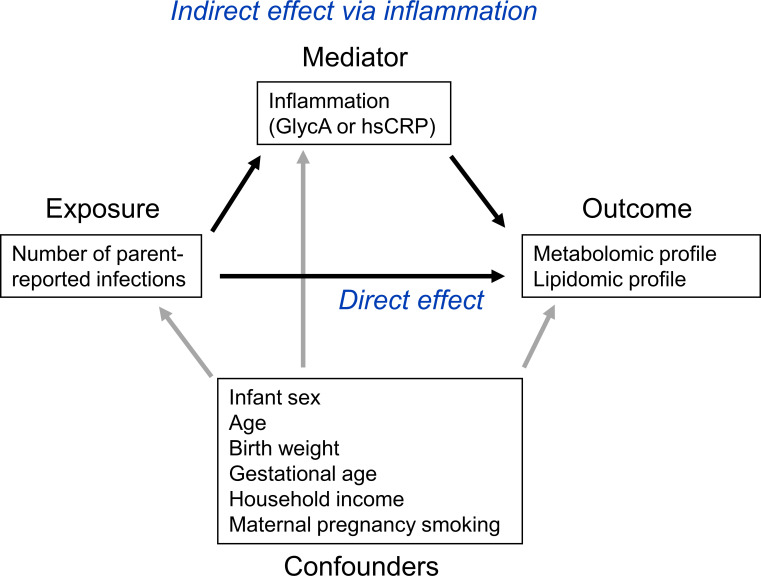
The risk of adult onset cardiovascular and metabolic (cardiometabolic) disease accrues from early life. Infection is ubiquitous in infancy and induces inflammation, a key cardiometabolic risk factor, but the relationship between infection, inflammation, and metabolic profiles in early childhood remains unexplored. We investigated relationships between infection and plasma metabolomic and lipidomic profiles at age 6 and 12 months, and mediation of these associations by inflammation.
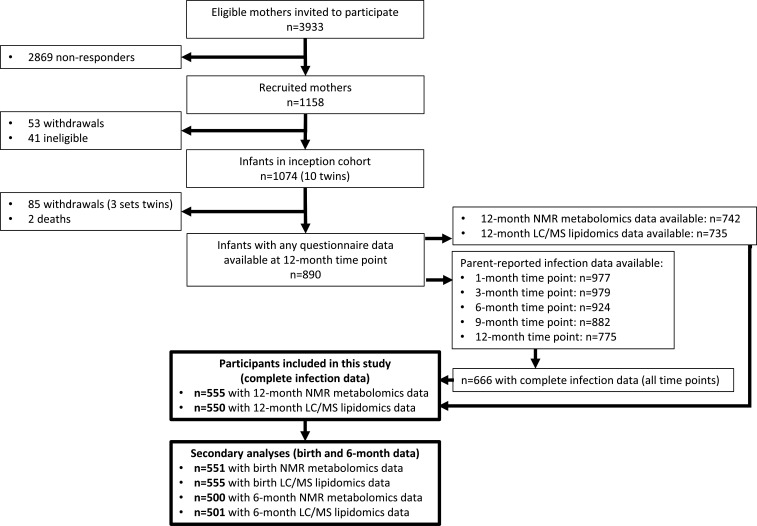
Matched infection, metabolomics, and lipidomics data were generated from 555 infants in a pre-birth longitudinal cohort. Infection data from birth to 12 months were parent-reported (total infections at age 1, 3, 6, 9, and 12 months), inflammation markers (high-sensitivity C-reactive protein [hsCRP]; glycoprotein acetyls [GlycA]) were quantified at 12 months. Metabolic profiles were 12-month plasma nuclear magnetic resonance metabolomics (228 metabolites) and liquid chromatography/mass spectrometry lipidomics (776 lipids). Associations were evaluated with multivariable linear regression models. In secondary analyses, corresponding inflammation and metabolic data from birth (serum) and 6-month (plasma) time points were used.
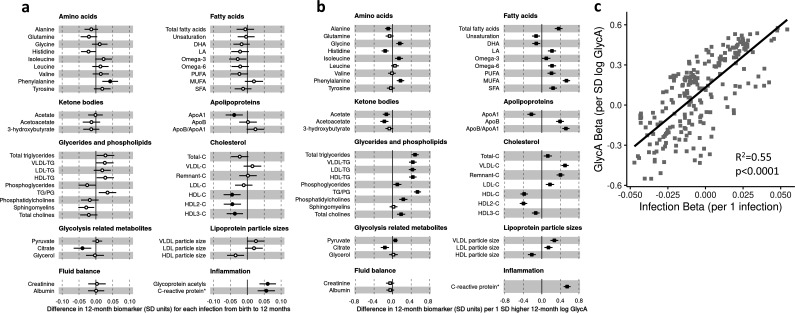
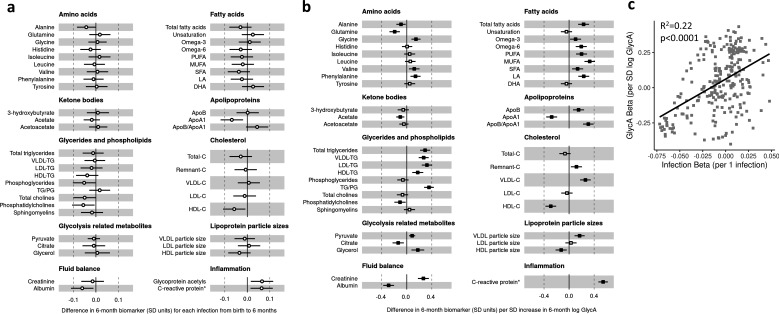
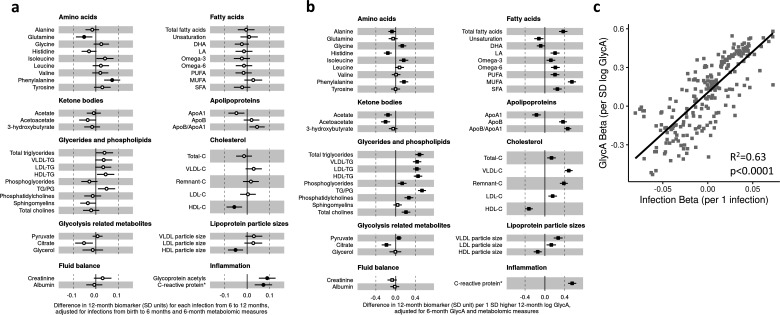
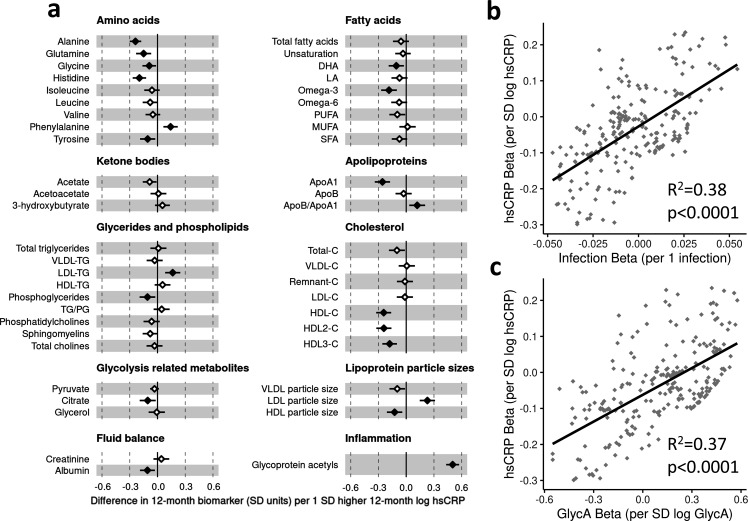
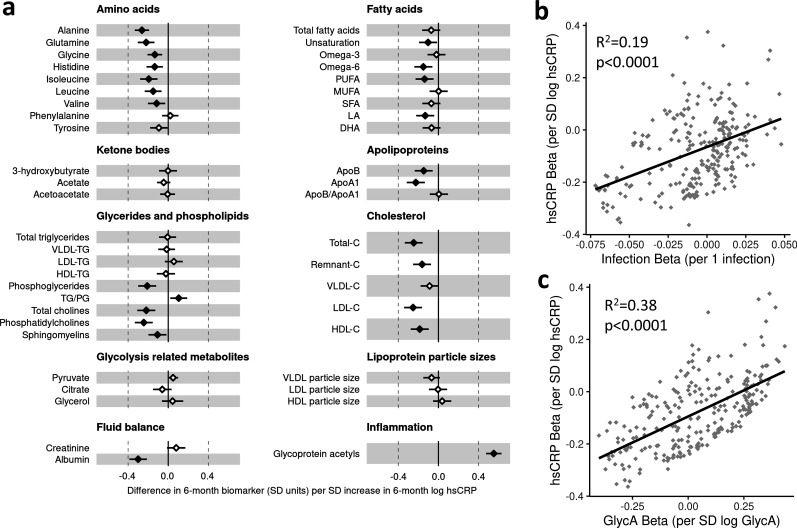
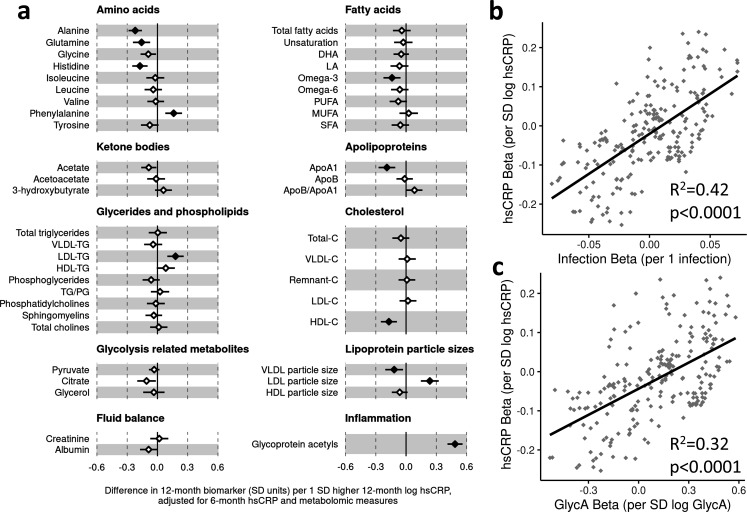
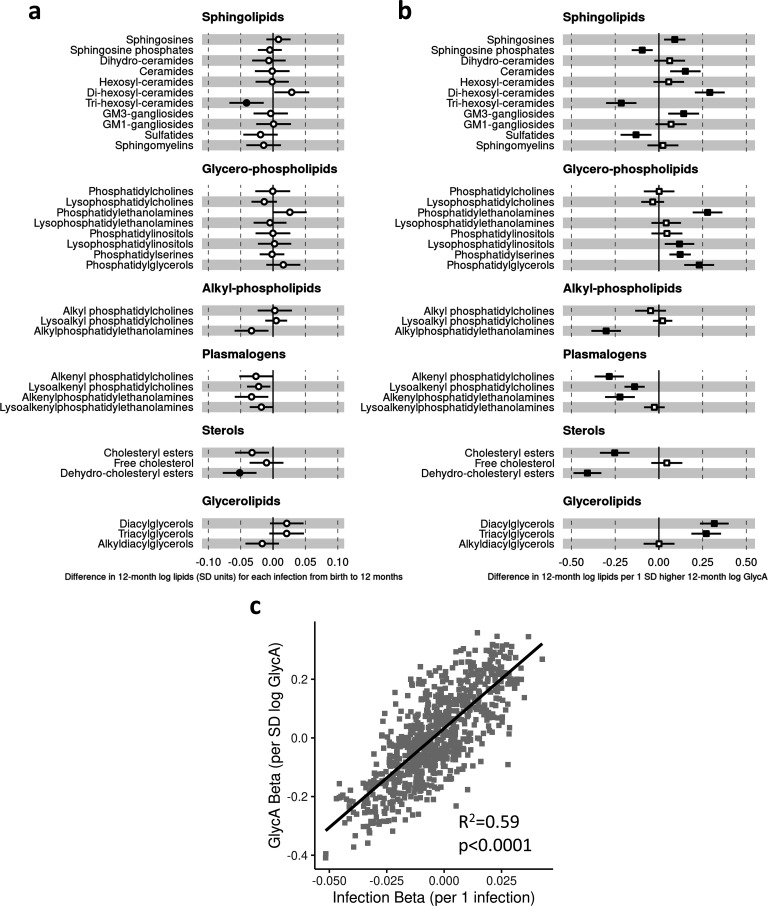
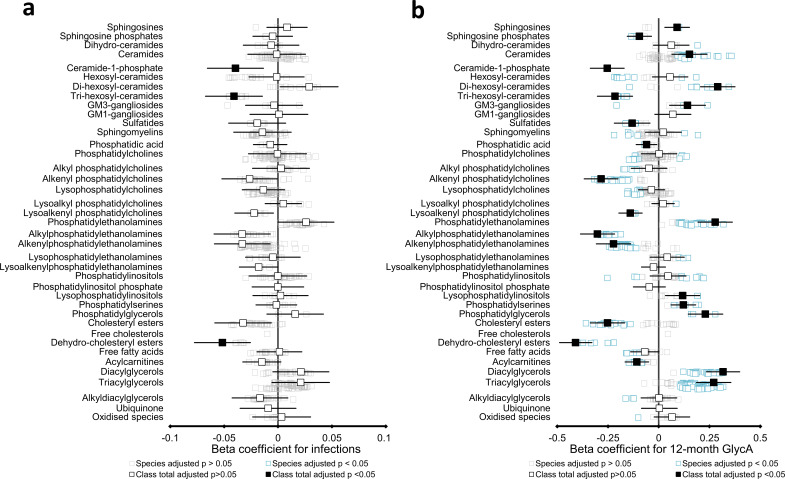
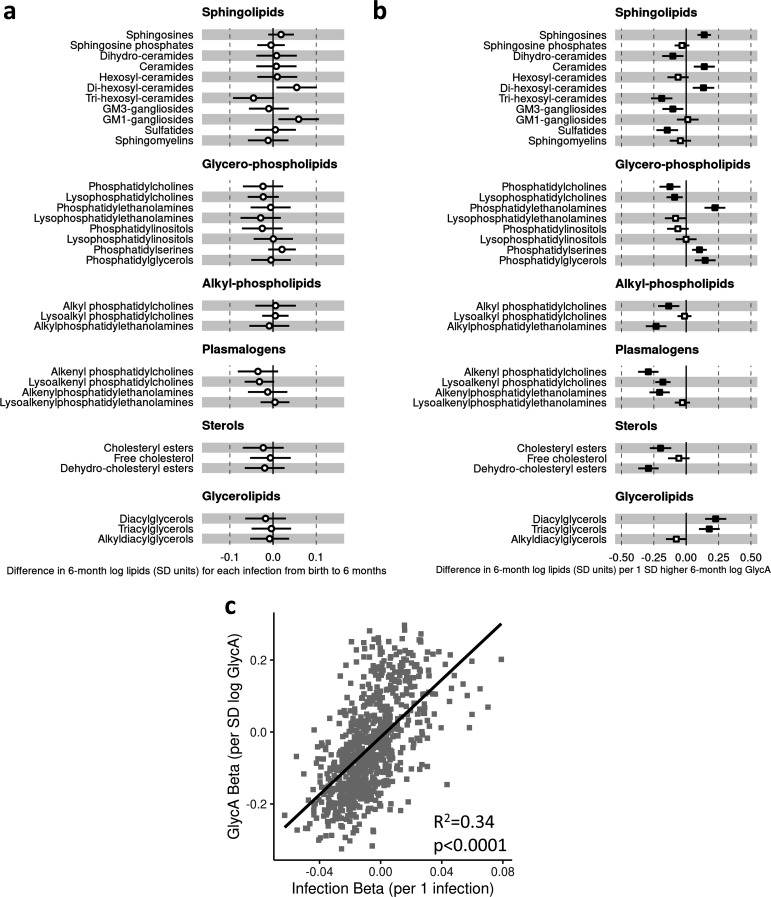
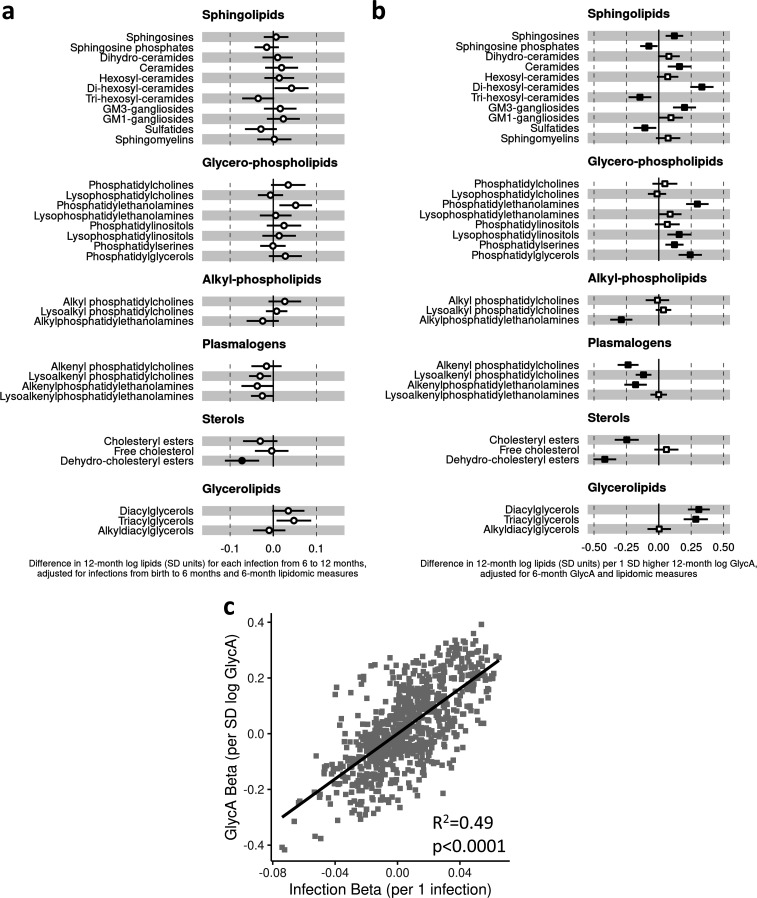
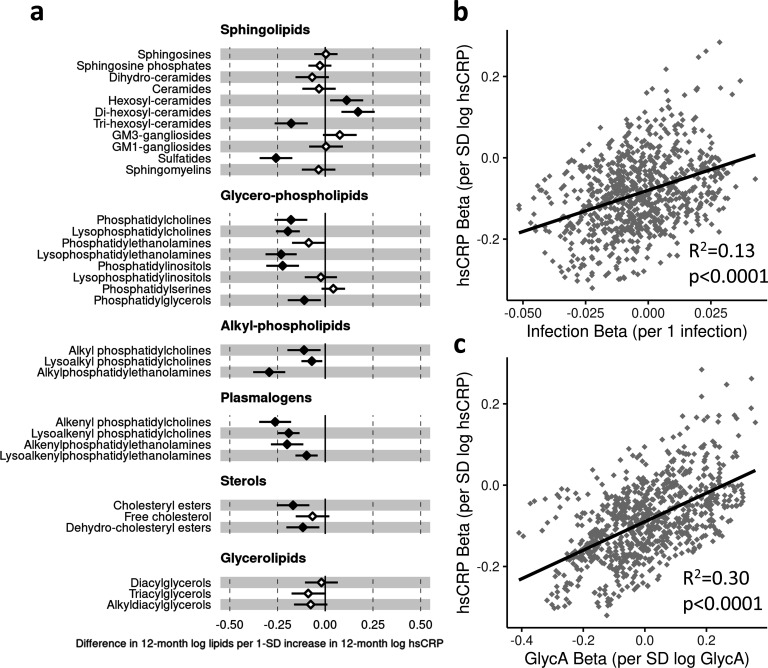
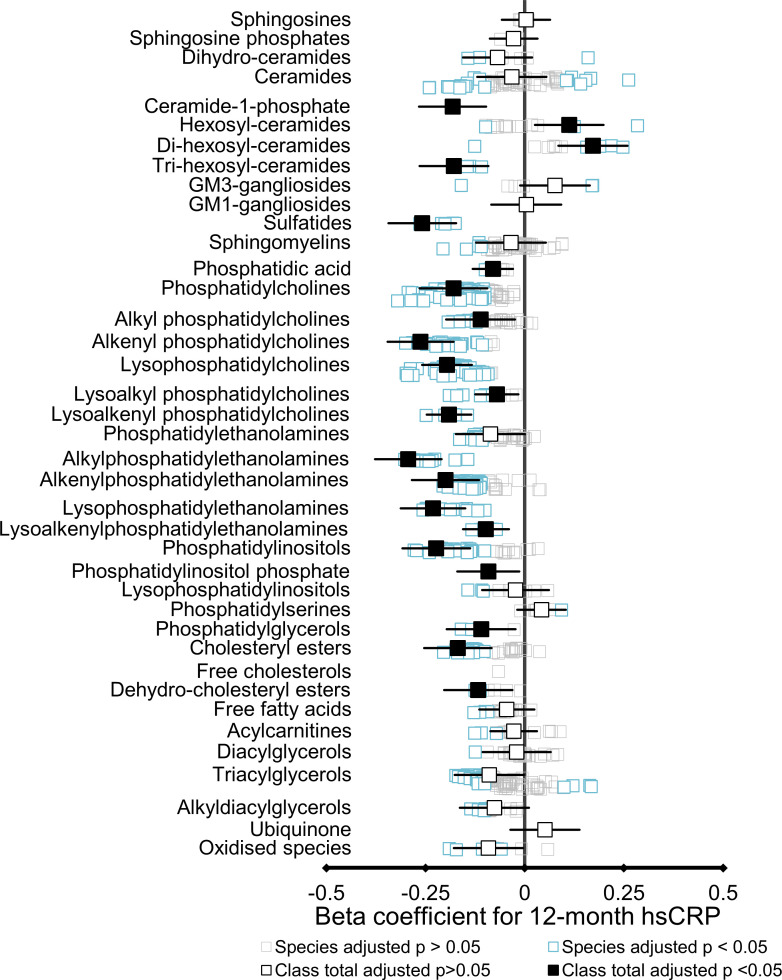
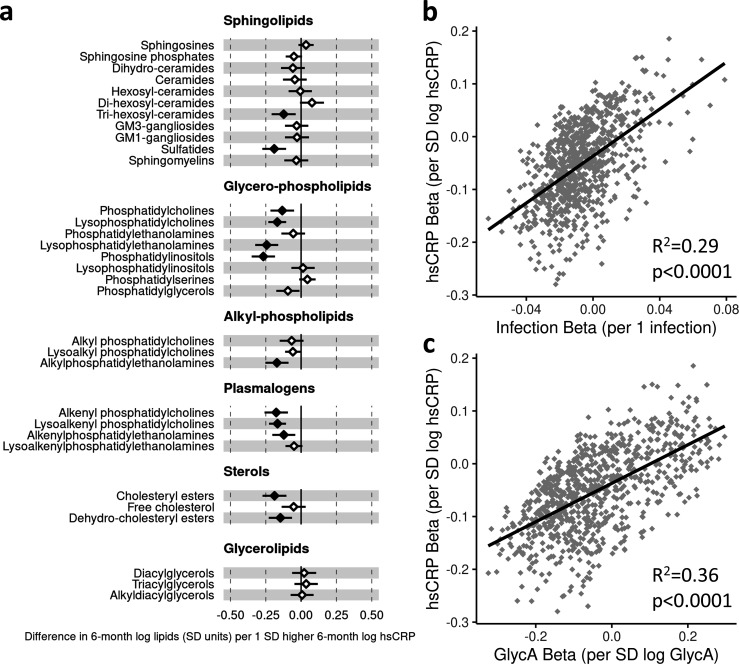
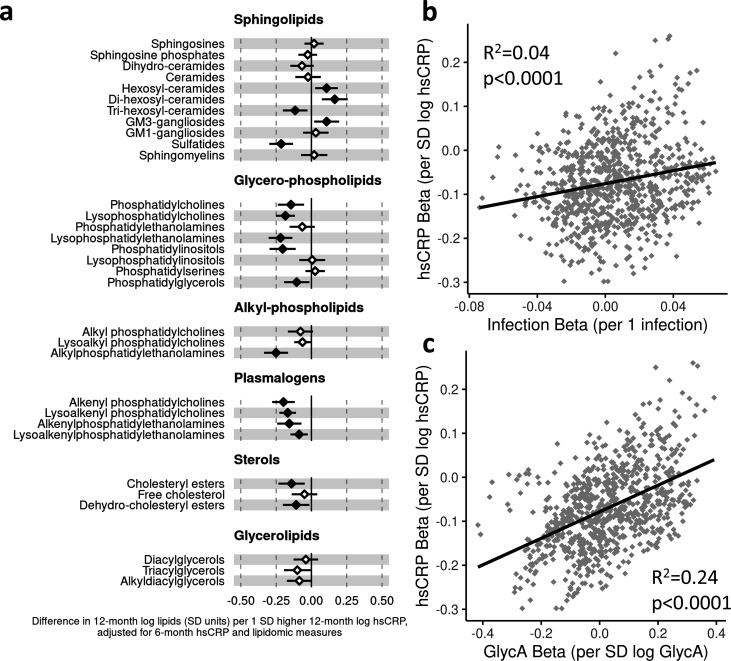
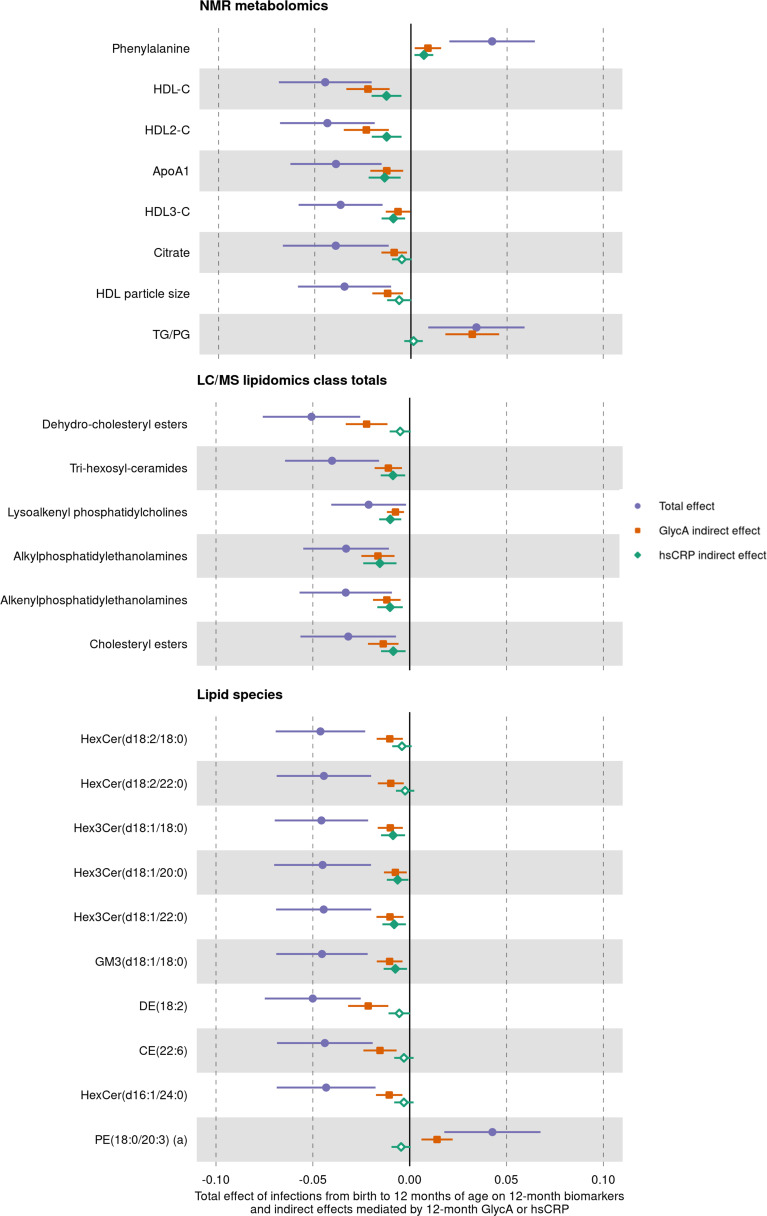
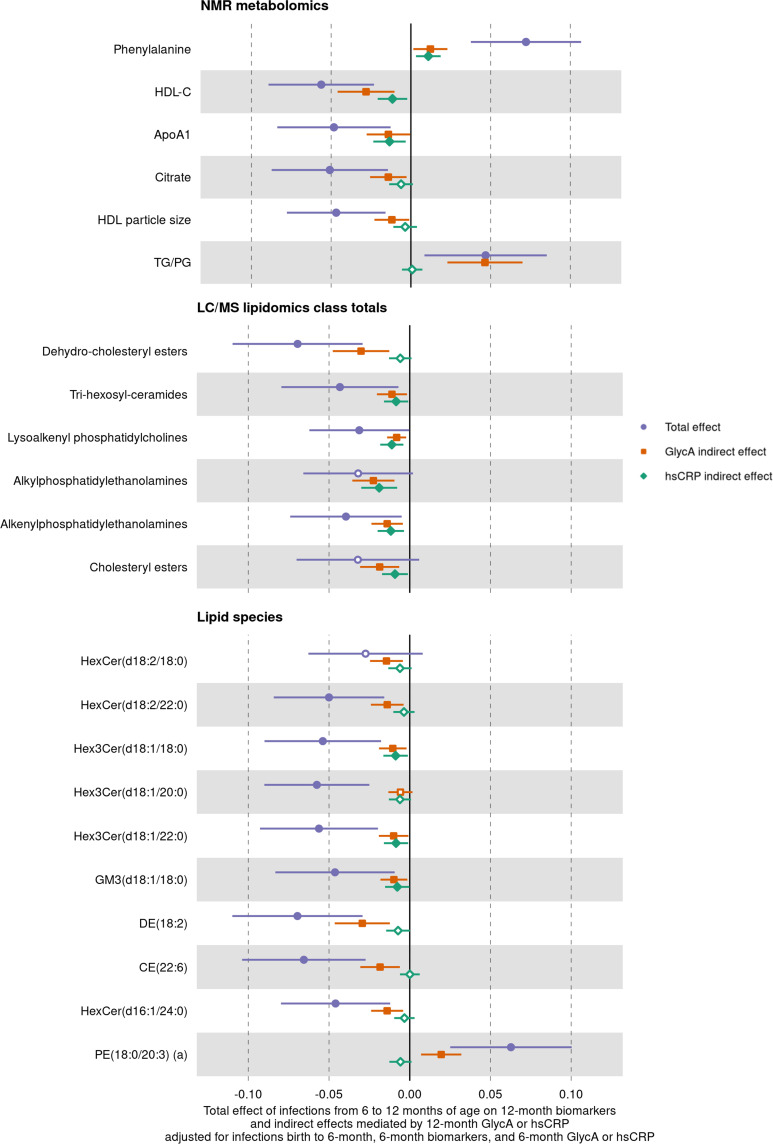
At 12 months, more frequent infant infections were associated with adverse metabolomic (elevated inflammation markers, triglycerides and phenylalanine, and lower high-density lipoprotein [HDL] cholesterol and apolipoprotein A1) and lipidomic profiles (elevated phosphatidylethanolamines and lower trihexosylceramides, dehydrocholesteryl esters, and plasmalogens). Similar, more marked, profiles were observed with higher GlycA, but not hsCRP. GlycA mediated a substantial proportion of the relationship between infection and metabolome/lipidome, with hsCRP generally mediating a lower proportion. Analogous relationships were observed between infection and 6-month inflammation, HDL cholesterol, and apolipoprotein A1.
Infants with a greater infection burden in the first year of life had proinflammatory and proatherogenic plasma metabolomic/lipidomic profiles at 12 months of age that in adults are indicative of heightened risk of cardiovascular disease, obesity, and type 2 diabetes. These findings suggest potentially modifiable pathways linking early life infection and inflammation with subsequent cardiometabolic risk.
The establishment work and infrastructure for the BIS was provided by the Murdoch Children's Research Institute (MCRI), Deakin University, and Barwon Health. Subsequent funding was secured from National Health and Medical Research Council of Australia (NHMRC), The Shepherd Foundation, The Jack Brockhoff Foundation, the Scobie & Claire McKinnon Trust, the Shane O'Brien Memorial Asthma Foundation, the Our Women's Our Children's Fund Raising Committee Barwon Health, the Rotary Club of Geelong, the Minderoo Foundation, the Ilhan Food Allergy Foundation, GMHBA, Vanguard Investments Australia Ltd, and the Percy Baxter Charitable Trust, Perpetual Trustees. In-kind support was provided by the Cotton On Foundation and CreativeForce. The study sponsors were not involved in the collection, analysis, and interpretation of data; writing of the report; or the decision to submit the report for publication. Research at MCRI is supported by the Victorian Government's Operational Infrastructure Support Program. This work was also supported by NHMRC Senior Research Fellowships to ALP (1008396); DB (1064629); and RS (1045161) , NHMRC Investigator Grants to ALP (1110200) and DB (1175744), NHMRC-A*STAR project grant (1149047). TM is supported by an MCRI ECR Fellowship. SB is supported by the Dutch Research Council (452173113).
成人期心血管和代谢(心脏代谢)疾病的风险从生命早期开始积累。感染在婴儿期普遍存在,并引发炎症,这是心脏代谢的一个关键风险因素,但感染、炎症与幼儿代谢特征之间的关系仍未得到探索。我们研究了在 6 个月和 12 个月龄时感染与血浆代谢组学和脂质组学特征之间的关系,并探讨了炎症对这些关联的介导作用。
从一项产前纵向队列中的 555 名婴儿中获得了匹配的感染、代谢组学和脂质组学数据。从出生到 12 个月的感染数据由父母报告(1、3、6、9 和 12 个月时的总感染数),12 个月时测定炎症标志物(高敏 C 反应蛋白[hsCRP];糖基化乙酰基[GlycA])。代谢特征为 12 个月时的血浆核磁共振代谢组学(228 种代谢物)和液相色谱/质谱脂质组学(776 种脂质)。使用多变量线性回归模型评估相关性。在二次分析中,还使用了出生时(血清)和 6 个月时(血浆)相应的炎症和代谢数据。
在 12 个月时,婴儿感染频率增加与代谢组学(炎症标志物升高、甘油三酯和苯丙氨酸升高,高密度脂蛋白胆固醇和载脂蛋白 A1 降低)和脂质组学特征(磷脂酰乙醇胺升高,三己糖神经酰胺、去氢胆甾醇酯和脑苷脂降低)相关。类似的,更显著的特征与更高的 GlycA 有关,但与 hsCRP 无关。GlycA 介导了感染与代谢组/脂质组之间的很大一部分关系,而 hsCRP 通常介导的比例较低。在感染与 6 个月时的炎症、高密度脂蛋白胆固醇和载脂蛋白 A1 之间也观察到类似的关系。
在生命的第一年中感染负担较高的婴儿在 12 个月时具有促炎和动脉粥样硬化的血浆代谢组学/脂质组学特征,这些特征在成年人中表明心血管疾病、肥胖和 2 型糖尿病的风险增加。这些发现表明,早期生活中的感染和炎症与随后的心脏代谢风险之间可能存在潜在的可调节途径。
BIS 的建立工作和基础设施由默多克儿童研究所(MCRI)、迪肯大学和巴旺健康提供。随后的资金由澳大利亚国家卫生和医学研究委员会(NHMRC)、谢泼德基金会、布罗克霍夫基金会、斯考比和克莱尔·麦克金农信托基金、奥文·奥布莱恩过敏症基金会、我们的妇女我们的儿童基金委员会巴旺健康、罗得岛俱乐部、米尔杜拉基金会、伊尔汉食物过敏基金会、GMHBA、先锋投资澳大利亚有限公司和珀西·巴克斯特慈善信托基金、永久受托人提供。实物支持由棉花On 基金会和创意力量提供。研究赞助商没有参与数据的收集、分析和解释;报告的编写;或提交报告以供出版的决定。MCRI 的研究得到了维多利亚政府运营基础设施支持计划的支持。这项工作还得到了 NHMRC 资深研究员奖学金(ALP 1008396;DB 1064629;RS 1045161)、NHMRC-星展银行项目拨款(1149047)、NHMRC 研究员拨款(ALP 1110200)和 DB 1175744)的支持。TM 得到了 MCRI ECR 奖学金的支持。SB 得到了荷兰研究理事会的支持(452173113)。