Singapore Institute for Clinical Sciences, A*STAR, Singapore, Singapore.
Singapore Lipidomics Incubator, Life Sciences Institute, National University of Singapore, Singapore, Singapore.
BMC Med. 2023 Feb 13;21(1):53. doi: 10.1186/s12916-023-02740-x.
Adaptations in lipid metabolism are essential to meet the physiological demands of pregnancy and any aberration may result in adverse outcomes for both mother and offspring. However, there is a lack of population-level studies to define the longitudinal changes of maternal circulating lipids from preconception to postpartum in relation to cardiometabolic risk factors.
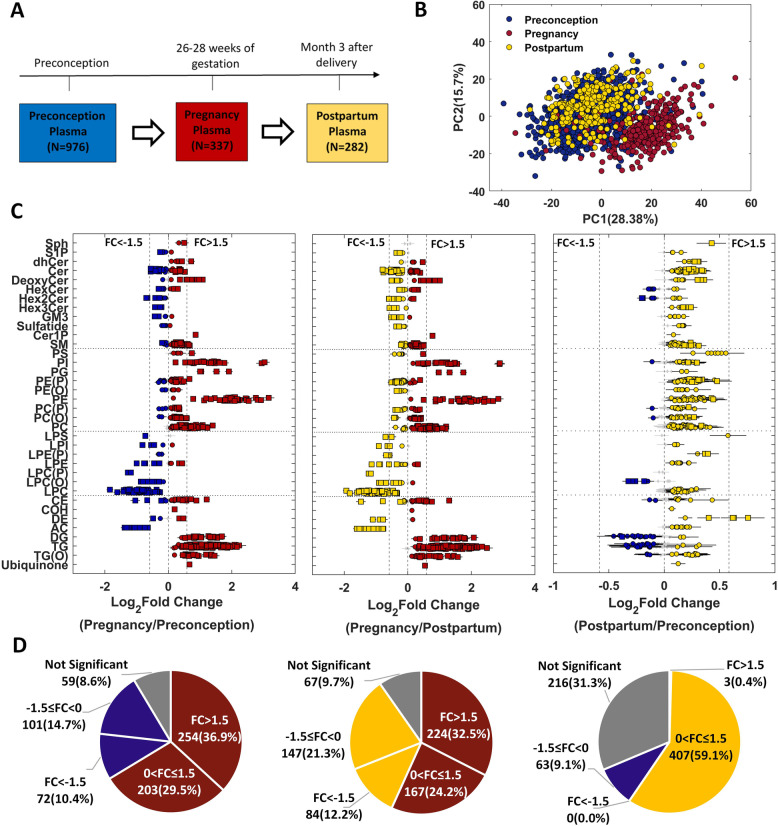
LC-MS/MS-based quantification of 689 lipid species was performed on 1595 plasma samples collected at three time points in a preconception and longitudinal cohort, Singapore PREconception Study of long-Term maternal and child Outcomes (S-PRESTO). We mapped maternal plasma lipidomic profiles at preconception (N = 976), 26-28 weeks' pregnancy (N = 337) and 3 months postpartum (N = 282) to study longitudinal lipid changes and their associations with cardiometabolic risk factors including pre-pregnancy body mass index, body weight changes and glycaemic traits.
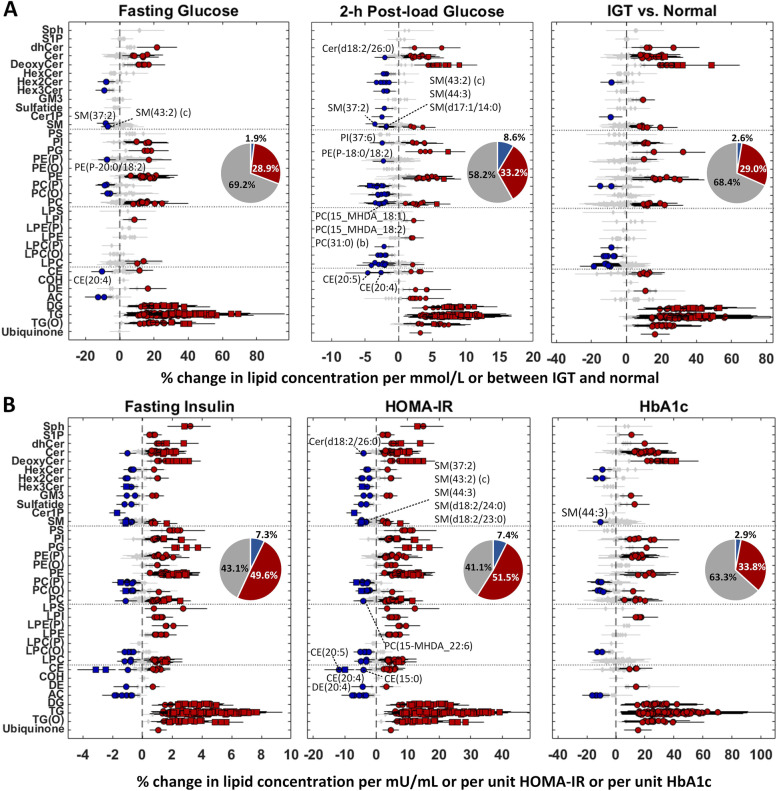
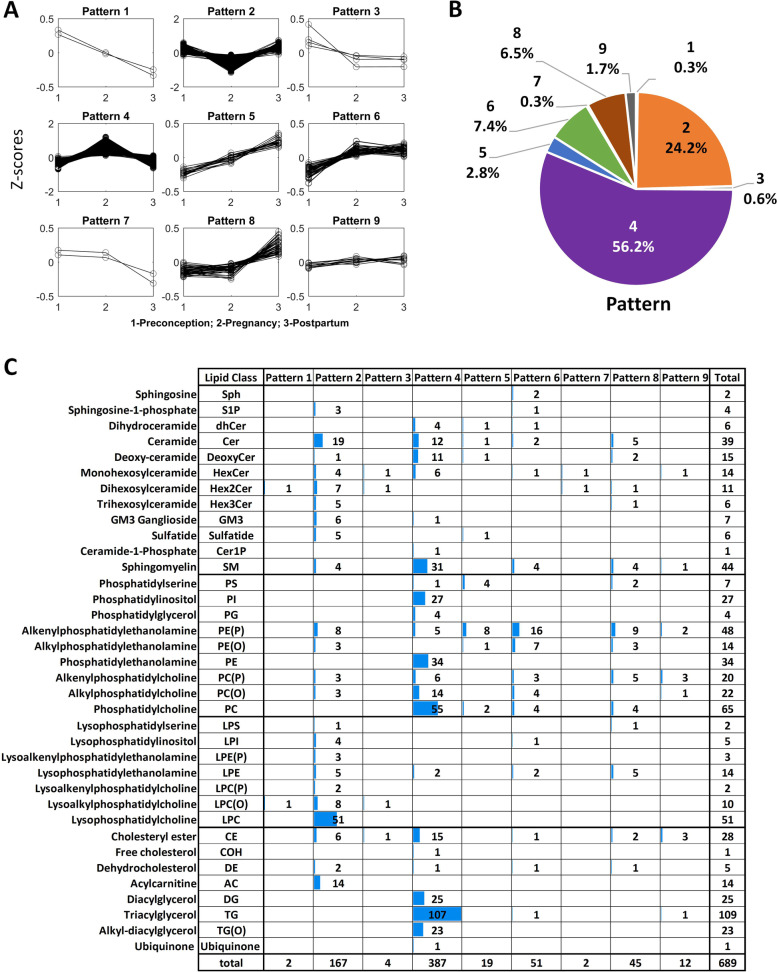
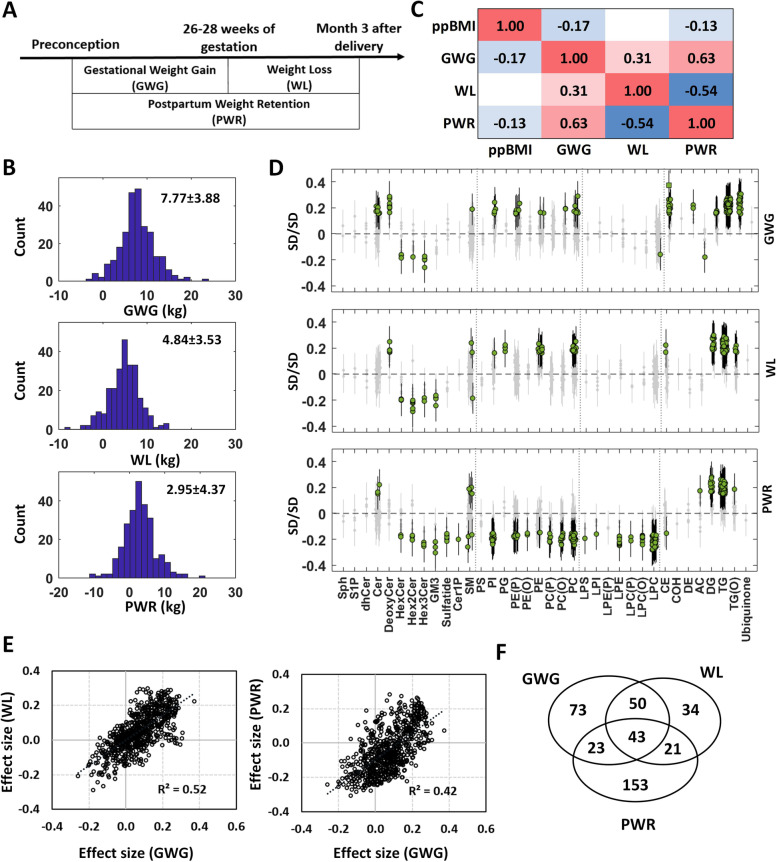
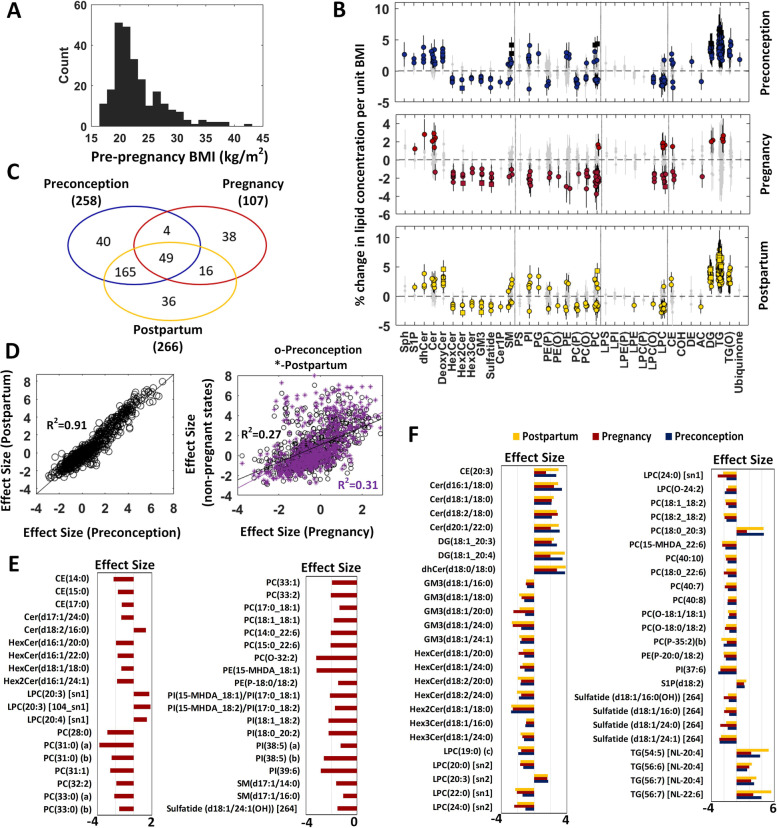
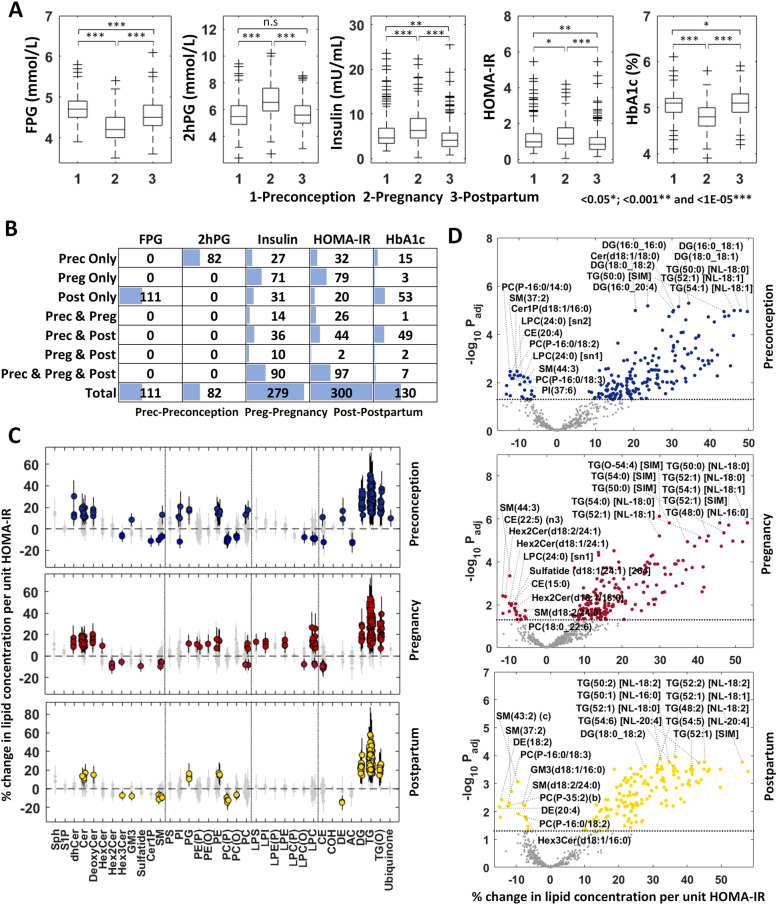
Around 56% of the lipids increased and 24% decreased in concentration in pregnancy before returning to the preconception concentration at postpartum, whereas around 11% of the lipids went through significant changes in pregnancy and their concentrations did not revert to the preconception concentrations. We observed a significant association of body weight changes with lipid changes across different physiological states, and lower circulating concentrations of phospholipids and sphingomyelins in pregnant mothers with higher pre-pregnancy BMI. Fasting plasma glucose and glycated haemoglobin (HbA1c) concentrations were lower whereas the homeostatic model assessment of insulin resistance (HOMA-IR), 2-h post-load glucose and fasting insulin concentrations were higher in pregnancy as compared to both preconception and postpartum. Association studies of lipidomic profiles with these glycaemic traits revealed their respective lipid signatures at three physiological states. Assessment of glycaemic traits in relation to the circulating lipids at preconception with a large sample size (n = 936) provided an integrated view of the effects of hyperglycaemia on plasma lipidomic profiles. We observed a distinct relationship of lipidomic profiles with different measures, with the highest percentage of significant lipids associated with HOMA-IR (58.9%), followed by fasting insulin concentration (56.9%), 2-h post-load glucose concentration (41.8%), HbA1c (36.7%), impaired glucose tolerance status (31.6%) and fasting glucose concentration (30.8%).
We describe the longitudinal landscape of maternal circulating lipids from preconception to postpartum, and a comprehensive view of trends and magnitude of pregnancy-induced changes in lipidomic profiles. We identified lipid signatures linked with cardiometabolic risk traits with potential implications both in pregnancy and postpartum life. Our findings provide insights into the metabolic adaptations and potential biomarkers of modifiable risk factors in childbearing women that may help in better assessment of cardiometabolic health, and early intervention at the preconception period.
ClinicalTrials.gov, NCT03531658.
脂质代谢的适应性对于满足妊娠的生理需求至关重要,任何异常都可能对母婴双方的健康产生不利影响。然而,目前缺乏人群水平的研究来定义从受孕前到产后母亲循环脂质的纵向变化与心血管代谢危险因素之间的关系。
在新加坡 PREconception Study of long-Term maternal and child Outcomes (S-PRESTO) 前瞻性队列中,对 1595 份血浆样本进行了基于 LC-MS/MS 的 689 种脂质的定量分析。我们将受孕前(N=976)、26-28 周妊娠(N=337)和产后 3 个月(N=282)三个时间点的母亲血浆脂质组学图谱与心血管代谢危险因素(包括受孕前体重指数、体重变化和血糖特征)进行了关联研究。
大约 56%的脂质在妊娠期间浓度增加,24%的脂质在产后恢复到受孕前的浓度,而大约 11%的脂质在妊娠期间发生了显著变化,其浓度并未恢复到受孕前的浓度。我们观察到体重变化与不同生理状态下的脂质变化之间存在显著关联,并且体重指数较高的孕妇循环磷脂和神经鞘磷脂浓度较低。与受孕前和产后相比,空腹血糖和糖化血红蛋白(HbA1c)浓度较低,而稳态模型评估的胰岛素抵抗(HOMA-IR)、2 小时餐后血糖和空腹胰岛素浓度较高。脂质组学特征与这些血糖特征的关联研究揭示了它们在三个生理状态下各自的脂质特征。在受孕前使用较大样本量(n=936)评估血糖特征与循环脂质之间的关系提供了对高血糖对血浆脂质组学特征影响的综合看法。我们观察到脂质组学特征与不同测量值之间存在明显的关系,与 HOMA-IR(58.9%)关联最大的显著脂质百分比最高,其次是空腹胰岛素浓度(56.9%)、2 小时餐后血糖浓度(41.8%)、HbA1c(36.7%)、糖耐量受损状态(31.6%)和空腹血糖浓度(30.8%)。
我们描述了从受孕前到产后母亲循环脂质的纵向变化,并全面了解了脂质组学特征在妊娠期间发生的变化的趋势和幅度。我们确定了与心血管代谢风险特征相关的脂质特征,这些特征可能对妊娠和产后生活都有影响。我们的研究结果为生育期妇女的代谢适应和潜在的可改变危险因素的生物标志物提供了新的认识,这可能有助于更好地评估心血管代谢健康,并在受孕前进行早期干预。
ClinicalTrials.gov,NCT03531658。