Center of Excellence in Medical Genetics Research, Chiang Mai University, Chiang Mai, Thailand; Division of Pediatric Dentistry, Department of Orthodontics and Pediatric Dentistry, Faculty of Dentistry, Chiang Mai University, Chiang Mai, Thailand.
School of Chemistry, Institute of Science, and Center for Biomolecular Structure, Function and Application, Suranaree University of Technology, Nakhon Ratchasima, Thailand.
Int Dent J. 2023 Feb;73(1):79-86. doi: 10.1016/j.identj.2022.04.006. Epub 2022 May 7.
WNT/β-catenin signaling is initiated by binding of a WNT protein to a Frizzled (FZD) receptor and a co-receptor, low-density lipoprotein (LDL) receptor-related protein 5 or 6 (LRP5/6). The objective of this study was to find the genetic variants responsible for dental anomalies found in 4 families.
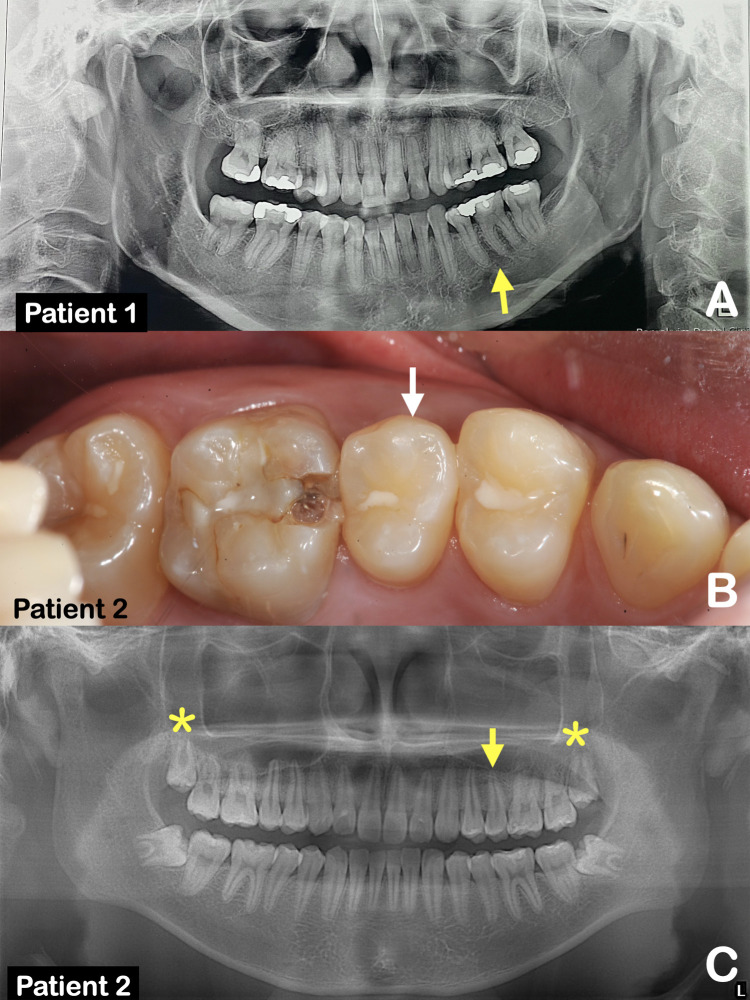
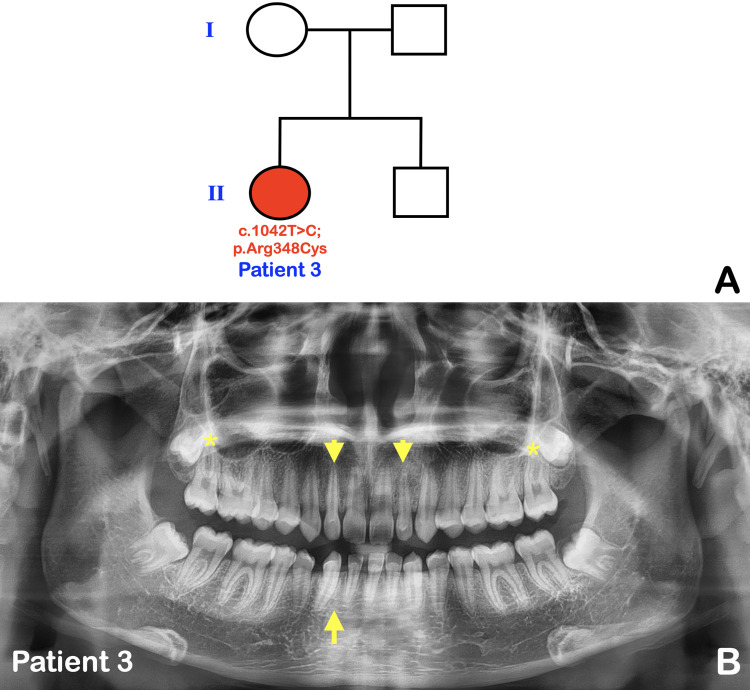
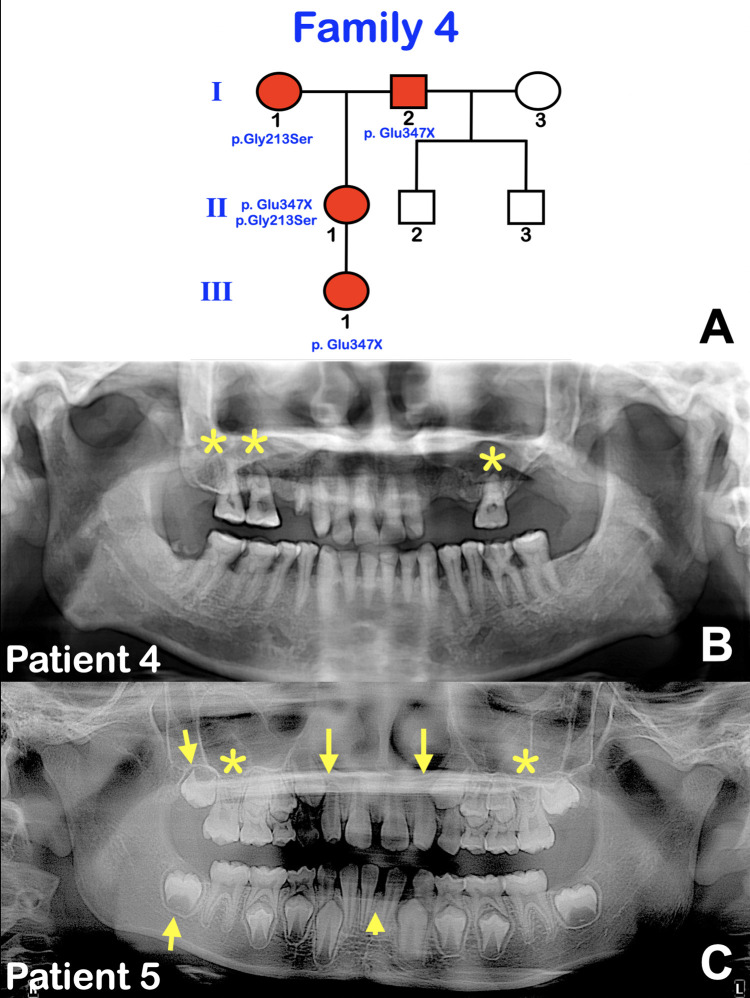
Clinical and radiographic examination and whole exome sequencing were performed on 5 patients affected with dental anomalies and the mutant proteins modeled.
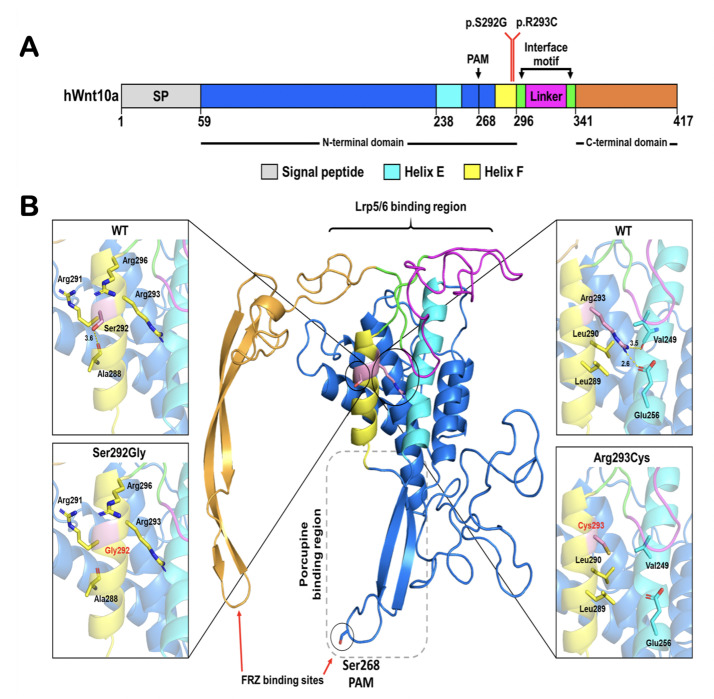
Five patients were heterozygous for the WNT10A variants, including c.877C>T; p.Arg293Cys, c.874A>G; p.Ser292Gly, c.1042C>T; p.Arg348Cys, and c.1039G>T; p.347GluX. The p.Arg293Cys and p.Ser292Gly mutations are located in the WNT10A N-terminal domain region with binding sites for FZD receptor, porcupine, WNTLESS, and extracellular binding proteins, so they are likely to have adverse effects on binding these proteins. The p.Arg348Cys mutation, which is located in the binding site of LRP5/6 co-receptors, is postulated to result in impaired binding to these co-receptors. The nonsense mutation p.347GluX is predicted to result in the truncation of most of the C-terminal domain, which is likely to disrupt the binding of WNT10A to WNTLESS, the membrane protein that binds lipid-acylated WNT proteins to carry them from the endoplasmic reticulum to the cell surface and FZD.
Four novel mutations in WNT10A were identified in patients with isolated tooth agenesis. The mutations in the N-terminal domain and the interface between the N- and C-terminal domains of WNT10A in our patients are likely to disrupt its binding with FZD, LRP5/6, and various other proteins involved in WNT10A processing and transport, impair WNT and SHH signaling, and subsequently result in tooth agenesis, microdontia, and root maldevelopment.
WNT/β-连环蛋白信号由 WNT 蛋白与卷曲蛋白(FZD)受体和共受体低密度脂蛋白受体相关蛋白 5 或 6(LRP5/6)结合引发。本研究旨在寻找导致 4 个家系中发现的牙齿异常的遗传变异。
对 5 名受牙齿异常影响的患者进行临床和影像学检查及全外显子组测序,并对突变蛋白进行建模。
5 名患者杂合携带 WNT10A 变异,包括 c.877C>T;p.Arg293Cys、c.874A>G;p.Ser292Gly、c.1042C>T;p.Arg348Cys 和 c.1039G>T;p.347GluX。p.Arg293Cys 和 p.Ser292Gly 突变位于 WNT10A N 端结构域区域,与 FZD 受体、刺猬蛋白、WNTLESS 和细胞外结合蛋白的结合位点,因此很可能对与这些蛋白的结合产生不利影响。位于 LRP5/6 共受体结合位点的 p.Arg348Cys 突变,推测会导致与这些共受体结合受损。无义突变 p.347GluX 预测会导致大部分 C 端结构域缺失,很可能会破坏 WNT10A 与 WNTLESS 的结合,WNTLESS 是一种膜蛋白,它将脂酰化的 WNT 蛋白结合到内质网上,并将其从内质网运送到细胞表面和 FZD。
在孤立性牙齿缺失的患者中发现了 WNT10A 的 4 个新突变。我们患者的 WNT10A N 端结构域和 N 端与 C 端结构域之间的突变,很可能会破坏其与 FZD、LRP5/6 以及其他参与 WNT10A 加工和运输的各种蛋白的结合,削弱 WNT 和 SHH 信号,进而导致牙齿缺失、小牙症和牙根发育不良。