Pediatric Cardiology and Congenital Heart Defect Division, Department of Cardiology and Vascular Medicine, National Cardiovascular Center Harapan Kita, Universitas Indonesia, Jakarta, Indonesia.
Faculty of Medicine, Universitas Indonesia, Jakarta, Indonesia.
Curr Cardiol Rev. 2022;18(6):e090522204486. doi: 10.2174/1573403X18666220509203335.
Reversed Potts shunt has been a prospective approach to treat suprasystemic pulmonary hypertension, particularly when medication treatment fails to reduce right ventricular afterload.
This meta-analysis aims to review the clinical, laboratory, and hemodynamic parameters after a reversed Potts shunt in suprasystemic pulmonary hypertension patients.
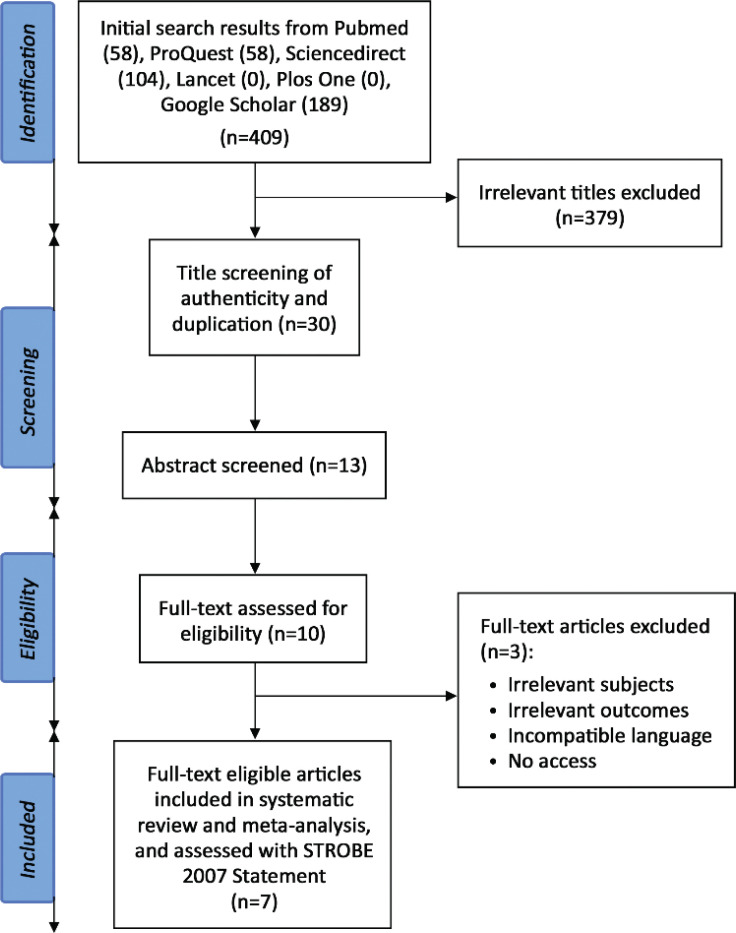
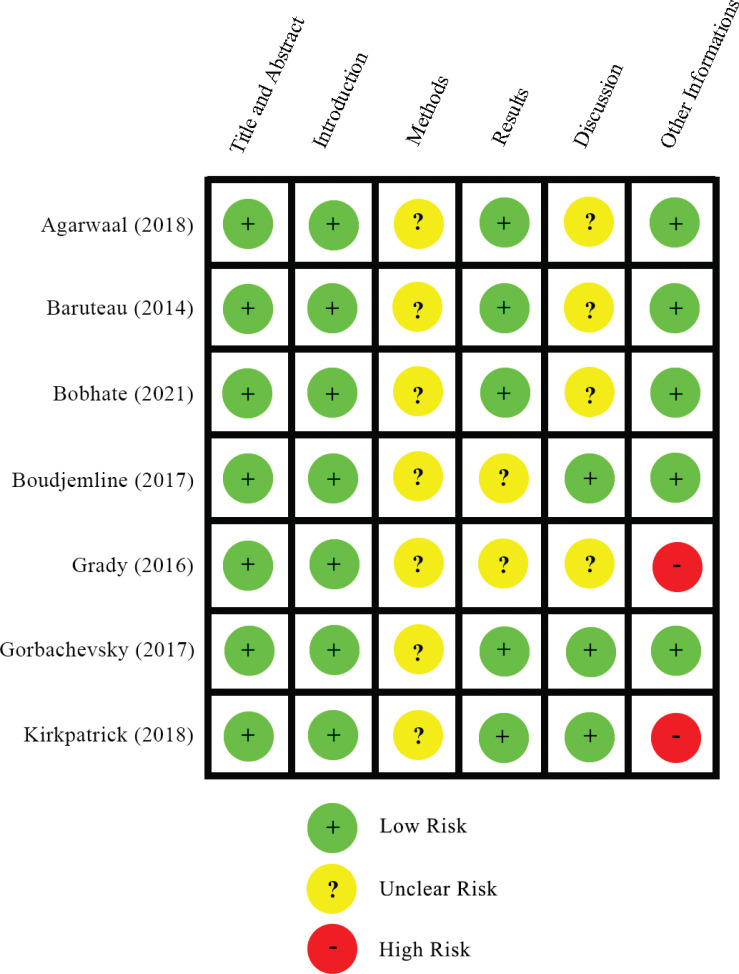
Six electronic databases were searched from the date of inception to August 2021, where the obtained studies were evaluated according to the PRISMA statement. The effects of shunt creation were evaluated by comparing preprocedural to postprocedural or follow-up parameters, expressed as a mean difference of 99% confidence interval. Quality assessment was conducted using the STROBE statement.
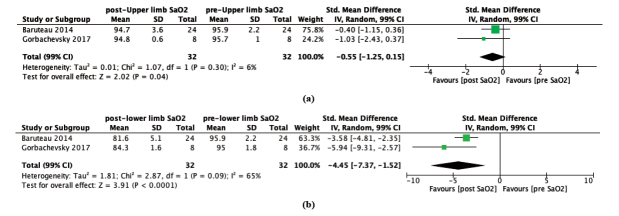
Seven studies suited the inclusion criteria which were included in this article. A reduction in upper and lower limb oxygen saturation [Upper limb: St. Mean difference -0.55, 99% CI -1.25 to 0.15; P=0.04; I=6%. Lower limb: St. Mean difference -4.45, 99% CI -7.37 to -1.52; P<0.00001; I=65%]. Reversed Potts shunt was shown to improve WHO functional class, 6-minute walk distance, NTpro-BNP level, and hemodynamic parameters including tricuspid annular plane systolic excursion, interventricular septal curvature, and end-diastolic right ventricle/left ventricle ratio.
Reversed Potts shunt cannot be said to be relatively safe, although it allows improvement in the clinical and functional status in patients with suprasystemic PAH. Reversed Potts shunt procedure may be the last resort for drug-resistant pulmonary hypertension as it is considered a high-risk procedure performed on patients with extremely poor conditions.
反式波氏分流术已成为治疗系统性肺动脉高压的一种前瞻性方法,特别是在药物治疗无法降低右心室后负荷时。
本荟萃分析旨在回顾反式波氏分流术治疗系统性肺动脉高压患者的临床、实验室和血流动力学参数。
从成立日期到 2021 年 8 月,检索了 6 个电子数据库,根据 PRISMA 声明评估获得的研究。通过比较术前与术后或随访参数来评估分流术的效果,用 99%置信区间的均值差表示。使用 STROBE 声明进行质量评估。
有 7 项符合纳入标准的研究被纳入本文。上肢和下肢氧饱和度均降低[上肢:St. 均值差-0.55,99%CI-1.25 至 0.15;P=0.04;I=6%。下肢:St. 均值差-4.45,99%CI-7.37 至-1.52;P<0.00001;I=65%]。反式波氏分流术可改善世界卫生组织功能分级、6 分钟步行距离、NT-pro-BNP 水平以及血流动力学参数,包括三尖瓣环平面收缩期位移、室间隔曲率和舒张末期右心室/左心室比值。
虽然反式波氏分流术可改善系统性肺动脉高压患者的临床和功能状态,但不能说它相对安全。反式波氏分流术可能是药物抵抗性肺动脉高压的最后手段,因为它被认为是一种对条件极差的患者进行的高风险手术。