Luo Tian-Ying, He Xi, Zhang Ji, Chen Ping, Liu Yan-Hong, Wang Hai-Jiao, Yu Xiao-Qi
Key Laboratory of Green Chemistry and Technology, Ministry of Education, College of Chemistry, Sichuan University Chengdu 610064 P. R. China
RSC Adv. 2018 Feb 7;8(11):6053-6062. doi: 10.1039/c7ra13607b. eCollection 2018 Feb 2.
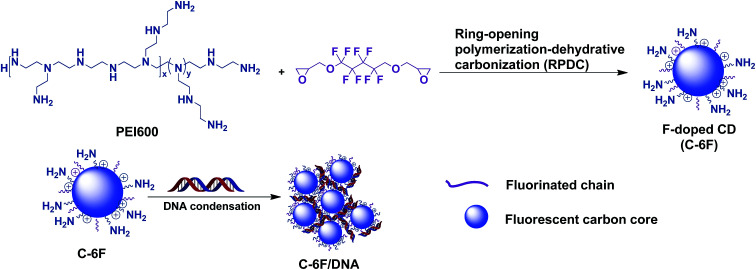
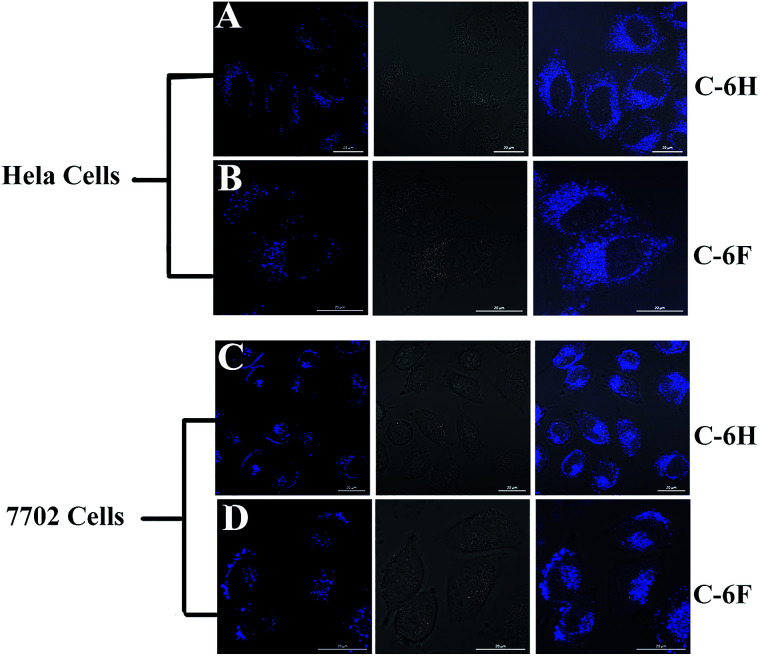
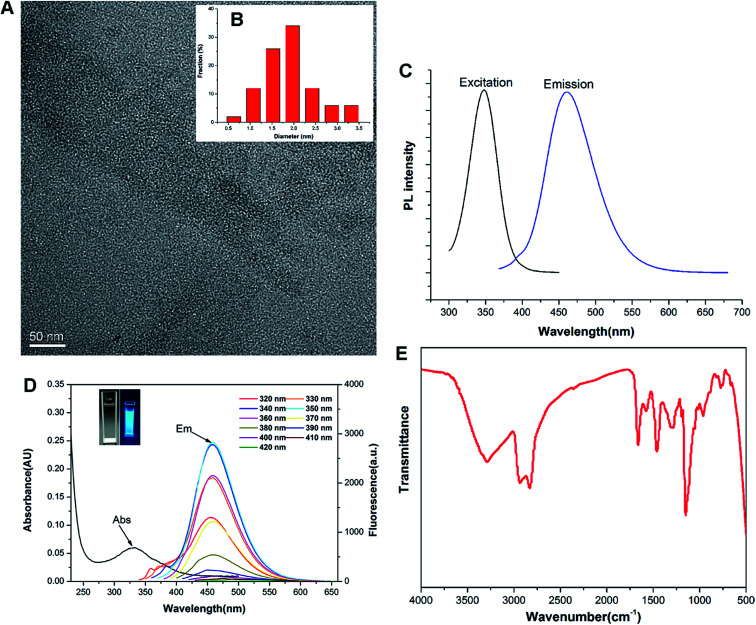
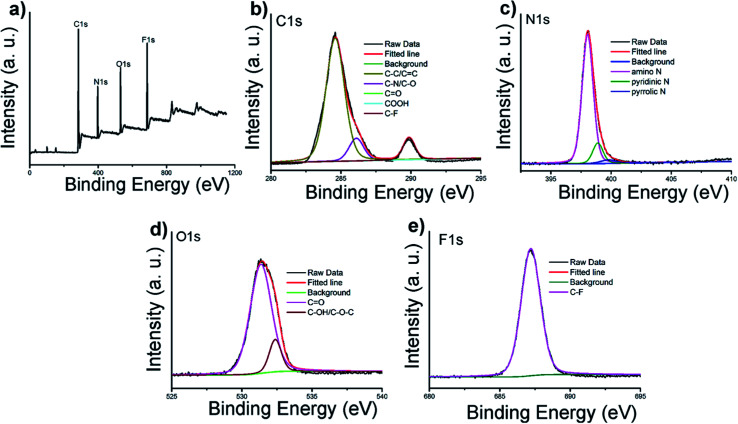
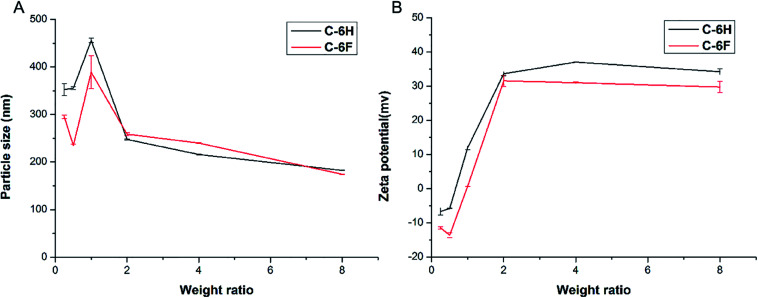
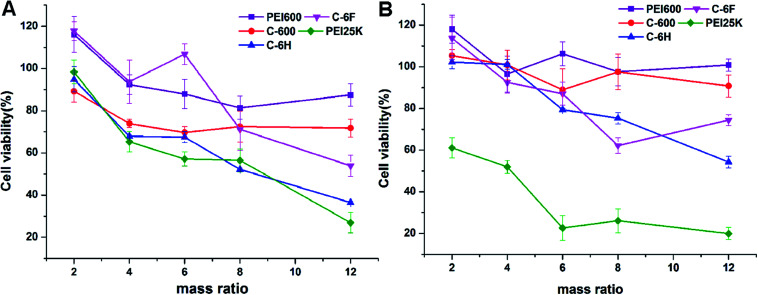
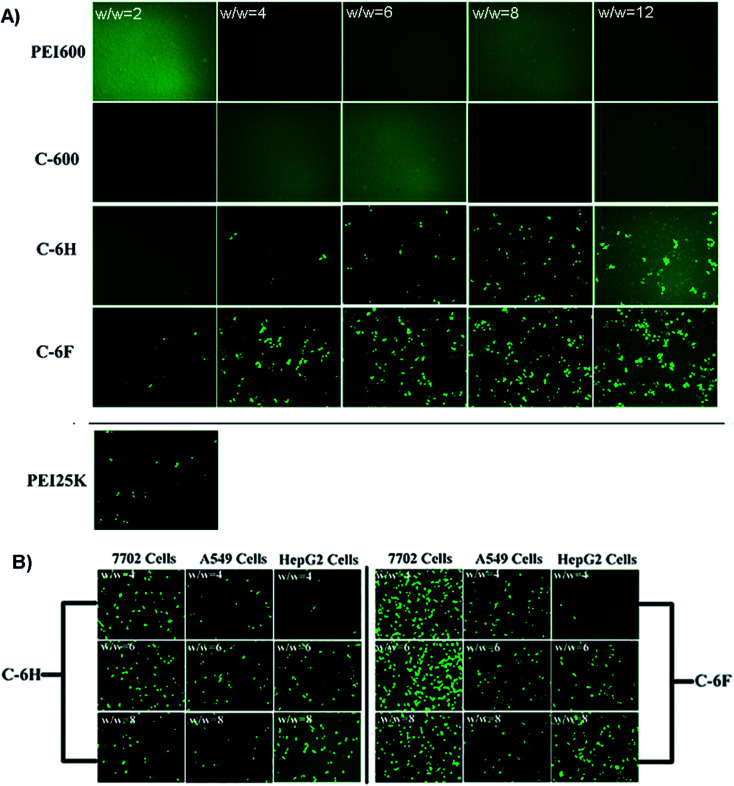
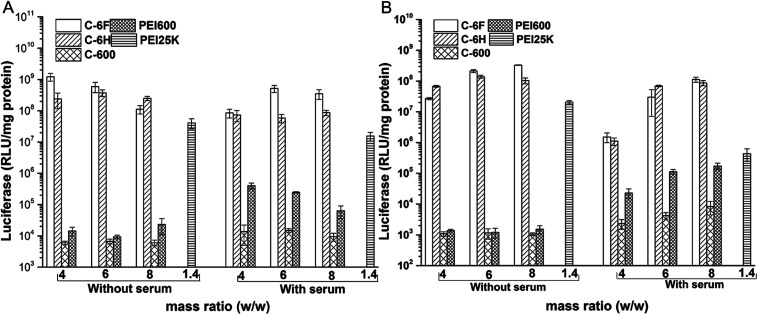
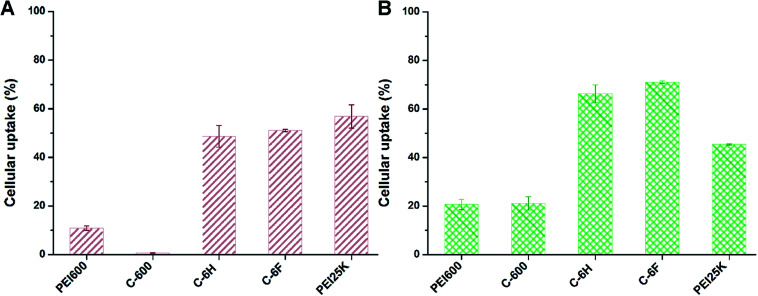
Carbon dots (CDs) are photoluminescent nanoparticles with distinctive properties, having great potential in nano-biomaterial systems such as gene/drug delivery vectors and cell imaging agents. Fluorine-doped CD C-6F was prepared by a one-step ring-opening polymerization-dehydrative carbonization (RPDC) approach based on low molecular weight polyethyleneimine (PEI, 600 Da) and fluorinated diglycidyl ethers, while the non-fluorinated counterpart C-6H and the CD prepared from PEI 600 Da solely (C-600) were also prepared for comparison. TEM, FT-IR and XPS were performed to determine the compositions and surface states of the CDs. cell experiment results reveal that the CDs prepared from RPDC approach have much higher transfection efficiency and cellular uptake than PEI 600 contrasts in various cell lines. Compared to non-fluorinated C-6H, C-6F exhibited distinctly higher transfection efficiency, and up to 30 and 260 times higher efficiency than PEI 25 kDa could be achieved in the absence and presence of serum, respectively, indicating the advantage of F-doping. Besides, these CDs exhibit good cell imaging capability under single wavelength excitation, making the materials suitable for cellular tracking and transfection mechanism studies. These results demonstrate that fluorine-doping is an efficient approach to obtained CD gene vectors with high efficiency and serum tolerance.
碳点(CDs)是具有独特性质的光致发光纳米颗粒,在纳米生物材料系统中具有巨大潜力,如基因/药物递送载体和细胞成像剂。基于低分子量聚乙烯亚胺(PEI,600 Da)和氟化二缩水甘油醚,通过一步开环聚合-脱水碳化(RPDC)方法制备了氟掺杂的CD C-6F,同时还制备了非氟化的对应物C-6H以及仅由PEI 600 Da制备的CD(C-600)用于比较。进行了透射电子显微镜(TEM)、傅里叶变换红外光谱(FT-IR)和X射线光电子能谱(XPS)分析以确定碳点的组成和表面状态。细胞实验结果表明,通过RPDC方法制备的碳点在各种细胞系中的转染效率和细胞摄取量比PEI 600对照物高得多。与非氟化的C-6H相比,C-6F表现出明显更高的转染效率,在无血清和有血清的情况下,其效率分别比PEI 25 kDa高30倍和260倍,表明了氟掺杂的优势。此外,这些碳点在单波长激发下表现出良好的细胞成像能力,使该材料适用于细胞追踪和转染机制研究。这些结果表明,氟掺杂是获得具有高效性和血清耐受性的CD基因载体的有效方法。