Pinna Alessandra, Ricco' Raffaele, Migheli Rossana, Rocchitta Gaia, Serra Pier Andrea, Falcaro Paolo, Malfatti Luca, Innocenzi Plinio
Department of Materials, Imperial College London, South Kensington Campus London SW72AZ UK.
Graz University of Technology, Institute of Physical and Theoretical Chemistry Stremayrgasse 9 8010 Graz Austria.
RSC Adv. 2018 Jul 18;8(45):25664-25672. doi: 10.1039/c8ra04969f. eCollection 2018 Jul 16.
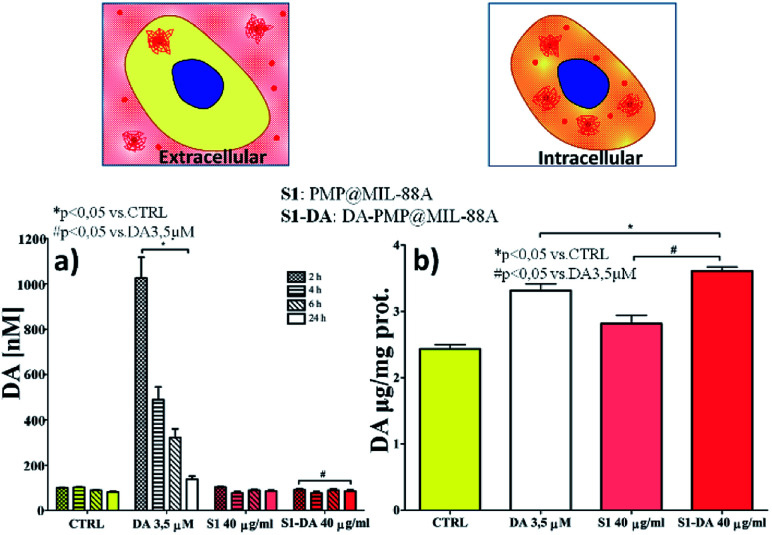
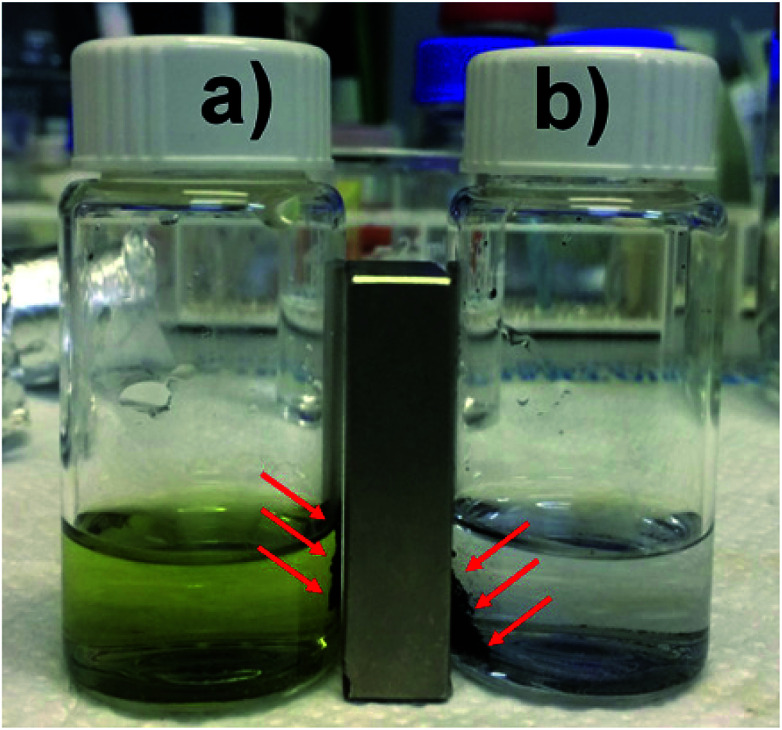
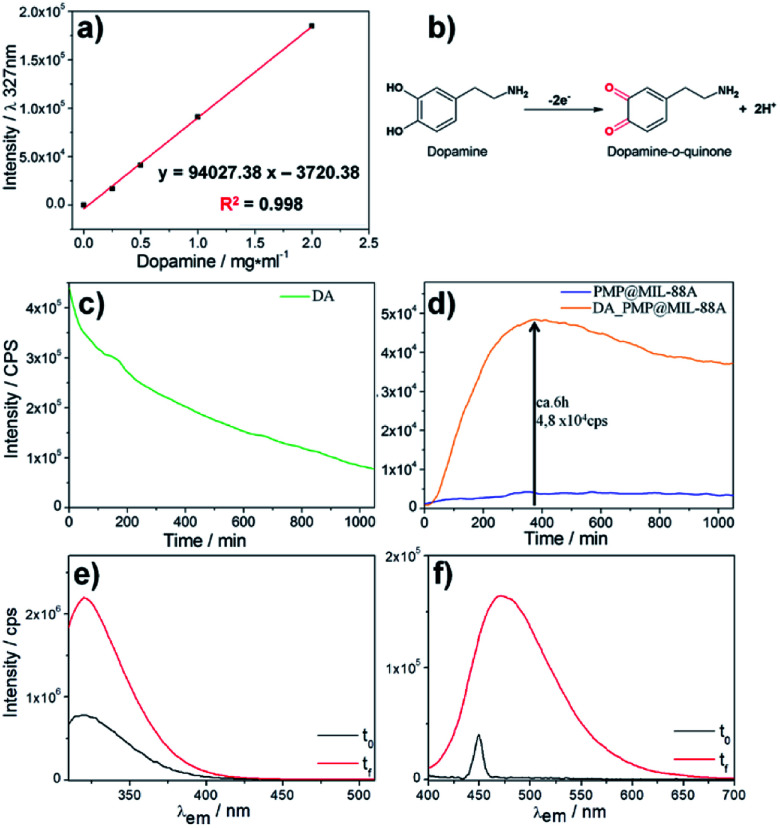
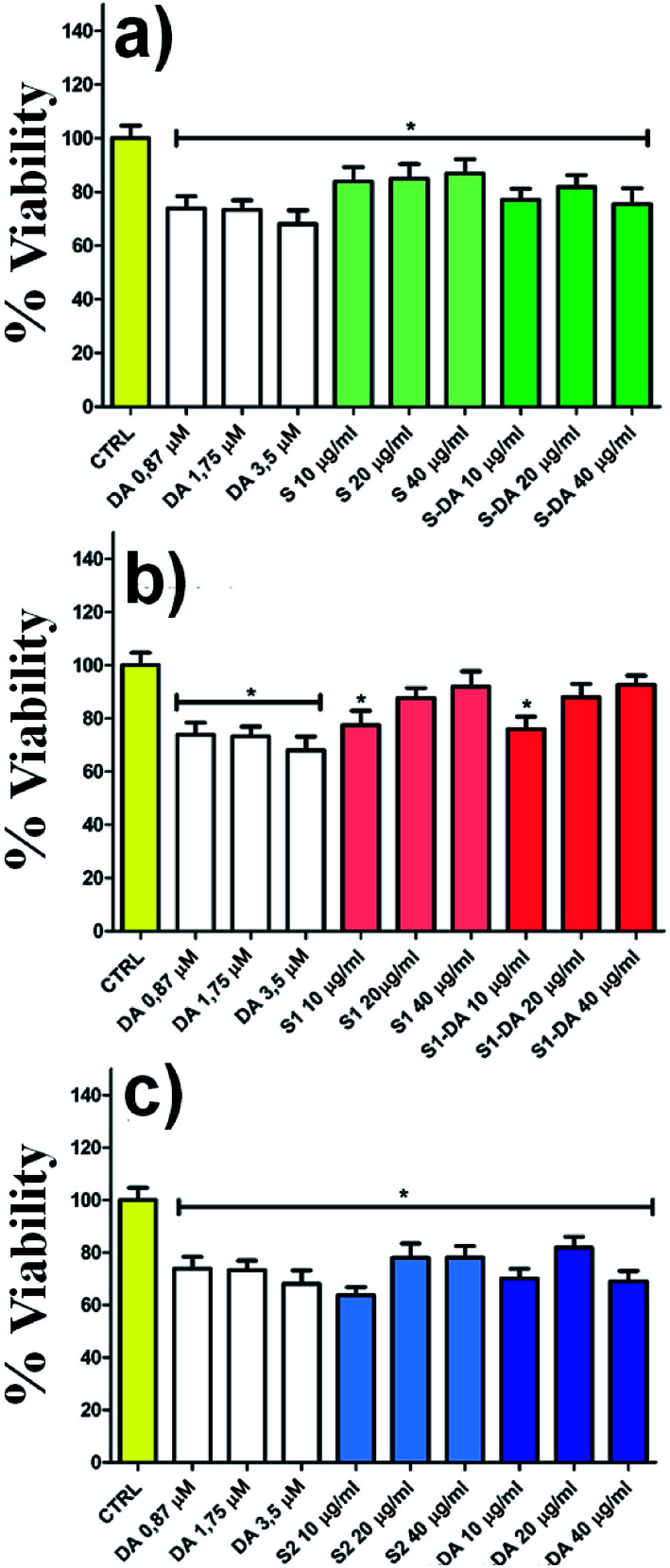
MIL-88A (Fe) MOF crystals were nucleated and grown around a polymer core containing superparamagnetic nanoparticles to assemble a new class of biocompatible particles for magnetophoretic drug delivery of dopamine. The carrier enabled efficient targeted release, dopamine protection from oxidative damage, long-term delivery and improved drug delivery cost-efficiency. After loading, dopamine was stable within the carrier and did not undergo oxidation. Drug release monitoring spectrofluorimetry revealed a shorter burst effect and higher release efficiency than silica based carriers. The cytotoxicity at different MOF concentrations and sizes was assessed using PC12 cells as the neuronal cell model. The drug was directly uptaken into the PC12 cells avoiding possible side effects due to oxidation occurring in the extracellular environment.
MIL-88A(铁)金属有机框架晶体在含有超顺磁性纳米颗粒的聚合物核周围成核并生长,以组装一类新型的生物相容性颗粒,用于多巴胺的磁泳药物递送。该载体实现了高效的靶向释放、多巴胺免受氧化损伤、长期递送并提高了药物递送的成本效益。负载后,多巴胺在载体内稳定,未发生氧化。药物释放监测荧光光谱法显示,与基于二氧化硅的载体相比,具有更短的突释效应和更高的释放效率。使用PC12细胞作为神经元细胞模型评估了不同MOF浓度和尺寸下的细胞毒性。药物直接被PC12细胞摄取,避免了由于细胞外环境中发生氧化而可能产生的副作用。