Guo Yiyou, Cao Changlin, Luo Fubin, Huang Baoquan, Xiao Liren, Qian Qingrong, Chen Qinghua
Engineering Research Center of Polymer Green Recycling of Ministry Education, Fujian Key Laboratory of Pollution Control & Resource Reuse, College of Environmental Science and Engineering, Fujian Normal University Fuzhou 350007 China
Fujian Normal University, Fuqing Branch Fuzhou 350300 China.
RSC Adv. 2019 Dec 9;9(70):40800-40809. doi: 10.1039/c9ra08416a.
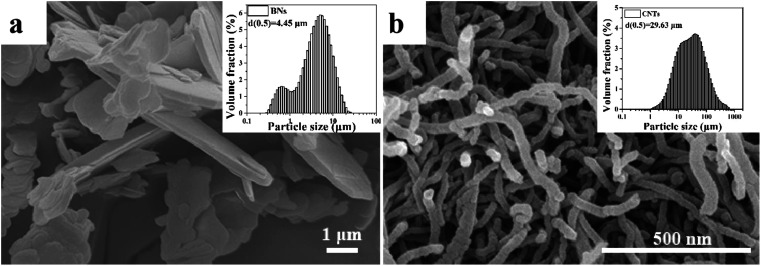
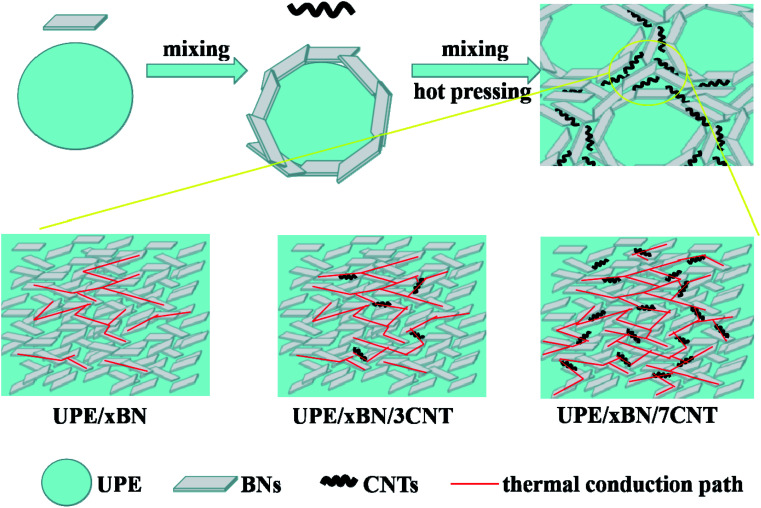
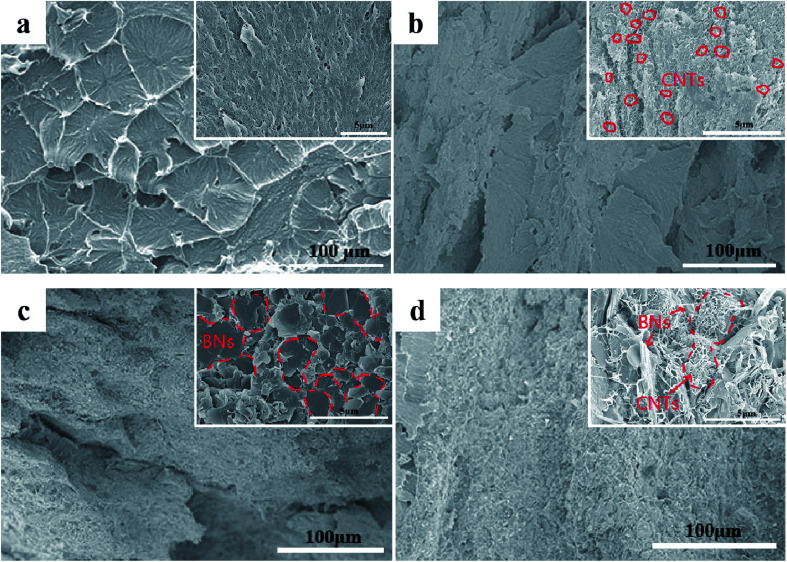
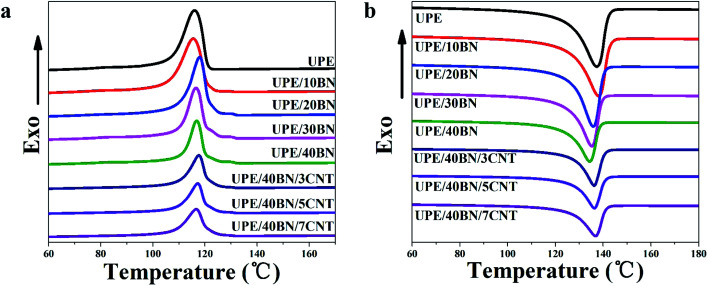
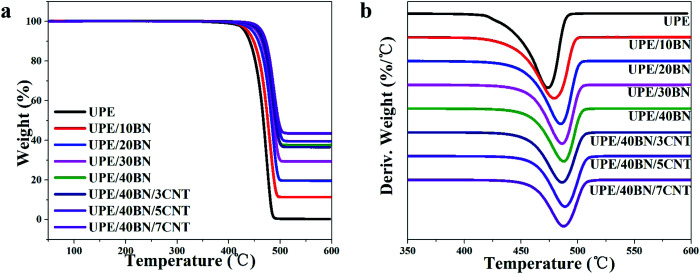
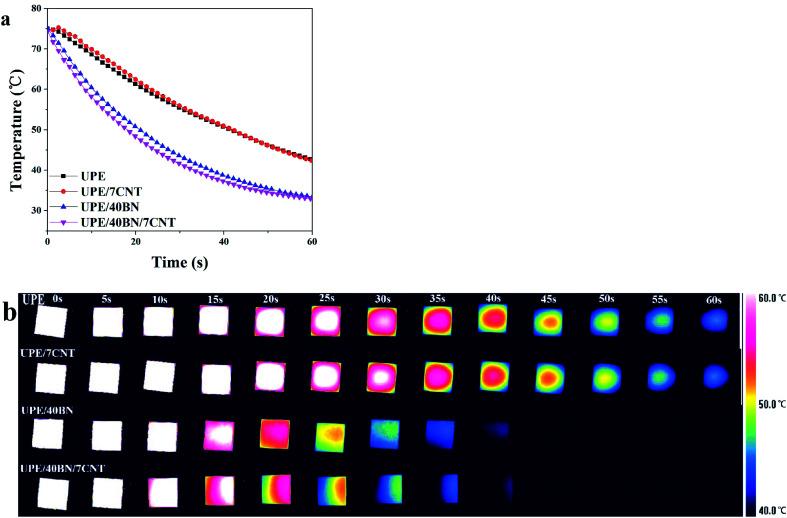
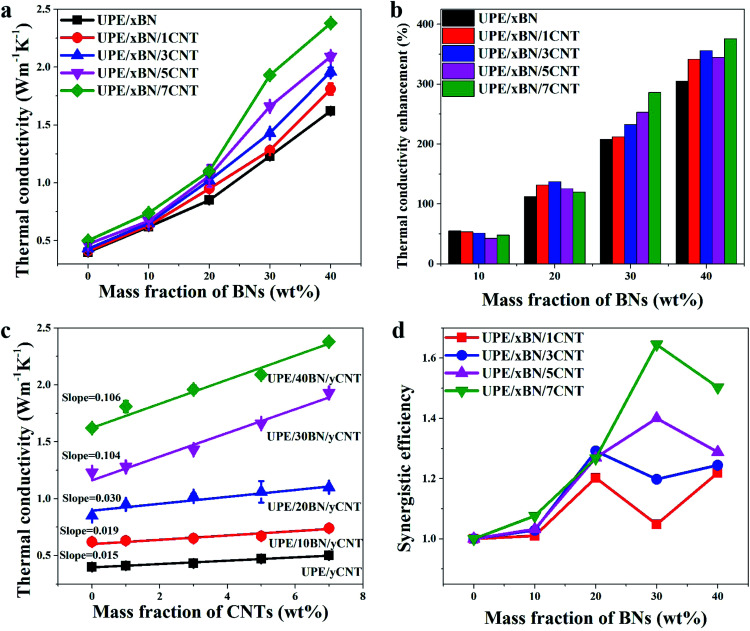
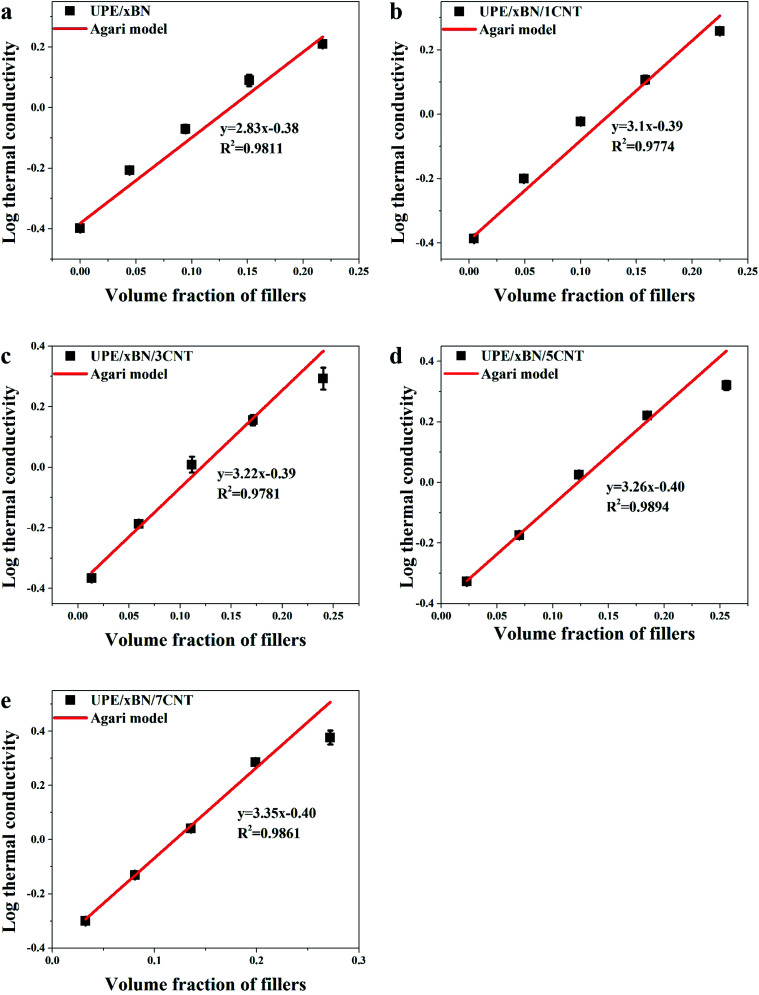
In recent years, thermally conductive polymer-based composites have garnered significant attention due to their light weight and easy formation process. In this work, the thermal conductivity of ultra high molecular weight polyethylene (UPE) composites was improved through construction of a hybrid filler network of boron nitride sheets (BNs) and carbon nanotubes (CNTs) in the matrix hot compression. The morphology, UPE aggregate structure, thermal conductivity, heat dissipation capacity and thermal stability of the UPE composites were investigated. The thermal conduction mechanism of the UPE composites was explored through simulations with Agari's semi-empirical formula. The results showed that the thermal conductivity of the UPE composite with 40 wt% BNs and 7 wt% CNTs was 2.38 W m K, which was 495% higher than that of pure UPE, showing a synergistic effect between BNs and CNTs. The simulations with Agari's semi-empirical simulation suggested that increasing the CNT content contributed to synergistically assist BNs to form a better continuous and effective hybrid filler thermal network, thereby reducing phonon scattering and thermal resistance between BNs. In addition, UPE composites doped with BNs and CNTs presented better heat dissipation capacity and higher thermal stability as compared to that of pure UPE.
近年来,基于热导聚合物的复合材料因其重量轻且成型工艺简单而备受关注。在本研究中,通过在基体热压缩过程中构建氮化硼片(BNs)和碳纳米管(CNTs)的混合填料网络,提高了超高分子量聚乙烯(UPE)复合材料的热导率。研究了UPE复合材料的形态、UPE聚集结构、热导率、散热能力和热稳定性。通过使用阿加里半经验公式进行模拟,探索了UPE复合材料的热传导机制。结果表明,含有40 wt% BNs和7 wt% CNTs的UPE复合材料的热导率为2.38 W m K,比纯UPE高出495%,表明BNs和CNTs之间存在协同效应。阿加里半经验模拟表明,增加CNT含量有助于协同辅助BNs形成更好的连续且有效的混合填料热网络,从而减少声子散射和BNs之间的热阻。此外,与纯UPE相比,掺杂BNs和CNTs的UPE复合材料具有更好的散热能力和更高的热稳定性。