Travaš Lovro, Rujnić Havstad Maja, Pilipović Ana
Faculty of Mechanical Engineering and Naval Architecture, University of Zagreb, Ivana Lucica 5, 10000 Zagreb, Croatia.
Polymers (Basel). 2023 Sep 4;15(17):3645. doi: 10.3390/polym15173645.
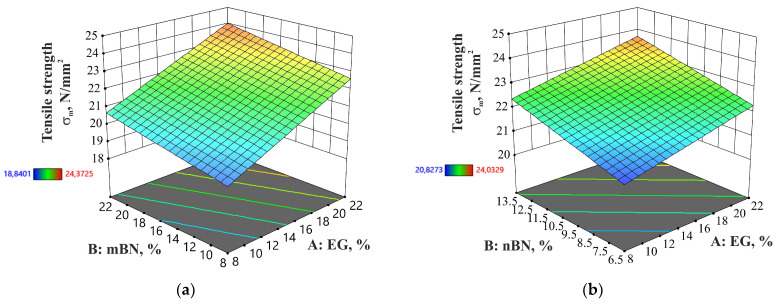
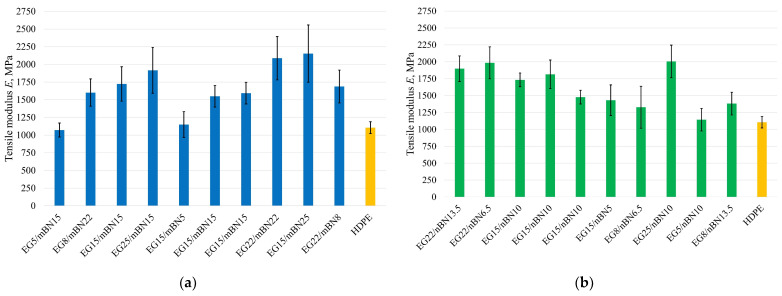
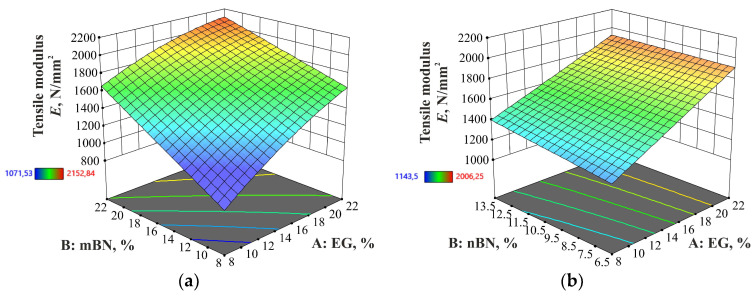
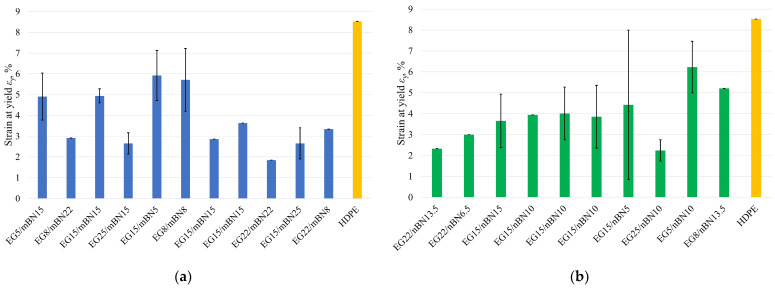
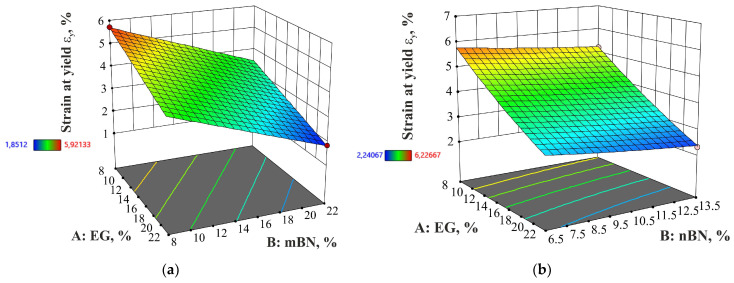
Due to its mechanical, rheological, and chemical properties, high-density polyethylene (HDPE) is commonly used as a material for producing the pipes for transport of various media. Low thermal conductivity (0.4 W/mK) narrows down the usage of HDPE in the heat exchanger systems. The main goal of the work is to reduce the vertical depth of the HDPE pipe buried in the borehole by increasing the thermal conductivity of the material. This property can be improved by adding certain additives to the pure HDPE matrix. Composites made of HDPE with metallic and non-metallic additives show increased thermal conductivity several times compared to the thermal conductivity of pure HDPE. Those additives affect the mechanical properties too, by enhancing or degrading them. In this research, the thermal conductivity and tensile properties of composite made of HDPE matrix and two types of additives, expanded graphite (EG) and boron nitride (BN), were tested. Micro-sized particles of EG and two different sizes of BN particles, micro and nano, were used to produce composite. The objective behind utilizing composite materials featuring dual additives is twofold: firstly, to enhance thermal properties, and secondly, to improve mechanical properties when compared with the pure HDPE. As anticipated, the thermal conductivity of the composites exhibited an eightfold rise in comparison to the pure HDPE. The tensile modulus experienced augmentation across all variations of additive ratios within the composites, albeit with a marginal reduction in tensile strength. This implies that the composite retains a value similar to pure HDPE in terms of tensile strength. Apart from the enhancement observed in all the aforementioned properties, the most significant downside of these composites pertains to their strain at yield, which experienced a reduction, declining from the initial 8.5% found in pure HDPE to a range spanning from 6.6% to 1.8%, dependent upon the specific additive ratios and the size of the BN particles.
由于其机械、流变和化学特性,高密度聚乙烯(HDPE)通常用作生产输送各种介质管道的材料。低热导率(0.4W/mK)限制了HDPE在热交换器系统中的应用。这项工作的主要目标是通过提高材料的热导率来减小埋入钻孔中的HDPE管的垂直深度。通过向纯HDPE基体中添加某些添加剂可以改善这一特性。由HDPE与金属和非金属添加剂制成的复合材料的热导率比纯HDPE的热导率提高了几倍。这些添加剂也会通过增强或降低材料的机械性能来影响其机械性能。在本研究中,测试了由HDPE基体和两种添加剂——膨胀石墨(EG)和氮化硼(BN)制成的复合材料的热导率和拉伸性能。使用EG的微米级颗粒和两种不同尺寸的BN颗粒(微米和纳米级)来制备复合材料。使用具有双重添加剂的复合材料的目的有两个:第一,提高热性能;第二,与纯HDPE相比改善机械性能。正如预期的那样,复合材料的热导率比纯HDPE提高了八倍。在复合材料中,所有添加剂比例变化下的拉伸模量都有所增加,尽管拉伸强度略有降低。这意味着复合材料在拉伸强度方面保持了与纯HDPE相似的值。除了上述所有性能都有所增强外,这些复合材料最显著的缺点是其屈服应变降低了,从纯HDPE最初的8.5%降至6.6%至1.8%的范围,这取决于特定的添加剂比例和BN颗粒的尺寸。