Ballatore M Belén, Spesia Mariana B, Milanesio M Elisa, Durantini Edgardo N
Departamento de Química, Facultad de Ciencias Exactas, Físico-Químicas y Naturales, Universidad Nacional de Río Cuarto Ruta Nacional 36 Km 601, X5804BYA Río Cuarto Córdoba Argentina
RSC Adv. 2018 Jun 21;8(41):22876-22886. doi: 10.1039/c8ra04562c.
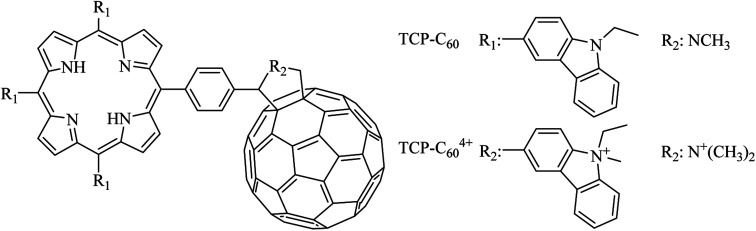
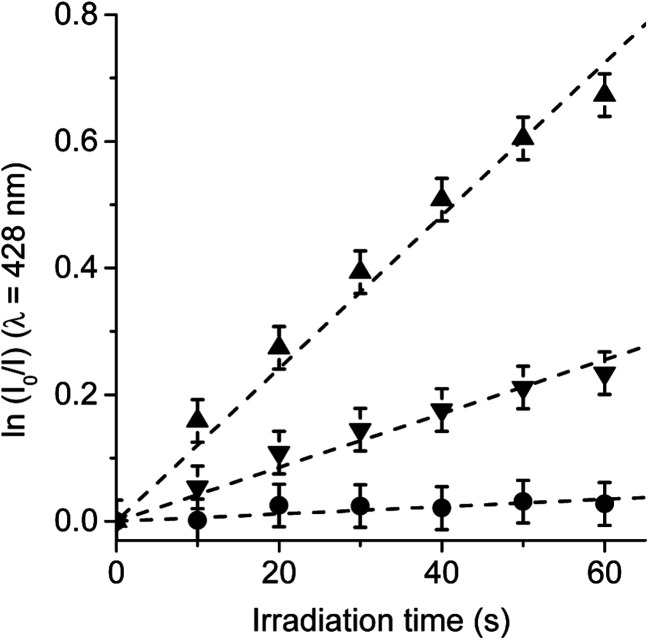
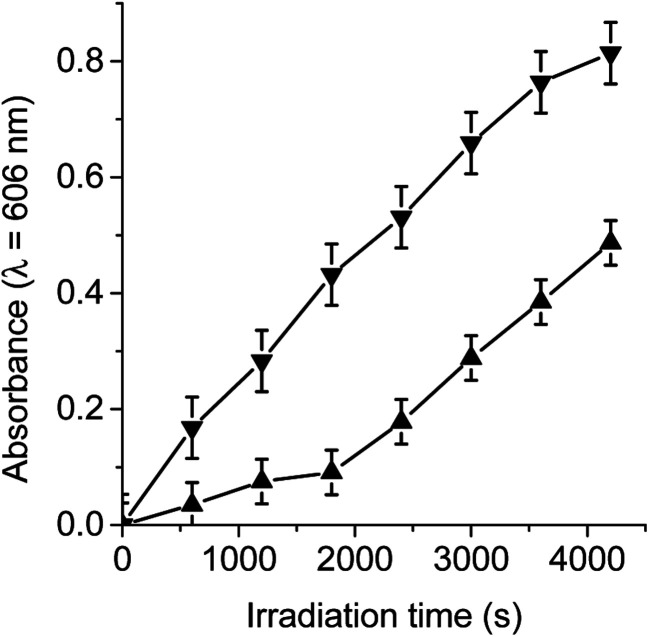
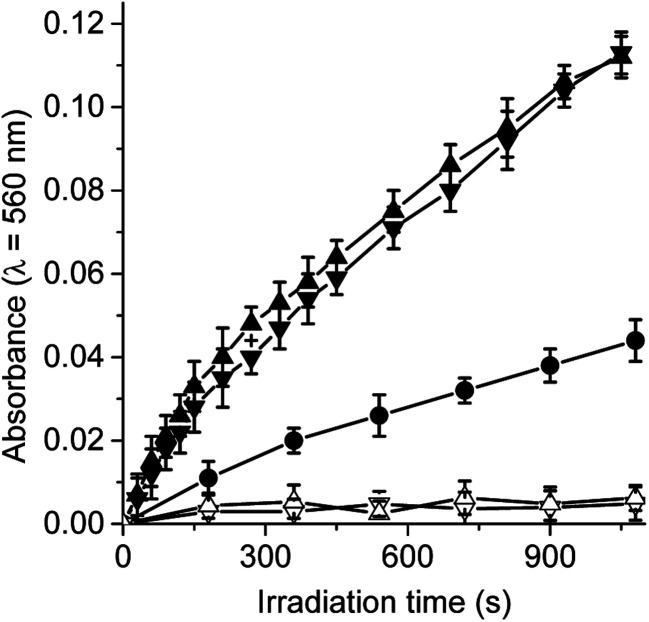
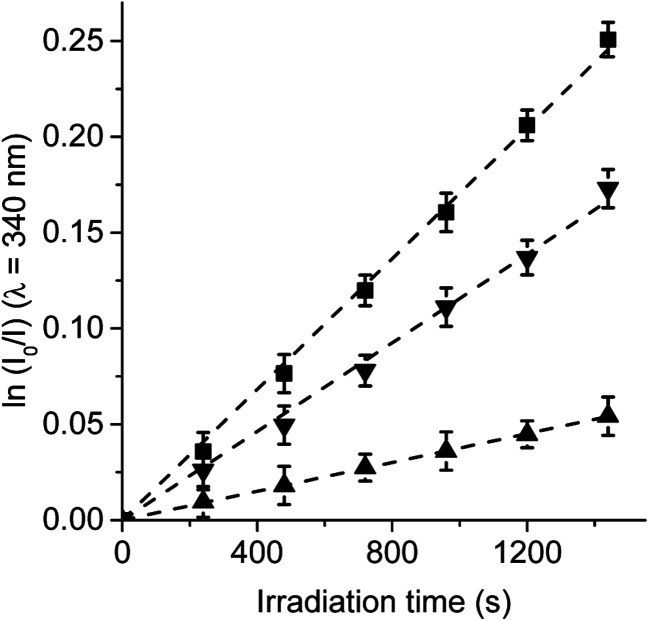
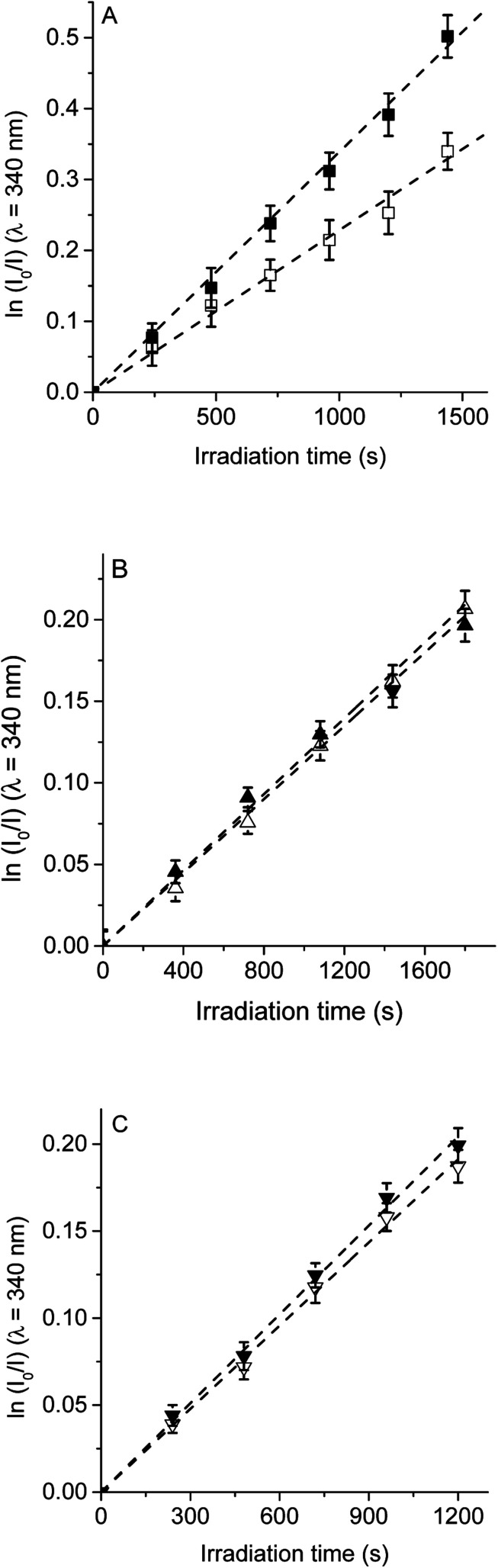
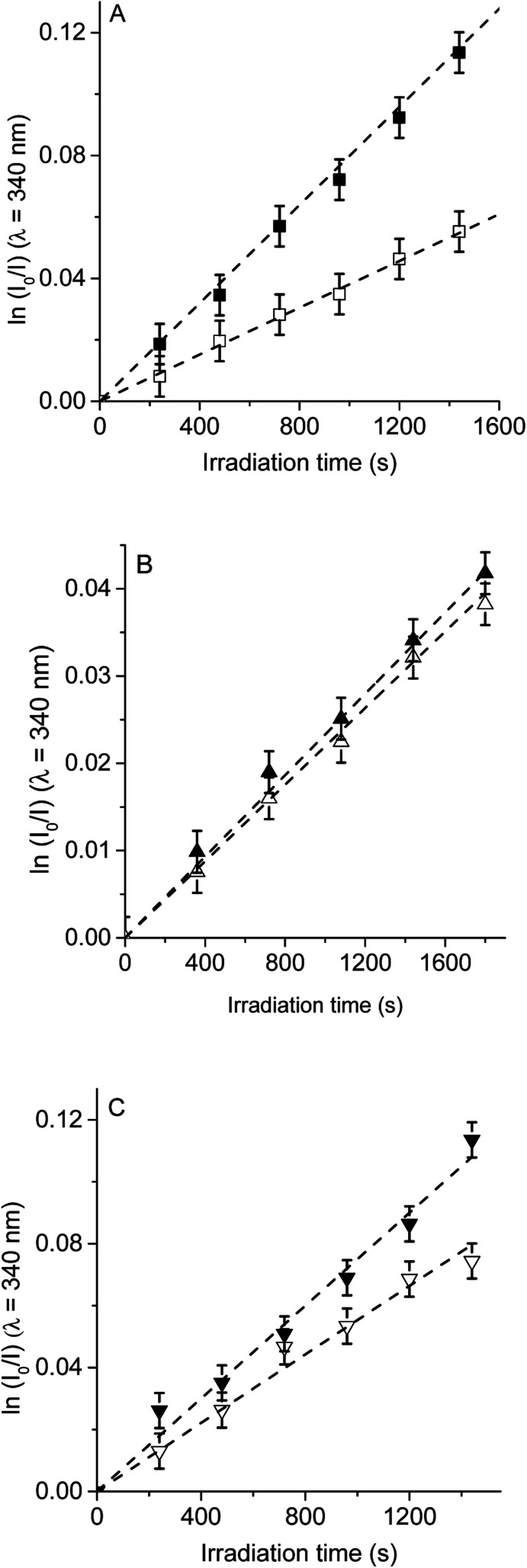
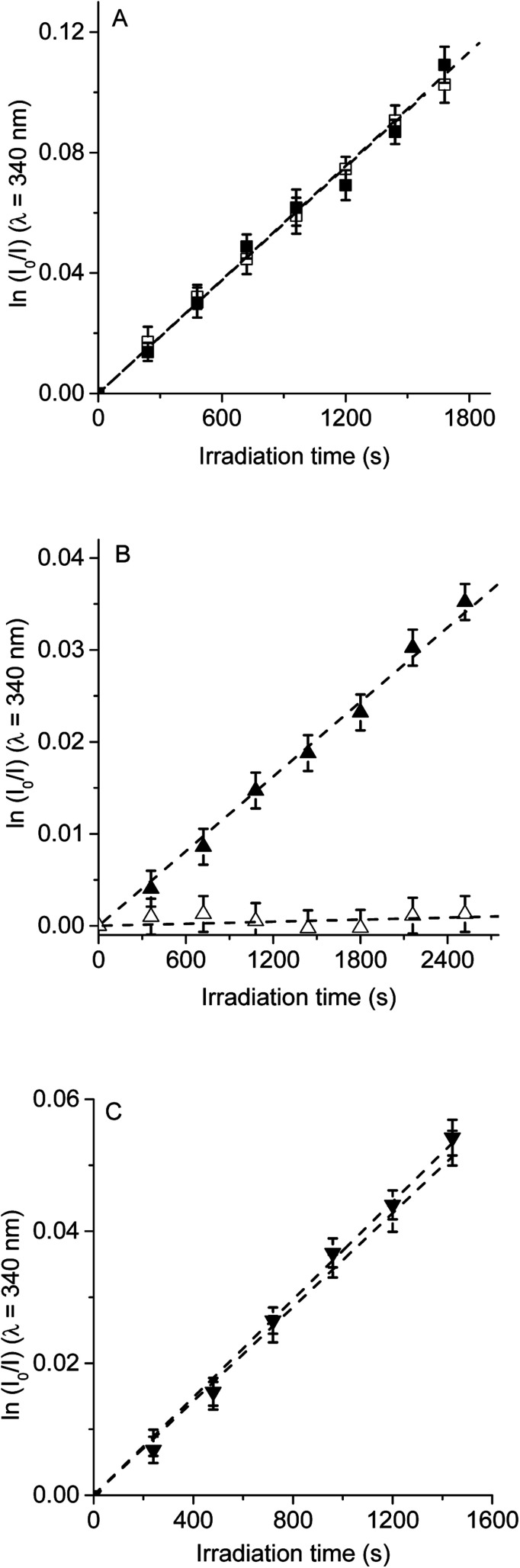
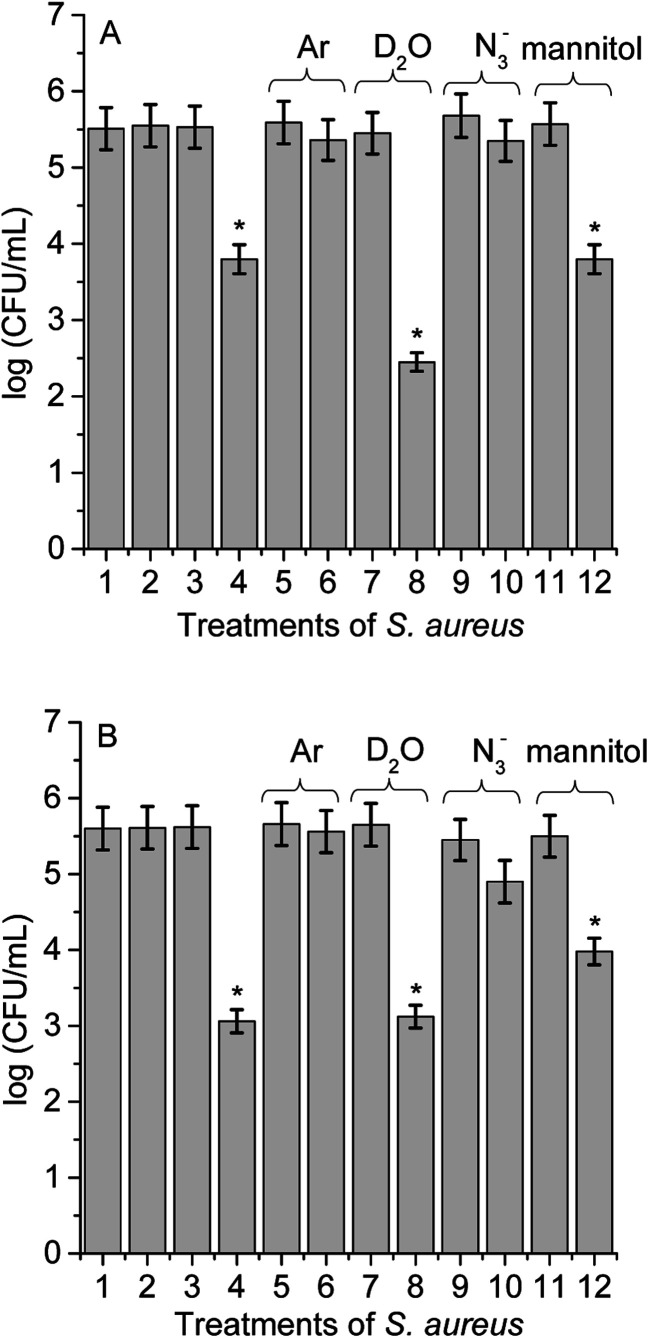
The photodynamic action mechanism sensitized by a non-charged porphyrin-fullerene C dyad (TCP-C) and its tetracationic analogue (TCP-C ) was investigated in solution and in cells. The ability of both dyads to form a photoinduced charge-separated state was evidenced by the reduction of methyl viologen in ,-dimethylformamide (DMF). Moreover, the formation of superoxide anion radicals induced by these dyads was detected by the reduction of nitro blue tetrazolium. Also, photosensitized decomposition of l-tryptophan (Trp) was investigated in the presence of reactive oxygen species (ROS) scavengers. The addition of β-carotene and sodium azide had a slight effect on reaction rate. However, photooxidation of Trp mediated by TCP-C was negligible in the presence of d-mannitol, while no protection was found using TCP-C . In a polar medium, these dyads mainly act by a contribution of type I pathway with low generation of singlet molecular oxygen, O(Δ). In cell suspensions, an aerobic atmosphere was required for the photokilling of this bacterium. The photocytotoxicity induced by TCP-C was increased in DO with respect to water, while a small effect was found using TCP-C . Furthermore, photoinactivation of microbial cells was negligible in the presence of sodium azide. The addition of d-mannitol did not affect the photoinactivation induced by TCP-C. In contrast, cells were protected by d-mannitol when TCP-C was used as a photosensitizer. Also, generation of O(Δ) in the cells was higher for TCP-C than TCP-C . Therefore, TCP-C appears to act in microbial cells mainly through the mediation of O(Δ). Although, a contribution of the type I mechanism was found for cell death induced by TCP-C . Therefore, these dyads with high capacity to produce photoinduced charge-separated state represent interesting photosensitizers to inactivate microorganisms by type I or type II mechanisms. In particular, TCP-C may be located in a non-polar microenvironment in the cells favoring a type II pathway, while a contribution of the type I mechanism was produced using the cationic TCP-C .
研究了由不带电荷的卟啉 - 富勒烯C二元体系(TCP - C)及其四阳离子类似物(TCP - C⁴⁺)敏化的光动力作用机制,研究在溶液和细胞中进行。在N,N - 二甲基甲酰胺(DMF)中甲基紫精的还原证明了这两种二元体系形成光诱导电荷分离态的能力。此外,通过硝基蓝四唑的还原检测到由这些二元体系诱导的超氧阴离子自由基的形成。同时,在活性氧(ROS)清除剂存在的情况下研究了L - 色氨酸(Trp)的光敏分解。添加β - 胡萝卜素和叠氮化钠对反应速率有轻微影响。然而,在D - 甘露醇存在下,TCP - C介导的Trp光氧化可忽略不计,而使用TCP - C⁴⁺时未发现保护作用。在极性介质中,这些二元体系主要通过I型途径起作用,单线态分子氧O(¹Δg)的生成量较低。在细胞悬液中,这种细菌的光杀伤需要有氧气氛。相对于水,TCP - C在DO中诱导的光细胞毒性增加,而使用TCP - C⁴⁺时发现的影响较小。此外,在叠氮化钠存在下微生物细胞的光灭活可忽略不计。添加D - 甘露醇不影响TCP - C诱导的光灭活。相反,当使用TCP - C⁴⁺作为光敏剂时,细胞受到D - 甘露醇的保护。而且,在细胞中TCP - C产生的O(¹Δg)比TCP - C⁴⁺更高。因此,TCP - C似乎主要通过O(¹Δg)的介导作用于微生物细胞。尽管如此,发现I型机制对TCP - C⁴⁺诱导的细胞死亡有贡献。因此,这些具有高能力产生光诱导电荷分离态的二元体系是通过I型或II型机制灭活微生物的有趣光敏剂。特别是,TCP - C可能位于细胞中的非极性微环境中,有利于II型途径,而使用阳离子TCP - C⁴⁺时产生了I型机制的贡献。