Chen Jishun, Shang Bing, Zhang Hua, Zhu Zhengpeng, Chen Long, Wang Hongmei, Ran Fengying, Chen Qinhua, Chen Jun
Affiliated Dongfeng Hospital, Hubei University of Medicine Hubei Shiyan 442008 China
RSC Adv. 2018 Apr 19;8(27):14798-14805. doi: 10.1039/c8ra01362d. eCollection 2018 Apr 18.
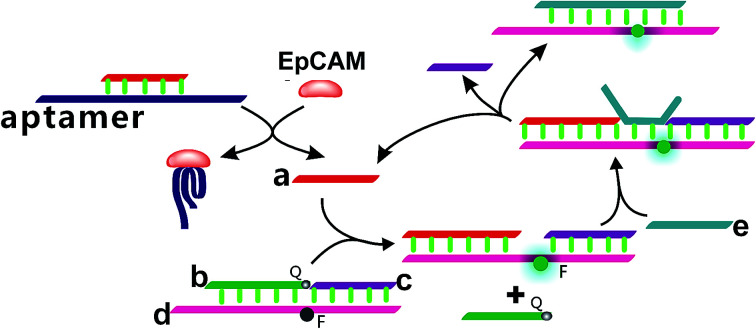
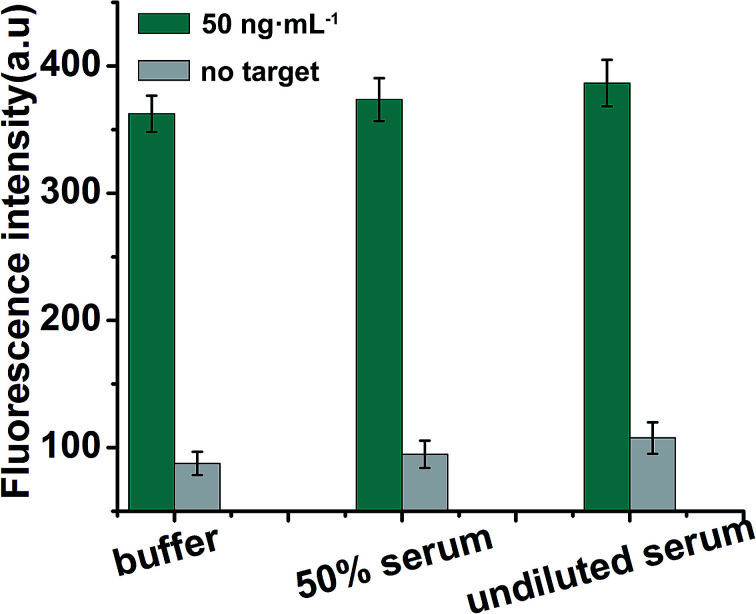
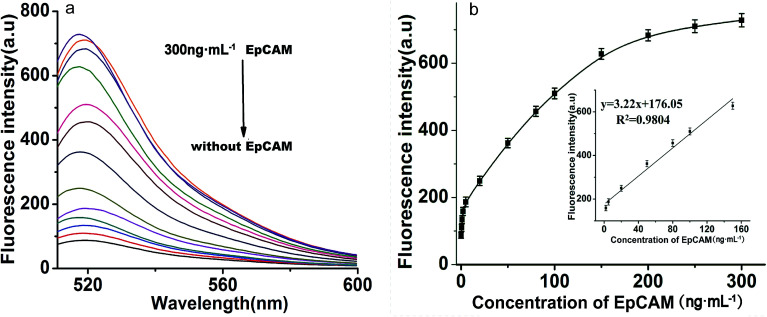
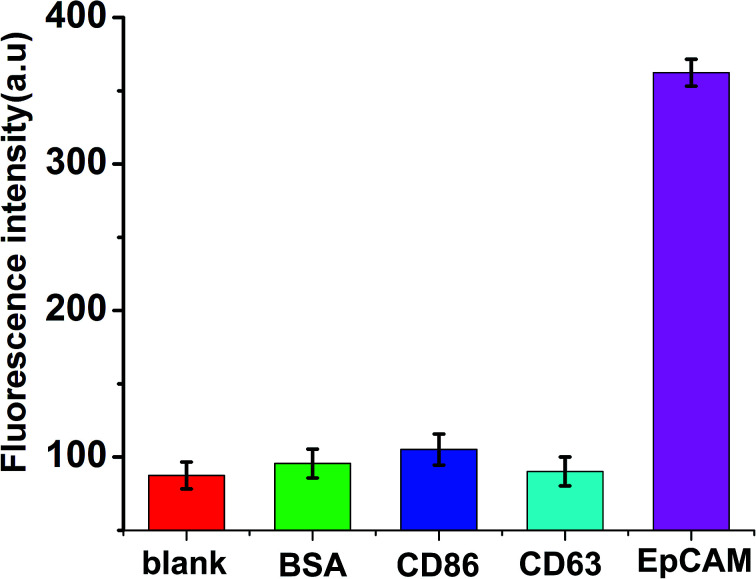
Epithelial cell adhesion molecules (EpCAMs) play a significant role in tumorigenesis and tumor development. EpCAMs are considered to be tumor signaling molecules for cancer diagnosis, prognosis and therapy. Herein, an enzyme-free and highly sensitive fluorescent biosensor, with a combined aptamer-based EpCAM recognition and toehold-aided DNA recycling amplification strategy, was developed for sensitive and specific fluorescence detection of EpCAMs. Due to highly specific binding between EpCAMs and corresponding aptamers, strand a, which is released from the complex of aptamer/strand a in the presence of EpCAMs which is bound to the corresponding aptamer, triggered the toehold-mediated strand displacement process. An amplified fluorescent signal was achieved by recycling strand a for ultrasensitive EpCAM detection with a detection limit as low as 0.1 ng mL, which was comparable or superior to that of reported immunoassays and biosensor strategies. In addition, high selectivity towards EpCAMs was exhibited when other proteins were selected as control proteins. Finally, this strategy was successfully used for the ultrasensitive fluorescence detection of EpCAMs in human serum samples with satisfactory results. Importantly, the present strategy may be also expanded for the detection of other targets using the corresponding aptamers.
上皮细胞粘附分子(EpCAMs)在肿瘤发生和肿瘤发展中发挥着重要作用。EpCAMs被认为是用于癌症诊断、预后和治疗的肿瘤信号分子。在此,开发了一种无酶且高度灵敏的荧光生物传感器,它结合了基于适配体的EpCAM识别和借助分支结构的DNA循环扩增策略,用于对EpCAMs进行灵敏且特异的荧光检测。由于EpCAMs与相应适配体之间具有高度特异性结合,在与相应适配体结合的EpCAMs存在的情况下,从适配体/链a复合物中释放出来的链a触发了分支结构介导的链置换过程。通过循环利用链a实现了放大的荧光信号,用于超灵敏的EpCAM检测,检测限低至0.1 ng/mL,这与已报道的免疫测定和生物传感器策略相当或更优。此外,当选择其他蛋白质作为对照蛋白时,该方法对EpCAMs表现出高选择性。最后,该策略成功用于人血清样品中EpCAMs的超灵敏荧光检测,结果令人满意。重要的是,本策略也可扩展用于使用相应适配体检测其他靶标。