Giri Suvendu, Manivannan Jeganathan, Srinivasan Bhuvaneswari, Sundaresan Lakshmikirupa, Gajalakshmi Palanivel, Chatterjee Suvro
Department of Biotechnology, Anna University Chennai Tamil Nadu India
Vascular Biology Lab, AU-KBC Research Centre, MIT Campus of Anna University Chennai Tamil Nadu India.
RSC Adv. 2018 Jun 4;8(36):20211-20221. doi: 10.1039/c8ra02877j. eCollection 2018 May 30.
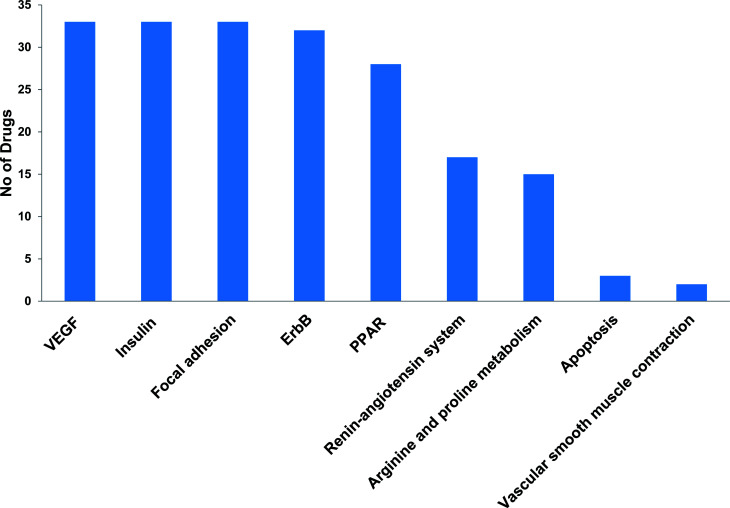
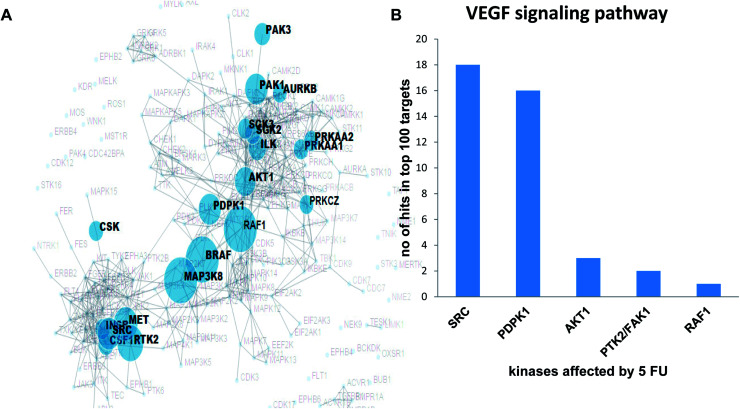
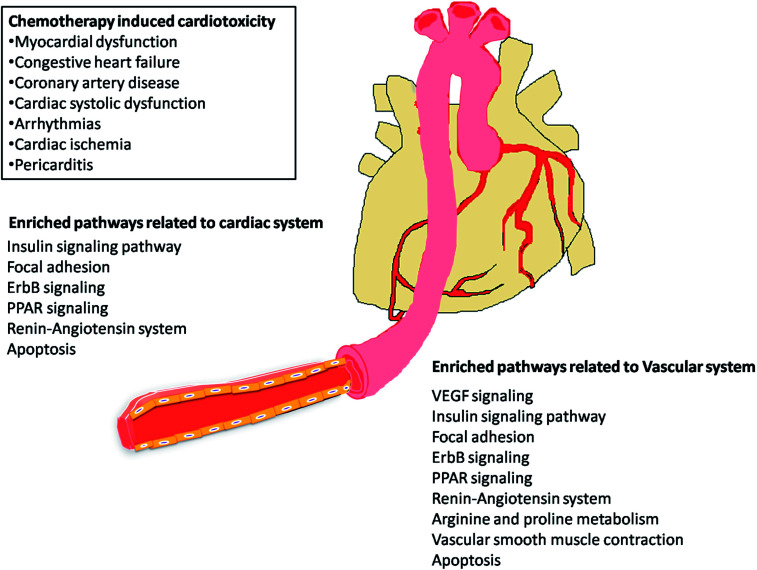
Onco-cardiology is critical for the management of cancer therapeutics since many of the anti-cancer agents are associated with cardiotoxicity. Therefore, the major aim of the current study is to employ a novel method combined with experimental validation to explore off-targets and prioritize the enriched molecular pathways related to the specific cardiovascular events other than their intended targets by deriving relationship between drug-target-pathways and cardiovascular complications in order to help onco-cardiologists for the management of strategies to minimize cardiotoxicity. A systems biological understanding of the multi-target effects of a drug requires prior knowledge of proteome-wide binding profiles. In order to achieve the above, we have utilized PharmMapper, a web-based tool that uses a reverse pharmacophore mapping approach (spatial arrangement of features essential for a molecule to interact with a specific target receptor), along with KEGG for exploring the pathway relationship. In the validation part of the study, predicted protein targets and signalling pathways were strengthened with existing datasets of DrugBank and antibody arrays specific to vascular endothelial growth factor (VEGF) signalling in the case of 5-fluorouracil as direct experimental evidence. The current systems toxicological method illustrates the potential of the above big-data in supporting the knowledge of onco-cardiological indications which may lead to the generation of a decision making catalogue in future therapeutic prescription.
肿瘤心脏病学对于癌症治疗的管理至关重要,因为许多抗癌药物都与心脏毒性有关。因此,本研究的主要目的是采用一种结合实验验证的新方法,通过推导药物-靶点-通路与心血管并发症之间的关系,探索脱靶效应,并对与特定心血管事件相关的富集分子通路进行优先级排序,而不是关注其预期靶点,以帮助肿瘤心脏病学家制定策略,将心脏毒性降至最低。对药物多靶点效应的系统生物学理解需要蛋白质组范围结合谱的先验知识。为了实现上述目标,我们利用了PharmMapper,这是一种基于网络的工具,它使用反向药效团映射方法(分子与特定靶受体相互作用所必需的特征的空间排列),并结合KEGG来探索通路关系。在研究的验证部分,对于5-氟尿嘧啶,利用DrugBank的现有数据集和针对血管内皮生长因子(VEGF)信号传导的抗体阵列,强化预测的蛋白质靶点和信号通路,作为直接实验证据。当前的系统毒理学方法说明了上述大数据在支持肿瘤心脏病学适应症知识方面的潜力,这可能会在未来的治疗处方中生成一个决策目录。