Zhang Lin-Ning, Wang Long, Shi Zi-Qi, Li Ping, Li Hui-Jun
State Key Laboratory of Natural Medicines, China Pharmaceutical University No. 24 Tongjia Lane Nanjing China
Affiliated Hospital of Integrated Traditional Chinese and Western Medicine, Nanjing University of Chinese Medicine Nanjing China.
RSC Adv. 2018 Mar 1;8(17):9074-9082. doi: 10.1039/c7ra13503c. eCollection 2018 Feb 28.
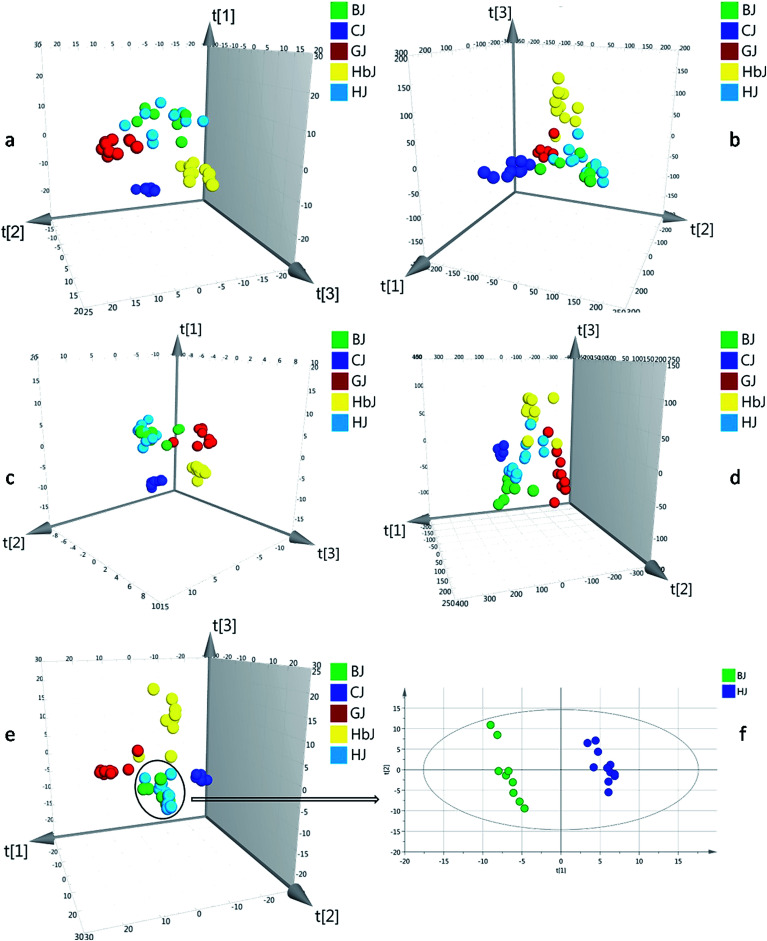
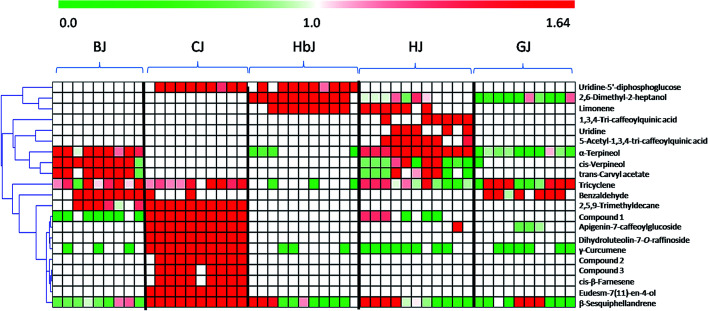
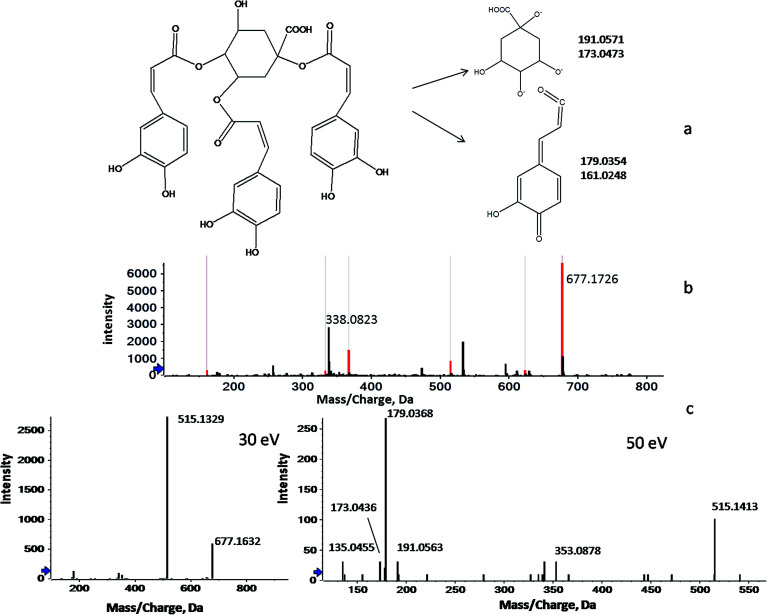
The extreme complexity of the chemical composition of plant extracts requires an unbiased and comprehensive detection methodology to improve the potential of metabolomic study. The present work, taking five closely related cultivars of flowers as a typical case, attempts to develop a metabolomic strategy to find more markers of metabolites for precise differentiation based on headspace gas chromatography-mass spectrometry (HSGC-MS) and ultra-performance liquid chromatography coupled with quadrupole time-of-flight mass spectrometry (UHPLC-QTOF/MS). In detail, 53 batches of flower samples were collected and analyzed. The fusion of datasets from HSGC-MS and UHPLC-QTOF/MS was done in two different ways. After comparison, the fusion of the total peak area normalized metabolomic data was performed for multivariate statistical analysis. A total of 21 marker compounds (including 14 volatile and 7 nonvolatile metabolites) were identified, and a heatmap was employed for clarifying the distribution of the identified metabolites among the five cultivars. The results indicated that the integrated platform benefited the metabolomic study of medicinal and edible herbs by providing complementary information through fully monitoring functional constituents.
植物提取物化学成分的极度复杂性需要一种公正且全面的检测方法,以提升代谢组学研究的潜力。本研究以五种亲缘关系密切的花卉品种为典型案例,尝试基于顶空气相色谱 - 质谱联用仪(HSGC-MS)和超高效液相色谱 - 四极杆飞行时间质谱联用仪(UHPLC-QTOF/MS)开发一种代谢组学策略,以寻找更多代谢物标记物用于精确区分。具体而言,收集并分析了53批次的花卉样本。HSGC-MS和UHPLC-QTOF/MS的数据集融合通过两种不同方式进行。经过比较,对总峰面积归一化的代谢组学数据进行融合以进行多变量统计分析。共鉴定出21种标记化合物(包括14种挥发性和7种非挥发性代谢物),并采用热图来阐明所鉴定代谢物在五个品种中的分布情况。结果表明,该集成平台通过全面监测功能成分提供互补信息,有利于药食两用草药的代谢组学研究。