Fan Yan Liang, Tan Chuan Hao, Lui Yuansiang, Zudhistira Dionaldo, Loo Say Chye Joachim
School of Materials Science and Engineering, Nanyang Technological University 50 Nanyang Avenue 639798 Singapore
Singapore Centre for Environmental Life Sciences Engineering (SCELSE), Nanyang Technological University 60 Nanyang Drive 637551 Singapore.
RSC Adv. 2018 Apr 30;8(29):16032-16042. doi: 10.1039/c8ra02271b. eCollection 2018 Apr 27.
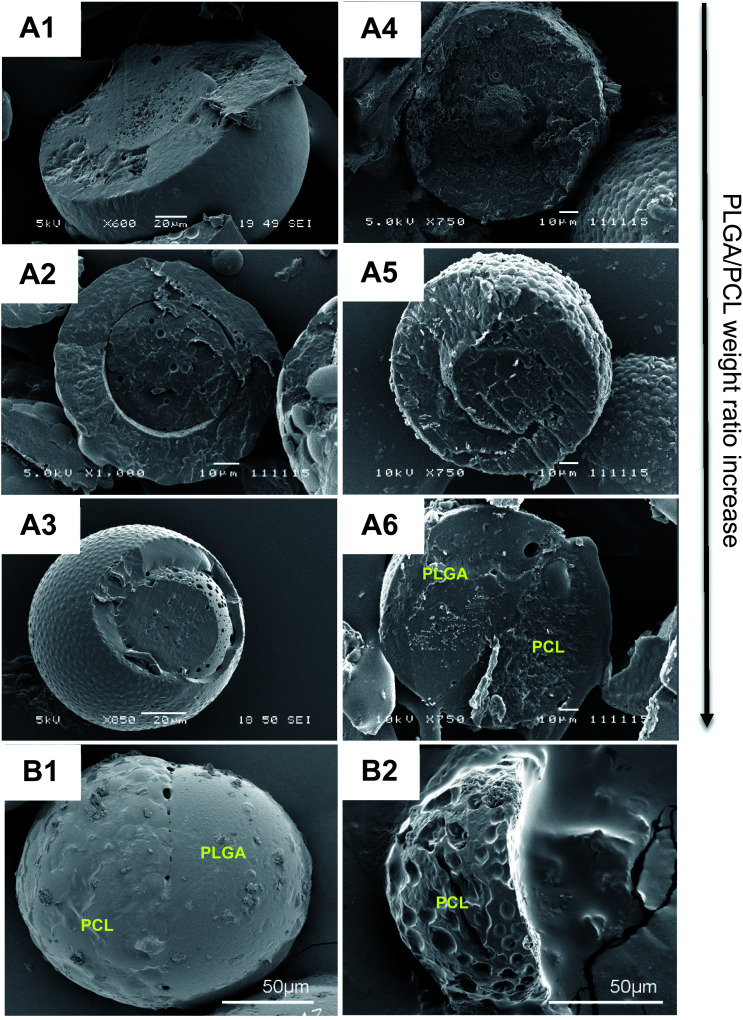
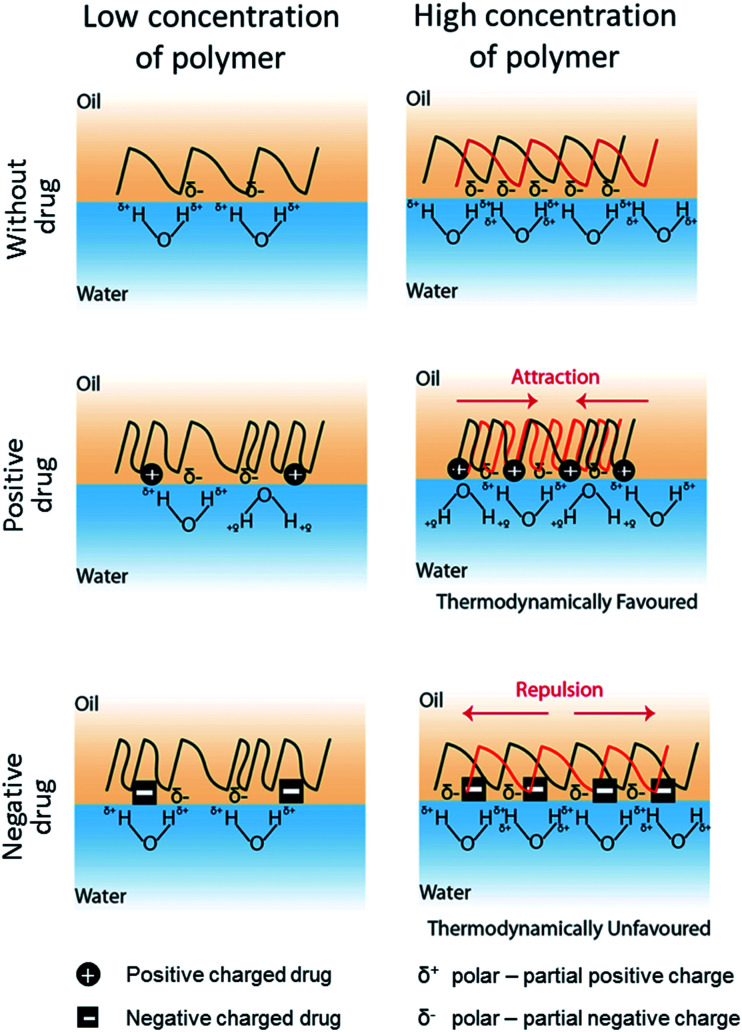
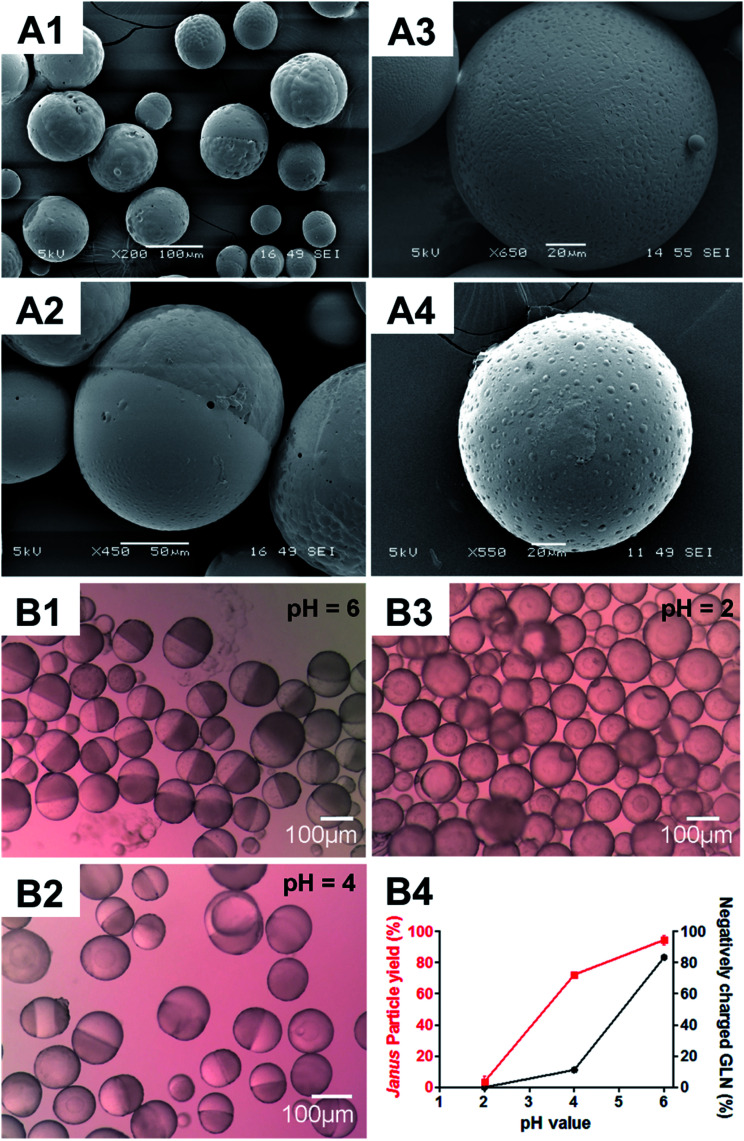
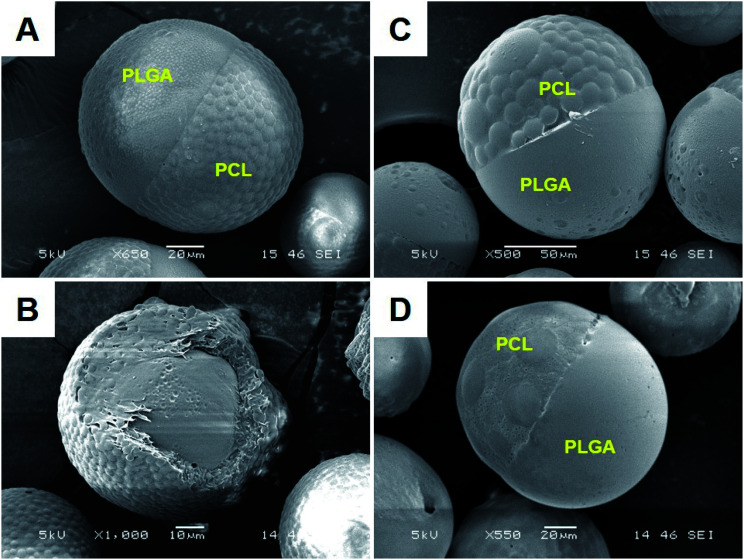
Janus particles are emerging as structurally unique drug carriers with the potential to deliver multiple drugs and agents. Although synthesis methods have been extensively explored to fabricate Janus particles, it remains a challenge to generate drug-loaded Janus particles through an economical, high throughput technique. Here, we report the formation of the first drug-loaded, micro-scale Janus particles prepared using a single-step emulsion solvent evaporation approach. Our results revealed that both the net charge of drug molecules ( glibenclamide, tolbutamine, rapamycin and lidocaine) and polymer weight ratio ( poly(lactic--glycolic) and polycaprolactone) were critical in determining the formation of Janus particles. The formation of drug-loaded Janus particles was proven to be thermodynamically-driven in accordance to the classical equilibrium spreading coefficient theory, which is strongly governed by interfacial tensions. Specifically, comparable interfacial tensions between the two interacting polymers with the water phase were identified to be key criteria to achieve the Janus particles hemispheric structure. Such interfacial tensions were amenable, and were found to be highly dependent on the interfacial charge density attributed to both drug and polymer ratio. Hereby, this study provides a mechanistic insight into the fabrication of drug-loaded Janus particles and paves an important path towards large-scale production of Janus particles using a simplified, single-step emulsion solvent evaporation strategy.
Janus颗粒正成为结构独特的药物载体,具有递送多种药物和药剂的潜力。尽管已经广泛探索了合成方法来制备Janus颗粒,但通过经济、高通量技术制备载药Janus颗粒仍然是一项挑战。在此,我们报告了使用单步乳液溶剂蒸发法制备的首批载药微米级Janus颗粒的形成。我们的结果表明,药物分子(格列本脲、甲苯磺丁脲、雷帕霉素和利多卡因)的净电荷以及聚合物重量比(聚乳酸-乙醇酸共聚物和聚己内酯)在决定Janus颗粒的形成方面都至关重要。根据经典的平衡铺展系数理论,载药Janus颗粒的形成被证明是由热力学驱动的,该理论受界面张力强烈支配。具体而言,两种相互作用的聚合物与水相之间相当的界面张力被确定为实现Janus颗粒半球形结构的关键标准。这种界面张力是可控的,并且发现高度依赖于药物和聚合物比例所导致的界面电荷密度。因此,本研究为载药Janus颗粒的制备提供了机理见解,并为使用简化的单步乳液溶剂蒸发策略大规模生产Janus颗粒铺平了重要道路。