Patzsch Julia, Spencer Jacob N, Folli Andrea, Bloh Jonathan Z
DECHEMA-Forschungsinstitut Theodor-Heuss-Allee 25 60486 Frankfurt am Main Germany
School of Chemistry, Cardiff University Main Building, Park Place Cardiff CF10 3AT Wales UK.
RSC Adv. 2018 Aug 3;8(49):27674-27685. doi: 10.1039/c8ra05017a. eCollection 2018 Aug 2.
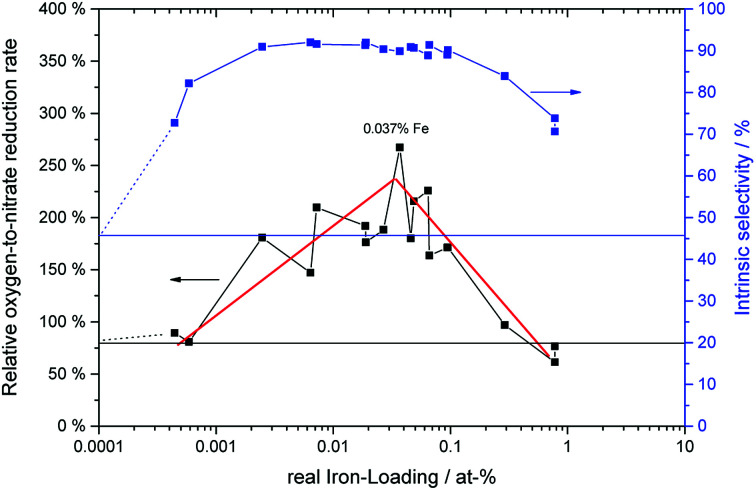
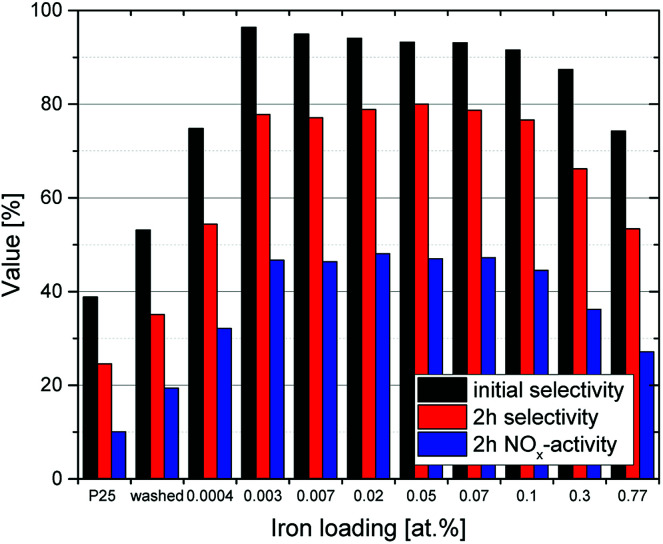
Semiconductor photocatalysis could be an effective means to combat nitrogen oxides (NO ) based air pollution through mineralisation of NO to nitrate. However, most of the typically TiO-based catalysts employed show a much higher reactivity towards NO than NO, leading to an accumulation of this unwanted and toxic intermediate. By grafting the photocatalyst with small amounts (≤0.1 at%) of isolated iron(iii) ions, the reactivity towards NO is increased by the factor of 9, bringing it up to par with the NO-reactivity and alleviating the problem with intermediate accumulation. Consequently, the observed selectivity of the reaction is dramatically increased from less than 40% to more than 90%. The paper also discusses possible mechanisms for this very beneficial behavior.
半导体光催化可能是一种通过将氮氧化物(NO )矿化为硝酸盐来对抗基于氮氧化物的空气污染的有效手段。然而,大多数常用的典型TiO基催化剂对NO的反应性比对NO 的反应性高得多,导致这种不需要的有毒中间体的积累。通过用少量(≤0.1原子%)孤立的铁(III)离子接枝光催化剂,对NO的反应性提高了9倍,使其与对NO的反应性相当,并缓解了中间体积累的问题。因此,观察到的反应选择性从不到40%显著提高到超过90%。本文还讨论了这种非常有益行为的可能机制。