Tuberculosis Research Program Centenary Institute, The University of Sydney, Camperdown, Australia
The University of Sydney, Discipline of Infectious Diseases and Immunology and Sydney Institute for Infectious Diseases, Camperdown, Australia.
Life Sci Alliance. 2022 May 11;5(9). doi: 10.26508/lsa.202201476. Print 2022 Sep.
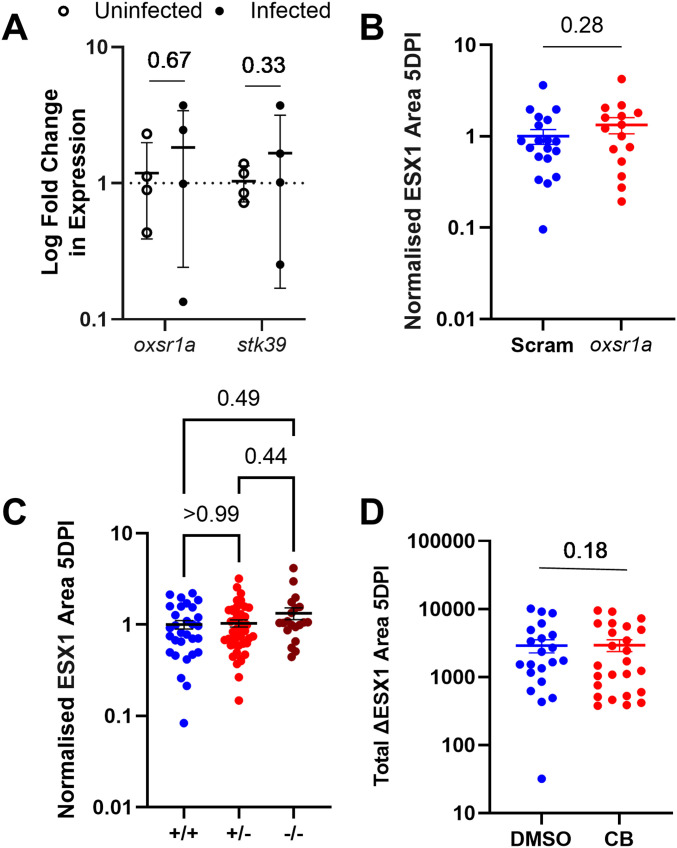
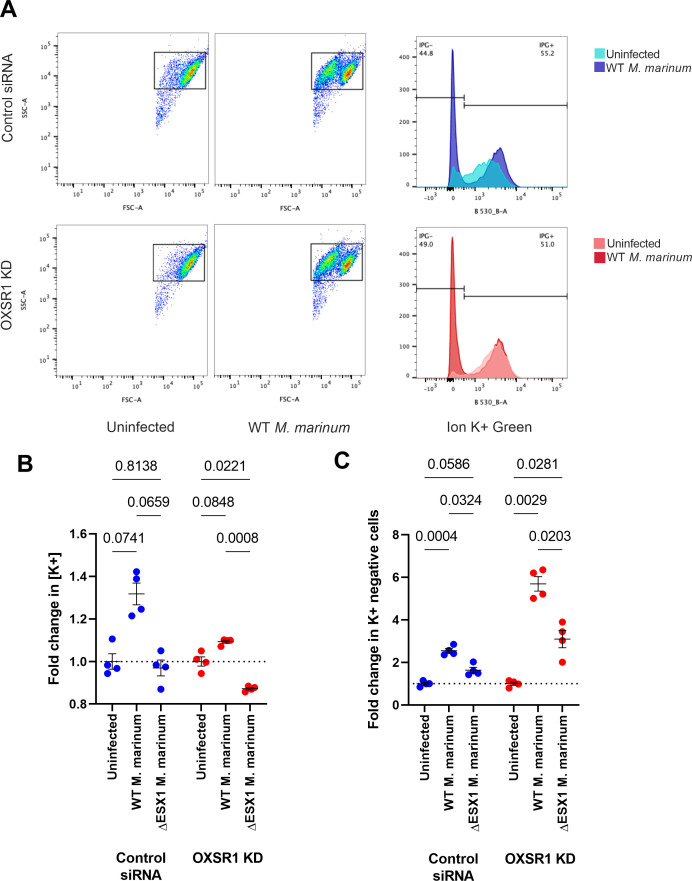
Pathogenic mycobacteria inhibit inflammasome activation to establish infection. Although it is known that potassium efflux is a trigger for inflammasome activation, the interaction between mycobacterial infection, potassium efflux, and inflammasome activation has not been investigated. Here, we use infection of zebrafish embryos and infection of THP-1 cells to demonstrate that pathogenic mycobacteria up-regulate the host WNK signalling pathway kinases SPAK and OXSR1 which control intracellular potassium balance. We show that genetic depletion or inhibition of OXSR1 decreases bacterial burden and intracellular potassium levels. The protective effects of OXSR1 depletion are at least partially mediated by NLRP3 inflammasome activation, caspase-mediated release of IL-1β, and downstream activation of protective TNF-α. The elucidation of this druggable pathway to potentiate inflammasome activation provides a new avenue for the development of host-directed therapies against intracellular infections.
致病分枝杆菌抑制炎症小体激活以建立感染。虽然已知钾外流是炎症小体激活的触发因素,但分枝杆菌感染、钾外流和炎症小体激活之间的相互作用尚未得到研究。在这里,我们使用 感染斑马鱼胚胎和 感染 THP-1 细胞来证明致病性分枝杆菌上调宿主 WNK 信号通路激酶 SPAK 和 OXSR1,它们控制细胞内钾平衡。我们表明,OXSR1 的遗传缺失或抑制会降低细菌负荷和细胞内钾水平。OXSR1 缺失的保护作用至少部分是通过 NLRP3 炎症小体激活、半胱天冬酶介导的 IL-1β 释放以及下游保护性 TNF-α 的激活来介导的。阐明这条可药物干预的途径以增强炎症小体激活为针对细胞内感染的宿主定向治疗的发展提供了新途径。