Rando Halie M, Brueffer Christian, Lordan Ronan, Dattoli Anna Ada, Manheim David, Meyer Jesse G, Mundo Ariel I, Perrin Dimitri, Mai David, Wellhausen Nils, Gitter Anthony, Greene Casey S
Department of Systems Pharmacology and Translational Therapeutics, University of Pennsylvania, Philadelphia, Pennsylvania, United States of America; Department of Biochemistry and Molecular Genetics, University of Colorado School of Medicine, Aurora, Colorado, United States of America; Center for Health AI, University of Colorado School of Medicine, Aurora, Colorado, United States of America · Funded by the Gordon and Betty Moore Foundation (GBMF 4552); the National Human Genome Research Institute (R01 HG010067).
Department of Clinical Sciences, Lund University, Lund, Sweden.
ArXiv. 2022 Apr 26:arXiv:2204.12598v2.
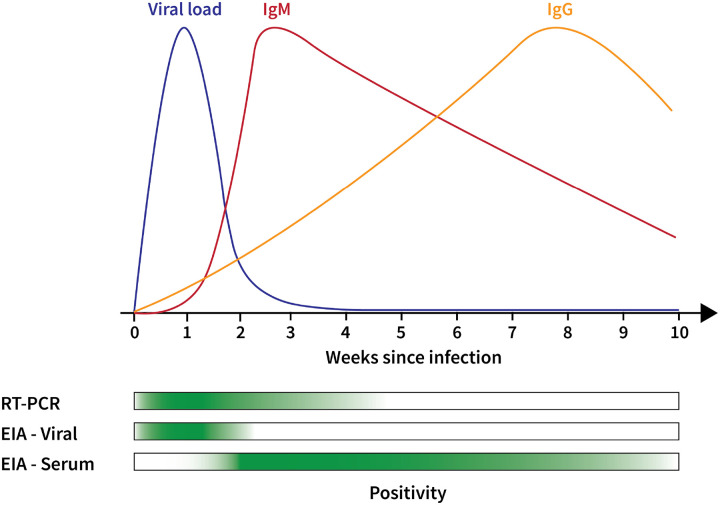
The COVID-19 pandemic has presented many challenges that have spurred biotechnological research to address specific problems. Diagnostics is one area where biotechnology has been critical. Diagnostic tests play a vital role in managing a viral threat by facilitating the detection of infected and/or recovered individuals. From the perspective of what information is provided, these tests fall into two major categories, molecular and serological. Molecular diagnostic techniques assay whether a virus is present in a biological sample, thus making it possible to identify individuals who are currently infected. Additionally, when the immune system is exposed to a virus, it responds by producing antibodies specific to the virus. Serological tests make it possible to identify individuals who have mounted an immune response to a virus of interest and therefore facilitate the identification of individuals who have previously encountered the virus. These two categories of tests provide different perspectives valuable to understanding the spread of SARS-CoV-2. Within these categories, different biotechnological approaches offer specific advantages and disadvantages. Here we review the categories of tests developed for the detection of the SARS-CoV-2 virus or antibodies against SARS-CoV-2 and discuss the role of diagnostics in the COVID-19 pandemic.
新冠疫情带来了诸多挑战,促使生物技术研究去解决特定问题。诊断学是生物技术发挥关键作用的一个领域。诊断测试通过促进对感染者和/或康复者的检测,在应对病毒威胁方面发挥着至关重要的作用。从所提供信息的角度来看,这些测试可分为两大类,即分子检测和血清学检测。分子诊断技术可检测生物样本中是否存在病毒,从而能够识别当前被感染的个体。此外,当免疫系统接触病毒时,会通过产生针对该病毒的特异性抗体做出反应。血清学检测能够识别对目标病毒产生免疫反应的个体,从而有助于识别先前接触过该病毒的个体。这两类测试为理解新冠病毒的传播提供了不同的、有价值的视角。在这些类别中,不同的生物技术方法各有其特定的优缺点。在此,我们回顾为检测新冠病毒或针对新冠病毒的抗体而开发的测试类别,并讨论诊断学在新冠疫情中的作用。